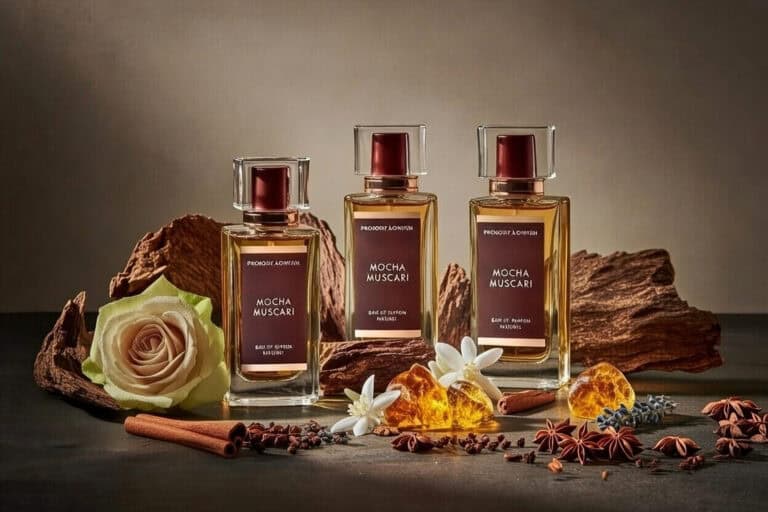
Best Women’s Perfumes 2026 — Ranked by a Working Perfumer
By Kershen Teo, founder and natural perfumer of Prosody London — Updated June 2026
At a Glance — 24 Best Women’s Perfumes 2026
Most perfume guides organise by popularity or price. This one organises by ingredient — because understanding what’s actually in a fragrance is the only reliable way to find one that works for you. The seven clusters below cover the most important floral families in women’s perfumery: jasmine, rose, neroli and orange blossom, iris, mimosa, linden blossom, and the great floral bouquets. Each has a distinct character, a distinct emotional register, and a distinct set of occasions it serves best.
| Floral Family | Designer Pick | Prosody Botanical | Best For |
|---|---|---|---|
| Rose | Frédéric Malle — Portrait of a Lady | Rose Rondeaux | Deep, sensual evening presence vs. everyday romance without heaviness |
| Jasmine | Chanel — No.5 | Jacinth Jonquil | Timeless, iconic sophistication vs. fresh, joyful daytime wear |
| Linden Blossom | Marc-Antoine Barrois — Tilia | Lissom Linden | A niche signature scent vs. the quietly unforgettable everyday floral |
| Floral Bouquet | Parfums de Marly — Delina | Bebop Allure | Modern, effortlessly wearable elegance vs. vibrant, energetic femininity |
| Neroli & Orange Blossom | Tom Ford — Neroli Portofino | Neroli Nuance | Luxury holiday radiance vs. all-day natural brightness |
| Iris | Prada — Infusion d’Iris | — | Cool, contemplative sophistication |
| Mimosa | Frédéric Malle — Carnal Flower | Moire Mimosa | Extraordinary niche complexity vs. a soft, conversation-starting statement |
Best Everyday Perfume for Women — A Perfumer’s Pick
The full list below covers 24 women’s fragrances across every occasion and intensity. But if you’re looking specifically for an everyday scent — something that works in an office, on a commute, across a full day — there’s something worth knowing first.
Most mainstream everyday perfumes achieve their clean, inoffensive quality through synthetic musks — compounds like galaxolide and tonalide that give a fragrance its lingering softness and skin-close warmth. These musks are effective, but France’s national safety agency ANSES has proposed classifying galaxolide as a reproductive toxicant, based on animal studies, with the proposal currently under review by European regulators. For a fragrance you wear every single day, that’s worth knowing.
For a full examination of what these synthetic compounds are, what pheromone perfumes actually contain, and what botanical ingredients genuinely do instead, read our guide to pheromones in perfume.
Every fragrance below contains no synthetic musks, no phthalates, and no endocrine-disrupting compounds. Longevity and softness come from botanical resins, natural sandalwood, and vetiver — materials that fix naturally to skin without the health questions attached to synthetic fixatives.
- Lissom Linden — clean, luminous, never tiring. The one I’d recommend for daily office wear.
- Rose Rondeaux — warmer and more distinctive than a typical daily wear, but well within the threshold for daytime. Rose without sweetness.
- A Capella Ray — the most versatile. Citrus-bright in the morning, woody-warm by afternoon.
- Carissis — light, skin-close, genuinely unobtrusive. For anyone who finds most fragrances too present for daily life.
- Pizzicato Bliss — the warm-weather everyday option. Peach and sandalwood, nothing synthetic propping it up.
If you’re looking for a women’s perfume built entirely from botanical ingredients — no synthetics, no compromise on complexity — start with Rose Rondeaux, the closest thing in natural perfumery to Portrait of a Lady. Not sure where to start? Try the Build Your Own 6 x 2ml Discovery Setor browse the full natural perfume collection for women.

Top women’s perfumes 2026-
Most perfume guides organise by popularity or price. This one organises by ingredient — because understanding what’s actually in a fragrance is the only reliable way to find one that works for you.
Jasmine is the most complex floral material in perfumery — over 200 aromatic compounds in a single absolute, which is why no synthetic reconstruction fully captures it. The finest jasmine fragrances are irreplaceable.
Rose is the most versatile. From the light and fresh to the dark and oriental, rose covers more emotional ground than any other floral — which is why it appears at the centre of more great fragrances than any other ingredient.
Neroli and orange blossom are the same flower at different stages — neroli from the blossom, orange blossom from the absolute — and together they define the most radiant, summery register in perfumery. Brighter than rose, warmer than jasmine, and effortlessly wearable in heat.
Mimosa is the most underrated. Powdery, honeyed, and slightly almond-like, mimosa absolute from Acacia dealbata is one of the great natural materials — used at full concentration it creates something genuinely luxurious that synthetic recreations never approach.
Linden blossom is the unexpected one — technically in the citrus family, which makes it the finest summer floral most women have never tried. Its honeyed, slightly narcotic sweetness is unlike anything else in perfumery, and the best linden fragrances are among the most quietly memorable you can wear.
Floral bouquets are the category most women know best — the great commercial florals, from Chanel to Flowerbomb, that layer multiple flowers into something immediately appealing and broadly wearable. The best of them achieve genuine complexity; the worst are indistinguishable from fabric softener.
Emotional impact on first contact. The best women’s perfumes make an immediate impression — top notes of bright florals, citrus, or aldehydes define the personality of the fragrance within the first ten seconds. A perfume that doesn’t earn attention at first contact rarely gets a second chance.
Evolution on skin. A great women’s perfume changes across time. Heart notes emerge as top notes fade — jasmine, rose, iris, spice — revealing the true character. Base notes of vanilla, musk, woods, or resins then anchor everything and determine longevity. The best compositions evolve in ways that remain consistently appealing from first spray to final dry-down.
Balance and construction. A fragrance that is technically imbalanced — too linear, too loud, or disjointed between its stages — will never become a classic regardless of marketing. The best women’s fragrances achieve a harmony between their elements that makes the whole greater than the sum of its parts. This is where a perfumer’s training is most visible, and most invisible when done well.
Emotional resonance. Scent is more closely linked to memory and emotion than any other sense. The fragrances that earn lasting loyalty are the ones that reliably evoke something — confidence, comfort, joy, serenity — not just on first wear but on the fifteenth.
Ingredient integrity. The best women’s perfumes achieve their performance without relying on synthetic fixatives — phthalates and synthetic musks — that raise legitimate health and environmental questions. A perfume that smells extraordinary and contains only botanical ingredients achieves something genuinely harder. For the full picture on what synthetic fragrances contain, see our endocrine disruptors in perfume guide.
The best jasmine perfumes for women
Jasmine is the most complex floral material in perfumery. A jasmine absolute contains over 200 aromatic compounds — which is why no synthetic reconstruction fully captures it, and why the finest jasmine fragrances are built around the real thing.
Chanel No.5 The fragrance that made jasmine iconic in modern perfumery. Ernest Beaux used jasmine absolute at extraordinary concentration alongside aldehydes — a combination that was revolutionary in 1921 and remains the reference point for understanding what jasmine can do at the centre of a great composition. The aldehydes lift the jasmine into something abstract and luminous; the civet base grounds it into something deeply sensual. A construction that repays study regardless of whether you wear it.
Jean Patou — Joy Rose and jasmine at enormous concentration — one of the most expensive fragrances ever made when it launched, and still a reference point for what happens when you use both materials at genuine quality. The reason it works is that nothing else is needed. An argument for restraint through abundance.
Le Labo Jasmin 17 A modern soliflore that treats jasmine as the entire story. The 17 refers to the number of ingredients — unusual restraint for a niche house. The result is jasmine stripped of distraction: intense, slightly indolic, and genuinely beautiful. One of the better arguments for the soliflore approach in contemporary perfumery.
Gucci Flora Gorgeous Jasmine Jasmine handled for maximum accessibility — bright, clean, and immediately appealing without the indolic depth that makes some jasmine fragrances challenging. A well-constructed mainstream entry that demonstrates how far you can take jasmine toward broad appeal without losing its essential character.
Tom Ford Jasmin Rouge Jasmine pushed into darker, spicier territory — coriander and pepper in the opening give it a dry, almost savoury quality before the jasmine heart emerges. More complex and challenging than the Gucci, less abstract than No.5. For women who want jasmine with edge.
L’Artisan Parfumeur — La Chasse aux Papillons Delicate jasmine and airy florals in a light, transparent construction. One of the best examples of a perfume that works because of what it leaves out — jasmine handled with restraint rather than abundance, creating something almost weightless.
The best rose perfumes for women
Rose
Rose is the most versatile floral in perfumery — and the hardest to do well. A rose absolute contains over 300 aromatic compounds, which is why synthetic rose reconstructions consistently disappoint: they capture the shape of the flower but not its depth. The finest rose fragrances understand that rose is not one thing but many — sweet, citrus, honeyed, fruity, green, spicy — and choose which facets to amplify.
Frédéric Malle — Portrait of a Lady The modern benchmark. Dominique Ropion uses Turkish rose at extraordinary concentration alongside patchouli and incense — a combination that shifts rose from the floral family into something darker and more oriental. The blackcurrant bud opening gives it a green, slightly catty quality that resolves into something deeply sensual. For understanding what rose can achieve at the highest level of contemporary perfumery, this is the reference.
Diptyque Eau Rose Rose handled with restraint and transparency — a light, fresh interpretation that captures the green, slightly watery quality of a rose stem rather than the heavy sweetness of the absolute. For women who find traditional rose fragrances too rich or too old-fashioned, Eau Rose is the modern entry point.
Lancôme La Vie Est Belle Rose Extraordinaire Rose pushed toward the fruity-floral register — bright, accessible, and immediately appealing. The rhubarb top note gives it an unusual tartness that stops it reading as conventional. A well-constructed mainstream rose for women who want something fresher than the classic oriental rose tradition.
Maison Francis Kurkdjian À La Rose Rose in its purest, most luminous form — centifolia rose at high concentration with minimal interference. MFK’s technical precision shows: this is rose as transparency rather than richness, closer to the living flower than most fragrances that bear the name. One of the better arguments for the soliflore approach in contemporary niche perfumery.
Parfums de Marly Delina A contemporary rose that sits beautifully between fresh and rich. The rhubarb and litchi top notes give it an unusual fruity tartness that stops it reading as old-fashioned — the challenge all modern rose perfumes face. The vetiver and cashmeran base give it unexpected depth. Well-constructed and genuinely versatile.
The best neroli and orange blossom perfumes for women
Neroli and orange blossom come from the same flower — the blossom of the bitter orange tree — but they are different materials. Neroli is steam-distilled, giving it a bright, slightly metallic, almost citrus quality. Orange blossom absolute is solvent-extracted, producing something warmer, richer, and more indolic. The finest fragrances in this family understand the difference and use each material deliberately.
This is technically a citrus family — which makes it the finest summer floral most women have never properly explored. Lighter than rose, warmer than jasmine, and effortlessly wearable in heat. The best neroli fragrances have a radiance that no other floral achieves.
Tom Ford Neroli Portofino The modern reference for neroli done at luxury level. Bergamot, lemon, and mandarin amplify the citrus brightness of the neroli before it settles into a warm, slightly woody base. The Italian Riviera positioning is earned — this genuinely captures the feeling of warm coastal air. Technically accomplished and immediately recognisable as premium.
Kayali Marrakesh in a Bottle Orange Blossom 24 Orange blossom pushed toward its warmer, more indolic character — this is the absolute rather than the distillate, giving it a creamier, slightly honeyed quality. The musk base keeps it skin-close rather than projecting outward. A good entry point for women discovering the orange blossom family for the first time.
Serge Lutens Fleurs d’Oranger Orange blossom at full, unapologetic intensity. Lutens doesn’t restrain the indolic, narcotic quality of the absolute — he amplifies it. The result is polarising and deliberately so. For women who want orange blossom as a statement rather than a whisper, this is the reference. Worth understanding even if it’s too full for everyday wear.
Hermès — Un Jardin sur le Nil Jean-Claude Ellena at his most minimal — green mango and lotus over a barely-there musk base, with neroli providing transparency rather than presence. A masterclass in what a fragrance can achieve through subtraction. The neroli here is structural rather than starring, which is exactly the point. For understanding restraint in floral perfumery, nothing in the Hermès garden series surpasses it.
The best mimosa perfumes for women
Mimosa is one of the great underrated materials in perfumery. Extracted from Acacia dealbata — the silver wattle that blankets the hills above Grasse every February — mimosa absolute has a powdery, honeyed, slightly almond quality that is simultaneously delicate and distinctive. It is not a loud material. It doesn’t announce itself. It creates an atmosphere.
The challenge with mimosa is that it sits at the intersection of floral, powdery, and gourmand — which makes it difficult to categorise and easy to misuse. The finest mimosa fragrances understand that the material works best when it’s given space rather than buried under competing notes.
Chloé Atelier des Fleurs Herba Mimosa The most naturalistic interpretation — luminous, powdery, and slightly woody, inspired by the mimosa hills of Grasse. Chloé’s Atelier des Fleurs series is built around single botanical ingredients handled with restraint, and Herba Mimosa is one of the best in the collection. The gentle, almost airy quality makes it immediately wearable without being forgettable.
New Notes Latte Mimosa Extrait de Parfum Mimosa pushed into gourmand territory — iris, fresh milk, vanilla, and musk alongside the mimosa create something comforting and warm. A highly rated interpretation that demonstrates how far mimosa can travel toward the sweet and enveloping without losing its essential character. For women who love both florals and gourmands.
Perris Monte Carlo Mimosa Tanneron An ode to the sun-drenched mimosas of the South of France — bright, honeyed, and slightly wild. Hawthorn and rose alongside the mimosa give it a natural, garden-like quality. One of the more faithful interpretations of the material in its natural context, with a warmth that feels genuinely Mediterranean.
Vilhelm Parfumerie Modest Mimosa Mimosa handled with artistic restraint — candied violets, carrots, and a subtle leather base add complexity that takes it well beyond a simple floral. The unexpected dry-down is the point: this is mimosa for women who find most florals too predictable. One of the more interesting interpretations in contemporary niche perfumery.
Frédéric Malle — Carnal Flower Technically a tuberose fragrance, but the melon and coconut top notes that manage the transition into the tuberose heart share the powdery, tropical quality of mimosa — which is why fans of one often find themselves drawn to the other. What Dominique Ropion achieves here is extraordinary: tuberose absolute at high concentration without the indolic heaviness that makes many tuberose fragrances unwearable. As a natural perfumer it’s a construction I study — knowing you can’t replicate it with botanical materials alone, which makes it both admirable and a reminder of the trade-offs.

The best linden blossom perfumes for women
Linden blossom is the unexpected entry in this list — and the one most likely to become your new obsession. Technically in the citrus family, linden has a honeyed, slightly narcotic sweetness that is unlike anything else in perfumery. It smells simultaneously of honey, green tea, and something almost edible — warm, intimate, and deeply personal.
It is also one of the rarest and most expensive materials in natural perfumery. Linden flower absolute is extracted from the blossoms of the Tilia tree at the precise moment of flowering — a window of days, not weeks. The material cannot be replicated synthetically with any accuracy, which is why the finest linden fragrances are built around the real thing and why so few brands attempt it seriously.
This is the finest summer floral most women have never tried. If you wear neroli in summer, linden blossom is the next discovery.
Marc-Antoine Barrois — Tilia The current industry favourite among fragrance professionals. Barrois blends linden blossom with sambac jasmine, heliotrope, and ambroxan — creating something fizzy, solar, and honeyed that feels simultaneously familiar and completely original. The ambroxan gives it a skin-close warmth that makes it deeply wearable. For understanding what linden can do at the highest level of contemporary niche perfumery, this is the reference point.
Penhaligon’s — Highgrove Bouquet Created in collaboration with the King’s Foundation, Highgrove Bouquet features linden blossom alongside mimosa and tuberose in a powdery, honeyed floral that feels genuinely English — quiet, considered, and refined. The royal provenance is earned rather than decorative. A fragrance for women who appreciate understatement as a form of sophistication.
L’Erbolario — Ombra di Tiglio A well-loved Italian interpretation that highlights linden blossom paired with cyclamen and sweet woody base notes. What distinguishes it is the longevity — impressive for a fragrance at this price point, and a demonstration of how well linden blossom performs when given a resinous base to anchor it. An accessible entry point into the linden family for women discovering it for the first time.

The best floral bouquet perfumes for women
The floral bouquet is the largest and most familiar category in women’s perfumery — and the most variable in quality. At its best, a floral bouquet achieves something a single-ingredient fragrance cannot: the sense of walking through a garden in full bloom, where rose, jasmine, lily, and peony exist simultaneously rather than in sequence. At its worst, it becomes indistinguishable from fabric softener.
The difference lies in the quality of the materials and the skill of the construction. A great floral bouquet requires each ingredient to retain its individual character while contributing to a coherent whole — which is genuinely difficult to achieve, and why the best examples in this category have remained classics for decades.
Chanel Coco Mademoiselle A modern floral-oriental that works because it found the exact balance between the old-fashioned heaviness of traditional Chanel and something younger and more accessible. The patchouli base is handled beautifully — present enough to give depth, restrained enough not to read as earthy. One of the better constructions in mainstream perfumery and a reliable reference point for understanding how a floral bouquet can have genuine longevity without heaviness.
YSL Libre Intense Lavender and orange blossom is not an obvious combination — lavender reads as masculine in most contexts, orange blossom as feminine and sometimes overwhelming. Libre Intense works because the lavender is handled with restraint and the orange blossom is warm rather than sharp. The amber base gives it staying power. A technically interesting construction that demonstrates how masculine and feminine floral materials can be balanced without either dominating.
Burberry Goddess A vanillic floral built around a lavender-vanilla accord. What makes it work is the softness of the construction — nothing sharp, nothing angular. It’s a fragrance engineered for broad appeal and it achieves that without feeling generic. The vanilla base is rich without being cloying, which takes genuine skill to achieve even with synthetic materials. The most wearable entry in this group.
Byredo — La Tulipe A transparent, modern floral that demonstrates what a bouquet can achieve by doing less. The tulip accord — cyclamen, rhubarb, freesia, and vetiver — is airy and slightly green, and the minimalism is the point. A useful counterpoint to the maximalism of Flowerbomb or La Vie Est Belle, and one of the better arguments for restraint in contemporary floral perfumery.
Viktor & Rolf — Flowerbomb An explosion of jasmine, freesia, and orchid over a patchouli and vanilla base — the name is accurate. Flowerbomb understands its brief completely: maximum floral impact, maximum projection, maximum staying power. As a perfumer I admire the construction even while noting that the synthetic musks responsible for its legendary longevity are exactly what Prosody London is built against. For understanding the ceiling of synthetic floral performance, this is the reference.
Lancôme — La Vie Est Belle The fragrance of happiness — iris pallida paired with orange blossom, jasmine, and a spun-sugar vanilla finish. What makes it work is the iris: a genuinely expensive natural material that gives the whole composition a powdery, sophisticated quality that cheaper florals lack. La Vie Est Belle succeeds because it uses a real ingredient at the centre of an otherwise synthetic construction — which is an interesting lesson in where natural materials add irreplaceable value even within mainstream perfumery.
The best iris perfumes for women
Iris is perfumery’s great misdirection: despite the name, almost none of the material comes from the flower itself, which has barely any scent at all. What perfumers actually use is orris — the rhizome, or root, of Iris pallida or Iris germanica, dried and aged for three to five years before it develops its aromatic compound, irone. That wait is why orris butter is one of the most expensive raw materials in perfumery, priced alongside oud and natural ambergris. The result is unmistakable: cool, powdery, faintly carrot-like, with a suede-soft texture no synthetic reconstruction fully replicates.
Prada Infusion d’Iris treats iris as pure architecture — orris root alongside frankincense and cedar, in a composition so restrained it borders on minimalist. Where other iris fragrances layer the material into a bouquet, Prada isolates it, letting the powdery, faintly carrot-like character of real orris stand almost entirely on its own. The result is cool rather than warm, more contemplative than romantic — the reference point most perfumers reach for first when discussing what iris smells like in its most honest form.
Hermès Hiris, created in 1999 by Olivia Giacobetti, takes the opposite approach — iris appears in the top, heart, and base simultaneously, so the whole fragrance becomes a study of the material at every stage of its evolution. Coriander and carnation give the opening a peppery edge; neroli and rose soften the heart; cedar, honey, and vanilla in the base bring warmth that Infusion d’Iris deliberately withholds. Where Prada is cool and cerebral, Hiris is the more emotionally generous of the two — a genuine journey through the flower rather than a single held note.
Chanel No.19 Poudré, Jacques Polge’s 2011 reinterpretation of Coco Chanel’s original 1970 No.19, takes iris in a third direction entirely — folding it into green galbanum, jasmine, and a cloud of white musk and tonka bean, so the powdery iris heart emerges through sharpness rather than in isolation. It’s the most structurally complex of the three, and the one most clearly rooted in classical chypre construction rather than the modern soliflore approach Prada and Hermès both take.
Together, the three define the range of what iris can do: Infusion d’Iris for cool restraint, Hiris for warmth and narrative development, No.19 Poudré for iris as one voice within a fuller, greener composition.

How to Choose Between the SEVEN Floral Families
Seven families, seven very different registers. Here’s the quickest way to find yours.
If you want something quietly radiant and universally flattering — start with Neroli & Orange Blossom. It’s the most forgiving of the six: bright without being sharp, warm without being heavy, and genuinely wearable from a morning meeting through to evening. Tom Ford Neroli Portofino for the mainstream reference, Neroli Nuance if you want the same radiance built entirely from botanical materials.
If you want depth and a genuine talking point — go to Jasmine. It’s the most complex material in perfumery, and it rewards patience: the finest jasmine fragrances aren’t immediately obvious, they unfold. Chanel No.5 for the historical benchmark, Jacinth Jonquil if you want jasmine grandiflorum without a single synthetic reconstruction underneath it.
If you want romance without nostalgia — Rose is the widest-ranging family here, capable of reading fresh, dark, fruity, or oriental depending on construction. Frédéric Malle’s Portrait of a Lady for rose at its most extraordinary, Rose Rondeaux if you want that same ambition built from Rosa damascena absolute alone.
If you want something almost no one else is wearing — Iris and Linden Blossom are your two most distinctive options. Iris is cool, powdery, and intellectual; linden is honeyed, narcotic, and quietly unforgettable. Neither has a mainstream household-name reputation the way rose or jasmine does, which is precisely their appeal. Lissom Linden is the only botanical entry point into either family on this list — Iris, for now, remains designer-only in ours.
If you want warmth with genuine originality — Mimosa is the most underrated family in this guide. Powdery, honeyed, slightly almond-like, and rarely given the space it deserves. Frédéric Malle’s Carnal Flower for the adjacent tuberose-mimosa territory, Moire Mimosa if you want the material at full concentration, unbothered by competing notes.
A final note on combining families: the most interesting fragrances on this list rarely sit in just one category. Rose Rondeaux is floral-oriental. Neroli Nuance is fresh-floral with a labdanum base that pulls it toward something warmer. Knowing which two families you’re drawn to, rather than picking just one, is usually the faster route to a genuine signature scent.
A perfumer’s note on synthetic ingredients
Every fragrance above contains synthetic aromatic molecules — some more than others. This isn’t a criticism; it’s a fact worth understanding.
Modern synthetic perfumery makes possible things that botanical ingredients cannot achieve — the crystalline transparency of certain aldehydics, the enormous projection of synthetic musks, the batch-to-batch consistency that mass-market fragrance depends on. These are genuine technical achievements.
The trade-off is ingredient transparency and health. Peer-reviewed research has documented polycyclic musks — compounds like galaxolide and tonalide — in human breast milk across multiple populations, with a 2007 study published in Environmental Science & Technology finding the highest concentrations ever recorded in nursing mothers in the United States.
The same compounds have been identified in surface waters, lake sediments, and aquatic organisms across the US and Europe, confirming environmental persistence that the industry has been slow to address. Phthalates, widely used as synthetic fixatives, have been linked in multiple population studies to endocrine disruption. The amounts in any single application are small. The question is what daily application across a lifetime looks like — and for that, the precautionary case for botanical alternatives is meaningful.
The best natural women’s perfumes — Prosody London
These are natural fragrances built entirely from botanical ingredients — essential oils, plant absolutes, resins, and tinctures. No synthetic aromatic molecules. No phthalates. Every note you read below is something that exists in nature.
Try before you commit — our Build Your Own 6 x 2ml Discovery Set lets you choose any six from the collection.

Jacinth Jonquil — Best women’s perfumesfor: the woman who wants spring in a bottle
Key notes: Hyacinth, Bergamot, Jasmine
Captivating and contemporary. Jacinth Jonquil opens with gorgeous hyacinth, heady jasmine, and the fresh clarity of jonquil — a breath of spring that works for every season. The challenge with green florals at this intensity is keeping them bright without becoming sharp; the jasmine softens the opening beautifully as it develops.
CaFleureBon’s Lauryn Beer called the jonquil heart “the most life-like daffodil note” she’d encountered in perfumery, adding that it was “like wearing the most gorgeous May day on your wrist, even in November.

Idyllic, fresh, and intensely lively — one of the most joyful fragrances I’ve made.
Who it’s for: Daytime wear year-round, women who love fresh, uplifting florals with genuine depth.
How long it lasts: 7–9 hours.

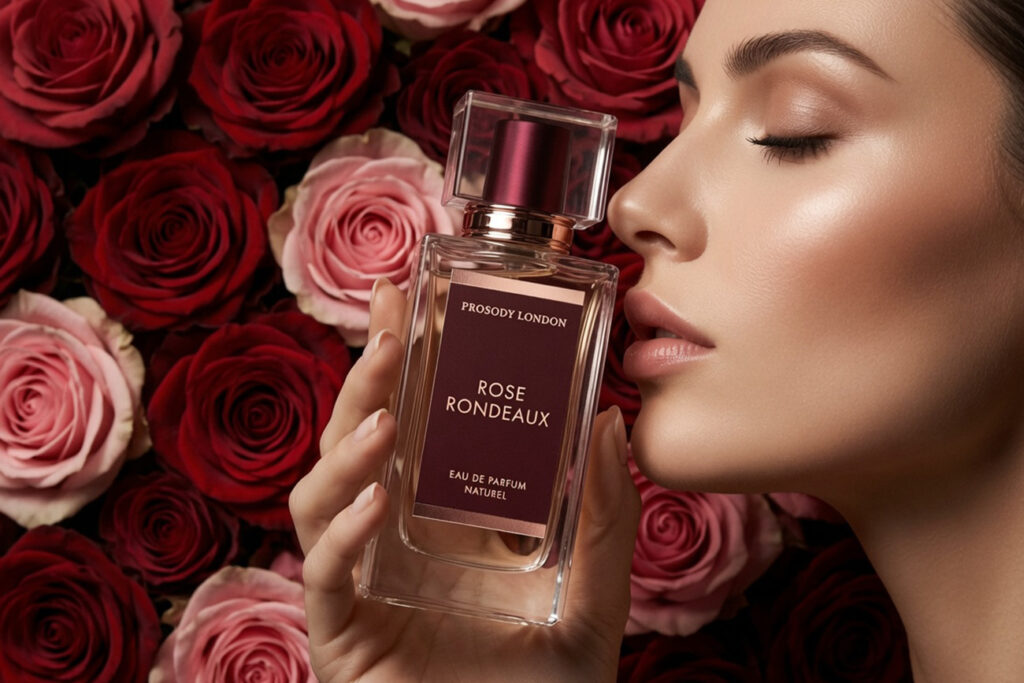
Rose Rondeaux — Best women’s perfumes for : the timeless romantic
Key notes: Top: Iris, Bergamot, Raspberry · Heart: Rose · Base: Blackcurrant, Patchouli, Musky Sandalwood
Delightfully decadent, seductively fruity and woody. Rose Rondeaux is my answer to the modern rose — one that acknowledges the great tradition of rose perfumery while refusing to be merely nostalgic.
The raspberry and bergamot opening gives it an immediate freshness and fruitiness before the rose heart emerges — complex, full, genuinely beautiful. Patchouli warmth in the base prevents it from floating away, and the musky sandalwood anchors everything into something romantic and lasting. It has more in common with Portrait of a Lady in its ambition than with a simple rose soliflore.
Perfume critic Luca Turin — reviewing Lancôme’s own twelve-fragrance Absolue rose collection — concluded that even its most successful entry was “reminiscent of Prosody’s superb Rose Rondeaux, but less fervent.” Coming from a critic being asked to assess a major house’s flagship rose range, that’s a striking benchmark to be measured against.
Who it’s for: Special occasions and evenings, women who appreciate the rose tradition done with genuine skill.
How long it lasts: 8–10 hours.
For the full assessment of Rose Rondeaux against Portrait of a Lady, Aesop Rozu and Byredo Young Rose, read our complete guide to the best rose perfume.

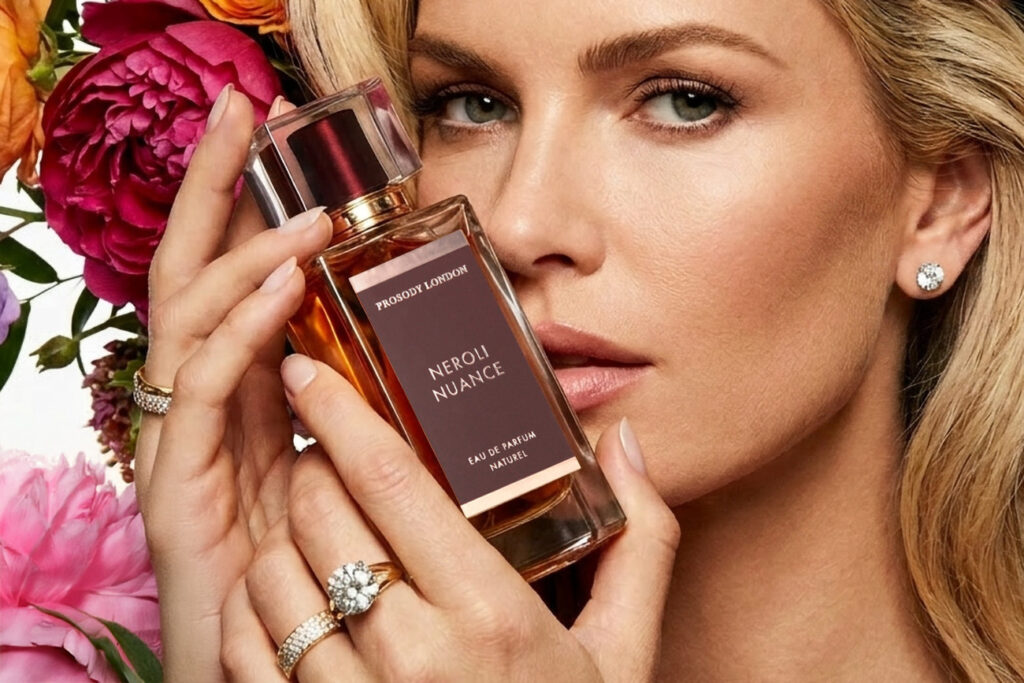
Neroli Nuance — Best women’s perfumes for: effortless everyday radiance
Key notes: Neroli, Blood Orange, Candlewood, Orange Blossom, Labdanum, Oakmoss
Bright and summery, fresh and flirtatious. Neroli Nuance brings together neroli, blood orange, and candlewood in a captivating citrus-floral blend — the sort of fragrance that makes people feel good simply by being near you.
The labdanum base is what makes it more than just a fresh citrus: a resin harvested from the cistus shrub in the Mediterranean, it brings warm ambery depth that gives this light fragrance remarkable staying power. Oakmoss adds a cool, sophisticated grounding note. An elegant embrace. Contains Oakmoss.
Writing in the Daily Mail, beauty journalist Jo Fairley described Neroli Nuance as taking “white floral notes of orange blossom… creating a super-elegant, summery blend that incorporates other floral and woody notes.”
Who it’s for: Daily wear, warmer months, women who want a fragrance that is radiant without being demanding.
How long it lasts: 7–9 hours.

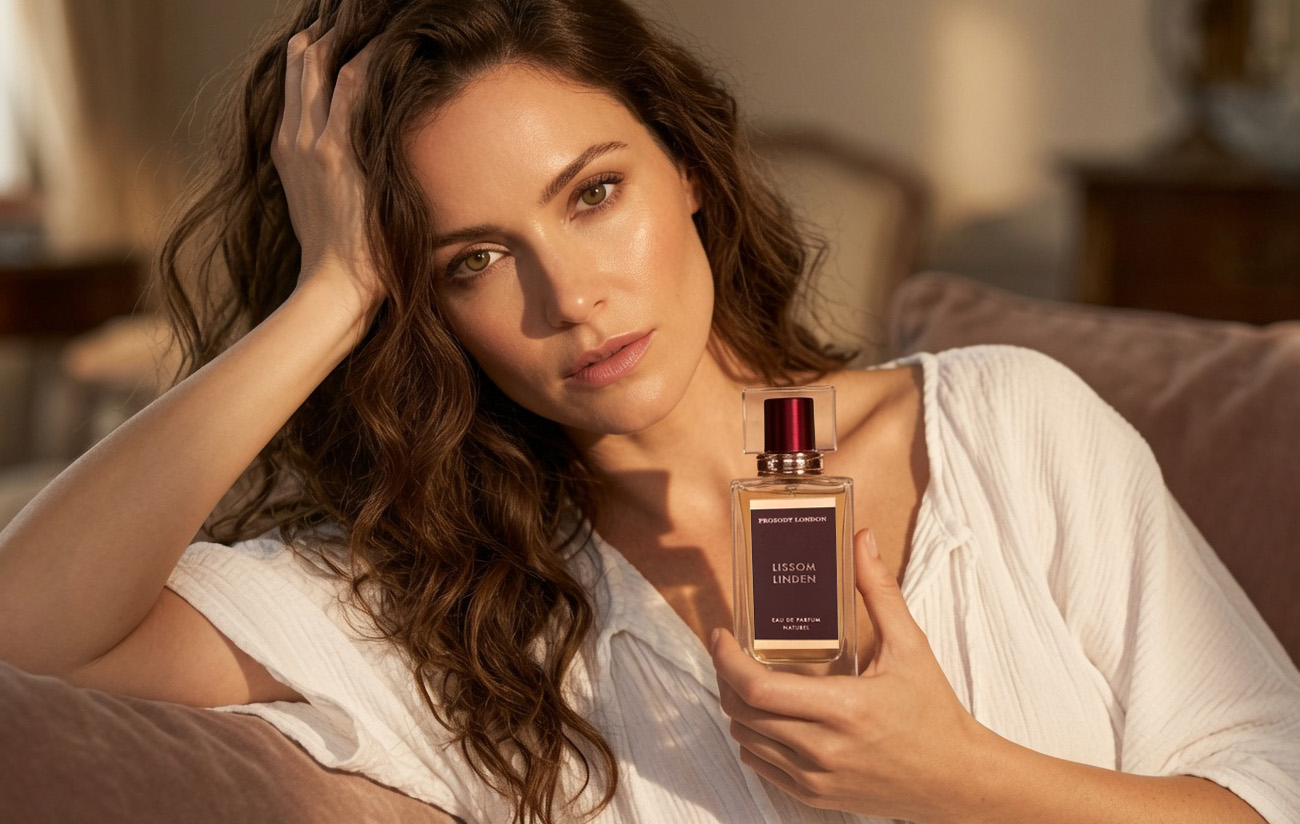
Lissom Linden — Best women’s perfumes for: the quietly memorable
Key notes: Honeyed Rose, Fresh Linden Flowers, Melon, Frankincense, Light Musky Wood
Sophisticated and sensual. Lissom Linden captures something specific and elusive — the smell of a linden tree in full bloom, with all the honeyed, slightly narcotic sweetness that entails. The essence of summer, wearable every season.
Linden flower absolute is one of the most beautiful and expensive materials in natural perfumery — its quality cannot be replicated synthetically. Paired with honeyed rose and melon it creates an almost edible brightness; frankincense in the base brings meditative calm, and musky woods keep it skin-close rather than projecting outward. Uplifting and unforgettable.
Who it’s for: The woman whose signature scent people can never quite identify — only remember.
How long it lasts: 7–9 hours.

Moire Mimosa — Best women’s perfumes for: the unexpected statement
Key notes: Top: Neroli, Melon, Coconut, Chilean Lime, Almond Blossom · Heart: Mimosa · Base: Indian Tuberose
Moire Mimosa is the fragrance that most consistently stops people mid-conversation to ask what you’re wearing. Mimosa absolute — extracted from the Acacia dealbata — has a powdery, honey-like, slightly almond quality that no synthetic recreation approaches. Here it sits between a fresh tropical opening and a deep, almost indolic tuberose base. Light, powdery, and gently sweet with a soft, comforting warmth — spring sunlight through trees.
Who it’s for: Women who want a fragrance that is airy and uplifting without being ordinary.
How long it lasts: 6–8 hours.

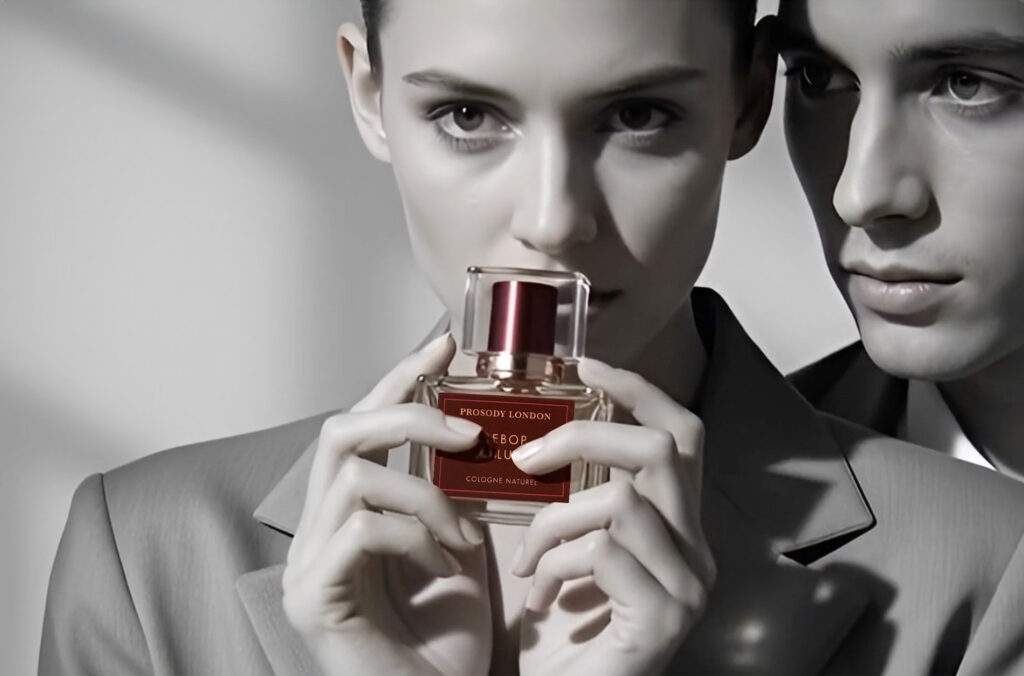
Bebop Allure — Best women’s perfumes for: joyful, modern femininity
Key notes: Top: Cox Apple, Valencia Neroli · Heart: Bulgarian Rose, Russian Celery Seed · Base: Egyptian Myrrh, Madagascan Vanilla, Haitian Vetiver
Vibrant and energetic, Bebop Allure opens with Cox apple and Valencia neroli — a combination that is simultaneously fruity, floral, and completely natural. Cox apple absolute has a complex, almost wine-like quality entirely unlike synthetic apple. Bulgarian rose in the heart pairs with Russian celery seed for something unexpected and sophisticated. Haitian vetiver and Egyptian myrrh in the base add depth and longevity that lifts this beyond a simple fresh floral.
Who it’s for: Women who want energy and modernity with genuine elegance underneath.
How long it lasts: 8–10 hours.

How to find your signature women’s perfume
Understand your scent family. Floral, oriental, woody, fresh, gourmand — each family has a different emotional register. The florals above range from light and transparent (La Chasse aux Papillons, Jacinth Jonquil) to rich and full (Fracas, Rose Rondeaux). Where you sit on that spectrum is personal, but worth knowing before you shop.
Sample on skin. No fragrance smells the same on skin as it does on paper or in the bottle. Your skin chemistry, pH, and moisture level all interact with the fragrance materials — which is why a scent that seems wrong in the shop can become extraordinary after an hour’s wear. Our Build Your Own 6 x 2ml Discovery Set exists for exactly this reason.
Consider the occasion. The best women’s perfumes work differently across contexts. A fragrance like Mitsouko or Rose Rondeaux is an evening or occasion scent. Neroli Nuance or La Tulipe works effortlessly in daylight. Building a small wardrobe of two or three complementary fragrances gives you more range than any single signature.
Think about longevity honestly. Natural fragrances evolve more interestingly than synthetic ones but typically project less aggressively. For long-lasting natural perfume, apply to moisturised skin at pulse points — wrists, neck, inner elbows.
Women’s perfume by scent family — how to find your register
The single most useful thing you can do before buying a women’s perfume is identify which scent family you’re drawn to. Not because you should limit yourself to one, but because understanding your register tells you where to start and why certain fragrances consistently disappoint you while others feel immediately right.
Floral — the largest and most varied family in women’s perfumery. Ranges from light and transparent (Byredo La Tulipe, Jacinth Jonquil) to rich and full (Fracas, Rose Rondeaux). If you’re consistently drawn to flowers — jasmine, rose, lily, tuberose — you’re in floral territory. The question is whether you want them airy or opulent.
Oriental — warm, resinous, and sensual. Vanilla, amber, incense, musk, spice. Dior Hypnotic Poison and Serge Lutens Chergui sit here, as does Rose Rondeaux at its base. If fragrances that feel cold or sharp consistently leave you unmoved, orientals are likely your register. They tend to perform best in cooler months and evening wear.
Woody — earthy, grounded, and often unisex in character. Sandalwood, vetiver, cedarwood, oud, patchouli. Bebop Allure‘s vetiver base and Lissom Linden‘s musky woods both touch this family. Women who find florals too sweet and orientals too heavy often discover their home in woody compositions.
Fresh — citrus, green, aquatic, and aromatic. Clean, light, and immediate. Neroli Nuance opens in this register before deepening into its labdanum base. Hermès Un Jardin sur le Nil is the niche reference. If you want a fragrance that feels effortless and daytime-appropriate without demanding attention, fresh is your starting point.
Gourmand — edible, sweet, dessert-like. Vanilla, caramel, chocolate, almond. Burberry Goddess lives here. Moire Mimosa touches it with its almond blossom and coconut, and Santal Foy with its creamy coconut tonka-vanilla depth. If you’ve ever been told your perfume smells good enough to eat, you’re already a gourmand wearer.
Most great women’s perfumes sit at the intersection of two families — which is where the most interesting work happens. Rose Rondeaux is floral-oriental. Bebop Allure is fresh-woody. Knowing your two preferred families narrows the field considerably.

Women’s perfume concentrations explained
The concentration terminology on perfume bottles — eau de parfum, eau de toilette, parfum, cologne — is widely misunderstood and occasionally misused for marketing purposes. Here is what it actually means, and why the conventional wisdom around it is largely wrong.
The four concentrations
Parfum (also called extrait de parfum) — the highest concentration, typically 20–40% aromatic compounds in alcohol. Most expensive per millilitre, most intimate in projection.
Eau de parfum (EDP) — 10–20% aromatic compounds. The standard for most serious women’s fragrances.
Eau de toilette (EDT) — 5–10% aromatic compounds. Lighter projection, lower price point, often includes water.
Cologne (eau de cologne) — 2–5% aromatic compounds. Historically a specific style of light citrus fragrance from Cologne, Germany, now used loosely for lighter concentrations. Not a gender designation — cologne simply means a lower concentration of aromatic compounds in a higher proportion of alcohol and water.
A note on water in fragrance
Most conventional eau de toilette and cologne formulations include water, which requires preservatives to prevent bacterial growth and shortens shelf life. At Prosody London we formulate without water — our fragrances are aromatic compounds in pure organic alcohol only. No water means no preservatives, no bacterial risk, and a significantly longer shelf life. It also means a cleaner, more direct delivery of the botanical compounds onto skin.
The truth about concentration and longevity
Here is the part the industry rarely admits: concentration determines intensity, not longevity. A parfum will smell stronger than an EDT of the same fragrance — but it will not necessarily last longer. Longevity is determined by the base materials. A well-formulated EDT built on resinous base notes — labdanum, sandalwood, myrrh, oud — will outlast a poorly formulated parfum every time. The resins and woods in the base are what fix the composition to skin and allow it to evolve across hours. Without them, you can add as much aromatic concentrate as you like and it will still fade within the hour.
Why the myth persists
This misunderstanding is not accidental. The concentration-equals-longevity narrative is one of the most effective profit engines in the fragrance industry. Some synthetic aromatic molecules — chiefly the petroleum-derived synthetic musks that form the longevity backbone of most mass-market fragrances — cost very little to produce. Increasing concentration adds relatively little to the cost of goods, but justifies a significantly higher retail price. Higher concentration, higher prestige, higher margin. Not all synthetics are cheap — premium aroma chemicals like ambroxan or certain musks carry real cost — but the overall raw material economics of synthetic perfumery make concentration a powerful pricing lever that botanical perfumery simply cannot play in the same way.
The synthetic musk problem
Beyond concentration, the industry’s longstanding answer for longevity was synthetic musk — galaxolide, tonalide, and their derivatives, which cling to skin and fabric long after the rest of a fragrance has faded. They work. But evidence of their bioaccumulation in human tissue and the environment has prompted a quiet reckoning. A 2015 peer-reviewed study tested breast milk from Korean mothers and detected galaxolide in 75% of samples and tonalide in 54%, with researchers noting the levels were the highest reported worldwide at the time. More brands are now reducing or replacing synthetic musks, often with safer macrocyclic musk alternatives.
The Prosody London approach
At Prosody London our approach is different entirely — we achieve longevity through resins, oud, and botanical base materials that fix the composition naturally to skin. Labdanum, frankincense, myrrh, agarwood — materials that have been used as fixatives for thousands of years, long before synthetic chemistry existed, and that evolve on skin rather than simply persisting on it. The calculus changes entirely when your ingredients are botanical. Natural absolutes, resins, and oud cost hundreds or thousands of pounds per kilogram — concentration becomes a genuine formulation decision rather than a pricing lever. The result is a fragrance that lasts not because it refuses to leave, but because it becomes part of you.
This is why we named the house Prosody — the study of metre, rhythm, and structure in poetry. A great fragrance, like a great poem, requires the top, heart, and base to be individually beautiful and structurally inseparable. Longevity is a consequence of balance, not concentration. For a deeper exploration of how natural fragrances achieve lasting wear, read our guide to long-lasting natural perfume.

How to test women’s perfume properly
Most perfume is tested badly — on paper strips, in shops full of competing scents, for thirty seconds before a decision is made. This is how you end up with fragrances that disappoint on the third wear.
Test on skin, not paper. A paper strip tells you what a fragrance smells like in isolation at the moment of application. Your skin tells you how it will actually perform — how it evolves, how it interacts with your chemistry, how long it lasts. These are entirely different things. The paper version and the skin version of the same fragrance can smell nothing alike after twenty minutes.
One fragrance at a time. Testing three fragrances simultaneously means you’re smelling a blend of all three plus your own skin chemistry. Apply one, wait, evaluate. If you want to compare, test a second fragrance the following day on the same pulse point at the same time. Olfactory fatigue is real — after two or three fragrances your nose stops distinguishing accurately.
Wait for the dry-down. The top notes you smell in the first five minutes are not the fragrance — they are the volatile opening compounds, citrus, aldehydes, light florals, that evaporate quickly to reveal the true character underneath. The heart and base of a women’s perfume typically emerge thirty minutes to an hour after application. A fragrance that is still interesting at the one-hour mark is worth serious consideration. One that has disappeared is not.
Apply to pulse points on moisturised skin. Wrists, inner elbows, throat. Body heat at these points drives the evolution of the fragrance. Moisturised skin holds aromatic compounds significantly longer than dry skin — apply an unscented lotion first if you want an accurate longevity reading.
Sleep on it. The fragrances that still feel right at the end of the day — present on skin, not just on the original application point — are the ones that have genuinely become part of you.
Natural perfumes interact with skin chemistry in ways that synthetic fragrances are not designed to. Because botanical ingredients are chemically complex — a rose absolute contains over 300 compounds, a jasmine absolute over 200 — they respond to your individual body temperature, pH, and microbiome differently on every wearer. This is not a limitation. It is the quality that makes a natural perfume feel like it was made for you specifically. Testing a natural perfume properly requires more patience than testing a synthetic one — the dry-down is longer, the evolution more gradual, and the final skin scent genuinely personal. For a deeper understanding of how this works, read our guide to what natural perfume actually is and how it performs on skin.
Our Build Your Own 6 x 2ml Discovery Set is designed for exactly this kind of considered testing across multiple days and occasions — the only reliable way to know whether a natural perfume is truly yours.

Women’s perfume trends 2026
2026 has produced genuine shifts in what women are looking for — and what the industry is beginning, sometimes reluctantly, to deliver. As a practising perfumer I watch trends with scepticism, but these four are worth understanding.
Skin scents and quiet luxury. The loudest trend in women’s perfumery right now is the move away from projection. The cloud of fragrance that announces arrival has given way to something more intimate — scents that sit close to the skin, reveal themselves only to those nearby, and feel personal rather than performative. This is not minimalism for its own sake. It is a considered rejection of the synthetic musk arms race that dominated the 2000s and 2010s, when fragrances were engineered to fill rooms and persist on fabric for days. The counter-movement is towards presence rather than announcement. Carissis and Lissom Linden sit naturally in this space — skin-close, intimate, and personal.
Botanical perfumery entering the mainstream. Three years ago, 100% natural perfumery was a niche within a niche. In 2026 it is increasingly a mainstream expectation, particularly among women under 35 who are applying the same ingredient scrutiny to fragrance that they have already applied to skincare. The global natural fragrance market is projected to grow at roughly 8.4% CAGR through 2030 — this is not a passing trend but a permanent shift in consumer expectations driven by genuine ingredient awareness.
Florals with depth and staying power. The clean, transparent floral that dominated the 2010s — linear, fresh, forgotten within an hour — is giving way to florals with genuine complexity. Women want florals that evolve, that have a base worth reaching, that feel considered rather than convenient. Rose Rondeaux, Jacinth Jonquil, and Moire Mimosa reflect this direction — botanical florals with resinous depth, evolving character, and emotional weight that synthetic transparency cannot replicate.
Away from synthetic projection. Concerns about the bioaccumulation of synthetic musks in human tissue and their environmental persistence are reaching mainstream awareness faster than the industry anticipated. The fragrances gaining genuine loyalty in 2026 are the ones that smell extraordinary on skin without requiring a petrochemical scaffold to stay there. This is not a niche position any more. It is where the market is heading. For the full picture on what synthetic fragrances contain and why it matters, read our guide to endocrine disruptors in perfume.
Frequently asked questions
What is the best women’s perfume for 2026?
It depends on which floral register you’re drawn to. For rose at its most extraordinary, Frédéric Malle’s Portrait of a Lady remains the reference; for jasmine, Chanel No.5 is still the benchmark nearly a century on. If you want a modern floral bouquet, Parfums de Marly Delina and Chanel Coco Mademoiselle are the two strongest contemporary picks. For something almost no one else is wearing, Prada Infusion d’Iris or Marc-Antoine Barrois Tilia are worth exploring. For 100% botanical perfumery with genuine complexity, Rose Rondeaux and Lissom Linden are where I’d point you.
What makes a women’s perfume last longer?
Longevity depends primarily on the quality of the base materials—resins, woods and fixatives—and how the fragrance is applied, not concentration alone. Moisturised skin holds fragrance significantly longer than dry skin, while pulse points such as the wrists, neck and inner elbows help the fragrance evolve naturally throughout the day.
Are natural women’s perfumes as long-lasting as synthetic ones?
Well-formulated natural perfumes built on resinous bases—such as sandalwood, myrrh, labdanum and frankincense—can last 8–11 hours on skin. They typically project less aggressively than synthetic fragrances but often evolve with greater nuance over time. Read our full guide to long-lasting natural perfume.
What is the difference between natural and synthetic perfume?
Natural perfumes use only ingredients derived from botanical sources — flowers, woods, resins, citrus. Synthetic perfumes use laboratory-created aromatic molecules, often to replicate natural scents at lower cost or to achieve effects natural materials cannot. For a detailed comparison, see our natural perfume vs synthetic perfume guide.
Are natural perfumes better for sensitive skin?
Generally yes — the synthetic compounds most associated with allergic reactions and skin sensitivity are absent from genuine natural perfumes. Some natural ingredients — certain citrus oils and florals — can cause photosensitivity in rare cases, but the overall profile is significantly gentler. Read our guide to natural perfume for sensitive skin.
Explore further
- Natural perfume for women — full collection
- Best natural perfume UK: the 2026 buyer’s guide
- 12 perfumes men love on women
- 6 perfumes that boost libido
- 24 best smelling women’s fragrances
- Top 25 unisex perfumes
- Build Your Own 6 x 2ml Discovery Set