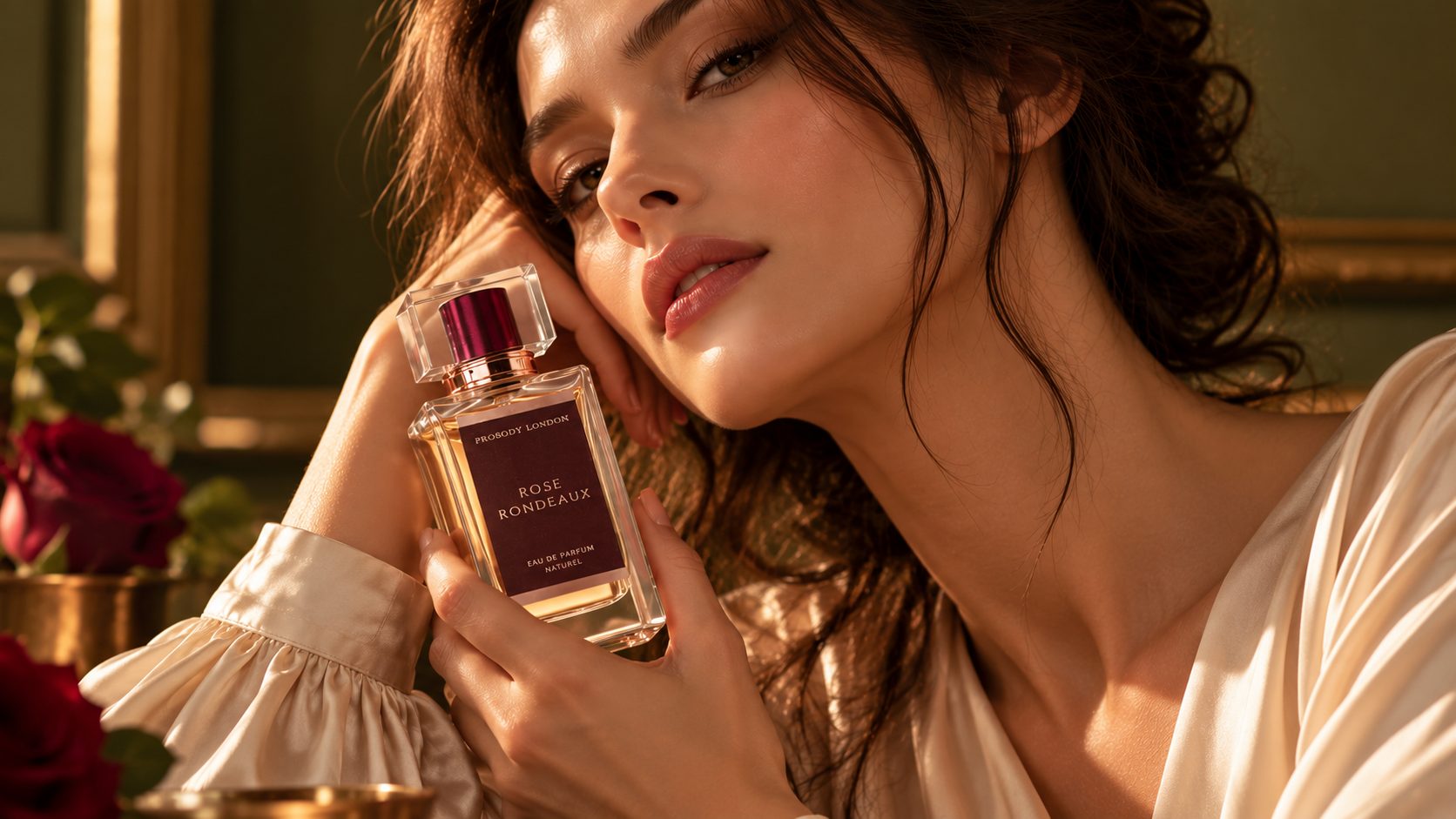
Best Perfume for Women 2026: 24 Picks by a Working Perfumer
By Kershen Teo, founder and natural perfumer of Prosody London — Updated November 2026.
Looking for the best perfume for women in 2026? Start with your preferred scent family rather than popularity alone: fresh and soft florals are easy everyday choices, while rose, amber and gourmand fragrances make richer signatures. Below I select 18 established designer and niche perfumes alongside six original Prosody London botanical fragrances, with notes on who each style suits and where to shop.
Find your next perfume: Everyday fragrances · Browse by scent family · Rose perfumes · Long-lasting perfumes. The recommendations include both established designer fragrances and independent botanical compositions; they are not presented as identical substitutes.
As an Amazon Associate I earn from qualifying purchases. Amazon UK links below open search results and Amazon US links open product pages; please verify the exact product, size and seller. Prosody London fragrances link directly to our own shop.
At a glance: the 24 best women’s perfumes 2026
The best perfume for women is the one whose ingredients suit you. Popularity is a starting point, but the full guide organises by ingredient, because understanding what’s actually in a fragrance is the only reliable way to find one that works for you. The seven clusters below cover the most important floral families in women’s perfumery: jasmine, rose, neroli and orange blossom, iris, mimosa, linden blossom, and the great floral bouquets. Each has a distinct character, a distinct emotional register, and a distinct set of occasions it serves best.
| Floral Family | Designer Pick | Best For |
|---|---|---|
| Rose | Frédéric Malle — Portrait of a Lady | Deep, sensual evening presence |
| Jasmine | Chanel — No.5 | Timeless, iconic sophistication |
| Linden Blossom | Marc-Antoine Barrois — Tilia | A niche signature scent |
| Floral Bouquet | Parfums de Marly — Delina | Modern, effortlessly wearable elegance |
| Neroli & Orange Blossom | Tom Ford — Neroli Portofino | Luxury holiday radiance |
| Iris | Prada — Infusion d’Iris | Cool, contemplative sophistication |
| Mimosa | Chloé — Atelier des Fleurs Herba Mimosa | Airy, naturalistic Grasse mimosa |
Explore original Prosody London compositions: Rose Rondeaux · Jacinth Jonquil · Lissom Linden · Bebop Allure · Neroli Nuance · Moiré Mimosa. These are independent botanical fragrances, not equivalents to the perfumes reviewed above.
The most popular women’s perfumes in 2026
The most popular women’s perfumes in 2026 are Lancôme La Vie Est Belle, YSL Libre, Chanel No.5 and Prada Paradoxe on the high street, and Parfums de Marly Delina and Frédéric Malle Portrait of a Lady in niche perfumery. That is what this year’s bestseller data shows: the Tendance Parfums October 2026 bestsellers for department-store fragrance, and the Scento Fragrance Index of European sample orders from October 2025 to September 2026 for niche.
Popularity tells you what other people are buying, not what you would be wearing. So for each bestseller I’ve added what it is built on, from the notes each house publishes. Treat this as a snapshot of the market rather than my recommendations: five of these bestsellers are among my 24 picks below, and the others are here because they are what most people are buying.
| Popular perfume | Why it’s popular | What it’s built on |
|---|---|---|
| Lancôme La Vie Est Belle | The defining gourmand floral of the last decade: sweet, easy and instantly recognisable | Iris, praline and vanilla over patchouli |
| YSL Libre | Lavender made feminine, for women who find florals too sweet | Lavender, orange blossom, vanilla and a musk accord |
| Chanel No.5 | The most famous perfume ever made, still a bestseller more than a century on | Aldehydes, jasmine, rose, sandalwood and vanilla |
| Prada Paradoxe | Clean, bright and modern; one of the fastest risers of recent years | Neroli, an amber accord and Serenolide, a synthetic white musk |
| Parfums de Marly Delina | The modern pink rose, and the niche house’s best-known scent | Litchi, rhubarb, Turkish rose, peony, vanilla and cashmeran (an aroma-chemical) |
| Frédéric Malle Portrait of a Lady | The benchmark rose of modern niche perfumery | Turkish rose, blackcurrant, patchouli, incense and sandalwood |
| Tom Ford Lost Cherry | The cherry gourmand that went viral | Black cherry, bitter almond, Turkish rose, Peru balsam and tonka |
| Burberry Goddess | A soft vanilla-lavender built for broad appeal | Lavender and vanilla |
Explore original Prosody London compositions: Moiré Mimosa · Neroli Nuance · Jacinth Jonquil · Carissis · Mocha Muscari · Santal Foy · Bebop Allure · Rose Rondeaux · Pizzicato Bliss · Lissom Linden. These are independent botanical fragrances, not equivalents to the perfumes reviewed above.
What’s actually in a popular perfume?
Most of the bestsellers above rely heavily on aroma-chemicals. That isn’t a criticism: materials like Serenolide, cashmeran and ethyl maltol are exactly what give modern bestsellers their cleanliness, sweetness and reach. But it does mean the name on the bottle tells you very little about what is on your skin. The botanical fragrances explore related scent families with plant materials alone — ambrette seed for musk, rose otto for rose, mimosa absolute for powder.
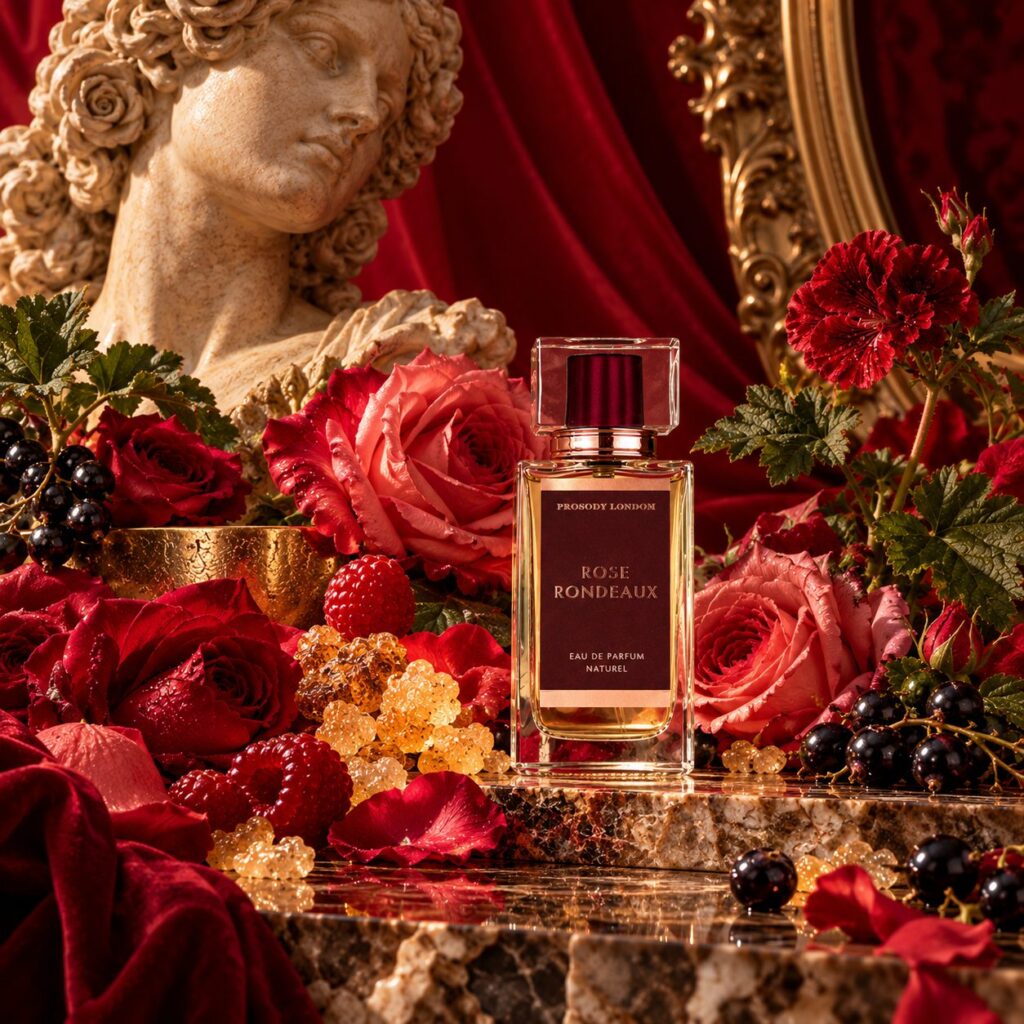
Love rose? See my full guide to the best rose perfume for women, with ten roses compared by a perfumer.
Below, explore 18 designer and niche fragrances by floral family, followed by six original Prosody London botanical perfumes.
Best Everyday Perfume for Women — A Perfumer’s Pick
This guide features 24 women’s fragrances: 18 established designer and niche choices and six Prosody London botanical perfumes. But if you’re looking specifically for an everyday scent — something that works in an office, on a commute, across a full day — there’s something worth knowing first.
Most mainstream everyday perfumes get their clean, inoffensive quality from synthetic musks, compounds such as galaxolide and tonalide that give a fragrance its lingering softness and skin-close warmth. They are inexpensive and very persistent, which is why they sit in the base of so many high-street perfumes.
For a full examination of what these synthetic compounds are, what pheromone perfumes actually contain, and what botanical ingredients genuinely do instead, read our guide to pheromones in perfume.
The Prosody London perfumes below use no synthetic aroma chemicals. Their longevity and softness come from botanical resins, natural sandalwood and vetiver, materials that hold well on skin.
- Lissom Linden — clean, luminous, never tiring. The one I’d recommend for daily office wear.
- Rose Rondeaux — warmer and more distinctive than a typical daily wear, but well within the threshold for daytime. Rose without sweetness.
- A Capella Ray — the most versatile. Citrus-bright in the morning, woody-warm by afternoon.
- Carissis — light, skin-close, genuinely unobtrusive. For anyone who finds most fragrances too present for daily life.
- Pizzicato Bliss — the warm-weather everyday option. Peach and sandalwood, nothing synthetic propping it up.
If you’re looking for a women’s perfume built entirely from botanical ingredients — no synthetics, no compromise on complexity — start with Rose Rondeaux, a jammy rose with pink pepper, a berry accord, patchouli and sandalwood. Not sure where to start? Try the Build Your Own 6 x 2ml Discovery Set or browse the full natural perfume collection for women.

Top women’s perfumes 2026
Jasmine is the most complex floral material in perfumery — over 200 aromatic compounds in a single absolute, which is why no synthetic reconstruction fully captures it. The finest jasmine fragrances are irreplaceable.
Rose is the most versatile. From the light and fresh to the dark and oriental, rose covers more emotional ground than any other floral — which is why it appears at the centre of more great fragrances than any other ingredient.
Neroli and orange blossom are the same flower at different stages — neroli from the blossom, orange blossom from the absolute — and together they define the most radiant, summery register in perfumery. Brighter than rose, warmer than jasmine, and effortlessly wearable in heat.
Mimosa is the most underrated. Powdery, honeyed, and slightly almond-like, mimosa absolute from Acacia dealbata is one of the great natural materials — used at full concentration it creates something genuinely luxurious that synthetic recreations never approach.
Linden blossom is the unexpected one — the quiet discovery of this list. Its honeyed, slightly narcotic sweetness is unlike anything else in perfumery, and the best linden fragrances are among the most quietly memorable you can wear.
Floral bouquets are the category most women know best — the great commercial florals, from Chanel to Flowerbomb, that layer multiple flowers into something immediately appealing and broadly wearable. The best of them achieve genuine complexity; the worst are indistinguishable from fabric softener.
Emotional impact on first contact. The best women’s perfumes make an immediate impression — top notes of bright florals, citrus, or aldehydes define the personality of the fragrance within the first ten seconds. A perfume that doesn’t earn attention at first contact rarely gets a second chance.
Evolution on skin. A great women’s perfume changes across time. Heart notes emerge as top notes fade — jasmine, rose, iris, spice — revealing the true character. Base notes of vanilla, musk, woods, or resins then anchor everything and determine longevity. The best compositions evolve in ways that remain consistently appealing from first spray to final dry-down.
Balance and construction. A fragrance that is technically imbalanced — too linear, too loud, or disjointed between its stages — will never become a classic regardless of marketing. The best women’s fragrances achieve a harmony between their elements that makes the whole greater than the sum of its parts. This is where a perfumer’s training is most visible, and most invisible when done well.
Emotional resonance. Scent is more closely linked to memory and emotion than any other sense. The fragrances that earn lasting loyalty are the ones that reliably evoke something — confidence, comfort, joy, serenity — not just on first wear but on the fifteenth.
Ingredients. A perfume’s quality depends on its composition, safety assessment and suitability for the wearer, not on whether its ingredients are natural or synthetic. Prosody London chooses botanical materials for their character and as a formulation philosophy, and natural extracts contain fragrance allergens too. For more on how fragrance ingredients are assessed, see our guide to endocrine disruptors in perfume.
The best jasmine perfumes for women
Jasmine is the most complex floral material in perfumery. A jasmine absolute contains over 200 aromatic compounds — which is why no synthetic reconstruction fully captures it, and why the finest jasmine fragrances are built around the real thing.
Chanel No.5 — the iconic aldehydic jasmine
Where to buy: Amazon UK · Amazon US
The fragrance that made jasmine iconic in modern perfumery. Ernest Beaux used jasmine absolute at extraordinary concentration alongside aldehydes — a combination that was revolutionary in 1921 and remains the reference point for understanding what jasmine can do at the centre of a great composition. The aldehydes lift the jasmine into something abstract and luminous; the civet base grounds it into something deeply sensual. A construction that repays study regardless of whether you wear it.
Le Labo Jasmin 17 — the modern jasmine soliflore
Where to buy: Amazon UK
A modern soliflore that treats jasmine as the entire story. The 17 refers to the number of ingredients — unusual restraint for a niche house. The result is jasmine stripped of distraction: intense, slightly indolic, and genuinely beautiful. One of the better arguments for the soliflore approach in contemporary perfumery.
YSL Black Opium — jasmine in a supporting role
Where to buy: Amazon UK · Amazon US
Technically a coffee-vanilla gourmand, but the white flower and jasmine accord at its heart is what makes it work. Without it, the coffee and vanilla would read as purely edible; the jasmine lifts the composition into something brighter, more complex and more wearable. It’s the clearest example on this list of jasmine playing a supporting role rather than a starring one. For an original botanical suggestion, see Mocha Muscari in our guide to the perfumes men love on women.
The best rose perfumes for women
Frédéric Malle Portrait of a Lady — the modern rose benchmark
Where to buy: Amazon UK · Amazon US
The modern benchmark. Dominique Ropion uses Turkish rose at extraordinary concentration alongside patchouli and incense — a combination that shifts rose from the floral family into something darker and more oriental. The blackcurrant bud opening gives it a green, slightly catty quality that resolves into something deeply sensual. For understanding what rose can achieve at the highest level of contemporary perfumery, this is the reference.
Diptyque Eau Rose — the fresh, transparent rose
Where to buy: Amazon UK · Amazon US
Rose handled with restraint and transparency — a light, fresh interpretation that captures the green, slightly watery quality of a rose stem rather than the heavy sweetness of the absolute. For women who find traditional rose fragrances too rich or too old-fashioned, Eau Rose is the modern entry point.
Parfums de Marly Delina — the contemporary fruity rose
Where to buy: Amazon UK
A contemporary rose that sits beautifully between fresh and rich. The rhubarb and litchi top notes give it an unusual fruity tartness that stops it reading as old-fashioned — the challenge all modern rose perfumes face. The vetiver and cashmeran base give it unexpected depth. Well-constructed and genuinely versatile.
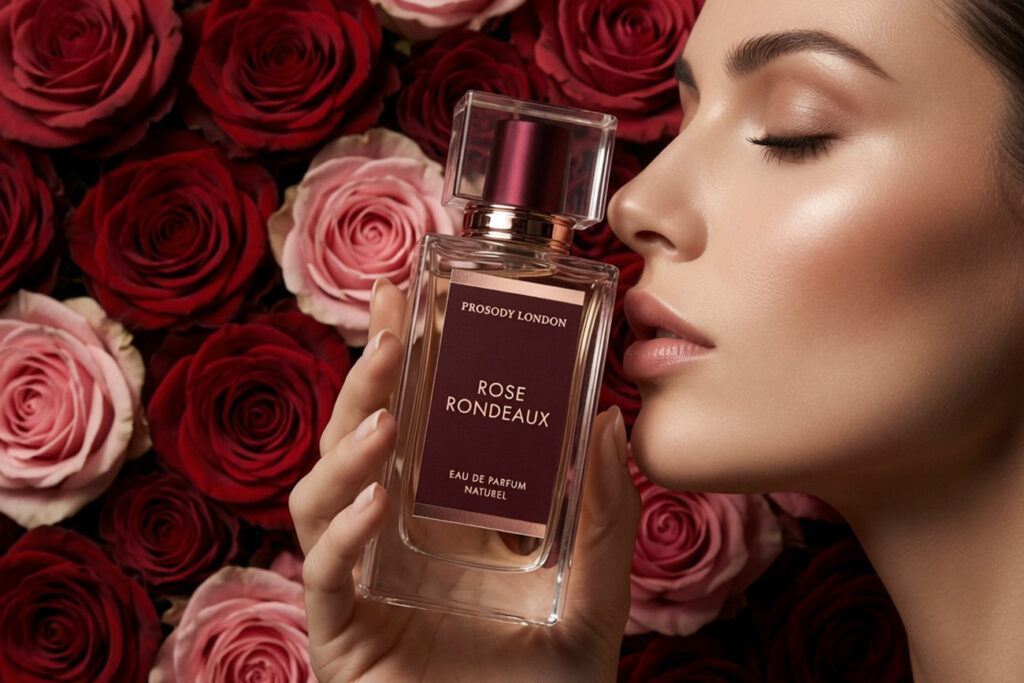
The best neroli and orange blossom perfumes for women
Neroli and orange blossom come from the same flower — the blossom of the bitter orange tree — but they are different materials. Neroli is steam-distilled, giving it a bright, slightly metallic, almost citrus quality. Orange blossom absolute is solvent-extracted, producing something warmer, richer, and more indolic. The finest fragrances in this family understand the difference and use each material deliberately.
This is technically a citrus family — which makes it the most naturally radiant family for warm weather. Lighter than rose, warmer than jasmine, and effortlessly wearable in heat. The best neroli fragrances have a radiance that no other floral achieves.
Tom Ford Neroli Portofino — luxury neroli
Where to buy: Amazon UK · Amazon US
The modern reference for neroli done at luxury level. Bergamot, lemon, and mandarin amplify the citrus brightness of the neroli before it settles into a warm, slightly woody base. The Italian Riviera positioning is earned — this genuinely captures the feeling of warm coastal air. Technically accomplished and immediately recognisable as premium.
Serge Lutens Fleurs d’Oranger — orange blossom at full intensity
Where to buy: Amazon UK · Amazon US
Orange blossom at full, unapologetic intensity. Christopher Sheldrake, working for Serge Lutens, doesn’t restrain the indolic, narcotic quality of the absolute — he amplifies it. The result is polarising and deliberately so. For women who want orange blossom as a statement rather than a whisper, this is the reference. Worth understanding even if it’s too full for everyday wear.
The best mimosa perfumes for women
Chloé Atelier des Fleurs Herba Mimosa — the naturalistic mimosa
Where to buy: Amazon UK · Amazon US
The most naturalistic interpretation — luminous, powdery, and slightly woody, inspired by the mimosa hills of Grasse. Chloé’s Atelier des Fleurs series is built around single botanical ingredients handled with restraint, and Herba Mimosa is one of the best in the collection. The gentle, almost airy quality makes it immediately wearable without being forgettable.
Perris Monte Carlo Mimosa Tanneron — the sun-drenched Mediterranean mimosa
Where to buy: Amazon UK
An ode to the sun-drenched mimosas of the South of France — bright, honeyed, and slightly wild. Hawthorn and rose alongside the mimosa give it a natural, garden-like quality. One of the more faithful interpretations of the material in its natural context, with a warmth that feels genuinely Mediterranean.
The best linden blossom perfumes for women
Marc-Antoine Barrois Tilia — the modern niche linden
Where to buy: Amazon UK
Barrois blends linden blossom with sambac jasmine, heliotrope, and ambroxan — creating something fizzy, solar, and honeyed that feels simultaneously familiar and completely original. The ambroxan gives it a skin-close warmth that makes it deeply wearable. For understanding what linden can do at the highest level of contemporary niche perfumery, this is the reference point.
The best floral bouquet perfumes for women
Chanel Coco Mademoiselle — the modern floral chypre
Where to buy: Amazon UK
A modern floral chypre that works because it found the exact balance between the old-fashioned heaviness of traditional Chanel and something younger and more accessible. The patchouli base is handled beautifully — present enough to give depth, restrained enough not to read as earthy. One of the better constructions in mainstream perfumery and a reliable reference point for understanding how a floral bouquet can have genuine longevity without heaviness.
YSL Libre Intense — lavender meets orange blossom
Where to buy: Amazon UK · Amazon US
Lavender and orange blossom is not an obvious combination — lavender reads as masculine in most contexts, orange blossom as feminine and sometimes overwhelming. Libre Intense works because the lavender is handled with restraint and the orange blossom is warm rather than sharp. The amber base gives it staying power. A technically interesting construction that demonstrates how masculine and feminine floral materials can be balanced without either dominating.
Burberry Goddess — the soft vanillic floral
Where to buy: Amazon UK · Amazon US
A vanillic floral built around a lavender-vanilla accord. What makes it work is the softness of the construction — nothing sharp, nothing angular. It’s a fragrance engineered for broad appeal and it achieves that without feeling generic. The vanilla base is rich without being cloying, which takes genuine skill to achieve even with synthetic materials. The most wearable entry in this group.
Lancôme La Vie Est Belle — the iris-led crowd-pleaser
Where to buy: Amazon US
The fragrance of happiness — iris pallida paired with orange blossom, jasmine, and a spun-sugar vanilla finish. What makes it work is the iris: a genuinely expensive natural material that gives the whole composition a powdery, sophisticated quality that cheaper florals lack. La Vie Est Belle succeeds because it uses a real ingredient at the centre of an otherwise synthetic construction — which is an interesting lesson in where natural materials add irreplaceable value even within mainstream perfumery.
The best iris perfumes for women
Iris is perfumery’s great misdirection: despite the name, almost none of the material comes from the flower itself, which has barely any scent at all. What perfumers actually use is orris — the rhizome, or root, of Iris pallida or Iris germanica, dried and aged for three to five years before it develops its aromatic compound, irone. That wait is why orris butter is one of the most expensive raw materials in perfumery, priced alongside oud and natural ambergris. The result is unmistakable: cool, powdery, faintly carrot-like, with a suede-soft texture no synthetic reconstruction fully replicates.
Prada Infusion d’Iris — iris as pure architecture
Where to buy: Amazon UK · Amazon US
Prada Infusion d’Iris treats iris as pure architecture — orris root alongside frankincense and cedar, in a composition so restrained it borders on minimalist. Where other iris fragrances layer the material into a bouquet, Prada isolates it, letting the powdery, faintly carrot-like character of real orris stand almost entirely on its own. The result is cool rather than warm, more contemplative than romantic — a clear reference for what iris smells like in its most honest form.
Hermès Hiris — iris at every stage
Where to buy: Amazon UK · Amazon US
Hermès Hiris, created in 1999 by Olivia Giacobetti, takes the opposite approach — iris appears in the top, heart, and base simultaneously, so the whole fragrance becomes a study of the material at every stage of its evolution. Coriander and carnation give the opening a peppery edge; neroli and rose soften the heart; cedar, honey, and vanilla in the base bring warmth that Infusion d’Iris deliberately withholds. Where Prada is cool and cerebral, Hiris is the more emotionally generous of the two — a genuine journey through the flower rather than a single held note.
Chanel No.19 Poudré — iris in a green composition
Where to buy: Amazon UK · Amazon US
Chanel No.19 Poudré, Jacques Polge’s 2011 reinterpretation of Coco Chanel’s original 1970 No.19, takes iris in a third direction entirely — folding it into green galbanum, jasmine, and a cloud of white musk and tonka bean, so the powdery iris heart emerges through sharpness rather than in isolation. It’s the most structurally complex of the three, and the one most clearly rooted in a classic green floral structure rather than the modern soliflore approach Prada and Hermès both take.
Together, the three define the range of what iris can do: Infusion d’Iris for cool restraint, Hiris for warmth and narrative development, No.19 Poudré for iris as one voice within a fuller, greener composition.

How to Choose Between the SEVEN Floral Families
Seven families, seven very different registers. Here’s the quickest way to find yours.
If you want something quietly radiant and universally flattering — start with Neroli & Orange Blossom. It’s the most forgiving of the seven: bright without being sharp, warm without being heavy, and genuinely wearable from a morning meeting through to evening. Tom Ford Neroli Portofino for the mainstream reference, Neroli Nuance if you want the same radiance built entirely from botanical materials.
If you want depth and a genuine talking point — go to Jasmine. It’s the most complex material in perfumery, and it rewards patience: the finest jasmine fragrances aren’t immediately obvious, they unfold. Chanel No.5 for the historical benchmark, Jacinth Jonquil if you want jasmine grandiflorum without a single synthetic reconstruction underneath it.
If you want romance without nostalgia — Rose is the widest-ranging family here, capable of reading fresh, dark, fruity, or oriental depending on construction. Frédéric Malle’s Portrait of a Lady for rose at its most extraordinary, Rose Rondeaux if you want that same ambition built from Rosa damascena otto alone.
If you want something almost no one else is wearing — Iris and Linden Blossom are your two most distinctive options. Iris is cool, powdery, and intellectual; linden is honeyed, narcotic, and quietly unforgettable. Neither has a mainstream household-name reputation the way rose or jasmine does, which is precisely their appeal. Lissom Linden is the only botanical entry point into either family on this list — Iris, for now, remains designer-only in ours.
If you want warmth with genuine originality — Mimosa is the most underrated family in this guide. Powdery, honeyed, slightly almond-like, and rarely given the space it deserves. Frédéric Malle’s Carnal Flower for the adjacent tuberose-mimosa territory, Moiré Mimosa if you want the material at full concentration, unbothered by competing notes.
A final note on combining families: the most interesting fragrances on this list rarely sit in just one category. Rose Rondeaux is floral-oriental. Neroli Nuance is fresh-floral with a labdanum base that pulls it toward something warmer. Knowing which two families you’re drawn to, rather than picking just one, is usually the faster route to a genuine signature scent.
Which style of perfume do you love most?
Choose the fragrance family you’re most drawn to.
How readers voted
Help us understand these results better.
Would you tell us your age group and gender? It’s optional, anonymous, and takes a few seconds.
What is your age group?
Optional: it helps us see how tastes differ by age.
Optional · No email required
What is your gender?
Optional · No email required
Thank you.
Your answers help us understand what fragrance lovers really think.
A perfumer’s note on synthetic ingredients
Every fragrance above contains synthetic aromatic molecules — some more than others. This isn’t a criticism; it’s a fact worth understanding.
Modern synthetic perfumery makes possible things that botanical ingredients cannot achieve — the crystalline transparency of certain aldehydics, the enormous projection of synthetic musks, the batch-to-batch consistency that mass-market fragrance depends on. These are real technical achievements. Botanical perfumery works within different limits, with softer projection and natural variation between harvests, and chooses its materials for their character.
The best natural women’s perfumes — Prosody London
These are natural fragrances built entirely from botanical ingredients — essential oils, plant absolutes, resins, and tinctures. No synthetic aromatic molecules. Every note you read below is something that exists in nature.
Try before you commit — our Build Your Own 6 x 2ml Discovery Set lets you choose any six from the collection.

Jacinth Jonquil
Best for: the woman who wants spring in a bottle.
Key notes: Hyacinth, Bergamot, Jasmine
Captivating and contemporary. Jacinth Jonquil opens with gorgeous hyacinth, heady jasmine, and the fresh clarity of jonquil — a breath of spring that works for every season. The challenge with green florals at this intensity is keeping them bright without becoming sharp; the jasmine softens the opening beautifully as it develops.
CaFleureBon’s Lauryn Beer called the jonquil heart “the most life-like daffodil note” she’d encountered in perfumery, adding that it was “like wearing the most gorgeous May day on your wrist, even in November.

Idyllic, fresh, and intensely lively — one of the most joyful fragrances I’ve made.
Who it’s for: Daytime wear year-round, women who love fresh, uplifting florals with genuine depth.
How it wears: a full day’s wear, settling into a soft labdanum warmth by evening.

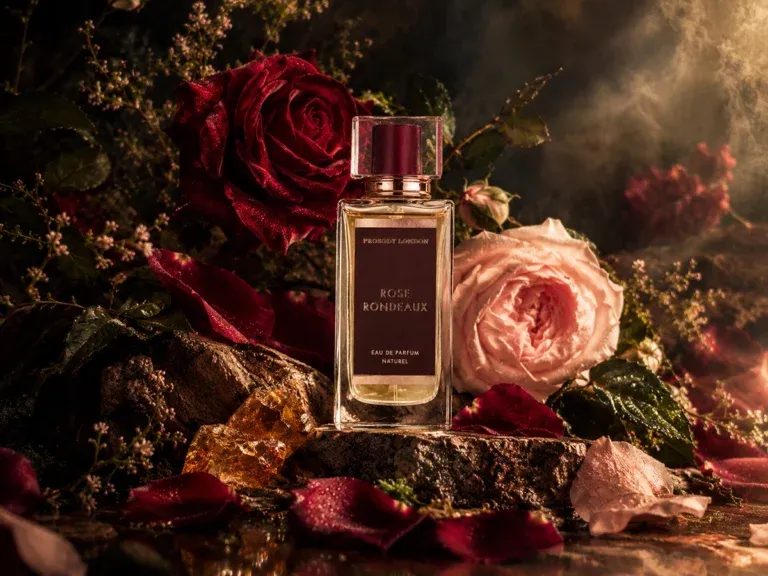
Rose Rondeaux
Best for: the timeless romantic.
Key notes: Top: Pink Pepper, Raspberry, Black Pepper · Heart: Bergamot, Rose, Geranium · Base: Labdanum, Patchouli, Sandalwood, Vanilla
Delightfully decadent, seductively fruity and woody. Rose Rondeaux is my answer to the modern rose — one that acknowledges the great tradition of rose perfumery while refusing to be merely nostalgic.
The raspberry and bergamot opening gives it an immediate freshness and fruitiness before the rose heart emerges — complex, full, genuinely beautiful. Patchouli warmth in the base prevents it from floating away, and the musky sandalwood anchors everything into something romantic and lasting. It has more in common with Portrait of a Lady in its ambition than with a simple rose soliflore.
Perfume critic Luca Turin — reviewing Lancôme’s own twelve-fragrance Absolue rose collection — concluded that even its most successful entry was “reminiscent of Prosody’s superb Rose Rondeaux, but less fervent.” Coming from a critic being asked to assess a major house’s flagship rose range, that’s a striking benchmark to be measured against.
Who it’s for: Special occasions and evenings, women who appreciate the rose tradition done with genuine skill.
How it wears: long-wearing; the rose holds well into the evening on its labdanum and sandalwood base.
For the full assessment of Rose Rondeaux against Portrait of a Lady, Aesop Rozu and Byredo Young Rose, read our complete guide to the best rose perfume.

Neroli Nuance
Best for: effortless everyday radiance.
Key notes: Neroli, Blood Orange, Candlewood, Orange Blossom, Labdanum, Oakmoss
Bright and summery, fresh and flirtatious. Neroli Nuance brings together neroli, blood orange, and candlewood in a captivating citrus-floral blend — the sort of fragrance that makes people feel good simply by being near you.
The labdanum base is what makes it more than just a fresh citrus: a resin harvested from the cistus shrub in the Mediterranean, it brings warm ambery depth that gives this light fragrance remarkable staying power. Oakmoss adds a cool, sophisticated grounding note. An elegant embrace. Contains Oakmoss.
Writing in the Daily Mail, beauty journalist Jo Fairley described Neroli Nuance as taking “white floral notes of orange blossom… creating a super-elegant, summery blend that incorporates other floral and woody notes.”
Who it’s for: Daily wear, warmer months, women who want a fragrance that is radiant without being demanding.
How it wears: a full day’s wear, the brightness softening into oakmoss and labdanum.

Lissom Linden
Best for: the quietly memorable.
Key notes: Linden Blossom, Rose, Jasmine Tea CO2, Helichrysum, Chamomile, Frankincense, Ambrette Seed
Sophisticated and sensual. Lissom Linden captures something specific and elusive — the smell of a linden tree in full bloom, with all the honeyed, slightly narcotic sweetness that entails. The essence of summer, wearable every season.
Linden flower absolute is one of the most beautiful and expensive materials in natural perfumery — its quality cannot be replicated synthetically. Paired with honeyed rose and jasmine tea it creates an almost edible brightness; frankincense in the base brings meditative calm, and musky woods keep it skin-close rather than projecting outward. Uplifting and unforgettable.
Who it’s for: The woman whose signature scent people can never quite identify — only remember.
How it wears: a full day’s wear, staying close to the skin as it settles into frankincense and wood.

Moiré Mimosa
Best for: the unexpected statement.
Key notes: Top: Aniseed, Mimosa Absolute, Melon Accord°, Coconut, Lime, Eucalyptus · Heart: Neroli, Tuberose Accord° · Base: Ambrette Seed, Vanilla
Moiré Mimosa is the fragrance that most consistently stops people mid-conversation to ask what you’re wearing. Mimosa oil — extracted from the Acacia dealbata — has a powdery, honey-like, slightly almond quality that no synthetic recreation approaches. Here it sits between a fresh tropical opening and a deep, almost indolic tuberose base. Light, powdery, and gently sweet with a soft, comforting warmth — spring sunlight through trees.
Who it’s for: Women who want a fragrance that is airy and uplifting without being ordinary.
How it wears: comfortable day wear; the lightest of the six, so reapply for the evening.

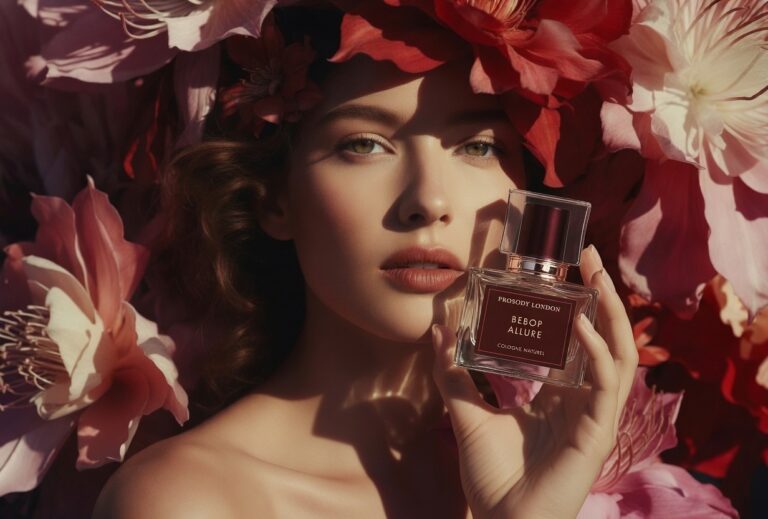
Bebop Allure
Best for: joyful, modern femininity.
Key notes: Top: Cox Apple, Valencia Neroli · Heart: Bulgarian Rose, Russian Celery Seed · Base: Egyptian Myrrh, Madagascan Vanilla, Haitian Vetiver
Vibrant and energetic, Bebop Allure opens with Cox apple and Valencia neroli — a combination that is simultaneously fruity, floral, and completely natural. Cox apple absolute has a complex, almost wine-like quality entirely unlike synthetic apple. Bulgarian rose in the heart pairs with Russian celery seed for something unexpected and sophisticated. Haitian vetiver and Egyptian myrrh in the base add depth and longevity that lifts this beyond a simple fresh floral.
Who it’s for: Women who want energy and modernity with genuine elegance underneath.
How it wears: long-wearing; myrrh and vetiver carry it well into the evening.

Would you switch to a 100% natural perfume if it smelled just as good as your current fragrance?
How readers voted
Help us understand these results better.
Would you tell us your age group and gender? It’s optional, anonymous, and takes a few seconds.
What is your age group?
Optional: it helps us see how tastes differ by age.
Optional · No email required
What is your gender?
Optional · No email required
Thank you.
Your answers help us understand what fragrance lovers really think.
How to find your signature women’s perfume
Understand your scent family. Floral, oriental, woody, fresh, gourmand — each family has a different emotional register. The florals above range from light and transparent (Diptyque Eau Rose, Jacinth Jonquil) to rich and full (Portrait of a Lady, Rose Rondeaux). Where you sit on that spectrum is personal, but worth knowing before you shop.
Sample on skin. No fragrance smells the same on skin as it does on paper or in the bottle. Your skin chemistry, pH, and moisture level all interact with the fragrance materials — which is why a scent that seems wrong in the shop can become extraordinary after an hour’s wear. Our Build Your Own 6 x 2ml Discovery Set exists for exactly this reason.
Consider the occasion. The best women’s perfumes work differently across contexts. A fragrance like Portrait of a Lady or Rose Rondeaux is an evening or occasion scent. Neroli Nuance or Neroli Portofino works effortlessly in daylight. Building a small wardrobe of two or three complementary fragrances gives you more range than any single signature.
Think about longevity honestly. Natural fragrances evolve more interestingly than synthetic ones but typically project less aggressively. For long-lasting natural perfume, apply to moisturised skin at pulse points — wrists, neck, inner elbows. For our full list of picks with real staying power, see the best long lasting perfume for women.
Women’s perfume by scent family — how to find your register
The single most useful thing you can do before buying a women’s perfume is identify which scent family you’re drawn to. Not because you should limit yourself to one, but because understanding your register tells you where to start and why certain fragrances consistently disappoint you while others feel immediately right.
Floral — the largest and most varied family in women’s perfumery. Ranges from light and transparent (Diptyque Eau Rose, Jacinth Jonquil) to rich and full (Portrait of a Lady, Rose Rondeaux). If you’re consistently drawn to flowers — jasmine, rose, lily, tuberose — you’re in floral territory. The question is whether you want them airy or opulent.
Oriental — warm, resinous, and sensual. Vanilla, amber, incense, musk, spice. Dior Hypnotic Poison and Serge Lutens Chergui sit here, as does Rose Rondeaux at its base. If fragrances that feel cold or sharp consistently leave you unmoved, orientals are likely your register. They tend to perform best in cooler months and evening wear.
Woody — earthy, grounded, and often unisex in character. Sandalwood, vetiver, cedarwood, oud, patchouli. Bebop Allure‘s vetiver base and Lissom Linden‘s musky woods both touch this family. Women who find florals too sweet and orientals too heavy often discover their home in woody compositions.
Fresh — citrus, green, aquatic, and aromatic. Clean, light, and immediate. Neroli Nuance opens in this register before deepening into its labdanum base. Hermès Un Jardin sur le Nil is the niche reference. If you want a fragrance that feels effortless and daytime-appropriate without demanding attention, fresh is your starting point.
Gourmand — edible, sweet, dessert-like. Vanilla, caramel, chocolate, almond. Burberry Goddess lives here. Moiré Mimosa touches it with its aniseed and coconut, and Santal Foy with its creamy coconut tonka-vanilla depth. If you’ve ever been told your perfume smells good enough to eat, you’re already a gourmand wearer.
Most great women’s perfumes sit at the intersection of two families — which is where the most interesting work happens. Rose Rondeaux is floral-oriental. Bebop Allure is fresh-woody. Knowing your two preferred families narrows the field considerably.

Women’s perfume concentrations explained
The concentration terminology on perfume bottles — eau de parfum, eau de toilette, parfum, cologne — is widely misunderstood and occasionally misused for marketing purposes. Here is what it actually means, and why the conventional wisdom around it is largely wrong.
The four concentrations
Parfum (also called extrait de parfum) — the highest concentration, typically 20–40% aromatic compounds in alcohol. Most expensive per millilitre, most intimate in projection.
Eau de parfum (EDP) — 10–20% aromatic compounds. The standard for most serious women’s fragrances.
Eau de toilette (EDT) — 5–10% aromatic compounds. Lighter projection, lower price point, often includes water.
Cologne (eau de cologne) — 2–5% aromatic compounds. Historically a specific style of light citrus fragrance from Cologne, Germany, now used loosely for lighter concentrations. Not a gender designation — cologne simply means a lower concentration of aromatic compounds in a higher proportion of alcohol and water.
A note on water in fragrance
Most conventional eau de toilette and cologne formulations include water, which requires preservatives to prevent bacterial growth and shortens shelf life. At Prosody London we formulate without water — our fragrances are aromatic compounds in pure organic alcohol only. No water means no preservatives, no bacterial risk, and a significantly longer shelf life. It also means a cleaner, more direct delivery of the botanical compounds onto skin.
The truth about concentration and longevity
Here is the part the industry rarely admits: concentration determines intensity, not longevity. A parfum will smell stronger than an EDT of the same fragrance — but it will not necessarily last longer. Longevity is determined by the base materials. A well-formulated EDT built on resinous base notes — labdanum, sandalwood, myrrh, oud — will outlast a poorly formulated parfum every time. The resins and woods in the base are what fix the composition to skin and allow it to evolve across hours. Without them, you can add as much aromatic concentrate as you like and it will still fade within the hour.
Why the myth persists
This misunderstanding is not accidental. The concentration-equals-longevity narrative is one of the most effective profit engines in the fragrance industry. Some synthetic aromatic molecules — chiefly the petroleum-derived synthetic musks that form the longevity backbone of most mass-market fragrances — cost very little to produce. Increasing concentration adds relatively little to the cost of goods, but justifies a significantly higher retail price. Higher concentration, higher prestige, higher margin. Not all synthetics are cheap — premium aroma chemicals like ambroxan or certain musks carry real cost — but the overall raw material economics of synthetic perfumery make concentration a powerful pricing lever that botanical perfumery simply cannot play in the same way.
Synthetic musks and longevity
Beyond concentration, the industry’s longstanding answer for longevity was synthetic musk: galaxolide, tonalide and their derivatives, which cling to skin and fabric long after the rest of a fragrance has faded. They work, and they are cheap. Botanical perfumery has to build staying power differently, from resins, woods and roots such as labdanum, sandalwood and vetiver.
The Prosody London approach
At Prosody London our approach is different entirely — we achieve longevity through resins, oud, and botanical base materials that fix the composition naturally to skin. Labdanum, frankincense, myrrh, agarwood — materials that have been used as fixatives for thousands of years, long before synthetic chemistry existed, and that evolve on skin rather than simply persisting on it. The calculus changes entirely when your ingredients are botanical. Natural absolutes, resins, and oud cost hundreds or thousands of pounds per kilogram — concentration becomes a genuine formulation decision rather than a pricing lever. The result is a fragrance that lasts not because it refuses to leave, but because it becomes part of you.
This is why we named the house Prosody — the study of metre, rhythm, and structure in poetry. A great fragrance, like a great poem, requires the top, heart, and base to be individually beautiful and structurally inseparable. Longevity is a consequence of balance, not concentration. For a deeper exploration of how natural fragrances achieve lasting wear, read our guide to long-lasting natural perfume.

How to test women’s perfume properly
Most perfume is tested badly — on paper strips, in shops full of competing scents, for thirty seconds before a decision is made. This is how you end up with fragrances that disappoint on the third wear.
Test on skin, not paper. A paper strip tells you what a fragrance smells like in isolation at the moment of application. Your skin tells you how it will actually perform — how it evolves, how it interacts with your chemistry, how long it lasts. These are entirely different things. The paper version and the skin version of the same fragrance can smell nothing alike after twenty minutes.
One fragrance at a time. Testing three fragrances simultaneously means you’re smelling a blend of all three plus your own skin chemistry. Apply one, wait, evaluate. If you want to compare, test a second fragrance the following day on the same pulse point at the same time. Olfactory fatigue is real — after two or three fragrances your nose stops distinguishing accurately.
Wait for the dry-down. The top notes you smell in the first five minutes are not the fragrance — they are the volatile opening compounds, citrus, aldehydes, light florals, that evaporate quickly to reveal the true character underneath. The heart and base of a women’s perfume typically emerge thirty minutes to an hour after application. A fragrance that is still interesting at the one-hour mark is worth serious consideration. One that has disappeared is not.
Apply to pulse points on moisturised skin. Wrists, inner elbows, throat. Body heat at these points drives the evolution of the fragrance. Moisturised skin holds aromatic compounds significantly longer than dry skin — apply an unscented lotion first if you want an accurate longevity reading.
Sleep on it. The fragrances that still feel right at the end of the day — present on skin, not just on the original application point — are the ones that have genuinely become part of you.
Natural perfumes interact with skin chemistry in ways that synthetic fragrances are not designed to. Because botanical ingredients are chemically complex — a rose absolute contains over 300 compounds, a jasmine absolute over 200 — they respond to your individual body temperature, pH, and microbiome differently on every wearer. This is not a limitation. It is the quality that makes a natural perfume feel like it was made for you specifically. Testing a natural perfume properly requires more patience than testing a synthetic one — the dry-down is longer, the evolution more gradual, and the final skin scent genuinely personal. For a deeper understanding of how this works, read our guide to what natural perfume actually is and how it performs on skin.
Our Build Your Own 6 x 2ml Discovery Set is designed for exactly this kind of considered testing across multiple days and occasions — the only reliable way to know whether a natural perfume is truly yours.

Women’s perfume trends 2026
2026 has produced genuine shifts in what women are looking for — and what the industry is beginning, sometimes reluctantly, to deliver. As a practising perfumer I watch trends with scepticism, but these five are worth understanding.
Skin scents and quiet luxury. The loudest trend in women’s perfumery right now is the move away from projection. The cloud of fragrance that announces arrival has given way to something more intimate — scents that sit close to the skin, reveal themselves only to those nearby, and feel personal rather than performative. This is not minimalism for its own sake. It is a considered rejection of the synthetic musk arms race that dominated the 2000s and 2010s, when fragrances were engineered to fill rooms and persist on fabric for days. The counter-movement is towards presence rather than announcement. Carissis and Lissom Linden sit naturally in this space — skin-close, intimate, and personal.
Botanical perfumery entering the mainstream. Three years ago, 100% natural perfumery was a niche within a niche. In 2026 it is increasingly a mainstream expectation, particularly among women under 35 who are applying the same ingredient scrutiny to fragrance that they have already applied to skincare. The global natural fragrance market is projected to grow at roughly 8.4% CAGR through 2030 — this is not a passing trend but a permanent shift in consumer expectations driven by genuine ingredient awareness.
Florals with depth and staying power. The clean, transparent floral that dominated the 2010s — linear, fresh, forgotten within an hour — is giving way to florals with genuine complexity. Women want florals that evolve, that have a base worth reaching, that feel considered rather than convenient. Rose Rondeaux, Jacinth Jonquil, and Moiré Mimosa reflect this direction — botanical florals with resinous depth, evolving character, and emotional weight that synthetic transparency cannot replicate.
Away from synthetic projection. More wearers now want perfume that sits close to the skin instead of filling a room, and that suits natural materials, which tend to wear more softly. For how fragrance ingredients are assessed, read our guide to endocrine disruptors in perfume.
Celebrity perfume, still sweet. Most of this year’s celebrity launches lean on vanilla, sugar and fruit, with a few quieter, woodier exceptions. I’ve read nine of them from their published notes in celebrity perfumes 2026, where readers also vote on the notes they smell and how long each one lasts.
How many hours should a good perfume last on your skin?
Choose your ideal minimum lasting time.
How readers voted
Help us understand these results better.
Would you tell us your age group and gender? It’s optional, anonymous, and takes a few seconds.
What is your age group?
Optional: it helps us see how tastes differ by age.
Optional · No email required
What is your gender?
Optional · No email required
Thank you.
Your answers help us understand what fragrance lovers really think.
New for 2026: three launches worth smelling
The 18 designer and niche picks above are the established references. These are the 2026 launches I’d seek out on a counter: one for each of the rose, jasmine and iris families.
Frédéric Malle Contre-Jour — rose seen against the light
Where to buy: Amazon UK
Annick Ménardo builds this around immortelle, the Mediterranean everlasting flower, with coffee and saffron at the top and rose and narcissus at the heart, over sandalwood and cedar. Immortelle’s honeyed, almost hay-like warmth is rarely given centre stage, and here it turns the rose golden rather than romantic. It’s a perfume for someone who already owns a classic rose and wants to hear the note differently.
A distinct botanical interpretation: Rose Rondeaux takes the same warm-rose direction, with Rosa damascena otto over labdanum and sandalwood.
Narciso Rodriguez Pure Musc Blanc For Her — the clean white floral
Where to buy: Amazon UK
An eau de parfum intense by Sonia Constant. It opens with bergamot and aldehydes, sets jasmine and cedar at its heart around Narciso Rodriguez’s signature musk, and settles on oakmoss, amber and vanilla. Of these three launches it is the most immediately wearable: soft, clean and easy to wear to the office. The jasmine here is bright and polished rather than heady.
A distinct botanical interpretation: Jacinth Jonquil, for jasmine grandiflorum with real depth: ylang ylang, clove leaf and labdanum underneath.
Hermès Musc Pallida Eau de Parfum — iris and musk, now as an eau de parfum
Where to buy: Amazon UK
Christine Nagel’s Musc Pallida first appeared in 2018 in the Hermessence collection. This year’s eau de parfum brings it to a wider audience: aldehydes, Iris pallida and soft musk, nothing more. It is powdery, intimate and close to the skin, the kind of scent people notice only when they lean in. Few iris perfumes are this restrained.
Frequently asked questions
What is the most popular women’s perfume in 2026?
On the high street, Lancôme La Vie Est Belle, YSL Libre and Chanel No.5 remain the bestsellers. In niche perfumery, Parfums de Marly Delina and Frédéric Malle Portrait of a Lady are among this year’s most-ordered samples. For an original botanical suggestion to the most popular styles, try Rose Rondeaux, Moiré Mimosa or Carissis by Prosody London.
What is the best women’s perfume for 2026?
It depends on which floral register you’re drawn to. For rose at its most extraordinary, Frédéric Malle’s Portrait of a Lady remains the reference; for jasmine, Chanel No.5 is still the benchmark more than a century on. If you want a modern floral bouquet, Parfums de Marly Delina and Chanel Coco Mademoiselle are the two strongest contemporary picks. For something quieter and less expected, Prada Infusion d’Iris or Marc-Antoine Barrois Tilia are worth exploring. For 100% botanical perfumery with genuine complexity, Rose Rondeaux and Lissom Linden are where I’d point you.
What makes a women’s perfume last longer?
Longevity depends primarily on the quality of the base materials—resins, woods and fixatives—and how the fragrance is applied, not concentration alone. Moisturised skin holds fragrance significantly longer than dry skin, while pulse points such as the wrists, neck and inner elbows help the fragrance evolve naturally throughout the day.
Are natural women’s perfumes as long-lasting as synthetic ones?
Well-formulated natural perfumes built on resinous bases—such as sandalwood, myrrh, labdanum and frankincense—wear well through the day. They typically sit closer to the skin than synthetic fragrances but often evolve with greater nuance over time. Read our full guide to long-lasting natural perfume.
What is the difference between natural and synthetic perfume?
Natural perfumes use only ingredients derived from botanical sources — flowers, woods, resins, citrus. Synthetic perfumes use laboratory-created aromatic molecules, often to replicate natural scents at lower cost or to achieve effects natural materials cannot. For a detailed comparison, see our \u003ca href=\u0022https://prosodylondon.com/blog/natural-perfume-vs-synthetic-perfume/\u0022\u003e\u003cstrong\u003enatural perfume vs synthetic perfume\u003c/strong\u003e\u003c/a\u003e guide.
Are natural perfumes better for sensitive skin?
Not automatically. Botanical extracts contain fragrance allergens too, and some citrus oils can cause photosensitivity. Check the declared allergens on the product and avoid any ingredient you are sensitised to. Read our guide to \u003ca href=\u0022https://prosodylondon.com/blog/natural-perfume-better-for-sensitive-skin/\u0022\u003enatural perfume for sensitive skin.\u003c/a\u003e
What is the best female perfume in the world?
No single perfume holds that title, but a handful are treated as benchmarks by perfumers: Chanel No.5 for aldehydic jasmine, Frédéric Malle’s Portrait of a Lady for rose, and Hermès Un Jardin sur le Nil for a lighter, transparent style. Which is best for you depends on the floral family you’re drawn to — the At a Glance table at the top of this guide pairs each family with a designer pick and an original botanical suggestion.
What are the top 10 perfumes for women in 2026?
From this guide, my top 10 are Chanel No.5, Frédéric Malle Portrait of a Lady, Parfums de Marly Delina, Chanel Coco Mademoiselle, Diptyque Eau Rose, Le Labo Jasmin 17, Tom Ford Neroli Portofino, YSL Libre Intense, Prada Infusion d’Iris and Marc-Antoine Barrois Tilia. For an original botanical suggestion, start with Rose Rondeaux and Lissom Linden — or try six of our perfumes at home with the \u003ca href=\u0022https://prosodylondon.com/product/build-your-own-6-x-2ml-discovery-set/\u0022\u003eBuild Your Own 6 x 2ml Discovery Set\u003c/a\u003e.
Explore further
- Celebrity perfumes 2026: reviews and reader votes
- New perfumes 2026 — the launches worth smelling
- Best fall perfumes for women 2026
- Natural perfume for women — full collection
- Best natural perfume UK: the 2026 buyer’s guide
- 12 perfumes men love on women
- 6 perfumes that boost libido
- Top 25 unisex perfumes
- Build Your Own 6 x 2ml Discovery Set

Not sure which scent is for you?
Signature Scent Finder