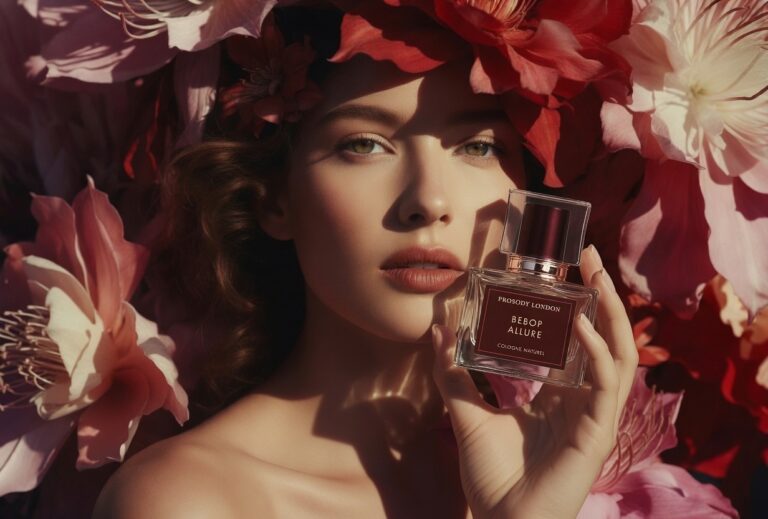
Best Rose Perfumes for Women 2026 — 5 Picks by a Perfumer
By Kershen Teo | Founder & Perfumer, Prosody London — Updated October 2026
Finding the best rose perfume for women is harder than it sounds — not because rose is rare, but because it’s so familiar. Everyone knows what a rose smells like, which means everyone knows immediately when a rose perfume gets it wrong. Most do.
At a glance — the best rose perfume for women 2026:
Frédéric Malle Portrait of a Lady (spicy rose, ingredient quality benchmark), Aesop Rozu (earthy modern rose, shiso and patchouli), Byredo Young Rose (fresh dewy rose, Sichuan pepper). 100% natural rose perfume without synthetic musks: Rose Rondeaux (jammy Bulgarian rose, deep and resinous, endorsed by Luca Turin), Trevi Rose (crystalline white rose, fresh and skin-close). Full assessments below.
What to Look For in a Rose Perfume for Women
Before comparing specific bottles, it’s worth understanding what separates a genuinely good rose perfume from the hundreds of fragrances available today. Three things matter most.
Material quality. Rose absolute and rose otto are both extracted from real rose flowers, but by different methods: rose absolute is produced using solvent extraction, while rose otto is obtained through steam or hydro-distillation. These natural extracts contain a complex mixture of aromatic compounds that gives rose its depth, warmth and natural character. Many mainstream rose fragrances instead use individual aroma molecules such as geraniol and phenyl ethyl alcohol to recreate aspects of the rose scent. The result can be cleaner and more linear than a perfume built around a natural rose extract.
How it’s built to last. A rose note on its own can be fleeting. What gives a rose perfume greater longevity is often the structure surrounding it. Sandalwood, woods and resins can provide a warm, persistent foundation, while synthetic musks and other aroma materials can extend the fragrance’s presence further. Neither approach is inherently right or wrong, but understanding the ingredients helps you know what you’re actually wearing. Our guide to endocrine disruptors in perfume explores this subject in more detail.
Occasion and register. Rose perfume covers a surprisingly wide emotional range — from bright, dewy and fresh compositions suited to daytime, to dark, sensual and resinous fragrances designed for evening. The right choice depends as much on when you plan to wear it as on the type of rose material used.
The five fragrances assessed below span this range — including three mainstream releases and two 100% botanical compositions — allowing you to compare them according to whichever matters most to you: natural materials, longevity, character or versatility.
At Prosody London I’ve spent years working with rose oil, and rose-adjacent botanical materials to understand what a genuine natural rose perfume can achieve. This guide presents five answers across two categories — three mainstream fragrances assessed on ingredient terms, and two botanical compositions from my own collection held to the same standard.
Looking beyond rose? See my best perfume for women in 2026 — 32 picks ranked across every floral family.

Why rose provokes such a strong emotional response — the chemistry
Rose absolute is unusual among aromatic materials in that its constituents have been studied in relation to three of the most extensively researched areas of botanical fragrance science — relaxation, mood, and skin — through several mechanisms investigated in peer-reviewed research. This long history across ritual, medicine, and perfumery in every major civilisation may reflect the enduring sensory and cultural significance of the material, alongside properties that modern research is beginning to characterise.
Relaxation
Geraniol and citronellol — two of rose absolute’s primary aromatic constituents — have been studied for potential anxiolytic properties in controlled settings. Their activity has been investigated alongside other fragrance compounds, including linalool, found in lavender and neroli. A 2025 systematic review and meta-analysis on Rosa damascena aromatherapy (PMID 39481888) found it significantly reduced anxiety symptoms (SMD = −1.31) and stress symptoms across 28 randomised controlled trials — one of the stronger effect sizes in botanical relaxation research. Rose aroma has also been investigated for its relationship with physiological stress markers, including cortisol, alongside HPA-axis activity explored in studies of botanicals such as bergamot and frankincense. This body of research may help explain the long cultural association between rose and emotional safety, alongside its enduring place in perfumery and traditional medicine. For the full science on how botanical fragrance compounds interact with relaxation and mood, read our guide to calming perfume and the science behind it.
Mood
Phenyl ethyl alcohol (PEA) — one of rose absolute’s most abundant constituents — is structurally related to phenylethylamine, a compound associated with emotional states in the brain. Whether this structural similarity translates into comparable biological activity has not been established, but it has made PEA a material of interest in olfactory research. Rose oxide — the compound most associated with the characteristic rosy quality — is one of the most readily perceived aroma compounds known, detectable at concentrations of parts per trillion (Ohloff, Scent and Fragrances, Springer), which contributes to rose’s distinctive and readily recognisable olfactory character. Some preclinical research has explored whether certain rose constituents influence serotonergic signalling (Frontiers in Public Health, 2025), although this should not be interpreted as evidence that rose oil has the clinical effects of antidepressant medicines. For the full evidence on how botanical fragrance materials have been studied in relation to mood, read our guide to perfume for mood and happiness.
Skin
Rose absolute and rose otto have a long history of use in skin preparations across Persian, Ayurvedic and European traditions. Modern research has examined rose petal extract for antioxidant activity and skin-comforting properties — with Rosa gallica petal extract studied for its skin anti-inflammatory activity through MAPK signalling pathway reduction in UV-exposed epidermal cell lines (PMID 30510758). Rosa damascena extract has also been studied for antioxidant capacity and free radical scavenging activity. This is research on the raw botanical material rather than finished perfume, and informs ingredient selection rather than constituting a claim about what wearing Rose Rondeaux does for skin. For the full picture on botanical fragrance materials and skin, read our guide to perfume and skin.
Rose is unusual in that research has explored its relationship with relaxation, mood, and skin through multiple naturally occurring constituents within the same botanical material. This breadth of scientific interest, together with its extraordinary sensory complexity, may help explain why rose has remained central to perfumery, medicine, and ritual across cultures for centuries.
Why some rose perfumes may feel overwhelming or headache-inducing
The isolated, synthetic versions of geraniol and phenyl ethyl alcohol used in many mass-market rose fragrances replicate the basic profile of the flower, but they flatten its complexity. A living rose contains hundreds of trace compounds that give it depth, variation, and the quality perfumers call roundness. No single isolated molecule captures the whole. The result is a rose that smells recognisable but not fully lifelike — linear, static, and, for some people, more likely to feel cloying or overwhelming in heavily synthetic compositions.
The longevity problem is made worse by what gets added to fix those molecules to the skin. Two ingredients in particular are worth understanding.
Phthalates — used in some consumer products and historically in certain fragrance applications — have been studied for their potential role as endocrine disrupting chemicals, with evidence that some compounds may interfere with hormone signalling at certain exposure levels.
Synthetic musks, including galaxolide and tonalide, are persistent in the environment and have been detected in human tissue and breast milk in independent studies.

What makes a natural rose perfume genuinely three-dimensional
The difference between a synthetic rose and a botanical one is not simply ingredient origin — it is complexity. A synthetic rose molecule does one thing consistently. A botanical material does dozens of things simultaneously, because it carries the full chemical fingerprint of the plant it came from.
In both Rose Rondeaux and Trevi Rose I use natural isolates alongside pure rose essences — molecules carefully extracted from botanical sources including clove, star anise, and rice. These are not synthetic approximations. They are plant-derived compounds that bring their own trace character to the composition — a molecular depth that cannot be replicated in a laboratory because it comes from the living plant itself.
The result is what I’d describe as a three-dimensional rose — one that has foreground and background, light and shadow, and continues to reveal itself across hours of wear rather than projecting a single flat note from application to dry-down. It is technically more demanding to formulate this way. It is also the only way to make a rose perfume that smells genuinely alive.
A Note on Rose’s Range
I make a point of visiting the rose garden at Regent’s Park regularly, and I don’t think I’ve ever left without smelling something new. Rose isn’t one material — it’s a whole family of distinct characters. There’s lemony rose, bright and citrus-edged, and peachy rose, soft and fruit-toned. There’s rose with a genuinely myrrh-like quality, resinous and almost incense-like. There’s the metallic, faintly green edge that comes from rose oxide, one of the most potent aroma compounds in the material, and the sharp, almost pointed brightness that geraniol-forward rose carries. And there’s rose with the delicate, sugared-petal quality of Turkish delight, or one that reads as powdery, almost cosmetic.
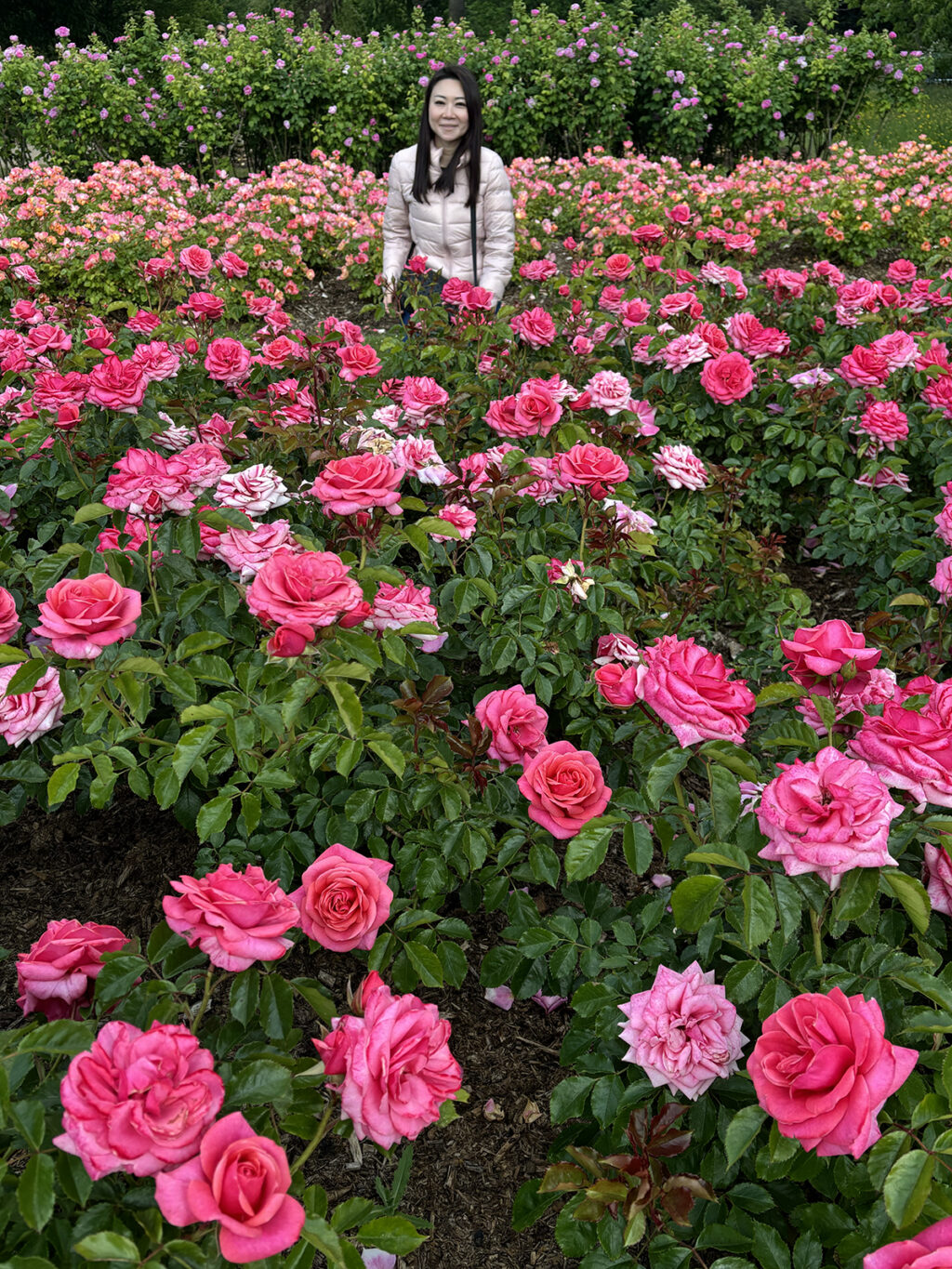
I’d go as far as saying rose might be the single best specimen a perfumer can study — walk through any real rose garden and you’ll find more olfactory range in that one genus than in almost anything else growing. It’s also, for me, one of the few materials that genuinely lifts my mood while I’m working with it, which tracks with the research on rose and relaxation cited earlier in this piece.
When I created Rose Rondeaux, the goal wasn’t to pick one of those facets and amplify it. It was to capture several of the ones I love most in a single composition — which is part of why it reads as jammy and multidimensional rather than a single, flat rose note.
Best spicy rose — the ingredient quality benchmark
FRÉDÉRIC MALLE PORTRAIT OF A LADY
Notes: Turkish Rose, Raspberry, Cinnamon, Patchouli, Sandalwood, Musk
Portrait of a Lady is the fragrance that established the modern case for rose as a serious material rather than a sentimental one. Perfumer Dominique Ropion uses Turkish rose at a concentration that most commercial houses would consider cost-prohibitive — the rose doesn’t support the composition, it IS the composition, with patchouli and cinnamon providing structure rather than character. The raspberry is a trace element that amplifies the rose’s red-fruit facets without reading as fruity. This is how rose should be used: as the primary material, not a supporting note dressed up as a headline.
From an ingredient perspective it’s worth knowing that the longevity — which is exceptional — comes partly from synthetic musks in the base. That’s the trade-off at this price point even from a house with Malle’s reputation for quality. For a botanical alternative that achieves comparable depth through sandalwood and organic resin fixatives rather than synthetic musks, Rose Rondeaux is the closest comparison I can make from my own formulations.
Best modern earthy rose
AESOP ROZU
Notes: Rose, Shiso, Patchouli, Sandalwood
Rozu is the most interesting mainstream rose release of the past five years — and the most instructive one for understanding what rose can do when the perfumer resists the obvious. The shiso note is the structural decision that makes this unusual: it gives the rose a green, slightly herbal quality that stops it reading as romantic or feminine. Patchouli grounds it without heaviness. The result is a rose that smells contemporary rather than traditional — earthy and precise rather than lush and enveloping.
My assessment from a formulation perspective: Rozu demonstrates what happens when you use rose as a material to be interrogated rather than celebrated. The sandalwood base uses synthetic sandalol approximations rather than genuine Indian sandalwood — the difference is noticeable in the dry-down, which loses some of the creaminess that real sandalwood provides. Worth knowing if ingredient quality is a priority for you.
Best fresh modern rose
BYREDO YOUNG ROSE
Notes: Sichuan Pepper, Dewy Petals, Pink Pepper, Musks
Young Rose is Byredo doing what Byredo does best — taking a familiar material and making it feel completely new. The Sichuan pepper opening is the structural choice that makes this work: it gives the rose dewy petals a brightness and slight numbness that synthetic aldehydes usually provide, but here achieved through a botanical spice. The result is a rose that reads as fresh-cut rather than distilled — alive rather than extracted.
From an ingredient transparency perspective, the “musks” in the base are synthetic — which is standard for Byredo and explains the exceptional longevity. The Sichuan pepper is the genuinely interesting material here; it’s what separates Young Rose from the dozens of “fresh rose” releases that surround it. If you want that same dewy freshness without the synthetic musk base, Trevi Rose achieves a comparable opening register through hyssop and citrus rather than pepper — with a shorter longevity that reflects the absence of synthetic fixatives.

Rose Rondeaux — Luca Turin’s favourite rose perfume
Best for: The connoisseur who gravitates toward depth, sensuality, and a richly faceted floral with a dark, velvety glow.
Rose Rondeaux is not a polite bouquet rose. It is the rose at its most indulgent—ripe, red, and unfolding slowly like velvet petals at dusk. Where many modern rose fragrances lean into powdery nostalgia or sharp, metallic brightness, Rose Rondeaux embraces warmth and saturation. It is lush without being cloying, sweet without becoming sugary, and floral without ever feeling dated.
Noted by Luca Turin
Perfume critic Luca Turin doesn’t hand out praise lightly — his review of Lancôme’s twelve-fragrance Absolue rose collection was pointedly mixed, closing with the observation that even the most successful entry reminded him of “Prosody’s superb Rose Rondeaux, but less fervent“. Asked directly in a reader AMA what his favourite rose fragrance was, Turin answered without hesitation: “My favorite is Prosody’s Rose Rondeaux.” He’s raised it unprompted on X too, asking followers, “Have you tried Rose Rondeaux by Prosody London?”

The olfactory profile
At the heart of this natural rose perfume is a rose oil — deep and honeyed, with a natural sweetness that perfumers describe as jammy: thick, rounded, and fruit-infused in a way that synthetic rose never achieves. Blackcurrant adds dark, tangy richness, amplifying the rose’s red-fruit facets without pulling it into gourmand territory. Bergamot in the opening provides lift rather than presence — enough to keep the composition from feeling heavy, not enough to distract from the rose itself.

The base
Sandalwood and myrrh ground everything grounds everything. Creamy and smooth, it acts as a stabiliser rather than a statement — allowing the rose and blackcurrant to settle into your skin’s warmth rather than sitting on top of it. Because every ingredient is botanical, Rose Rondeaux evolves throughout the day in a way synthetic fragrances cannot. The warmth of your pulse points gently intensifies it across hours of wear.
When to wear it
Evening gatherings, candlelit dinners, cold nights by the fire. Winter is where it performs best — the creamy, resinous sandalwood base gives it the kind of warmth that rewards being wrapped up indoors while it’s dark and freezing outside. It is a rose for those who want to be remembered not for volume, but for depth — which is why it’s my pick for best rose perfume in the botanical category. For more on how to match fragrance to the season, see our guide to niche perfume by season.
As the air turns crisp, Rose Rondeaux is also one of my best fall perfumes for women — its patchouli and resins come into their own in autumn.
Key notes: Bulgarian Rose, Blackcurrant, Bergamot, Organic Sandalwood, Myrrh

Trevi Rose — the fresh, crystalline natural rose perfume
Best for: clarity, precision, and a rose that feels like a luminous extension of clean skin.
If Rose Rondeaux is twilight, Trevi Rose is early morning — the rose reimagined not as romantic or heavy, but as invigorating and transparent. Where most fresh rose fragrances achieve their brightness through synthetic aldehydes or sharp aromatic molecules, this one does it entirely through botanical materials. The result is freshness that feels genuine rather than constructed.
The olfactory profile
Lemon zest opens the composition — sparkling and effervescent, immediately lifting without sharpness. At the heart is a white rose that reads as freshly cut rather than distilled: dewy, slightly green, and subtly sweet in the way a real petal is sweet rather than the way a synthetic accord is sweet. Hyssop weaves through the mid notes not as a dominant presence but as a clarifying agent — it sharpens the composition and gives it the crystalline quality that makes Trevi Rose immediately distinctive.
The base
Because Trevi Rose carries no synthetic fixatives or heavy musks, it wears close to the skin rather than projecting outward. This is a deliberate compositional choice — the fragrance is intimate and personal, designed to be discovered rather than announced. The dry-down is clean and softly warm, the citrus and rose settling into something quieter and more lasting than the bright opening suggests.
When to wear it
Professional environments, creative workspaces, warm weather, morning wear. Crisp linen, structured tailoring, minimalist dressing. Where Rose Rondeaux deepens and envelops, Trevi Rose clarifies and energises. The two cover different emotional registers entirely — which is why many customers who own one eventually reach for the other.
Key notes: Bahia Rosewood, Florentine Quince, Capri white rose, Ephesian Hyssop, Highland Raspberry, Paraguayan Guaiac wood

How to choose between them
The simplest way to decide is to think about when and how you want to wear a rose fragrance.
Trevi Rose is the daytime rose. Bright, clean, and skin-close — it works effortlessly in professional environments, warm weather, and any context where you want presence without weight. It is the rose you reach for in the morning without thinking twice.

Rose Rondeaux is the evening rose. Deeper, warmer, and more complex — it rewards slower moments and cooler temperatures. It is the rose you choose deliberately, for occasions that deserve it.
Many customers own both. The two fragrances cover different emotional registers so completely that they don’t compete — they complement. Worn together as a layering combination, Trevi Rose in the morning and Rose Rondeaux in the evening, they trace the arc of a day.
Not sure which is right for you? The most reliable way to find out is to try both on skin. Our Build Your Own 6 x 2ml Discovery Set lets you sample both alongside the rest of the collection before committing to a full bottle.
→ Shop Rose Rondeaux → Shop Trevi Rose → Explore the full Prosody London collection

[Explore the Full Prosody London Range]
FAQ about Best rose perfume for women
What is the best natural rose perfume?
It depends on what you’re looking for, but one standout is Rose Rondeaux by Prosody London. Perfume critic Luca Turin — who is sparing with praise — has named it his personal favourite rose fragrance in a reader AMA- “My favorite is Prosody’s Rose Rondeaux.”, and in a separate review of Lancôme’s rose-focused collection described their closest entry as “less fervent” by comparison. For a lighter, daytime alternative, Trevi Rose offers the same botanical, synthetic-free approach in a fresher register.
How long does natural rose perfume last?
A well-formulated natural rose perfume built on quality base materials — sandalwood, resins, botanical musks — will last six to eight hours on skin. Rose Rondeaux as an eau de parfum concentration lasts eight to ten hours. Trevi Rose as a cologne concentration is lighter and designed for reapplication, lasting four to six hours. Applying to moisturised skin at pulse points extends longevity on both.
Is natural rose perfume suitable for sensitive skin?
Generally yes — the synthetic compounds most commonly associated with skin sensitivity and allergic reactions are absent from genuine natural rose perfumes. Both Rose Rondeaux and Trevi Rose contain no synthetic aromatic molecules, phthalates, or synthetic musks. Some botanical citrus ingredients can cause photosensitivity in rare cases — if you have very sensitive skin, apply to areas not directly exposed to sunlight and patch test first.
What makes a rose perfume smell jammy?
It comes from the natural chemistry of certain rose varieties, particularly Bulgarian rose, which contains high concentrations of geraniol, citronellol, and rose oxide alongside trace compounds that give it its characteristic richness. Blackcurrant and raspberry accords alongside rose oil amplify this quality, which is exactly the combination used in Rose Rondeaux.
What should I look for in a rose perfume for women?
A good rose perfume for women isn’t defined by price or brand alone — it comes down to three things: the quality of the rose material itself, how the composition is built to last on skin, and whether it suits how and when you plan to wear it. Rose absolute and rose otto capture far more of the flower’s natural complexity than synthetic geraniol-based rose accords, which tend to smell recognisable but flat. For evening wear, look for rose paired with resinous or woody bases like sandalwood, patchouli, or amber; for daytime, look for rose paired with citrus or green facets. If skin sensitivity is a concern, a 100% botanical formulation — free of synthetic musks and phthalates — is worth seeking out specifically, since these aren’t always disclosed on standard ingredient lists. See the full assessments above for how five well-regarded rose perfumes — three mainstream, two botanical — measure up against these criteria.
What’s a good rose perfume if you don’t like an overpowering rose scent?
Look for a natural rose perfume built without synthetic musks — they’re what usually push a rose fragrance into “cloying” territory, since they’re engineered specifically to project and persist rather than sit close to skin. Trevi Rose is the clearest example in this collection: a crystalline, skin-close rose built on citrus and hyssop rather than heavy fixatives, so it reads as fresh and realistic rather than loud. If you want more depth without losing that restraint, Rose Rondeaux leans richer and more resinous but still avoids the synthetic musk base that makes mass-market rose perfumes feel heavy-handed. Either way, a botanical rose tends to read as “a rose, but real” rather than “a rose, turned up.”