What Is Non-Toxic Perfume? 7 things to Avoid in perfumes
By Kershen Teo | Founder & Perfumer, Prosody London
At a Glance — What Is Non-Toxic Perfume?
“Non-toxic perfume” is a popular search term, not a formal safety classification. A better way to choose a fragrance is to consider its ingredient information, allergen disclosures, intended use and compliance with applicable cosmetic safety requirements. Prosody London formulates its perfumes with plant-derived aromatic materials and organic grain alcohol, without the seven ingredient categories discussed below. This reflects our formulation philosophy, not a claim that all other perfumes are unsafe.
I’ve spent over a decade formulating 100% botanical perfume, which means I’ve spent an equal amount of time reading the safety data on the synthetic materials I chose not to use. This isn’t a marketing position — it’s a formulation decision I make for every batch, and I can point to exactly why for each ingredient I leave out.
“Non-toxic” itself has no legal definition in cosmetics or fragrance. The term does not replace the legal requirements for cosmetic safety and truthful marketing, which is exactly why it matters to look past the label and at the actual ingredient list — or, in most perfumes, the absence of one, since “parfum” or “fragrance” on a label can legally conceal dozens of individual compounds without disclosing a single one of them.
Is “Under-Studied” a Fair Criticism of Natural Fragrance?
A common argument from synthetic perfumery is that natural fragrance is the riskier choice, on the grounds that essential oils are complex mixtures whose full allergen profile hasn’t been exhaustively studied.
It’s true that essential oils contain compounds like limonene, linalool, and eugenol, which are common allergens and must be declared by law if present above a set threshold — exactly like synthetic allergens are. (See our guide to whether natural perfume is better for sensitive skin for more on how these allergens behave, and why oxidation — not origin — is usually the real variable.)
But treating “under-studied” as a reason to dismiss naturals wholesale skips over research that actually exists and complicates the picture. A phenomenon called the “quenching effect” has been documented in human patch-test studies: compounds within a natural mixture can partially blunt each other’s sensitising potential in combination. In one study, limonene reduced sensitisation to cinnamaldehyde in 3 of 11 subjects, and limonene combined with eugenol did so in 7 of 11 (Frontiers in Pharmacology, 2022).
That doesn’t mean natural mixtures are automatically safer — the effect was partial, not universal, and isolated allergens still need declaring regardless. But it does suggest the interactions within complex natural mixtures are more actively researched than the “we simply don’t know enough about naturals” argument tends to acknowledge. There’s real interaction science here, in both directions, and it’s an active area of research rather than settled ground for either side.
Here are the seven ingredient categories I formulate around, and why.
Scientific context: The seven categories below reflect Prosody London’s formulation choices, not a finding that every use of these substances is harmful. Risk depends on the individual substance, concentration and exposure; natural materials also require safety assessment.
1. Phthalates
Phthalates are a family of chemicals, not a single ingredient. Diethyl phthalate (DEP) has been used as a solvent in fragrance; findings about other phthalates cannot automatically be applied to DEP. The FDA states that available evidence does not establish a safety concern for DEP as currently used in cosmetics. Prosody London does not use phthalates. FDA: phthalates in cosmetics.
No Prosody London fragrance contains phthalates. Longevity in my formulations comes from botanical resins and fixatives — sandalwood, myrrh, labdanum, benzoin — rather than synthetic diluents.
2. Parabens
Parabens are preservatives used in some cosmetic formulations, particularly those containing water. Their safety depends on the individual compound and concentration. The EU Scientific Committee on Consumer Safety concluded that methylparaben is safe as a cosmetic preservative at concentrations up to 0.4%. Prosody London’s alcohol-based perfumes are formulated without parabens. SCCS: methylparaben opinion.
This is one area where formulation choice removes the problem structurally rather than requiring a substitute preservative. Prosody London uses organic grain alcohol with no water content — a water-free base that is self-preserving. There’s no bacterial growth to guard against, so there’s no need for a paraben or a paraben alternative at all.
3. Synthetic Musks
Synthetic musks — galaxolide and tonalide among the most common — are used across mainstream fragrance for their lingering, skin-close warmth. Galaxolide has been classified by ANSES as a substance of concern, and polycyclic musks have documented links to bioaccumulation in human tissue (PMID 15537743) — galaxolide and tonalide have been detected in human blood (Hutter et al., 2005) and in breast milk (Liebl et al., 2000). For the full evidence base on this and other flagged ingredients, see our guide to endocrine disruptors in perfume.
I don’t formulate with synthetic musks of any kind, polycyclic or nitro. Where a composition needs a musky, skin-warming base, I use natural alternatives — ambrette seed, for one, a macrocyclic musk that binds to skin without the persistence or bioaccumulation profile of its synthetic counterparts.
4. Formaldehyde and Formaldehyde-Releasers
Formaldehyde and formaldehyde-releasing preservatives are used in some cosmetic formulations, although they are less common in alcohol-based perfumes than in water-containing products. Formaldehyde itself has been classified by the International Agency for Research on Cancer as a Group 1 human carcinogen since 2004, based on sufficient evidence for nasopharyngeal cancer and leukaemia at occupational exposure levels. EU regulators classify it slightly differently — as a presumed human carcinogen — and more recent occupational studies have produced mixed findings. Where formaldehyde or a formaldehyde-releasing preservative forms part of a fragrance formulation, it may not be individually disclosed, since “fragrance” or “parfum” can legally appear as a single collective ingredient. (For a fuller look at the cancer question specifically, see our piece on does perfume cause cancer.)
No Prosody London fragrance uses formaldehyde or formaldehyde-releasing preservatives. Because my perfumes are formulated in a water-free organic grain alcohol base, they don’t require antimicrobial preservatives of that kind.
5. ISO E Super
ISO E Super is a widely used aroma molecule in modern perfumery — a woody-amber synthetic that boosts diffusion and creates the “skin scent” effect many contemporary fragrances rely on. It’s approved by IFRA within regulated limits, and I want to be precise here rather than overstate the case against it: there isn’t strong evidence it’s unsafe at approved concentrations. Questions about environmental fate are separate from safety at normal cosmetic exposure — a 2024 study in Environmental Toxicology and Chemistry found ISO E Super is manufactured at 5,000–22,000 metric tonnes annually and has been measured in wastewater and surface water across the US and Europe. (For a full breakdown of this specific ingredient, see Is ISO E Super Safe?)
I choose not to formulate with it — not because it’s dangerous at approved levels, but because the depth and skin-amplifying quality it provides is achievable through cedarwood, vetiver, and amyris. Given its documented environmental persistence, I prefer those botanical alternatives in my own formulations.
6. BHT (Butylated Hydroxytoluene)
BHT is a synthetic antioxidant used in some fragrances — permitted at up to 0.8% in leave-on hydroalcoholic products including perfume — to prevent the oils in a formulation from oxidising over shelf life. EWG’s Skin Deep database rates BHT a moderate hazard, flagging concerns for enhanced skin absorption and low-to-moderate non-reproductive organ toxicity and irritation. The evidence here is genuinely mixed, and I’d rather represent that honestly than overstate it: the French agency ANSES has raised endocrine disruption concerns based primarily on rat studies showing changes to thyroid physiology, while a separate toxicogenomic assessment found no clear connectivity between BHT and known endocrine-disruption pathways for estrogen, androgen, or thyroid activity. The regulatory picture is unsettled rather than resolved.
Given that uncertainty, I don’t use BHT. I formulate primarily around botanicals that are comparatively resistant to oxidation, including sandalwood, vetiver, patchouli, frankincense, and benzoin resin. Combined with careful formulation, protective packaging, and stability testing, I don’t find a synthetic antioxidant necessary in my perfumes.

7. UV-Filter Stabilisers (Benzophenones)
Benzophenones are distinct compounds with different safety profiles. The EU Scientific Committee on Consumer Safety found the evidence for endocrine disruption by benzophenone-3 inconclusive and assessed its safety according to use and concentration. Prosody London chooses not to use benzophenone UV stabilisers. Read the SCCS opinion.
I don’t use benzophenone or any UV-filter stabiliser in any Prosody London formulation.

What Non-Toxic Actually Means, Compared to “Clean”
“Clean” and “non-toxic” get used interchangeably, but they’re not the same claim. Clean perfume typically signals avoidance of a handful of high-profile flagged ingredients while still permitting synthetic musks, aroma chemicals, and petrochemical-derived fixatives elsewhere in the formula. Non-toxic, properly used, is a broader ingredient-safety standard — but like “clean,” it has no enforced legal definition either.
The only claim that means something structurally is a brand’s actual formulation commitment. Prosody London is formulated to IFRA standards and in accordance with COSMOS Organic principles, from 100% botanical ingredients in organic grain alcohol. That’s not a marketing distinction — it’s the reason none of the seven ingredients above appear in any bottle I make.
Seeing This Formulation Approach in a Finished Fragrance
A fair question at this point is whether formulating this strictly comes at a cost — whether ruling out seven categories of synthetic material, some of which exist specifically to boost diffusion, longevity, or stability, means the resulting perfume is a compromise. Rather than answer that myself, The Perfume Society described the collection as “so beautifully composed, so harmoniously sophisticated” that most people don’t even realise it’s all-natural. Here’s what independent reviewers said after smelling five specific finished Prosody London fragrances, formulated entirely without any of the seven ingredients above.

Luca Turin’s review of Lancôme’s twelve-fragrance Absolue rose collection was pointedly mixed, closing with the observation that even its most successful entry reminded him of “Prosody’s superb Rose Rondeaux, but less fervent”. Asked directly in a reader AMA what his favourite rose fragrance was, he answered without hesitation: “My favorite is Prosody’s Rose Rondeaux.” He’s raised it unprompted on X too, asking followers, “Have you tried Rose Rondeaux by Prosody London?” The Daily Mail’s Jo Fairley separately described it as having “a rosy heart and plenty of warmth in the lingering sandalwood and patchouli base.” That September Muse called it “delightfully plush and decadent.”
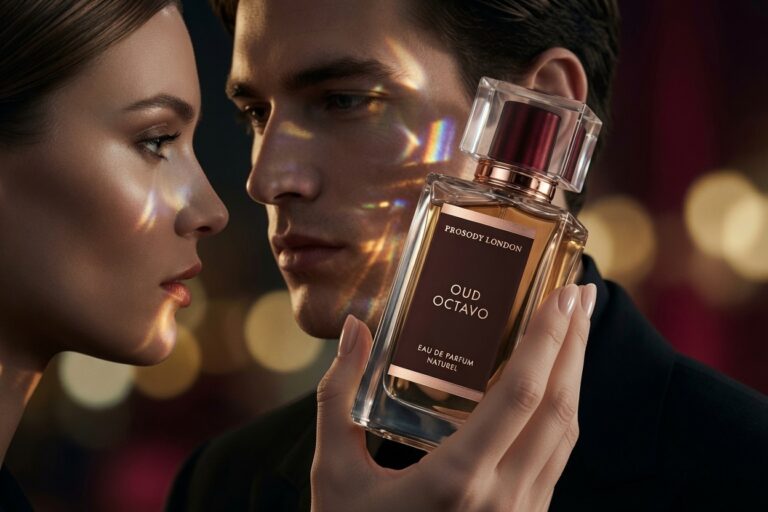
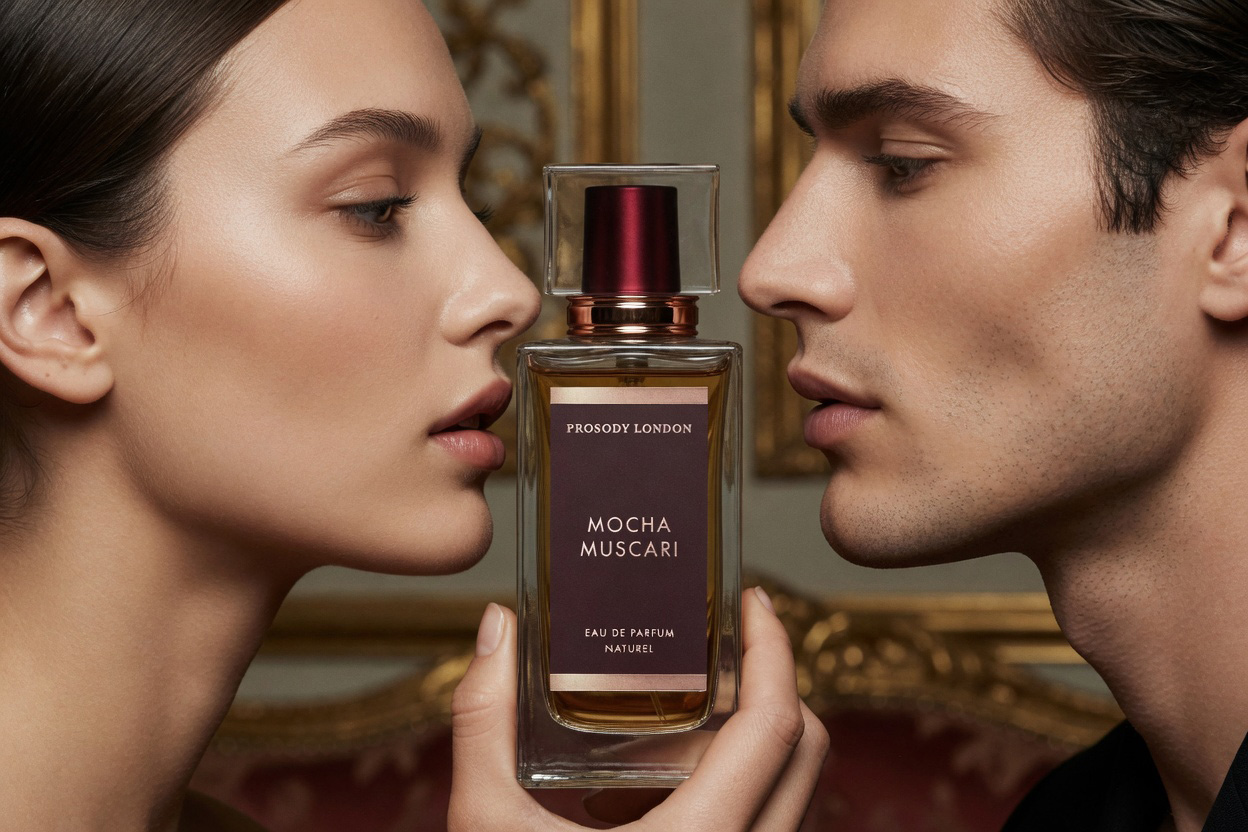
In the same Daily Mail piece, Fairley called Neroli Nuance “a super-elegant, summery blend.” Mocha Muscari was featured in Vogue Japan, which described it as “sexy and unique.” CaFleureBon’s Lauryn Beer named Pizzicato Bliss “one of my top ten fragrances of 2020.” Perfume blogger Stephan Matthews wrote that Oud Octavo “wrapped the subject in woods and citrus and the results are spectacular,” and has also written favourably about Ocean Commotion.
None of these are claims I’m making about my own work — they’re what independent reviewers said after smelling the finished fragrances.

FAQ
What is non-toxic perfume?
Non-toxic perfume is not a formal safety category. Check ingredient and allergen information and applicable cosmetic safety requirements.
Is non-toxic a regulated term?
The term has no single statutory definition in UK cosmetics law, but product safety and truthful marketing are legally required.
Does parfum on a label disclose every ingredient?
No. A fragrance mixture may be listed as parfum, but certain fragrance allergens require separate disclosure above specified thresholds.
Are natural perfumes automatically safer?
No. Botanical and synthetic materials can both cause reactions. Safety depends on the ingredients, concentration, exposure and finished-product assessment.
Why does Prosody London exclude these ingredients?
Prosody London chooses plant-derived fragrance materials as a formulation philosophy, not because every permitted synthetic ingredient is proven unsafe.
I formulate every fragrance myself, so I can account for exactly which of these reasons applies to each ingredient on the list. For product-specific picks built on these same principles, see our guides to non-toxic perfume for women and non-toxic clean cologne for men.