Non-Toxic Perfume for Women 2026 — A Working Perfumer’s Guide
By Kershen Teo, Founder & Perfumer, Prosody London
I’ve spent years sourcing botanical raw materials and formulating perfumes entirely from plant-derived ingredients. That experience shapes how I evaluate ingredient lists and the scientific literature — but wherever I discuss health-related topics in this guide, I’ve tried to distinguish between established evidence, preliminary research, and personal formulation choices. If you have specific health concerns, please speak with a healthcare professional.At a glance — best non-toxic perfumes for women 2026:
At a Glance — Best Non-Toxic Perfumes for Women 2026
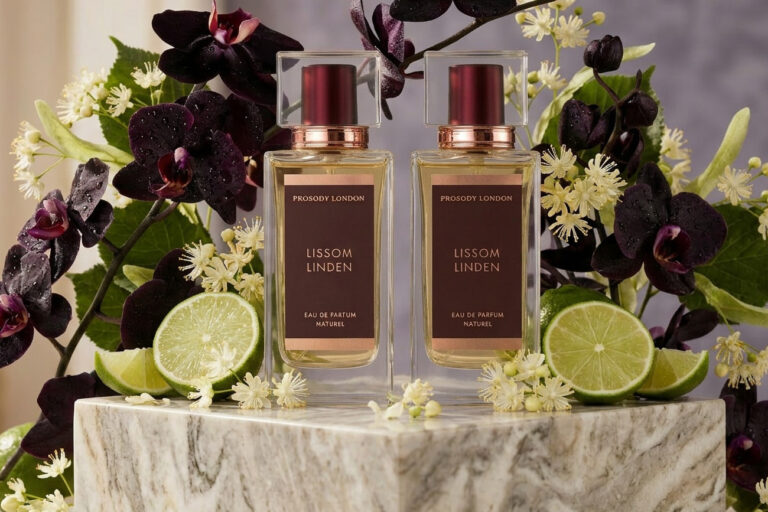
Rose Rondeaux (100% botanical damask rose, no synthetic musks, 8–10 hours), Neroli Nuance (orange blossom absolute, water-free, 7–9 hours), Jacinth Jonquil (hyacinth, jonquil, jasmine, spring floral), Lissom Linden (linden blossom, ambrette musk, summer), Moiré Mimosa (mimosa absolute, powdery, skin-close), Bebop Allure (Cox apple, Bulgarian rose, oriental). All 100% botanical, no phthalates, no synthetic musks, no petrochemical derivatives. Full reviews below.
Non-toxic perfume for women is not a niche concern — it is the most urgent question in the fragrance market right now.
Most perfumes are formulated primarily for scent, stability and performance rather than to minimise exposure to ingredients that some consumers prefer to avoid. I make perfume for a living — 100% botanical, no synthetic shortcuts — and the gap between what goes into a mainstream fragrance and what the label tells you is wider for women than for anyone else. Women are the primary market for perfume, body lotion, moisturiser, shampoo, and deodorant. That daily layering of products is also a daily layering of synthetic chemicals — and most women have no idea it is happening.
This is a guide to non-toxic perfume for women: what ingredients some consumers prefer to avoid, what “clean” actually means when a brand uses the word, and which perfumes are worth your attention in 2026. Every pick in this list is one I have formulated myself, from botanical ingredients, without phthalates, synthetic musks, or petrochemical derivatives
Why Women May Have Higher Cumulative Exposure to Fragrance Ingredients
The average woman uses approximately 12 personal care products before leaving the house, meaning she may experience higher cumulative exposure to fragrance ingredients across multiple products than someone using fewer. Each product that contains synthetic fragrance, preservatives, or petrochemical solvents adds to that cumulative picture.
Certain synthetic musks, including Galaxolide and Tonalide, have been detected in human tissue in biomonitoring studies (PMID 15537743). The health implications of these findings at typical cosmetic exposure levels remain under investigation. Some parabens have demonstrated weak oestrogenic activity in laboratory studies, although regulatory agencies have concluded that approved cosmetic uses remain safe within current concentration limits. Certain phthalates have been studied for endocrine activity in laboratory and epidemiological studies, although effects vary considerably between different phthalates and at different exposure levels. Researchers continue to study whether cumulative exposure from multiple personal care products has implications for long-term health.
A 2016 study published in Environmental Health Perspectives (PMID 26947464) — the HERMOSA Intervention Study — found that switching to personal care products labelled as free from phthalates and parabens for just three days reduced urinary concentrations of mono-ethyl phthalate by 27.4% on average in adolescent girls, demonstrating that exposure from personal care products can change measurably over a short period.

Fragrance Ingredients of Concern for Women
Several ingredients that appear routinely in mainstream women’s fragrance are worth understanding. The discussion below reflects current scientific literature and regulatory positions — it is not a claim that mainstream fragrances are unsafe.
Synthetic musks and breast milk
Galaxolide and tonalide — the two most common synthetic musks in commercial perfume — have been detected in human blood and breast milk in biomonitoring studies (PMID 15537743). The health implications of these findings at typical cosmetic exposure levels remain under investigation. Every Prosody London fragrance is formulated without them. For the full breakdown of what synthetic musks are and how they have been studied, read our guide to endocrine disruptors in perfume.
Phthalates as fixatives and plasticisers
Diethyl phthalate (DEP) is used in mainstream fragrance as a solvent and fixative. Certain phthalates have been studied for endocrine activity in laboratory and epidemiological studies (PMID 30336412), with effects varying considerably between compounds and exposure levels. Phthalates are also used in some plastics, although the extent to which they migrate into finished fragrance products depends on the packaging materials and formulation. Some consumers prefer to minimise exposure to these compounds as a precautionary choice.
Synthetic fragrance ingredients and skin sensitisation
Some synthetic fragrance ingredients have been studied in relation to contact allergy or skin irritation in susceptible individuals. Some people with fragrance sensitivity report preferring simpler botanical formulations, although reactions vary considerably between individuals. For more on this, read our guide to natural perfume for sensitive skin.
Other ingredients to know
Beyond synthetic musks and phthalates, several other fragrance chemicals are worth knowing. Lilial (butylphenyl methylpropional) was banned in EU cosmetics in 2022 over reproductive toxicity concerns — it had been widely used in women’s floral fragrances for decades (ECHA substance information). Iso E Super (HICC) is a known contact allergen now restricted in the EU (SCCS opinions on fragrance allergens). Musk ketone and musk tibetene — older nitro musks — occasionally appear in cheaper formulations. None of these appear in any Prosody London fragrance. For a full breakdown of hidden chemicals in mainstream perfume, read our guide to hidden chemicals in perfume.
Why You Should Consider a Water-Free Perfume
Many perfumes contain water as part of the formulation system. Because water can support microbial growth, preservatives are typically required in water-containing cosmetic products.
Many personal care products commonly marketed to women — including lotions, creams and shampoos — are water-based and therefore require preservation systems.
The preservative concern
The most commonly used preservatives in water-containing fragrances and cosmetics are parabens (methylparaben, ethylparaben, propylparaben, butylparaben), phenoxyethanol, and formaldehyde-releasing agents such as DMDM hydantoin and imidazolidinyl urea. Some parabens have demonstrated weak oestrogenic activity in laboratory studies, and research published in the Journal of Applied Toxicology detected intact parabens in human breast tissue (PMID 15170666), raising questions that researchers continue to investigate. Phenoxyethanol has been reviewed by the French Agency for the Safety of Medicines (ANSM) with respect to reproductive and developmental safety concerns (ANSM). Formaldehyde-releasing preservatives are classified as contact allergens, and formaldehyde itself is classified as a Group 1 human carcinogen by IARC (IARC Monographs). For more on whether perfume ingredients have been linked to cancer, read our full guide to does perfume cause cancer.

The case for a water-free base
Some researchers are interested in cumulative exposure because people often use multiple cosmetic products each day. A water-free formulation built on organic grain alcohol requires no added preservatives of any kind. The alcohol itself is the preservative, and the problem does not arise. Some consumers prefer this approach as a way of reducing exposure to ingredients they prefer to minimise.
What Does “Clean Perfume” Actually Mean for Women?
How the clean beauty market exploits women
The clean beauty movement is targeted almost exclusively at women. “Clean”, “green”, “natural”, “non-toxic” — none of these terms have a regulated definition in fragrance or cosmetics. A brand can market a perfume as clean while it contains synthetic musks, undisclosed petrochemical solvents, and formaldehyde-releasing preservatives — all hidden behind the single word “fragrance” or “parfum” on the INCI list. The clean beauty market generated over $11 billion globally in 2023. Most of it is greenwashing.
The real bar
When I use the term non-toxic perfume for women, I mean something specific: fragrance formulated from 100% botanical ingredients in an organic grain alcohol base, with full ingredient transparency, no synthetic musks, no phthalates, and no petrochemical derivatives. That is a higher bar than the market uses. In my view, that is a more meaningful standard than marketing terms such as “clean” or “green.”
The 6 best non-toxic perfumes for women 2026
I am a working perfumer. These are my own formulations — 100% botanical, made by hand in London. I include them here because I believe they are the strongest non-toxic perfumes available for women in 2026, and because I can stand behind every ingredient in every bottle.
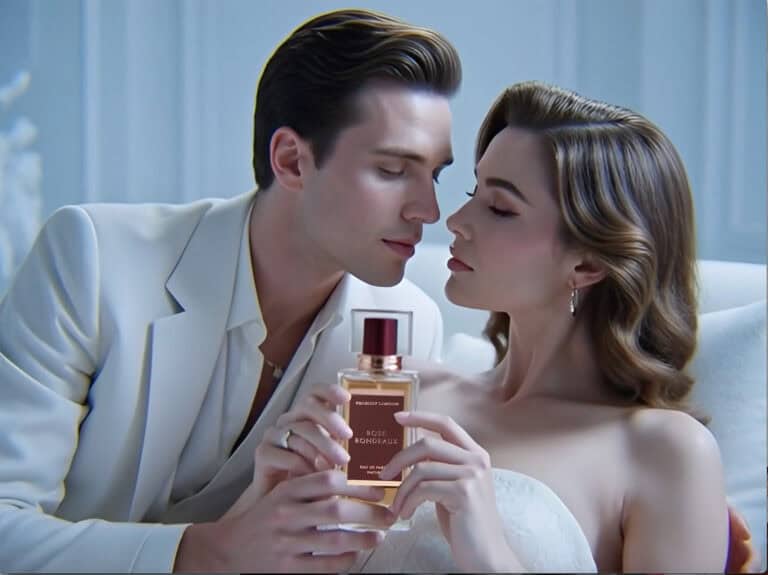
Best non-toxic perfume for women — Rose Rondeaux
The benchmark botanical rose — deep, romantic, and genuinely complex in a way that synthetic rose compositions cannot approach.
The Vibe: A deep, spiced damask rose wrapped in patchouli warmth and musky sandalwood, with raspberry and bergamot lifting the opening. Delightfully decadent and seductively fruity — this is rose done with the genuine craft that the great niche houses aspire to, built entirely from botanical ingredients.
Key Notes: Iris, bergamot, raspberry, rose, blackcurrant, patchouli, musky sandalwood.
Why it’s for her: Rose Rondeaux evokes warmth and romance. There is something about a true damascena rose — warm, slightly dark, with that velvety depth that no synthetic reconstruction has ever quite captured — that registers as deeply feminine without being delicate. As Lauryn Beer, Senior Editor at CaFleureBon, puts it: “Rose Rondeaux is one of the most joyous, breathtakingly life-like roses I’ve ever come across.” It’s also critic Luca Turin’s personal favourite rose fragrance — named without hesitation when a reader asked him directly.
For the full science on rose absolute and its relationship with mood and relaxation, read our guide to perfume for mood and happiness and our deep-dive on best rose perfume.

Best non-toxic floral perfume for women — Neroli Nuance
Neroli is one of the most expensive botanical materials in natural perfumery — a genuinely great neroli perfume is rare. This is one.
The Vibe: Bright, honeyed, and luminous — the neroli absolute opens with that characteristic orange blossom sweetness sharpened by a green herbal quality, deepening into a warm, resinous base. Radiant in warm weather, comforting in cold.
Key Notes: Neroli, bergamot, rose, jasmine, frankincense, cedarwood, musky wood.
Why it’s for her: Neroli Nuance has a way of creating an impression of luminosity — clean without being cold, summery without being casual. Neroli is one of the few materials that has been studied for its relationship with mood and the nervous system — for more on the research, read our guide to calming perfume and the botanical science behind it. As Jo Fairley, co-founder of Green & Black’s and editor of The Perfume Society, puts it: “Neroli Nuance takes white floral notes of orange blossom creating a super-elegant, summery blend that incorporates other floral and woody notes.”

Best non-toxic spring perfume for women — Jacinth Jonquil
A pure green floral built around hyacinth, jonquil, and jasmine — one of the most technically demanding compositions in natural perfumery.
The Vibe: Opens with gorgeous hyacinth — that cool, watery, intensely green quality that captures early spring exactly. Heady jasmine and the fresh clarity of jonquil follow, radiant and captivating.
Key Notes: Hyacinth, jonquil, jasmine, peach, cardamon.
Why it’s for her: Jacinth Jonquil is the scent of a sun-warmed flower at its peak — peachy, slightly narcotic, with that faintly animalic undercurrent that makes a fragrance feel alive on skin. Not loud. Not obvious. The kind of scent that draws people closer.

Best non-toxic powdery perfume for women — Moiré Mimosa
Mimosa absolute — extracted from the Acacia dealbata — has a powdery, honey-like, almond quality that is difficult to reproduce convincingly with synthetic materials. Moiré Mimosa is built around it.
The Vibe: Opens with airy, tropical brightness before the mimosa heart deepens into warm Indian tuberose. Comforting, powdery, and gently sweet — this is the fragrance that transitions beautifully between seasons.
Key Notes: Neroli, melon, coconut, Chilean lime, almond blossom, mimosa, Indian tuberose.
Why it’s for her: Wear it and you feel wrapped, softened, held — the olfactory equivalent of a cashmere layer you didn’t know you needed. There is something about a well-made powdery fragrance that evokes ease rather than effort.

Best non-toxic summer perfume for women — Lissom Linden

Linden blossom carries a honeyed, floral warmth that is difficult to reproduce convincingly with synthetic materials — it pairs with chamomile and siamwood, anchored by ambrette seed, to create something that smells unmistakably like summer.
The Vibe: The smell of a linden tree in full bloom on a warm afternoon — honeyed, slightly narcotic, and entirely distinctive. Fresh linden flowers over siamwood and chamomile, with ambrette seed giving a soft, skin-close muskiness that lingers for hours.
Key Notes: Fresh linden flowers, chamomile, citrus, siamwood, ambrette seed.
Why it’s for her: Lissom Linden evokes calm, sophistication, and quiet radiance. The muskiness comes entirely from ambrette seed, a botanical material that creates the skin-close warmth of musk without any petrochemical derivative.

Best non-toxic oriental perfume for women — Bebop Allure
A deep, spiced oriental built around Bulgarian rose, patchouli, and warm resinous base notes — the kind of fragrance that announces itself quietly and stays for hours.
The Vibe: Cox apple and Bulgarian rose on the opening, dry and sophisticated in the heart, grounded by myrrh and dark woody resonances. Complex, sensual, and entirely botanical — built for evenings and cooler weather.
Key Notes: Cox apple, Bulgarian rose, patchouli, myrrh, vetiver, cedarwood.
Why it’s for her: Bebop Allure has a warmth that feels instinctive rather than constructed — fruity and bright at first, then settling into something deeper and more intimate as it moves on skin. It creates a sense of warmth and confidence that deepens with wear.

How to read a perfume ingredient list
What to look for
The INCI (International Nomenclature of Cosmetic Ingredients) list is where the truth lives. Look for organic grain alcohol as the base — listed as Alcohol or Alcohol denat. followed by a botanical denaturant. Look for Latin botanical names: Citrus bergamia (bergamot), Vetiveria zizanoides (vetiver), Rosa damascena (damask rose). These indicate genuine botanical materials. Allergen declarations — Linalool, Limonene, Geraniol — are naturally occurring components of botanical ingredients, not synthetic additives.
What to avoid
Galaxolide or HHCB — synthetic musk, detected in human tissue in biomonitoring studies. Tonalide or AHTN — synthetic musk, detected in human tissue in biomonitoring studies. Diethyl phthalate or DEP — studied for endocrine activity in laboratory studies. Methylparaben, ethylparaben, propylparaben, butylparaben — demonstrated weak oestrogenic activity in some laboratory studies. DMDM hydantoin or imidazolidinyl urea — formaldehyde-releasing preservatives. Lilial or butylphenyl methylpropional — banned in EU cosmetics since 2022 (ECHA).
Why greenwashing makes INCI lists unreliable
The single word Parfum or Fragrance on an INCI list can legally conceal hundreds of individual synthetic chemicals — including synthetic musks, phthalates, and petrochemical solvents. A brand can declare “no added phthalates” while the fragrance component, listed as Parfum, contains DEP. A brand can declare “natural fragrance” while the Parfum component contains synthetic musks. The INCI list is a starting point, not a guarantee.
The only guarantee that means anything
Without a brand structurally committed to working in accordance with COSMOS natural standards of perfumery, petrochemical-derived ingredients can still enter the formula through synthetic fragrance components declared under the single word Parfum. The manufacturing standard is what closes that gap. For more on perfume and skin, read our guide to perfume and skin.
FAQ — non-toxic perfume for women
Is non-toxic perfume safe during pregnancy?
There is limited research on perfume use during pregnancy. Some people choose fragrances formulated without synthetic musks, phthalates, and petrochemical derivatives as a precautionary personal preference. Certain synthetic musks have been detected in human breast milk in biomonitoring studies — detection of a substance does not imply harm, and regulatory agencies consider approved cosmetic uses safe within established limits. Anyone who is pregnant should discuss fragrance use with their midwife or GP rather than relying on a fragrance brand’s formulation choices as a safety guarantee.
Does non-toxic perfume last as long as mainstream fragrance?
Yes — if the formulation uses botanical resin fixatives. Agarwood, labdanum, benzoin, galbanum, and myrrh are all botanical materials with exceptional fixative properties. Many conventional perfumes achieve long wear through combinations of synthetic musks, woody aroma chemicals and other long-lasting fixatives. Botanical fixatives achieve longevity through slower-evaporating resinous materials and genuine skin affinity. The Prosody London collection is formulated for 8–12 hours of wear without synthetic musks.
Is botanical perfume safe for sensitive skin?
Botanical ingredients contain naturally occurring allergens — limonene, linalool, geraniol — which are declared on the INCI list. These are the same compounds that appear in fruits and flowers. Some people with fragrance sensitivity report preferring simpler botanical formulations, although reactions vary considerably between individuals. If you have a known allergy to a specific botanical ingredient, check the INCI list before purchasing. For more, read our guide to natural perfume for sensitive skin.
What is the difference between natural and non-toxic perfume?
Natural refers to ingredient origin — derived from plants rather than synthesised. In this article I use “non-toxic” as shorthand for formulations that avoid ingredients some consumers prefer to minimise, including synthetic musks, phthalates and petrochemical fragrance materials. The term itself has no legal definition in cosmetics. In a well-formulated botanical perfume, the two overlap entirely. The distinction matters because some brands use “natural fragrance” as a marketing term while still including synthetic musks or petrochemical solvents under the single word Parfum.
Why does the clean beauty market use “non-toxic” if it has no legal meaning?
Because it works as a marketing term without requiring any commitment. A brand can claim “non-toxic” with no regulatory consequence because the term has no legal definition in cosmetics or fragrance. The only meaningful signal is a brand’s commitment to a recognised standard — COSMOS natural, Soil Association organic — which defines specifically what can and cannot go into a formulation. Everything else is marketing.

Is botanical perfume safe for sensitive skin?
Botanical ingredients contain naturally occurring allergens — limonene, linalool, geraniol — which are declared on the INCI list. These are the same compounds that appear in fruits and flowers. They are not the same as the synthetic sensitisers found in petrochemical-derived fragrance molecules. Most women with fragrance sensitivity find that non-toxic botanical perfume does not trigger the skin reactions and headaches associated with mainstream fragrance. If you have a known allergy to a specific botanical ingredient, check the INCI list before purchasing.
What is the difference between natural and non-toxic perfume?
Natural refers to ingredient origin — derived from plants rather than synthesised. Non-toxic refers to safety profile — no ingredients linked to endocrine disruption, bioaccumulation, or skin sensitisation. In a well-formulated botanical perfume, the two overlap entirely. The distinction matters because some brands use “natural fragrance” as a marketing term while still including synthetic musks or petrochemical solvents under the single word Parfum.
Why does the clean beauty market use “non-toxic” if it has no legal meaning?
Because it works as a marketing term without requiring any commitment. A brand can claim “non-toxic” with no regulatory consequence because the term has no legal definition in cosmetics or fragrance. The only meaningful signal is a brand’s commitment to a recognised standard — COSMOS Organic, Soil Association organic — which defines specifically what can and cannot go into a formulation. Everything else is marketing.
The Prosody London Non-Toxic Perfume Collection for Women
Every fragrance in the Prosody London range is 100% botanical, formulated without synthetic musks, phthalates, or petrochemical derivatives. The base is organic grain alcohol. The ingredients are fully disclosed. We work in accordance with COSMOS natural and Soil Association organic standards — not because certification is required for a small independent house, but because the standard is what makes the commitment real.
If you are switching from mainstream perfume — or looking for the first time for something formulated without the ingredients listed above — the natural perfume sample set is the right place to start. Try before you commit — the Build Your Own 6 x 2ml Discovery Set lets you explore the full collection before investing in a full bottle.
This article is for general interest and does not constitute medical advice. If you have specific health concerns about fragrance ingredients or perfume use during pregnancy, please speak with a healthcare professional.