Perfume for Mood — Botanical Fragrance, Depression and the Neuroscience of Emotional Wellbeing
By Kershen Teo | Founder & Perfumer, Prosody London
At a Glance — Perfume for Mood and Happiness
Botanical fragrance has long been the subject of scientific research exploring the relationship between aroma compounds and human emotional perception. Compounds such as linalool (found in lavender and neroli), limonene (found in citrus oils), and constituents of resins such as frankincense have been extensively studied for their role in olfactory processing, relaxation responses, and affective perception in controlled research settings (e.g., PMID 18492727; PMID 39487959). If you’re new to niche and botanical perfumery generally, our definitive guide to what niche perfume is covers the foundational category distinctions before this piece narrows in on the mood-and-fragrance research specifically.
At Prosody London, this body of scientific literature informs how we select and combine botanical materials — alongside their olfactory character, balance, and aesthetic role within each composition.
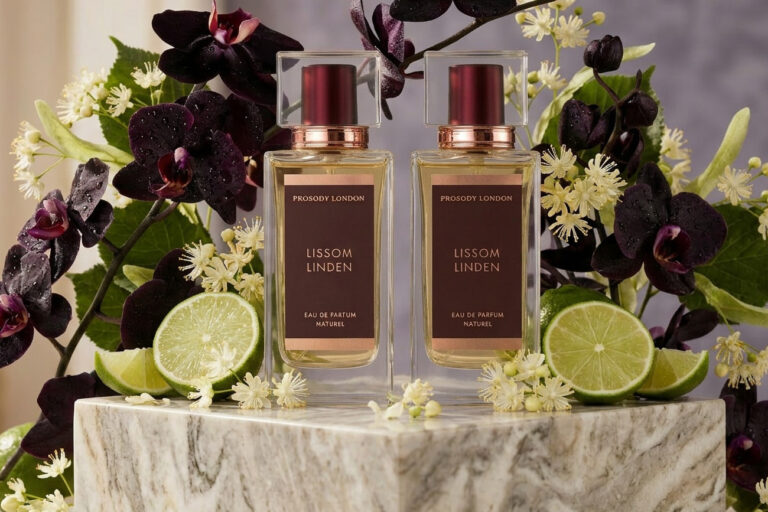
Our perfumes are 100% botanical, formulated without synthetic fragrance molecules, phthalates, or animal-derived ingredients. Every botanical earns its place twice: for its olfactory character and for the scientific literature that informs its inclusion. Fragrances most informed by this research include Pizzicato Bliss (bergamot, neroli), Neroli Nuance (linalool-rich neroli), and Lissom Linden (bergamot, linden blossom) — full profiles below.
How Botanical Fragrance Interacts with Mood in the Brain
The connection between scent and emotion is the most direct of any sense. Unlike sight or sound, olfactory signals travel to the amygdala and hippocampus — the brain’s emotional and memory centres — without passing through the thalamus. There is no filtering, no delay. The emotional response to scent is involuntary and immediate.
Research into essential oils suggests that their mood-elevating qualities are deeply connected to the brain’s natural reward and positivity pathways, including those associated with serotonin and dopamine. For instance, the inhalation of citrus oils rich in d-limonene is frequently highlighted in clinical literature for its ability to inspire a sense of profound vitality and brightness, promoting an uplifted atmosphere through well-characterised neurological pathways — specifically involving the 5-HT1A serotonin receptor and factors that support healthy neural pathways.
This is not simply aromatherapy folklore. These are findings from peer-reviewed clinical research. The botanical ingredients in the perfumes below are not chosen only for their beauty — they are selected because the compounds they contain interact with the brain’s mood architecture — including the serotonin, dopamine, and neuro-supportive pathways implicated in emotional resilience and happiness — in ways that are now scientifically well-characterised. For the full science on how this olfactory-limbic pathway supports tranquility alongside mood, read our guide to calming perfume and the botanical science behind it.
The Botanical Compounds Most Linked to Mood and Happiness
Understanding which perfume supports mood and happiness starts with the molecules themselves.
Limonene — the primary molecule in citrus oils including bergamot, neroli and lemon — has been studied in [animal research published in Phytomedicine](https://www.sciencedirect.com/science/article/abs/pii/S0944711321000167) for its interaction with dopamine and serotonin pathways in the brain, including striatal dopamine regulation and serotonin receptor activity. This research is at the animal-model stage; the evidence for a direct mood-elevating effect from limonene odour in humans specifically is less established than for some other compounds on this list.
Linalool — the primary molecule in neroli, lavender and many floral oils — has shown anxiolytic effects in behavioural studies that are blocked by GABA-A receptor antagonists, and separately, in vitro receptor-binding research published in Frontiers in Pharmacology found linalool binds the serotonin transporter (SERT) directly, though the same study did not detect direct binding affinity at the GABA-A benzodiazepine site specifically. Together, this points to linalool acting through multiple neurochemical pathways rather than a single confirmed mechanism, producing calm, sustained wellbeing rather than the sharp brightness of limonene.
Incensole acetate — the primary active compound of frankincense resin — has been studied for its interaction with TRPV3 ion channels in the brain (PMID 18492727), with research exploring its relationship to mood-related behavioural responses in animal models. Effects were absent when the TRPV3 receptor was not present — suggesting receptor-specific activity rather than general sedation.
Crocin and safranal — the active compounds in saffron (Crocus sativus) — have been examined in multiple randomised, double-blind, placebo-controlled trials exploring their relationship with mood, with research suggesting crocins act as reuptake inhibitors of dopamine and norepinephrine while safranal acts primarily on serotonin reuptake, alongside antioxidant activity as a secondary mechanism.
Clary sage — inhalation has been studied for its association with increased serotonin levels alongside reductions in cortisol of up to 36%. Cortisol is understood to suppress serotonin production — research into clary sage explores its dual relationship with both pathways simultaneously.
Bergamot’s active compounds — a study published in Phytotherapy Research found that bergamot essential oil attenuated HPA axis activity and reduced the corticosterone response to acute stress in rats, alongside anxiolytic-like behavioural effects comparable to the benzodiazepine diazepam. This is animal research into stress response specifically, rather than a direct human finding, but it points toward cortisol-lowering effects and improved relaxation as a genuine, specific mechanism for this material.
Individually, frankincense, ylang ylang, bergamot, neroli, sweet orange, geranium and rose essential oils have each been studied for their effect on the hypothalamic-pituitary-adrenal axis — a review in Phytotherapy Research summarising this body of individual studies found that all seven lower glucocorticoid levels, with associated calming effects and measurable decreases in blood pressure and heart rate across the underlying research.
The perfumes below are built with these compounds in mind — not as a wellness claim, but as a natural consequence of what their botanical ingredients are and the research that has explored them. For more on the materials most frequently studied in connection with low mood specifically, see the section below.
Botanical Materials Inspired by Mood Research
The science of botanical fragrance and mood extends into research exploring low mood and emotional resilience — territory that several aromatic compounds have been studied within, not as treatments, but as materials whose chemistry has inspired how we think about composition. A small number of botanicals — frankincense, clary sage and bergamot among them — appear repeatedly in this body of research, and their inclusion in our formulas is informed by that literature alongside their olfactory character.
Frankincense — Boswellia resin is rich in incensole acetate, a compound that has been the subject of neuro-olfactory research exploring its interaction with TRPV3 ion channels (PMID 18492727). Studies into this specific compound suggest a connection to grounding and emotional stillness. At Prosody London, we use frankincense not only for its deep, resinous character, but because this research has informed our understanding of its place in compositions intended to feel meditative and settled.
Clary sage — inhalation has been studied in a 2014 trial in menopausal women, published in Phytotherapy Research, which found a significant increase in serotonin alongside cortisol reductions of up to 36% in participants showing signs of depression, compared to a smaller reduction in those without. Cortisol is understood to suppress serotonin production — this research explores clary sage’s relationship with both pathways simultaneously, though the study population was specifically menopausal women, not a general population.
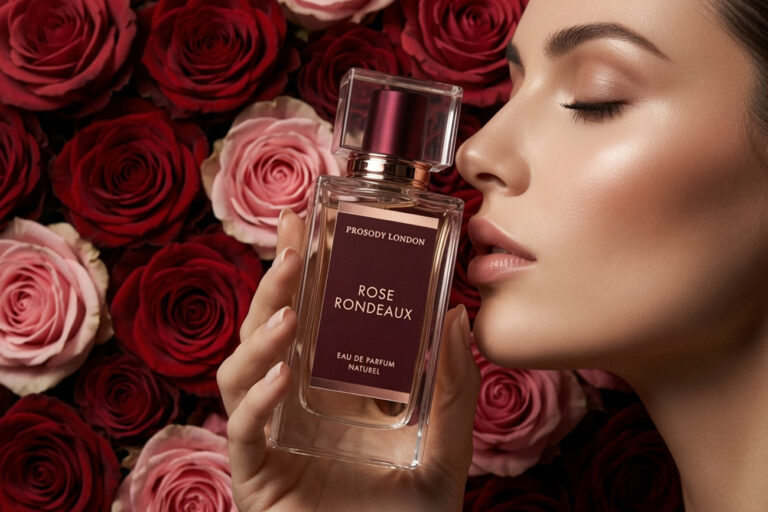
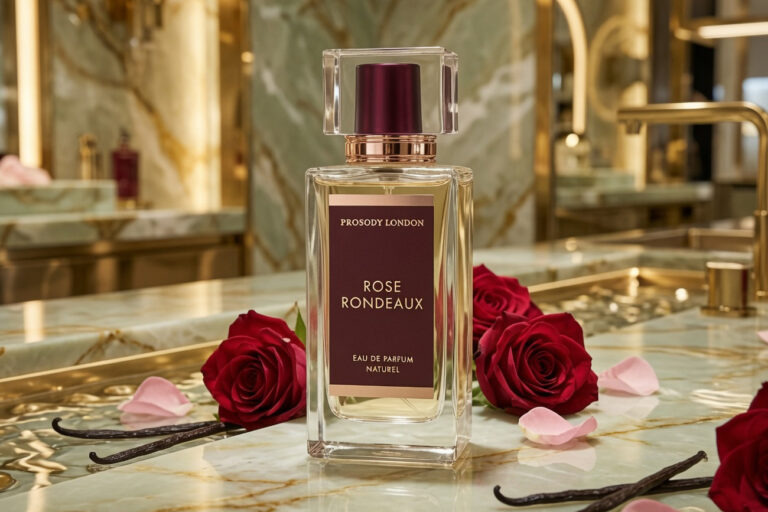
Rose — research has explored rose’s relationship with cortisol reduction and feelings of emotional warmth, with this material appearing frequently in studies examining mood and stress response. Its role in fragrance composition is informed by this body of literature alongside its established place in perfumery as one of the most complex and widely valued floral materials. For the full assessment of Prosody London’s rose compositions, see our guide to the best natural rose perfume.
The primary molecule in bergamot, d-limonene, contributes to its bright, citrus character, and separately, a 2025 study published in Advanced Science found that bergamot essential oil produced anxiolytic-like effects in stressed mice via a specific neural circuit connecting the anterior olfactory nucleus to the anterior cingulate cortex. This is early-stage animal research into anxiety reduction specifically, not a broader finding about reward or mood elevation, but it’s a genuine and specific mechanistic result for this material.
This research does not suggest that fragrance treats depression or any clinical condition. It describes botanical compounds being studied for their interaction with neurological systems also implicated in mood — and informs why these particular materials, among the many available to a perfumer, found their way into these compositions. For the full science on how botanical fragrance has been studied in relation to stress alongside mood, read our guide to calming perfume and the botanical science behind it.
7 Botanical Perfumes Inspired by Mood Research

Pizzicato Bliss → — The Joy Formula
Pizzicato Bliss is our brightest expression of botanical optimism. Built around bergamot, neroli and jasmine, it combines botanicals rich in aroma compounds such as limonene and linalool, which have been widely studied for their relationship with olfaction, emotional processing and positive mood.
Inspired by this body of scientific research, we composed Pizzicato Bliss to capture the sensation of effortless brightness: a sparkling citrus-floral opening that unfolds into a luminous heart before settling into a graceful, lasting base. The result is a fragrance designed to evoke freshness, vitality and joy through the artistry of botanical perfumery.
Every botanical was selected for both its olfactory character and the scientific literature informing its inclusion.

Berry Blitz → — Bright, Energised Happiness
Berry Blitz is built around vivid fruit botanicals including Scottish blueberry, blood orange and raspberry, creating a profile shaped by natural sweetness, citrus lift and soft green depth.
Citrus-derived aroma compounds such as limonene, along with naturally occurring berry volatiles, have been widely studied in relation to olfactory perception and emotional response. This body of scientific literature informs our approach to selecting and combining botanicals within the fragrance.
The composition opens with an immediate impression of brightness and energy, balanced by an oakmoss and woody base that grounds the fruit accord and extends its presence on the skin.
Berry Blitz reflects our approach to botanical perfumery: ingredients chosen for both their olfactory character and the scientific research that informs their selection.

Neroli Nuance → — Deep, Sustained Happiness
Neroli Nuance explores the quieter side of floral brightness — a composition centred on neroli oil, valued in perfumery for its soft citrus-floral character and natural complexity.
Neroli contains naturally occurring aroma compounds such as linalool, which has been the subject of scientific research exploring its role in olfactory perception and its relationship to relaxation responses under certain experimental conditions. This body of literature informs our understanding of neroli as a material within botanical perfumery.
The fragrance is composed to emphasise a sense of softness and balance: a floral citrus opening that unfolds into a calm, enveloping structure rather than a sharp lift, before settling into a gentle, lingering base.
Neroli Nuance reflects our approach of selecting botanicals for both their olfactory character and the scientific research that informs their inclusion.
As beauty journalist Jo Fairley wrote in the Daily Mail: “super-elegant, summery” — and Liz Earle has cited it as her favourite fragrance. The science and the experience align completely here.
Lissom Linden → — Happiness as Warmth
Lissom Linden explores warmth and softness in botanical perfumery — a composition centred on bergamot and linden blossom, two materials valued for their luminous, gentle aromatic character.
Bergamot contains naturally occurring aroma compounds that have been the subject of scientific research exploring their relationship with olfactory perception and emotional response in controlled settings. This research informs our broader understanding of citrus materials within fragrance composition.
At the heart, linden blossom brings a soft, honeyed floral tone that balances the brightness of the citrus opening, creating a smooth transition into a calm, enveloping structure.
The fragrance is composed to emphasise warmth, softness and quiet luminosity — a different expression of brightness that unfolds rather than projects.
Lissom Linden reflects our approach to botanical perfumery: ingredients chosen for both their olfactory character and the scientific literature informing their inclusion.

Jacinth Jonquil → — A Fragrance of Renewal
Jacinth Jonquil explores the idea of renewal in botanical perfumery — the sense of openness and unfolding that characterises the first days of warmth after winter.
Built around hyacinth, jonquil and jasmine, the composition uses CO₂ extracts to preserve the nuanced, living character of these florals at peak bloom. The result is a green-floral structure that balances freshness with depth, evoking the impression of petals just beginning to open.
Jasmine has been the subject of scientific research exploring its aroma compounds and their relationship to olfactory perception and emotional response in controlled settings. Alongside hyacinth’s dewy, green floral facets, this research informs our understanding of how these materials interact in composition.
The fragrance is composed to express brightness, softness and renewal — a floral accord that unfolds gradually, rather than announcing itself at once.
Jacinth Jonquil reflects our approach: botanicals selected for both their olfactory character and the scientific literature that informs their inclusion.

Carissis → — Quiet Happiness
Carissis explores the quieter spectrum of happiness in botanical perfumery — a sense of stillness, softness and ease rather than brightness or stimulation.
The composition is centred on lavender and carissa blossom, combining aromatic herbal-floral facets with gentle floral warmth. Lavender contains naturally occurring aroma compounds such as linalool, which has been the subject of scientific research exploring its relationship with olfactory perception and relaxation responses in controlled experimental contexts.
Rather than focusing on intensity, Carissis is composed to unfold slowly on the skin, emphasising softness, balance and quiet continuity.
Carissis reflects our approach to botanical perfumery: ingredients selected for both their olfactory character and the scientific literature that informs their inclusion.

A Capella Ray → — Solar Joy
A Capella Ray explores the sensation of light translated into fragrance — the feeling of warmth, clarity and openness associated with sunlit citrus accords. Built around limonene-rich citrus materials, the composition draws on botanicals that have been widely studied in relation to olfactory perception and emotional response in controlled research contexts. This body of scientific literature informs our understanding of citrus materials in perfumery.
The fragrance opens with a bright citrus lift that gradually softens into a warm, rounded structure, balancing freshness with depth to avoid sharpness or overstimulation.
A Capella Ray reflects our approach to botanical perfumery: ingredients selected for both their olfactory character and the scientific literature that informs their inclusion.

Lantern Reed → — Grounded Happiness
Lantern Reed explores a grounded expression of brightness in botanical perfumery — where citrus clarity is balanced by earthy depth and stillness. The composition opens with bergamot, a citrus material containing naturally occurring aroma compounds that have been widely studied in relation to olfactory perception and emotional response in controlled research settings. This citrus brightness is supported by vetiver and myrrh, materials known in perfumery for their deep, resinous and earthy character.
Rather than focusing on lift alone, Lantern Reed is composed to emphasise contrast: light and shadow, freshness and depth, movement and stillness.
Lantern Reed reflects our approach to botanical perfumery: ingredients selected for both their olfactory character and the scientific literature that informs their inclusion.

Why Natural Botanical Perfume Feels Different from Synthetic
The emotional and sensory responses associated with botanical fragrance materials are linked to naturally occurring aroma compounds such as linalool, limonene, and the complex constituents found in citrus, floral and resinous essential oils. These compounds have been studied in relation to olfactory perception and emotional response in controlled research contexts.
Synthetic fragrance molecules are typically designed for stability, consistency, and reproducibility of scent profile. Botanical materials, by contrast, contain naturally complex aromatic structures that vary depending on origin and extraction method.
A synthetic molecule designed to replicate the scent of bergamot may mimic its aroma profile, but it does not replicate the full natural chemical complexity of the original botanical material. This is why natural and synthetic materials can be experienced differently in perfumery, even when they smell similar.
This is part of why botanical fragrance is central to our work at Prosody London — not as a functional claim about mood outcomes, but as a different approach to fragrance composition rooted in natural materials and the scientific literature surrounding them.
For more on what synthetic fragrance contains instead, read our guide to hidden chemicals in perfume and our article on natural perfume vs synthetic.
Finding Your Fragrance
Choosing a fragrance is a personal sensory experience shaped by memory, preference, and context. Botanical materials interact differently with each wearer, influenced by individual perception and association.
Our collection explores a range of botanical compositions — from bright citrus structures to soft florals and grounded resins — each informed by our approach of selecting ingredients for both their olfactory character and the scientific literature that helps us understand them as materials.
We invite you to explore our natural perfume sample set and find the fragrance that resonates with your own sense of mood and atmosphere.
For more on botanical ingredients associated with prosperity and positive symbolism, see our guide to scent ingredients to attract abundance.

FAQ — Perfume for Mood and Happiness
Does perfume actually affect mood?
Scent has a uniquely direct connection to the brain’s emotional centres, reaching the amygdala without passing through the thalamus the way other senses do. Several botanical compounds — including limonene, linalool and incensole acetate — have been studied for their interaction with mood-related neurological pathways such as serotonin and dopamine. This is genuine and growing research, though it describes interaction with these pathways rather than a guaranteed mood outcome for every wearer.
Can fragrance help with low mood or stress?
Botanical materials such as frankincense, clary sage and bergamot have been studied in research exploring their relationship to mood-related pathways. This research informs why these materials are included in certain compositions — it is not a claim that any fragrance, including ours, treats low mood, depression, or any diagnosed mental health condition. If you are experiencing persistent low mood, the right person to speak with is a doctor.
Which botanical ingredients are most associated with mood research?
Limonene (citrus oils), linalool (neroli, lavender), incensole acetate (frankincense), crocin and safranal (saffron), and compounds in clary sage, bergamot and rose are among those most frequently studied in relation to mood and emotional response.
Is this the same as treating depression?
No. The research discussed in this article explores how certain botanical compounds interact with neurological systems also implicated in mood and depression — it is not evidence that fragrance treats depression or any clinical condition, and it should not be used as a substitute for professional medical or mental health support.
Disclaimer (to place at the end of the article, below the author bio):
This article is for general interest and does not constitute medical or mental health advice. Botanical fragrance is not a treatment for depression, anxiety, or any diagnosed mental health condition. If you are experiencing persistent low mood or mental health concerns, please speak with a doctor or qualified mental health professional.