Perfume and Skin — What the Research Actually Shows
By Kershen Teo, founder and perfumer of Prosody London
At a Glance — Perfume and Skin
Perfume and skin have a closer relationship than most fragrance marketing acknowledges — every botanical or synthetic material in a perfume spends hours in direct contact with skin, some of it absorbed to varying degrees. Several botanical ingredients commonly used in natural perfumery — rose, sandalwood, chamomile, frankincense, geranium, lavender — have been studied for properties relevant to skin comfort, including effects researchers describe as soothing or skin-conditioning.
| Botanical | Key Compound | Research Angle | Used In |
|---|---|---|---|
| Rose | — | Long history in Persian, Ayurvedic, European skin preparations | Rose Rondeaux |
| Sandalwood | α-santalol | Studied for interaction with skin cells | Santal Foy |
| Chamomile | Bisabolol | Widely studied for soothing properties | — |
| Frankincense | — | Long Egyptian/Arabian tradition; preliminary skin-related research | Whistle Moon, Oud Octavo |
| Geranium | — | Studied for general skin-comforting properties | — |
| Lavender | — | Extensively studied for skin comfort; long soothing-preparation history | Carissis |
This research is generally laboratory or raw-material focused, not studies of finished perfume worn on skin, and it informs which materials are chosen rather than constituting a claim about what any Prosody London fragrance does for skin. If you have a diagnosed skin condition, the right person to advise you is a dermatologist, not a fragrance article.
Perfume and skin are inseparable — every botanical material in a fragrance spends hours in direct contact with it, evaporating slowly into the air and being absorbed, to varying degrees, into the skin itself. That’s reason enough to think carefully about what’s in a fragrance, separate from how it smells.
I’m Kershen Teo, founder and perfumer of Prosody London. What follows is an honest account of what research says about perfume and skin — both the synthetic materials worth understanding and the botanical ones I choose to work with — and an equally honest account of where that research stops.
What “Skin-Friendly” Actually Means in Natural Perfumery
There’s a meaningful difference between a fragrance ingredient being gentle on skin and a fragrance ingredient treating a skin condition. The first is a reasonable, well-supported claim for many botanical materials. The second is a medical claim that no fragrance — natural or synthetic — is licensed or qualified to make.
Most of what follows sits firmly in the first category: materials that have been studied, often at the level of isolated compounds in laboratory conditions, for properties relevant to skin comfort. None of it should be read as evidence that wearing a Prosody London fragrance treats, prevents, or improves any diagnosed skin condition. For more on how natural formulation differs from synthetic on skin generally, see our guide to natural perfume for sensitive skin.
Perfume and Skin — The Synthetic Side
Most mainstream fragrance is built on synthetic fixatives designed for stability and longevity rather than skin compatibility. Two categories are worth understanding.
Synthetic musks — particularly galaxolide and tonalide — have been detected in human blood and breast milk in independent studies, confirming they accumulate in human tissue with regular use (PMID 15537743). France’s national safety agency ANSES has proposed classifying galaxolide as toxic for reproduction under EU regulation, citing suspected endocrine-disrupting properties.
Phthalates, used as fixatives and solvents in many conventional fragrances, are not required to be listed individually — they’re commonly hidden under the single word “fragrance” or “parfum” on an ingredient label. A systematic review found consistent associations between phthalate exposure and hormonal disruption across population studies (PMID 30336412).
Neither of these categories is about a specific skin condition — they’re broader questions about what’s being applied to skin daily, repeatedly, over years. For the full breakdown, read our guides to hidden chemicals in perfume and endocrine disruptors in perfume.
None of Prosody London’s fragrances contain synthetic musks or phthalates.
Perfume and Skin — The Botanical Evidence
Several of the materials I use most have been individually studied for their interaction with skin, generally at the level of isolated compounds in laboratory conditions.
Rose. Rose absolute and rose otto have a long history of use in skin preparations across Persian, Ayurvedic and European traditions. Modern research has examined individual compounds in rose oil for general skin-related properties — relevant to comfort rather than any specific condition. This is research on the raw material, not on perfume worn on skin. For the full assessment of rose in natural perfumery, read our guide to the best natural rose perfume.

Sandalwood. α-santalol, sandalwood’s primary aromatic compound, has been studied in laboratory settings for its interaction with skin cells. Sandalwood’s traditional use in skin preparations across South Asian cultures long predates this research and reflects a different kind of evidence — cultural and historical rather than clinical.
Chamomile. German chamomile is among the more widely studied botanicals in relation to skin comfort, with its primary compound bisabolol examined for soothing properties in various formulations — though much of this research relates to chamomile preparations generally, not specifically to fragrance.

Frankincense
Frankincense resin has a long history of use in skin preparations across Egyptian and Arabian traditions. Some compounds in frankincense have been studied in laboratory settings for skin-related properties, though this research remains preliminary and is not specific to frankincense as used in perfumery. For more on frankincense in natural perfumery, see our guide to frankincense for hay fever — confirm this is the correct live URL before publishing.
Geranium
Geranium oil has been studied for general skin-comforting properties and has a long tradition of use in skincare preparations, particularly across European and South Asian herbal practice.
Lavender
Lavender is one of the more extensively studied botanicals in relation to skin comfort, with a long history of use in soothing preparations. As with the other materials above, this body of research relates primarily to lavender as a raw material rather than to lavender worn as part of a finished perfume. For the full nervous-system evidence on lavender, read our guide to calming perfume.

Why I Choose These Materials
None of the research above is a claim that any Prosody London fragrance treats or improves a skin condition. What it explains is part of why these particular botanicals — rather than others — earned a place in certain compositions: they’re materials with a long history of use on skin, and a body of research, however preliminary, exploring why.

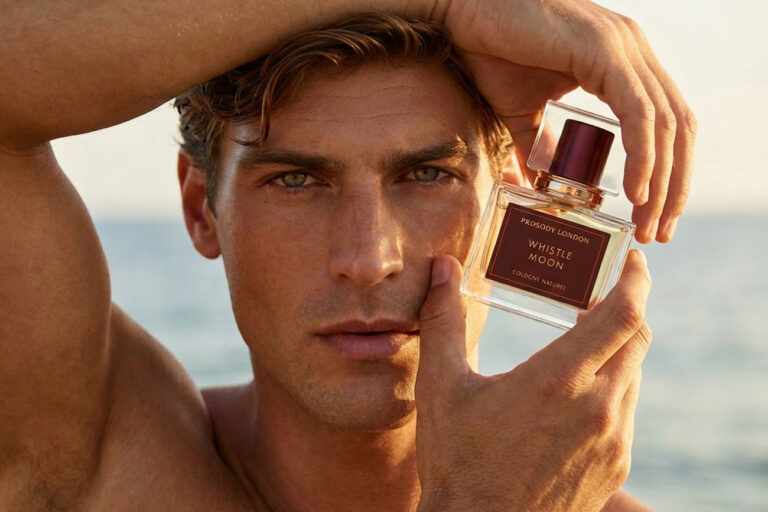
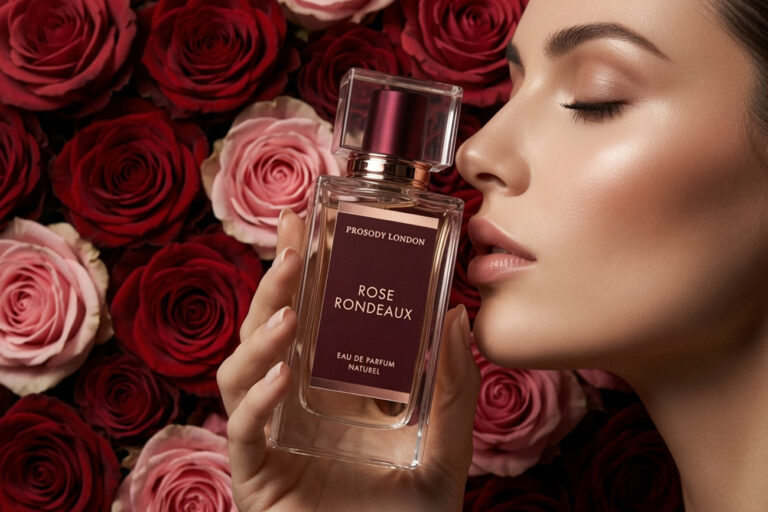
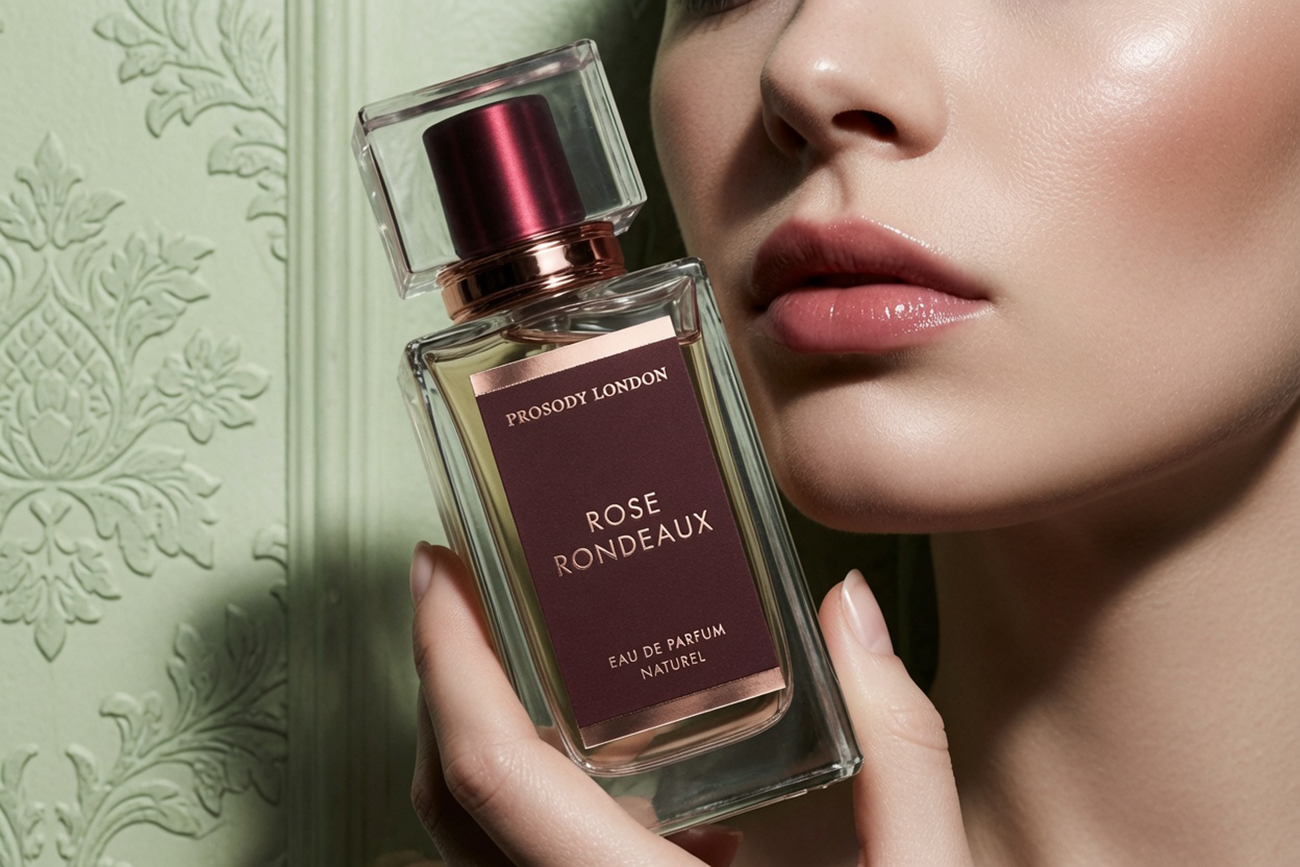
Rose Rondeaux is built around rose otto and sandalwood. Santal Foy centres on sandalwood. Whistle Moon carries frankincense through its base. Carissis is built around lavender absolute. Each is composed first for how it smells and wears on skin — the considerations above are part of the formulation thinking, not a promise about skin outcomes.
If you’d like to try several of these botanicals on your own skin before committing to a full bottle, our natural perfume sample set is the best way to do that.
If you have a diagnosed skin condition or specific dermatological concerns, please speak with a dermatologist. This article is general interest content, not medical or dermatological advice.
FAQ — Perfume and Skin
Is natural perfume better for skin than synthetic perfume?
Many people with sensitive skin find natural, botanically-formulated perfumes more comfortable to wear, partly because they avoid synthetic musks and other compounds associated with skin sensitivity in some individuals. This is a general comfort consideration, not a clinical claim, and individual skin reactions vary considerably regardless of whether a fragrance is natural or synthetic. Read more in our guide to natural perfume for sensitive skin.
Can perfume ingredients help with skin conditions like eczema or psoriasis?
Which botanical ingredients are associated with skin comfort?
Rose, sandalwood, chamomile, frankincense, geranium and lavender are among the botanicals most commonly studied in relation to general skin comfort, though much of this research focuses on the raw materials themselves rather than finished perfume.