Is Niche Perfume Worth the Price? A Perfumer’s View
By Kershen Teo | Founder & Perfumer, Prosody London
At a Glance: why is niche perfume so costly
Niche perfume commands a higher price because of ingredient cost, lower concentration dilution, small-batch production, and narrower distribution — not because “niche” is inherently better. The premium is worth paying when it correlates with rarer raw materials and independent formulation; it’s not worth paying when it’s simply funding packaging and scarcity marketing.
Is niche perfume worth the price? It’s the question I get asked more than almost any other, usually by someone standing in front of a shelf where a niche bottle costs two or three times what a designer fragrance next to it does. Before getting into the cost breakdown, if you’re not sure what actually qualifies as niche in the first place, our definitive guide to what niche perfume is covers that ground. The honest answer here is: sometimes, and it’s worth knowing which is which before you spend the extra money.
As a working perfumer, I can tell you that premium is genuinely earned in some bottles and genuinely marketing in others, depending on the house. Here’s how to tell the difference.
What actually costs more
Three things genuinely drive up the price of niche perfume, and none of them are about the word “niche” itself:
Ingredient quality and rarity
Natural absolutes, rare botanicals, and higher-grade essential oils cost dramatically more than the synthetic aromachemicals that make up most mainstream fragrance formulas. A rose absolute or an aged sandalwood oil can cost hundreds of times more per kilo than a synthetic substitute — see our breakdown of perfume brands with the best quality ingredients for how this plays out across the market.
Concentration
Niche houses more often formulate at extrait or parfum concentration rather than eau de toilette, which means more raw material per bottle — a direct cost, not a marketing one.
Batch size
Small, independent production runs don’t get the economies of scale that a conglomerate-owned designer brand does. You’re paying for craft, not efficiency.
What doesn’t justify the price on its own: an unusual bottle shape, a limited-edition label, or the word “niche” printed on the box. Those are marketing costs, and it’s worth being clear-eyed about which part of the price tag they represent.
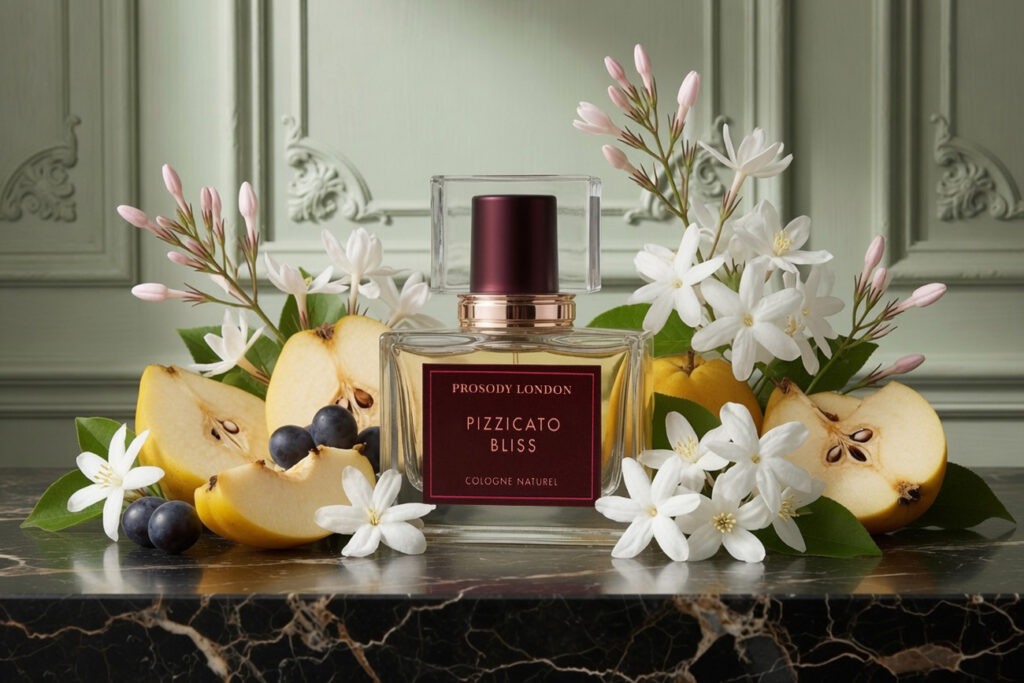
What “vetiver” or “jasmine” usually means on a designer label
Some of the most expensive materials in perfumery are rose otto, sandalwood, oud, orris root, ambergris, vetiver, and jasmine absolute — genuinely rare botanicals that can run into thousands of pounds per kilo, harvested and processed in ways that don’t scale easily.
Mass-produced designer fragrance is built around a different priority: predictability at enormous volume. A formula that has to smell identical across millions of bottles, batch after batch, for years, can’t depend on a natural harvest that varies by season, region, and yield. So the industry leans on synthetic aromachemicals engineered to reproduce a note reliably and cheaply, at any scale.
In practice, that means when a designer bottle lists “vetiver” or “sandalwood” on the label, it’s very often describing the effect of a synthetic molecule built to evoke that note, not the real raw material. The clearest example is jasmine: where a niche formula might use genuine jasmine absolute, most designer fragrance reaches instead for Hedione (methyl dihydrojasmonate) — a synthetic aromachemical that gives an airy, transparent jasmine-like effect for a fraction of the cost and with total batch-to-batch consistency.
It’s a legitimate and technically impressive tool. Hedione in particular is prized for its transparency, consistency, and lower allergen profile compared to some natural absolutes — but it isn’t the botanical itself. Similar synthetic stand-ins exist for sandalwood, vetiver, and most of the other expensive naturals on that list, and the choice to use them is usually a deliberate engineering decision, not a shortcut. For more on how these substitutions work across the market, our piece on natural perfume vs synthetic perfume perfume goes into the formulation side in more depth.
Where this becomes relevant to the price question: a designer bottle built around synthetic reliability and a niche bottle built around genuine botanicals can carry a similar price tag for genuinely different reasons — one is paying for engineering and scale, the other for rarity and hand-formulation. Neither is inherently the better choice; it depends what you value.
The mainstream benchmark
Houses like Serge Lutens, Frederic Malle, and Maison Francis Kurkdjian have built their reputations on formulations that genuinely justify their positioning — unusual materials, uncompromising concentrations, and perfumers given real creative latitude rather than a brief written by a marketing department. Hermès occupies a slightly different lane: designer distribution with niche-level formulation discipline under Christine Nagel.
These houses are useful reference points precisely because they show the premium can be earned. The test is whether a brand’s ingredient sourcing and formulation approach match its price — not whether it sits in the “niche” aisle of a department store. For a UK-specific view of who’s earning that premium, see our roundup of the best British luxury fragrance houses.
Why the natural alternatives can cost even more than what they replace
Synthetic musks became the industry default because they’re cheap and perfectly consistent — but they’ve also drawn sustained scientific scrutiny. Research published in Environmental Health Perspectives found that synthetic musk compounds inhibit the multixenobiotic resistance transporters that normally pump toxicants out of cells in marine mussels, allowing a marker toxicant to accumulate in tissue for 24–48 hours after exposure ended — part of a broader body of environmental research that has since documented persistent bioaccumulation of synthetic musks in waterways worldwide, and in human fatty tissue including breast milk. Formulating without them, as we do, is part of why the ingredient bill runs higher, not lower.
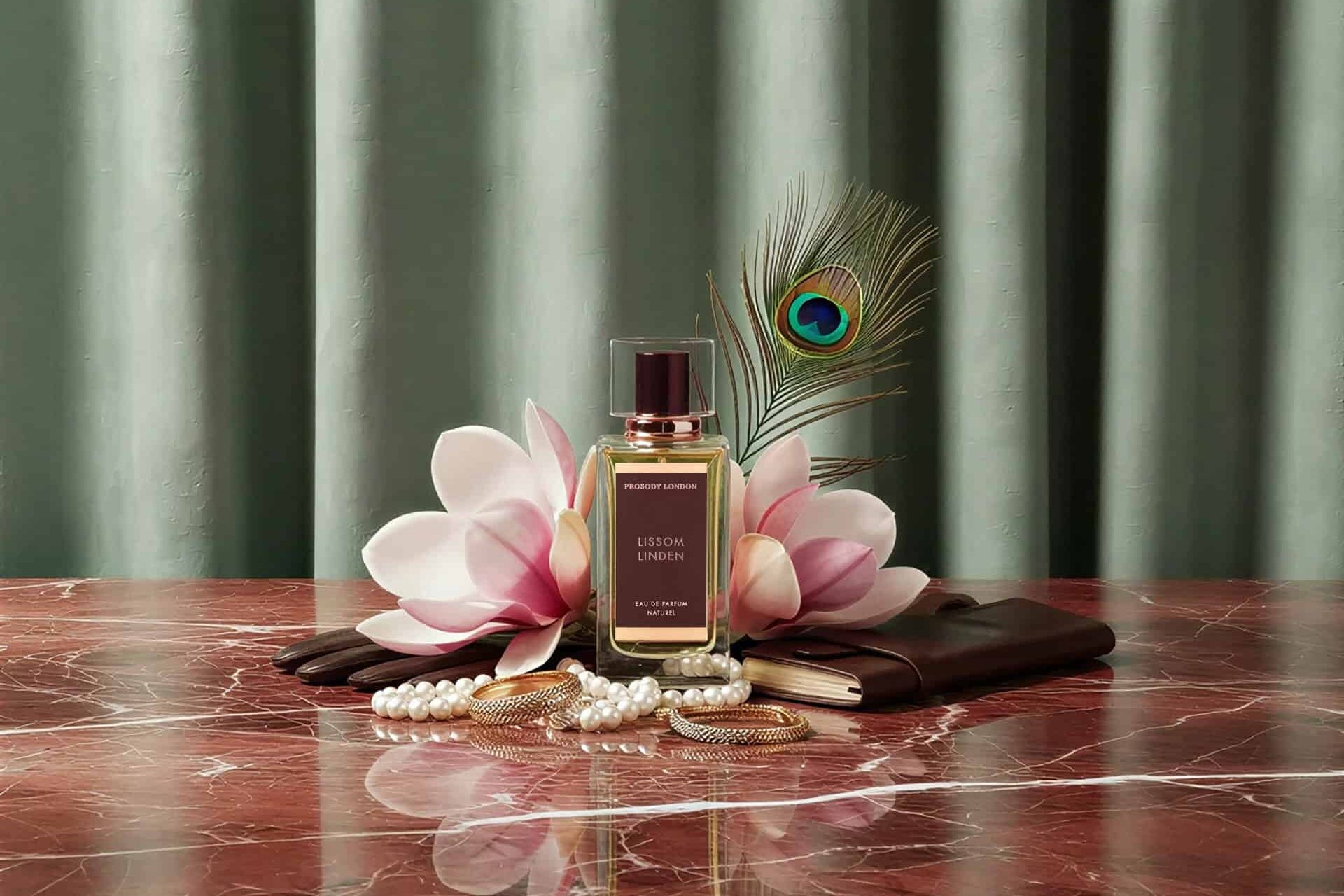
The natural alternatives aren’t just marginally pricier — they’re often the single most expensive material in the whole formula. Ambrette seed, extracted from a hibiscus relative, is the closest thing perfumery has to a genuine plant-based musk, and it typically costs £2,400–£4,800 per kilogram against roughly £40–160/kg for the synthetic musk analogues it replaces.
Agarwood — oud — sits at an even more extreme end: genuine oud oil can run £9,000–£20,000 per kilogram, which is why almost all “oud” in commercial fragrance, designer and niche alike, is actually a synthetic accord rather than the real resin. We go into exactly how that substitution works, and how to tell the difference, in our guide to what oud is actually made from.

Where Prosody LONDON fits
We formulate exclusively with botanical materials — no synthetic musks, phthalates, or petrochemical derivatives — using organic grain alcohol as our base, in accordance with COSMOS Organic principles. That’s a deliberate cost decision: natural, single-origin botanicals simply cost more than lab-synthesised substitutes, and we’ve chosen to spend the budget there rather than on packaging. You can browse the results in our organic and all-natural perfumes collection, or read more on why we formulate this way in our guide to natural perfume in the UK.
Perfume critic Luca Turin captured the trade-off well: “Organic perfumes are very difficult to make — these guys are very good at it.” That difficulty is exactly where the price premium of genuinely botanical perfumery goes — into formulation, not marketing.
A useful way to decide whether is niche perfume worth the price, bottle by bottle
- Ask what’s driving the price. Rare or natural ingredients and higher concentration are worth paying for. A famous name and a heavy bottle are not, by themselves.
- Check who’s behind the formula. Independent perfumers with room to use better materials tend to produce something a mass-market brief can’t.
- Consider how it wears, not just how it smells in the shop. Well-formulated fragrance tends to develop more interestingly over the course of a day — that’s a qualitative difference worth testing on skin, not a number to chase.
- Weigh exclusivity honestly. If part of what you’re paying for is that fewer people wear it, that’s a legitimate reason to buy niche — just be honest with yourself that it’s a different kind of value than formulation quality.
Niche perfume is worth the price when the premium is going into what’s actually in the bottle. It’s not worth it when it’s going into what’s printed on the box. If you’re weighing up specific options, our guide on how to choose a niche perfume walks through the selection process by season, mood, and presence — our pieces on niche perfume by season and niche perfume by mood narrow that down further, and our roundups of the best niche perfumes for women and best niche perfumes for men are a good place to start comparing formulations directly. You can also browse our full botanical perfume collection to see where we’ve put that ingredient budget to work.
FAQ: Is Niche Perfume Worth the Price?
Why is niche perfume more expensive than designer perfume?
Niche perfume costs more mainly due to three factors: higher-quality and rarer raw ingredients, higher concentration formulations such as extrait or parfum rather than eau de toilette, and small-batch production that doesn’t benefit from the economies of scale larger designer brands have.
Is niche perfume actually worth the extra cost?
It depends on what’s driving the price. When the premium reflects rarer natural ingredients and independent formulation, it’s generally worth paying. When it mainly reflects packaging and scarcity marketing, the extra cost isn’t buying meaningfully better quality.
What’s the difference between niche and designer perfume formulation?
Niche houses typically give perfumers more creative latitude and use higher-grade or rarer materials, while designer fragrance formulas are usually built to a marketing brief with cost efficiency and mass distribution in mind.