The 10 Best British Perfume Brands 2026 — A Perfumer’s Pick
By Kershen Teo | Founder & Perfumer, Prosody London
At a glance: the 10 best British perfume brands in 2026
The best British perfume brands in 2026 are Creed, Floris London, Clive Christian, Penhaligon’s, Ormonde Jayne, Jo Malone London, Boadicea the Victorious, Roja Parfums, Atkinsons and, for 100% plant-derived perfume, Prosody London. The table shows the scent I would try first from each house, its character and who it suits best; my full assessments follow.
| House | Scent to try first | Character | Best for |
|---|---|---|---|
| Creed | Aventus | Fruity, smoky, confident | Anyone after a modern compliment-getter |
| Floris London | No. 89 | Classic, clean, gentlemanly | Traditionalists who like discreet polish |
| Clive Christian | No. 1 | Opulent and maximal | Statement buyers for whom price is no object |
| Penhaligon’s | The Tragedy of Lord George | Witty, narrative, characterful | Collectors who enjoy a story |
| Ormonde Jayne | Ormonde Woman | Refined, unusual materials | Niche explorers |
| Jo Malone London | Wood Sage & Sea Salt | Light, airy, layerable | First luxury purchase; layering fans |
| Boadicea the Victorious | Blue Sapphire | Bold ambers, woods and oud | Wearers who want presence |
| Roja Parfums | Elysium | Lavish, classically built | Connoisseurs of grand perfumery |
| Atkinsons | 24 Old Bond Street | Smoky tea and woods | Lovers of historic London style |
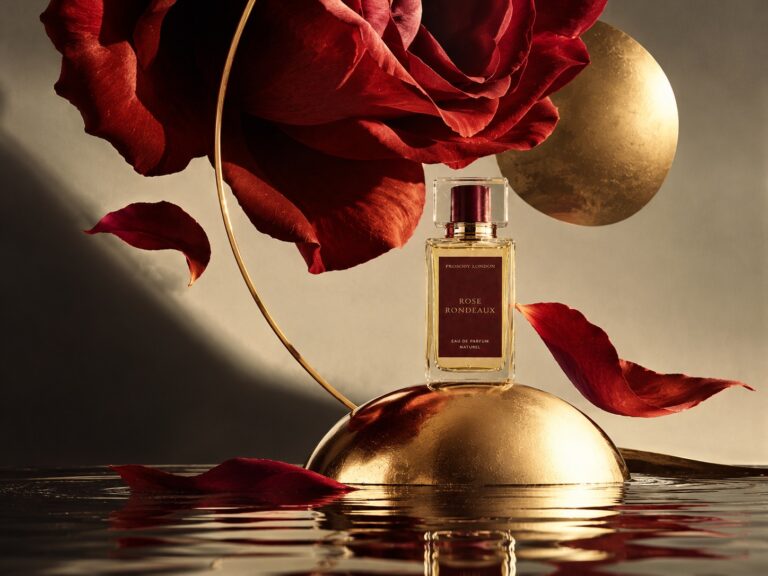
| Prosody London | Rose Rondeaux | 100% plant-derived, textured | Anyone choosing natural perfume |
British luxury fragrance is a grand and evolving theatre of identity, where centuries of history, audacious artistry and national character converge in a bottle. I have chosen these ten houses as a working perfumer in London: some for their heritage, some for their artistry, all for what they reveal about British perfumery. Heritage matters, but so do distinctive compositions and creative independence. This is an editorial selection, not a ranking by sales or laboratory testing, and Prosody London, which I founded, is included and clearly identified. For what I look for in an independent house, see what makes a good niche British perfume.
1. Creed: The Contested Lineage
No discussion of British luxury fragrance can begin without mentioning the iconic house of Creed. Creed tells its story as a London tailoring house founded in 1760 that went on to dress, and scent, European royalty. Fragrance historians have questioned how much of that early perfume history can be documented, and the house has long been based in France and is now part of a global luxury group. I include it for its British origins and its modern influence: Aventus, with its smoky pineapple and birch, changed what a contemporary men’s fragrance could be, and Original Vetiver remains a crisp, soapy-green classic.
2. Floris London: The Apothecary of Gentlefolk
Floris, established in 1730 on Jermyn Street, is the perfumer of the English gentry. As one of the oldest family-run fragrance houses, Floris represents a quieter, more personal luxury—understated refinement combined with impeccable service. It holds a royal warrant from King Charles III, following warrants from Queen Elizabeth II. Fragrances like No. 89, a favourite of Ian Fleming, embody sophistication, while Seringa offers a delicate, powdery floral. Floris captures the essence of discreet confidence and timeless elegance, a brand as much about heritage as it is about subtly perfecting the art of British luxury fragrance.
3. Clive Christian: The Opulence of Crown and Sceptre
For those seeking opulence in British luxury fragrance, Clive Christian is the epitome of ceremonial grandeur. The house revives the Crown Perfumery Company, founded in 1872, which the designer Clive Christian acquired in 1999. According to the brand, Queen Victoria allowed Crown Perfumery to use her crown on its bottles, and the crown still tops every flacon today — a story of royal permission rather than a current royal warrant. Its No. 1 Imperial Majesty, a ten-bottle edition released in 2005, is listed by Guinness World Records as the most expensive commercially available perfume. The perfumes themselves, No. 1 above all, are lavish florals and spiced woods built for maximal effect, making each scent a statement of power, legacy and impeccable taste. Clive Christian offers an unmatched luxury — fragrance as an accessory for arrival.
4. Penhaligon’s: The Eccentric Narrative
Founded in 1870, Penhaligon’s is a house that tells stories through scent, embodying the wit and eccentricity of British society. Its first royal warrant came from Queen Alexandra in 1903, and it holds one from King Charles III today; since 2015 it has been owned by the Spanish fragrance group Puig. Known for its whimsical ribboned bottles and Portraits collection, which subverts tradition with playful, fictional aristocratic narratives, Penhaligon’s creates fragrances with personality. Scents like The Tragedy of Lord George and Luna capture British charm, wit and heritage in ways that transcend mere fragrance, making each perfume an olfactory biography of British luxury fragrance.
5. Ormonde Jayne: The Couture of Rare Botanicals
Ormonde Jayne represents a modern, independent strand of British luxury fragrance. Founded by Linda Pilkington, the brand is celebrated for sourcing rare and extraordinary ingredients from across the globe, then composing them with British refinement. Fragrances like Ormonde Woman with black hemlock and violet heart, and Tanger, a sunny neroli and amber, exemplify a luxury of discovery. Ormonde Jayne’s sleek, geometric bottles and its taste for unusual raw materials speak to a confidence that is both understated and sophisticated.
6. Jo Malone London: The Grammar of Modern Elegance
Jo Malone London popularised “fragrance combining” in British luxury fragrance, transforming scents from singular statements into a personal, layered experience. Fragrances like English Pear & Freesia and Wood Sage & Sea Salt embody clean, transparent accords, offering an accessible yet sophisticated elegance. Founded in London by Jo Malone and owned by Estée Lauder since 1999, the brand’s iconic cream-and-black packaging adds a tailored chic that makes its creations feel personal, yet undeniably luxurious.
7. Boadicea the Victorious: The Power of Myth
Named after the Celtic warrior queen, Boadicea the Victorious is a British luxury fragrance house that embraces raw power and sensuality. Its luxurious, intricately carved flacons are matched by the intensity of the fragrances within, such as rich ambers, dark woods, and animalic musks. This is not a subtle luxury—it’s one of bold declaration and strength. Boadicea caters to those who view fragrance as a potent extension of personal confidence and power, a true statement of individuality in British luxury fragrance.
8. Roja Parfums: The Haute Couture of Perfumery
Roja Parfums represents the zenith of British luxury fragrance, with fragrances crafted by Roja Dove, an encyclopedic perfumer who approaches scent like a jeweler with gemstones. Known for emotional extravagance and impeccable construction, Roja Parfums offers a blend of classic chypres and lavish orientals, each fragrance designed to evoke profound emotion. The luxury of Roja Parfums is one of exclusivity, scholarly homage, and a timeless elegance that speaks to the connoisseur of British luxury fragrance.
9. Atkinsons: The Revival of Historic Character
Established in 1799 and relaunched in 2013, Atkinsons has revived a historic British name for the modern age, blending rich heritage with contemporary finesse. 24 Old Bond Street, named after the house’s historic Mayfair address, is built on black tea, juniper and a smoky hint of whisky, and reflects the brand’s ability to bridge past and present with sophistication. Atkinsons’ luxury is grounded in provenance, offering a connection to the olfactory tastes of centuries past, reinterpreted for today’s discerning perfume lovers.
10. The Pioneering Frontier: Prosody London’s Conscious Craft
While the nine houses above define the established spectrum of British luxury fragrance—ranging from royal lineage and discreet service to narrative and global opulence—a new, pioneering path is being forged by Prosody London. Its distinction lies in its radical approach to luxury, founded on conscious purity and a deep commitment to nature, using 100% plant-derived aromatic ingredients. This ethical and artistic constraint redefines beauty as something subtle, dynamic, and intrinsically tied to its origins in the earth.

Prosody’s philosophy is clearest in its florals. Moiré Mimosa is a profound, contemplative study of mimosa. It doesn’t just capture the sunny puffball bloom: mimosa absolute is lit by lime, neroli and a whisper of aniseed, coconut and melon give it a silken texture, and tuberose, ambrette seed and vanilla settle it into a quiet, powdery, honeyed warmth. This is the Prosody difference: immersive, botanical realism.

This commitment to profound realism finds its highest critical acclaim in Rose Rondeaux, which CaFleureBon called “one of the most joyous, breathtakingly life-like roses” its writer had encountered. It is a revelation of transparency and structure: pink pepper and a berry accord° open it, rose and geranium form the heart, and labdanum, patchouli, sandalwood and a raspberry accord° give it a jammy, unhurried depth, unfolding in rounds (the “rondeaux”) of increasing complexity across hours of wear. Luca Turin has said of the house: “Making organic fragrances is hard. These guys are very good at it.”
Prosody’s Lantern Reed is vetiver for people who love citrus. Grapefruit, bergamot and myrtle open it brightly; rose, clary sage and orris soften the heart; and vetiver, myrrh and agarwood give the base its earthy, slightly smoky depth, evoking reeds by a riverbank at twilight, illuminated by the soft glow of a lantern. A vetiver remembered from the earth.

This philosophy of authentic materiality is also exemplified in Oud Octavo, which presents Vietnamese black agarwood in a softer, more approachable light — bergamot, coriander and ginger bring clarity, while cedarwood, labdanum and benzoin deepen it — and in Jacinth Jonquil, capturing the honeyed, sun-drenched scent of spring in green hyacinth, jonquil and jasmine sambac, warmed by vanilla and resins.


Prosody’s holistic consciousness — from organic grain alcohol to a bottle-return scheme — makes ecological integrity inseparable from its luxury proposition. Through fragrances like the critically acclaimed Rose Rondeaux, the brand answers a profound contemporary question: what is the future of luxury in an age of environmental awareness? Prosody posits that the highest form of luxury is not excess, but integrity; not a polished abstraction of nature, but a reverent dialogue with its true character. For more natural houses, see my guide to the best natural perfume in the UK.
Explore the full Prosody London collection — natural perfume for women · natural cologne for men · Build Your Own 6 x 2ml Discovery Set

In doing so, Prosody London stands as a vital new chapter, proving that the future of British luxury fragrance is as much about intellectual botany and artistic purity as it is about celebrating a storied past. It is the scent of conscious brilliance.
FAQ about British perfume brands
What are the best British perfume brands?
The most established names include Floris London (founded 1730, one of the oldest surviving English perfume houses), Penhaligon’s (known for its story-driven Portraits collection), Creed (best known for Aventus), Clive Christian (opulent, with Victorian crown heritage) and Jo Malone London (light, layerable colognes). Alongside these historic houses, newer independents like Prosody London take a 100% plant-derived approach to British luxury fragrance.
Which British fragrance houses hold royal warrants?
Floris London and Penhaligon’s both hold royal warrants from King Charles III, following earlier warrants from previous monarchs. Clive Christian’s crown bottle traces back to the Crown Perfumery Company, which, according to the brand, Queen Victoria allowed to use her crown; that is a historic permission rather than a current royal warrant. Creed also describes historic royal clients, but those claims are hard to verify independently. A royal warrant marks supply to the royal household, not a guarantee of quality.
Which British perfume brand is the oldest?
Floris, founded on Jermyn Street in London in 1730, is generally regarded as the oldest English perfume house still trading, and it remains family-owned. Creed dates its origins to 1760 as a tailor, but that history is disputed, and Atkinsons dates from 1799.
Is Jo Malone London still a British brand?
Jo Malone London was founded in London by Jo Malone and remains London in identity, but it has been owned by the American group Estée Lauder since 1999. Jo Malone herself later founded a separate brand, Jo Loves.
Are British luxury fragrance houses using rare or unusual botanical ingredients?
Some are. Ormonde Jayne is known for unusual raw materials, and Prosody London builds every fragrance from 100% plant-derived aromatic ingredients — essential oils, absolutes, resins and natural isolates — with no synthetic aroma chemicals, which is a different approach to “luxury” than the heritage model most historic houses follow.
What’s the difference between a British luxury fragrance house and a niche fragrance brand?
The terms overlap but aren’t identical. “Luxury” typically signals price point, packaging, and often heritage or royal patronage. “Niche” usually refers to independent houses working outside mass-market distribution, sometimes with more experimental or personal compositions. A brand can be both, neither, or just one — Ormonde Jayne and Prosody London are arguably both niche and positioned at a luxury price point, while some heritage luxury houses (Creed, Clive Christian) aren’t considered niche given their scale and retail presence.