Niche Perfume by Season — A Working Perfumer’s Pick
By Kershen Teo, founder and perfumer of Prosody London
At a Glance:Niche Perfume by Season
Choosing niche perfume by season is less about matching a mood to a month and more about matching a fragrance’s structure to temperature and humidity — the two variables that most affect how a botanical composition actually performs on skin. This guide organises twelve Prosody London fragrances by the season each is formulated to suit: bright, green florals for spring (led by Jacinth Jonquil); light, fruited and aquatic structures for summer (led by A Capella Ray); woody and resinous compositions for autumn (led by Lantern Reed); and deep, long-held resins and ouds for winter (led by Oud Octavo).
New to niche perfumery generally? Start with our definitive guide to what niche perfume is.
| Season | Fragrance | Best For | Key Notes |
|---|---|---|---|
| Spring | Jacinth Jonquil | Classic spring floral | Hyacinth, jasmine, jonquil, bergamot, juniper berry, ylang ylang, benzoin |
| Spring | Neroli Nuance | Mediterranean brightness | Valencia neroli, citrus, melon, rose, jasmine, frankincense, cedarwood |
| Spring | Moiré Mimosa | Distinctive powdery floral | Neroli, Chilean lime, melon, mimosa absolute, almond blossom, tuberose |
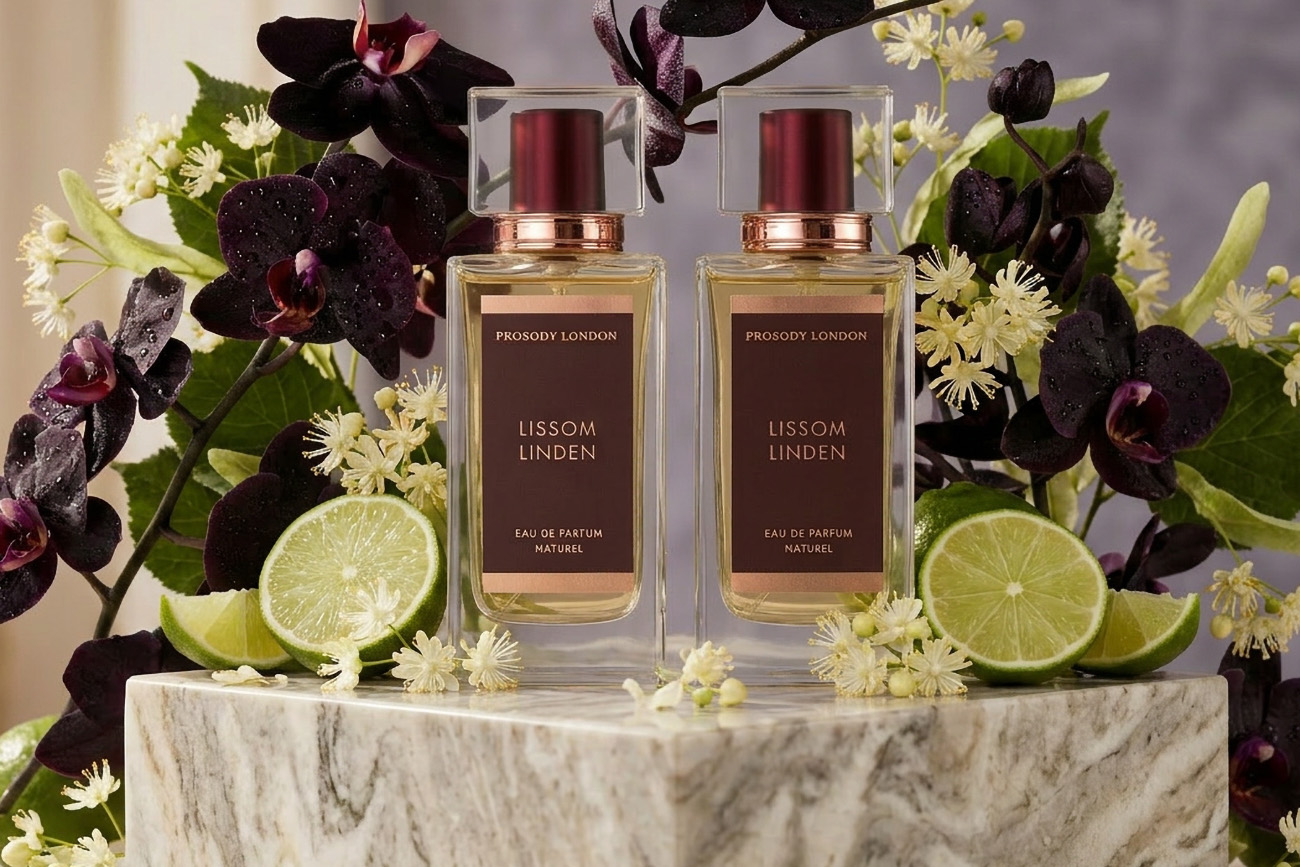
| Summer | Lissom Linden | Best all-day summer floral | Honeyed rose, linden flowers, melon, frankincense, light musky wood |
| Summer | A Capella Ray | Best low-projection unisex | Lavender, orange blossom, lemon verbena, jasmine, sandalwood |
| Summer | Berry Blitz | Best fruited day-to-dark scent | Scottish blueberry, blood orange, blackcurrant, pimento, rose, geranium, oak, peat, cedarwood, frankincense |
| Summer | Ocean Commotion | Best marine-aquatic | Sea fennel, ambergris-adjacent naturals, mineral-rich botanical extracts |
| Summer | Trevi Rose | Best skin-close rose | Capri white rose, Highland raspberry, Bahia rosewood |
| Autumn | Lantern Reed | Best transitional woody | Grapefruit, white florals, vetiver, cedarwood, sandalwood, labdanum, amber |
| Autumn | Whistle Moon | Best fruity-smoky | Smoke-adjacent resins, genuinely smoky botanicals |
| Winter | Rose Rondeaux | Best rose | Rosa damascena absolute, iris, bergamot, raspberry, blackcurrant, patchouli, musky sandalwood |
| Winter | Oud Octavo | Best oud | Genuine oud, cedarwood, smoky amber base |
Because the framework is built around temperature and humidity rather than a fixed calendar date, it applies wherever you are — simply match the fragrance to the season you’re currently in, not the specific month. Each entry below includes the key notes, the reasoning behind the seasonal placement, and — where the science supports it — the specific botanical molecule responsible for the fragrance’s character.
Most niche perfume guides sort fragrances by note family or by house. That’s useful if you already know what you like — it’s not much help if you’re standing in front of your collection wondering why the fragrance that felt perfect in December sits flat and wrong on a warm June evening. Thinking about niche perfume by season, rather than by note or by trend, solves that problem directly. The answer usually has nothing to do with quality and everything to do with season.
In How to Choose a Niche Perfume — The Prosody London Method, I set out the Season × Mood × Presence framework I use when formulating and when advising customers. Season is the first and most practical filter, because temperature, humidity and daylight change how a fragrance actually behaves on skin — not just how it’s perceived to fit the mood of a month. This article takes that first axis and works through it properly: what each season demands structurally from a fragrance, and which niche botanical compositions answer that demand.
Why Season Changes What You Should Wear
Fragrance is a chemical reaction with your skin, not a fixed object. Warmth accelerates the evaporation of top notes and pushes base materials forward faster; cold slows everything down, holding top notes in place longer and keeping heavier base notes from developing their full character until body heat builds under a coat. Humidity changes how sillage carries. This is why a heavy oud that feels intimate and correct in January can feel airless and overbearing in August, and why a bright citrus-aquatic that reads as perfect in July can feel thin and forgettable once the temperature drops.
This is also why thinking in terms of niche perfume by season is more useful than thinking in terms of niche perfume by month — the exact weeks shift by climate and hemisphere, but the underlying structural logic doesn’t.
Working with botanical materials makes this more pronounced, not less. Real Rosa damascena, real neroli absolute and real sandalwood all respond to temperature and skin chemistry in ways synthetic reconstructions — built for consistency rather than character — are specifically engineered to avoid. That’s a trade-off I’ve made deliberately. The fragrances below are grouped by the season each is built to perform in, not just the season its marketing suggests.
This article discusses fragrance in the context of perfumery practice, sensory psychology, and published research. It is not intended as medical or therapeutic advice.
Spring — Green Florals and Luminous Openings
Spring calls for fragrances that open bright and stay light on skin as the air warms but before summer heat takes hold. If you’re building a wardrobe of niche perfume by season for the first time, spring is usually the easiest entry point — the structures are lighter and more forgiving than autumn or winter compositions. The three below share a green, floral-forward architecture that reads as fresh rather than heavy.

Best for classic spring floral — Jacinth Jonquil
Built around hyacinth, jasmine and jonquil — jonquil being a relative of narcissus with a white floral richness that borders on narcotic. The opening is intensely green and watery, the kind of freshness that’s genuinely difficult to hold in natural perfumery because green floral absolutes are volatile and hard to fix without distorting them. Bergamot, juniper berry, ylang ylang and benzoin round out the structure, with the benzoin providing just enough resinous grip to keep the dry-down as considered as the opening.
Hyacinth and jasmine are both naturally rich in linalool, the terpene alcohol behind much of green floral perfumery’s calming reputation. A 2018 study published in Frontiers in Behavioral Neuroscience found that linalool odour exposure produced anxiolytic-like effects in mice, mediated through benzodiazepine-responsive GABA-A receptors — the same receptor family targeted by benzodiazepine medication, though at a fraction of the potency. The effect disappeared entirely in mice whose sense of smell had been destroyed, confirming it works through olfactory input rather than absorption. It’s animal research rather than a clinical claim about wearing perfume, but it helps explain why this particular green-floral profile has such an enduringly calming reputation.
Comparable mainstream reference points: the hyacinth-forward green florals from the classic French houses. Jacinth Jonquil is built without the synthetic fixatives those relies on for longevity.
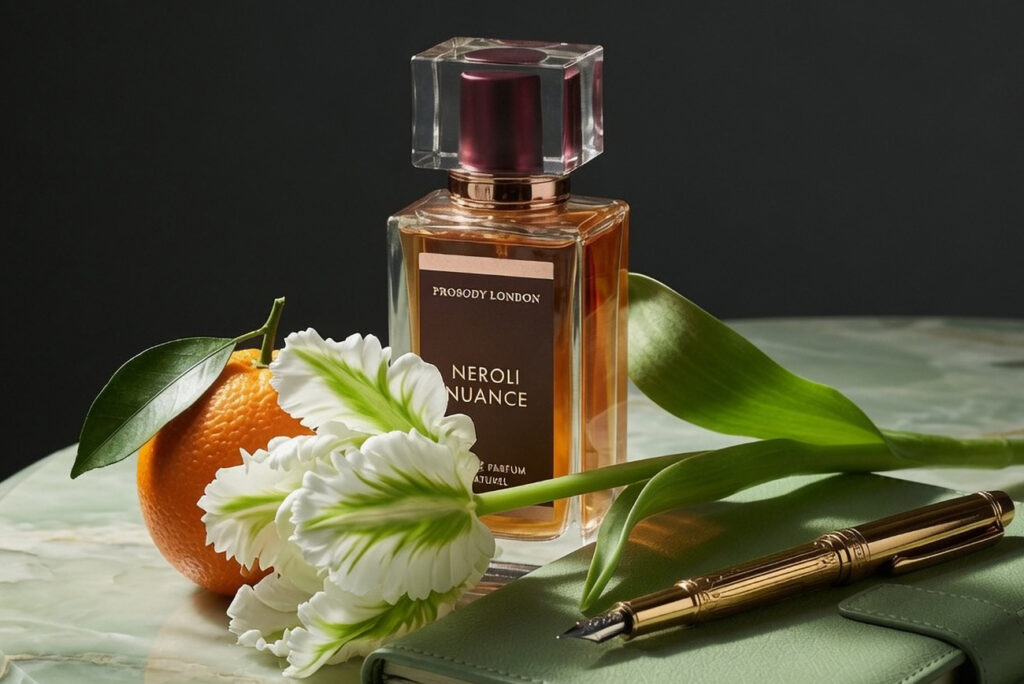
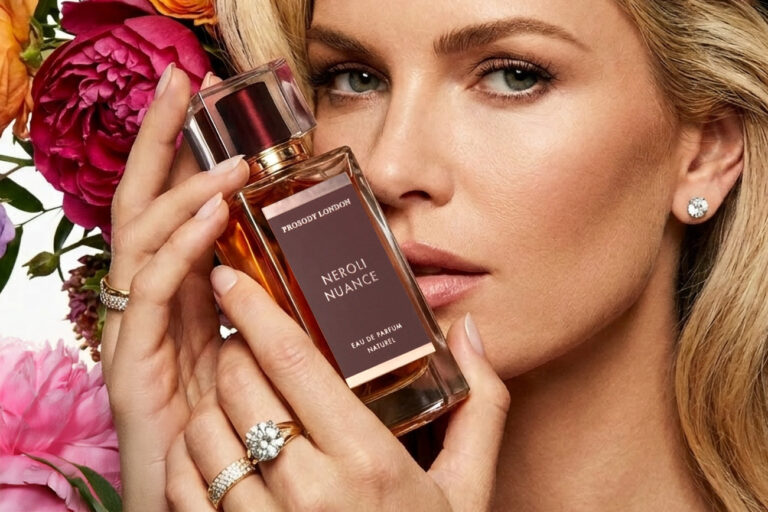
Best for Mediterranean brightness — Neroli Nuance
Neroli absolute is one of the most expensive materials in natural perfumery, and a genuinely good neroli fragrance is rarer than the ingredient’s popularity would suggest. Neroli Nuance opens solar and bright — Valencia neroli over citrus and melon — before a soft-spiced heart of rose, jasmine and frankincense introduces warmth, settling into a cedarwood base that keeps the whole composition close to skin. This is the fragrance I’d point to first for anyone who wants spring to smell luminous rather than simply green.
Bergamot is the other citrus component doing quiet work here. A 2015 randomized crossover study of 41 healthy women, published in Research in Complementary Medicine, found that inhaling bergamot essential oil vapour significantly lowered salivary cortisol and increased high-frequency heart rate variability — a marker of parasympathetic nervous system activity — compared to rest alone. It’s one of the few citrus aromatherapy findings backed by measured endocrine and physiological data rather than self-report alone.

Best for a distinctive powdery floral — Moiré Mimosa
Mimosa is one of the most underused notes in perfumery, mostly relegated to a supporting role in classic compositions rather than allowed to lead. Moiré Mimosa puts it centre stage: a bright opening of neroli, Chilean lime and melon gives way to Côte d’Azur mimosa absolute in the heart, powdery and honeyed, with almond blossom deepening the effect. Indian tuberose in the base adds a creamy, seductive weight that gives the fragrance real lasting power without losing the lightness that makes it a spring fragrance rather than an autumn one.
Worth being precise here rather than making a bigger claim than the evidence supports: citrus aromatherapy research is genuinely mixed. A 2016 study published in Frontiers in Psychology exposed 78 participants to d-limonene, vanillin, or diethyl phthalate during a stress-induction task and found no odour-specific mood-lifting effect of d-limonene itself — but the more pleasant participants judged an odour, regardless of which one, the less the stress task reduced their happiness.
Separately, animal research published in Phytomedicine has found that limonene produces anxiolytic-like effects in mice via adenosine A2A receptor-mediated regulation of dopaminergic and GABAergic activity in the striatum. The honest summary: citrus notes are consistently reported as pleasant, and there’s a plausible mechanism in animal models, but the human evidence for limonene itself lifting mood, independent of general pleasantness, isn’t there yet.
Summer — Aquatic, Citrus and Fruited Structures
Heat and humidity are unforgiving on fragrance. Heavy bases turn cloying, synthetic musks intensify unpleasantly on hot skin, and anything under-projected simply evaporates before it’s noticed. The five below are built specifically to hold their structure through warm weather rather than simply smelling “summery” in concept.

Best all-day summer floral — Lissom Linden
Honeyed rose and fresh linden flowers over melon, resting on a base of calming frankincense and light musky wood. The linden gives this its distinctive character — a green-floral note that most niche houses ignore entirely — while the frankincense base means it doesn’t collapse into thinness the way lighter summer florals often do by early evening.
The frankincense base isn’t just structural — it’s doing real olfactory-psychological work. Researchers from Johns Hopkins University and the Hebrew University of Jerusalem, publishing in The FASEB Journal, identified incensole acetate, a compound isolated from Boswellia resin, as a TRPV3 channel agonist that produced anxiolytic-like and antidepressant-like behavioural effects in mice — effects that disappeared entirely in mice genetically modified to lack the TRPV3 channel, confirming the mechanism. It’s a plausible molecular explanation for why frankincense has been burned in devotional and calming contexts across cultures for millennia.

Best low-projection unisex — A Capella Ray
Lavender done properly — herbal and slightly sharp rather than the “relaxing” cliché mainstream perfumery reduces it to — combined with orange blossom, lemon verbena and jasmine over a sandalwood base. The lowest-projection fragrance in the collection, which makes it the right choice for hot weather when you want presence without heaviness: effortlessly wearable, genuinely unisex, and built to sit close to skin through a full day of heat.
Lavender’s calming reputation isn’t just folklore. Linalool, its dominant terpene alcohol, has been shown in the same 2018 mouse study referenced earlier to produce anxiolytic-like behavioural effects specifically through olfactory input — the effect disappeared entirely in mice whose sense of smell had been chemically destroyed, confirming the pathway runs through smell itself rather than absorption. It’s the clearest molecular case in aromatherapy science for why scent alone, independent of any other action, can measurably shift a nervous system.
Best fruited day-to-dark scent — Berry Blitz
The opening — Scottish blueberry, blood orange, blackcurrant and a hit of pimento — is vivid and immediate, but it’s an intelligent vividness: the tartness comes from genuine botanical extracts rather than synthetic berry accords, which is why it doesn’t read as sweet or juvenile. A rose and geranium heart gives it spine, and a base of English oak, peat, cedarwood and frankincense means that as the temperature drops through a summer evening, the fragrance shifts register with it — from bright fruit to something considerably more grown-up.
The geranium heart isn’t just aromatic scaffolding. A study published in the Libyan Journal of Medicine found that rose geranium essential oil — rich in citronellol and geraniol, the same alcohols responsible for its scent — significantly reduced paw edema in rats with an effect comparable to diclofenac, a standard anti-inflammatory drug, and showed potent anti-inflammatory activity when applied topically to skin in a separate ear-edema model. A rare case of a fragrance material with genuine dermatological, not just olfactory, credentials.

Best marine-aquatic — Ocean Commotion
Mainstream aquatics are built almost entirely on a single synthetic aromachemical — the “Calone” molecule responsible for the identical cold-seawater character of every commercial marine fragrance on the market. Ocean Commotion takes a different route entirely: sea fennel, ambergris-adjacent naturals and a genuine saline quality drawn from mineral-rich botanical extracts. The result reads less like a swimming pool and more like a harbour at low tide — specific and coastal rather than generic. On skin in heat it performs exactly as a marine fragrance should: immediate freshness, a clean heart that never turns soapy, and a dry-down that’s warm and woody rather than cold and synthetic.
Comparable mainstream reference points: the Calone-driven aquatics that dominate the men’s fragrance market. Ocean Commotion delivers the same marine impression from entirely botanical sources.

Best skin-close rose — Trevi Rose
Capri white rose and Highland raspberry over Bahia rosewood — bright rather than heavy, and built to stay close to skin rather than project outward, which is exactly what a rose fragrance needs to do in summer heat to avoid turning cloying. A professional, versatile presence that works as easily for daytime office wear as it does for a warm evening.
Rose’s calming reputation extends to the skin as well as the nervous system. The geraniol naturally present in rose absolute is the same compound behind rose geranium’s documented anti-inflammatory activity referenced earlier — one reason genuine rose-led fragrances have historically been used in skin-adjacent contexts, well before the wellness-fragrance framing became fashionable.
Autumn — Woody, Resinous and Structured
As temperatures drop, skin holds fragrance differently — heavier materials finally get the chance to develop properly instead of evaporating before their base notes appear. Autumn is where woody and resinous structures earn their place.

Best transitional woody — Lantern Reed
Grapefruit and white florals open brightly, but the composition is really about what follows: a base of vetiver, cedarwood, sandalwood, labdanum and amber that provides genuine earthy grounding rather than the fleeting citrus-and-done structure typical of mainstream fragrances in this category.
Most commercial citrus-woody fragrances achieve their longevity through synthetic fixatives; Lantern Reed achieves it through the natural tenacity of vetiver and cedarwood, materials with real depth rather than chemically engineered staying power. This is the fragrance I’d reach for on the first genuinely cool day of the year.
Cedarwood’s grounding effect has direct physiological backing. A human inhalation study measuring cedrol — cedarwood’s principal sesquiterpene alcohol — exposed 26 healthy subjects to vaporised cedrol versus plain air and found it significantly decreased heart rate, systolic and diastolic blood pressure, and respiratory rate, with heart rate variability analysis confirming an increase in parasympathetic (rest-and-digest) activity and a corresponding drop in sympathetic activity. This is one of the better-documented human, rather than animal, findings in fragrance science.

Best fruity-smoky — Whistle Moon
I formulated Whistle Moon as a direct botanical answer to the most celebrated, most imitated fragrance in modern niche perfumery — a composition built almost entirely on synthetic iso-E super for its woody-smoky backbone. The question I set myself was whether that fruity-smoky, immediately compelling character could be achieved through entirely natural means. Whistle Moon uses smoke-adjacent resins and genuinely smoky botanicals in place of the synthetic route, and it’s autumn where that structure makes the most sense: cool enough for the smoky base to register properly, without the heaviness that would feel wrong in high summer.
The resinous, agarwood-adjacent materials in this family have a documented calming profile in their own right. A 2023 study published in Biomedical Reports found that agarwood essential oil inhalation produced anxiolytic effects in anxiety-induced mice and antidepressant-like effects in mice with stress-induced depression, linked to regulation of the brain’s glutamate and GABA-A receptor balance — the neurotransmitter system most directly implicated in stress response.
Comparable mainstream reference points: the fruity-smoky niche fragrance that defined the last decade of masculine perfumery, and its many synthetic-dependent imitators. Whistle Moon reaches for the same effect without the synthetic backbone.
Winter — Deep, Resinous and Long-Held
Cold air holds scent close and slows evaporation, which means winter is the one season where genuinely heavy, resin-led compositions can be worn without becoming overbearing. This is where the most expensive and difficult botanical materials — real rose absolute, real oud — get to do their proper work.
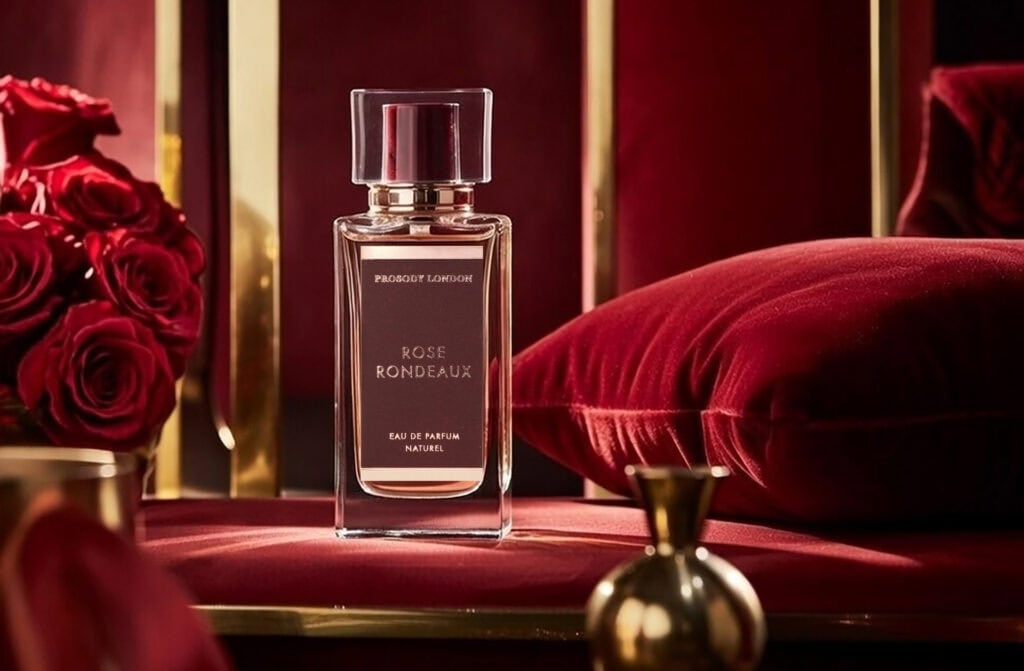
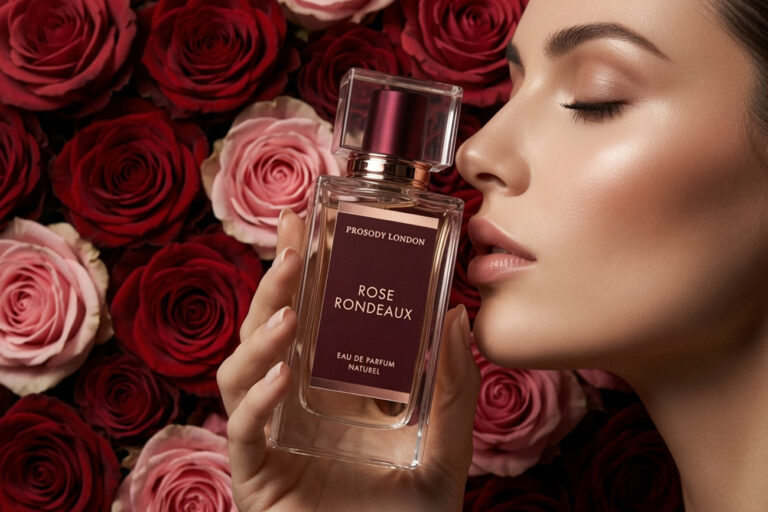
Best rose — Rose Rondeaux
Built around Rosa damascena absolute at a concentration that’s genuinely expensive to formulate with, which is exactly why synthetic rose reconstructions dominate the market at every price point. Iris and bergamot open the composition, raspberry and blackcurrant add brightness, and a base of patchouli and musky sandalwood gives it the depth and complexity that only real rose absolute can sustain into a proper dry-down. Cold weather is where this fragrance is at its best — the chill keeps the rose from ever tipping into sweetness.
The musky sandalwood base contributes more than depth. A 2004 study published in Planta Medica applied East Indian sandalwood oil and alpha-santalol to skin under breathing masks that excluded any olfactory input, and found alpha-santalol produced significant physiological changes consistent with a relaxing and sedative effect — confirming the effect works through transdermal absorption rather than requiring the sense of smell.
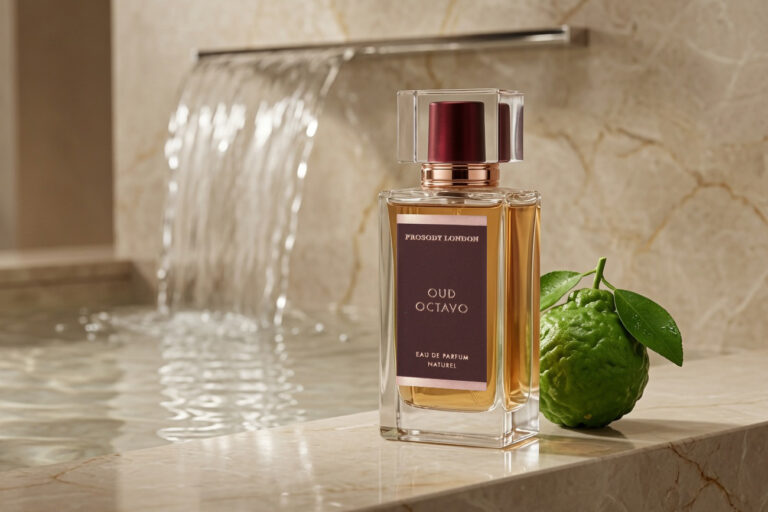
Best oud — Oud Octavo

Deep and resinous, built around genuine oud material with cedarwood and a smoky amber base. Oud is one of the most misunderstood materials in Western perfumery — frequently reduced to a single “oud accord” built from synthetic approximations. Oud Octavo uses the real material, which means the fragrance is complex and evolving rather than static, developing over hours in a way synthetic oud accords are not built to do. This is a fragrance for the coldest months, where the density of the composition finally has room to unfold without becoming heavy on skin.
Genuine agarwood carries more than tradition behind its calming reputation. A 2018 study published in the International Journal of Molecular Sciences found that agarwood essential oil reduced anxiety- and depression-like behaviour in restraint-stressed mice by inhibiting hyperactivity of the HPA axis — the hormonal stress-response system also implicated in human cortisol regulation — including reduced levels of the stress hormones ACTH and corticosterone downstream of that axis. It’s early-stage pharmacology rather than a clinical finding in humans, but it gives some scientific grounding to a material that’s been burned for calming, ceremonial purposes for over two thousand years.
How to Use This Niche perfume by season Guide
If you’re new to niche and natural perfumery, the practical starting point isn’t to buy a full bottle for every season — it’s to build niche perfume by season gradually, starting with whichever season is closest on the calendar. The natural perfume sample set lets you try any six fragrances from across the collection as 2ml samples before committing to a full bottle, which is the fastest way to work out which seasonal structures actually suit your skin chemistry — botanical materials behave differently from person to person more than synthetic ones do, so what reads as perfect on one person’s skin can develop quite differently on another’s.
For the deeper question of why that skin-chemistry variability happens at all, our guide to natural perfume vs synthetic perfume covers the structural differences in how each type of fragrance is built and why they perform so differently across seasons and skin types.
Season is only the first axis of the Prosody Method — mood and presence (how a fragrance projects and to whom) are the other two, and worth understanding once you’ve got the seasonal basics right. We cover why some fragrances feel emotionally “right” independent of their season in why emotion matters more than notes, and address the value question directly in are niche perfumes worth the price.
FAQ on Niche perfume by season
Do I really need to buy niche perfume by season?
Not strictly — but temperature and humidity change how any fragrance performs on skin, and this effect is more pronounced with botanical materials than with synthetic ones. A heavy resinous fragrance that feels rich and correct in winter can feel airless in summer heat, and a light citrus-aquatic that’s perfect in July can feel thin and underwhelming once temperatures drop.
Can one fragrance work across all four seasons?
A handful can — generally lighter, more skin-close compositions with restrained sillage. Most fragrances, however, are built around a specific seasonal logic, and fighting that logic usually means the fragrance never performs at its best.
What’s the easiest way to start building a seasonal fragrance wardrobe?
Start with the season closest on the calendar and add one fragrance at a time rather than buying a full set at once. A sample set is the most efficient way to test seasonal performance on your own skin before investing in full bottles.