Ambrette Seed Skin Scent: A Natural Skin Musk Guide
By Kershen Teo, founder and perfumer of Prosody London
At a Glance: Ambrette Seed Skin Scent
This is my own take as a working perfumer on why ambrette seed matters right now — a skin scent is a fragrance built to stay close to the body rather than project into a room, felt at close range rather than announced from a distance, and ambrette is one of the few natural materials genuinely capable of anchoring that kind of composition.
Its naturally soft, low-projection diffusion and fixative qualities are exactly what let a fragrance linger on skin rather than fade or drift away — which is why it’s often described as a natural skin musk. It’s also rarer and costlier than most synthetic alternatives, owing to labor-intensive harvesting and low yield, which is part of why true skin scents built around it, like Carissis, remain uncommon.
At the heart of this movement lies ambrette seed, derived from Abelmoschus moschatus — a botanical whose musky aura has long fascinated perfumers. Often called the “vegetable musk,” ambrette is more than an ingredient. It is a philosophy.
It is the seed that remembers the deer.
A plant that learned the secret of the animal.
The scent of the body remembering itself.
To understand why the Ambrette Seed Skin Scent feels so profoundly human — and why it remains rare and precious in perfumery — we must explore its science, symbolism, cost, and finally, its expression in composition.
The Seed That Remembers the Deer
Historically, natural deer musk was one of perfumery’s most treasured materials. Used in royal courts and sacred rituals, it was valued for its sensual warmth and magnetic depth. But its procurement required harm.
When perfumers discovered that ambrette seed could echo the velvety smoothness of deer musk without ethical cost, it was transformative. Ambrette became known poetically as “the seed that remembers the deer.”
Entirely botanical, yet unmistakably animalic in warmth, it bridges instinct and intention. It became perfumery’s most elegant natural musk alternative — not a synthetic approximation, but a plant-based material with genuine complexity.
There is quiet alchemy in this transformation: the vegetal becoming animal, the garden becoming skin.
Why Consider a Natural Alternative to Synthetic Musk at All?
Synthetic musks aren’t inferior — many, particularly modern macrocyclic and alicyclic types, are stable, well-studied, and biodegradable, and they remain the backbone of most commercial perfumery for good reason: consistency, cost, and scale. So the case for ambrette isn’t that synthetic musk is a lesser choice. It’s a different one.
A few genuine reasons someone might reach for ambrette instead:
Formulation philosophy — Some perfumers and wearers simply prefer working within a fully botanical framework as a matter of values and craft, not because synthetics are unsafe. This is closer to why a chef might choose to cook without processed ingredients: a stylistic and ethical choice, not a safety verdict.
Regulatory attention to certain older synthetic musk classes — Most synthetic musks used in modern perfumery have established safety assessments and remain important fragrance materials. However, some older musk classes have attracted ongoing scientific and regulatory attention because of concerns about environmental persistence and potential toxicological effects. In January 2025, France’s ANSES proposed classifying galaxolide as a Category 1B reproductive toxicant under the EU CLP Regulation, based on animal studies. At the time of writing, this remains a proposal under consultation through ECHA rather than a finalized EU classification.
Industry groups have challenged aspects of the proposal, and the regulatory process is still ongoing. Newer macrocyclic and alicyclic musks were developed in part to address some of the environmental and performance limitations associated with earlier synthetic musk classes, so this is not an argument against synthetic musks as a whole, nor are all synthetic musks equivalent.
A different sensory register — Ambrette’s complexity and gentle diffusion produce a specific quality — proximity rather than projection — that some wearers find more suited to how they want a fragrance to behave, independent of any claim about safety or superiority.
None of this makes ambrette a “better” musk. It makes it a different tool for a specific kind of fragrance: one built around closeness rather than distance.
The Science Behind an Ambrette Seed Skin Scent
An Ambrette Seed Skin Scent behaves differently from most commercial perfumes. It is structured around proximity and warmth.
Low Volatility and Intimate Sillage
Ambrette seed oil contains relatively high-molecular-weight macrocyclic lactone compounds that evaporate more slowly than many top-note materials, contributing to its soft, close-to-skin diffusion. This creates intimate sillage — a soft aura perceptible only within close range.
An Ambrette Seed Skin Scent does not fill a room. It lives within arm’s reach. It is felt during a hug, noticed in a shared breath.
Natural Fixative Power
Ambrette acts as a botanical fixative, binding lighter notes to the skin and slowing their evaporation. Many wearers describe it as feeling less like something applied and more like an extension of their own warmth — rather than remaining perceptibly separate from the skin, as some higher-diffusion synthetic musks can.
This is why many describe ambrette as “the scent of the body remembering itself.” It’s often perceived as enhancing natural warmth rather than sitting apart from it.
Multidimensional Profile
Unlike linear synthetic musks, ambrette unfolds in layers: nutty softness, slight fruit nuance, gentle medicinal coolness, deep velvety musk, faintly animal warmth.
This complexity makes every Ambrette Seed Skin Scent slightly different on each wearer.
Ayurvedic & Unani Lore — The Seed of Vital Warmth
Ambrette’s story extends beyond perfumery into traditional medicine. In Ayurvedic and Unani systems, ambrette — often called musk dana — has historically been valued as a warming botanical, traditionally used as a tonic, a soother, and a subtle aphrodisiac. These are traditional and historical uses rather than clinically established effects, but they speak to how long ambrette has held cultural significance well beyond fragrance.
Within Ayurvedic philosophy, warming plants are said to support Agni — the inner fire believed to govern digestion, magnetism, and life-force. Ambrette was traditionally believed to restore embodied presence, not through intensity, but through gentle warmth.
This cultural legacy deepens the meaning of an Ambrette Seed Skin Scent. It is not theatrical sensuality. It is vital sensuality — warmth aligned with life.

Why Ambrette Is So Expensive
Despite its beauty, ambrette remains rare in mainstream perfumery. Several factors contribute to its cost:
Labor-Intensive Harvesting — Ambrette seeds must be cultivated in specific climates and harvested carefully. The seeds are dried before extraction, requiring time and manual labor.
Low Yield — The aromatic yield from ambrette seeds is modest. Large quantities of raw material are needed to produce small amounts of oil or absolute.
Delicate Extraction — Steam distillation or CO₂ extraction must be precisely controlled to preserve ambrette’s musky nuances. This technical care increases production costs.
Market Economics — Synthetic musks are dramatically cheaper and more consistent, and modern classes like macrocyclic and alicyclic musks have made real strides in biodegradability compared to older nitro and polycyclic musks. They provide projection and stability at a fraction of ambrette’s cost.
Ambrette, by contrast, is expensive, subtle, harvest-dependent, and complex. For mass-market brands prioritizing volume and projection, ambrette is often considered impractical. But for artisans committed to intimacy and ethics, it is invaluable.
This rarity is part of what makes a true Ambrette Seed Skin Scent so distinctive.
Why Ambrette Is Rarely Used in Modern Perfume
Beyond price, ambrette presents creative challenges.
It does not dominate. It does not shout. It requires restraint.
In compositions designed for loud impact, ambrette can feel almost too subtle. It performs best in formulas built around skin, warmth, and breath.
An Ambrette Seed Skin Scent demands thoughtful pairing — soft florals, green nuances, gentle spices, or resinous depth that echoes the human body.
Because it is nuanced and harvest-dependent, many commercial formulas rely primarily on synthetic musks for consistency, scalability, and cost.
Yet those who understand it recognize its unmatched humanity.

The Future of the Ambrette Seed Skin Scent
Growing interest in skin scents and understated fragrances has brought renewed attention to ambrette, positioning the Ambrette Seed Skin Scent at the forefront of this shift in modern perfumery.
It aligns with ethical sourcing, natural complexity, intimate radiance, and quiet luxury. It reminds us that fragrance need not dominate to captivate.
Ambrette is rare because it is subtle. It is expensive because it is natural and labor-intensive. It is treasured because it feels alive.
It is the seed that remembers the deer.
A plant that learned the secret of the animal.
The scent of the body remembering itself.
And in compositions like Carissis, that philosophy becomes wearable — a luminous veil of intimacy that does not precede you, but lingers like a shared secret.
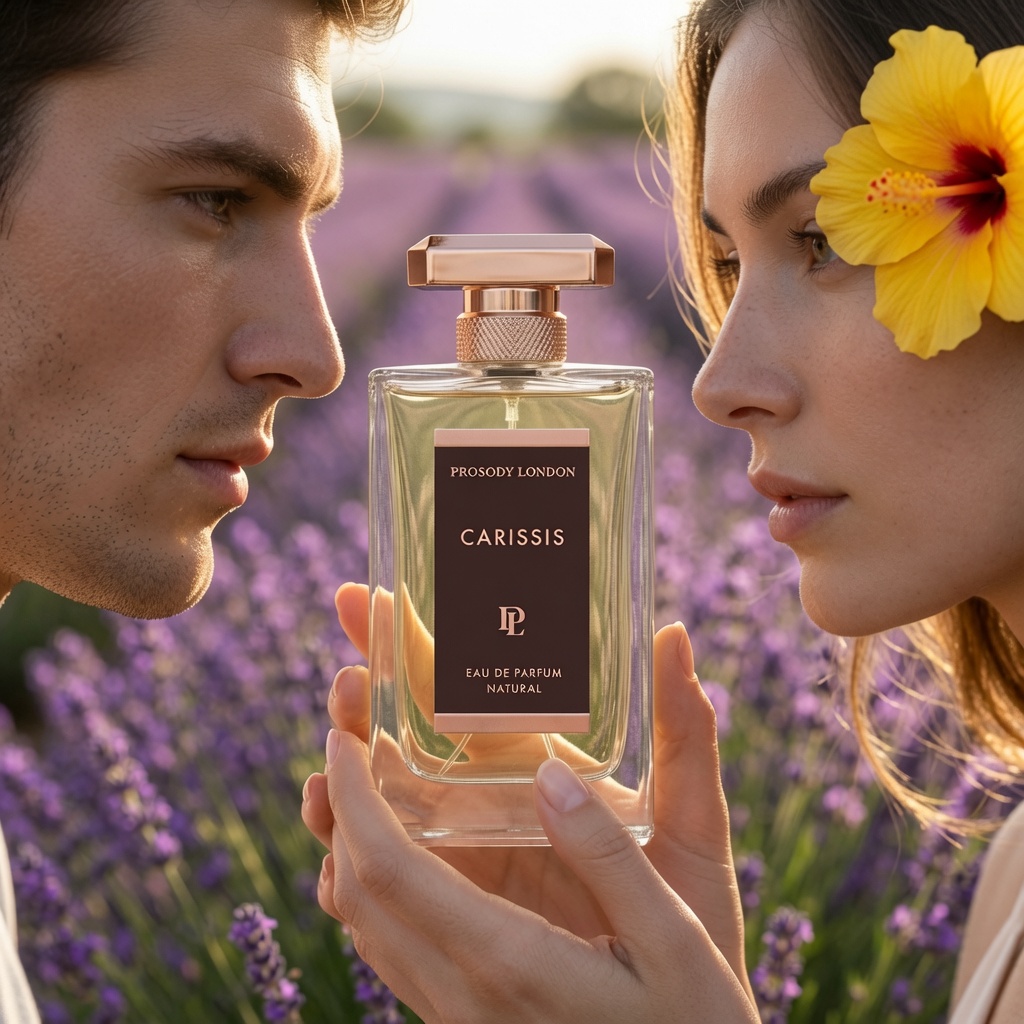
One contemporary example of this philosophy is Carissis, a 100% natural skin fragrance built around ambrette seed. In this composition, ambrette serves as a silken base, interacting with warm dryness and resinous depth to create a tactile, breathable aura.
Carissis demonstrates how ambrette can anchor a quiet, close-to-skin fragrance — the kind that feels less like something you wear, and more like something you are. If you’re looking to experience the primal warmth and sophisticated softness of a true ambrette seed skin scent, Carissis Organic Eau de Parfum from Prosody London is a breathable, botanical second skin, designed for those who believe a perfume should be an intimate secret rather than a public statement.
Another Prosody Example: Lissom Linden
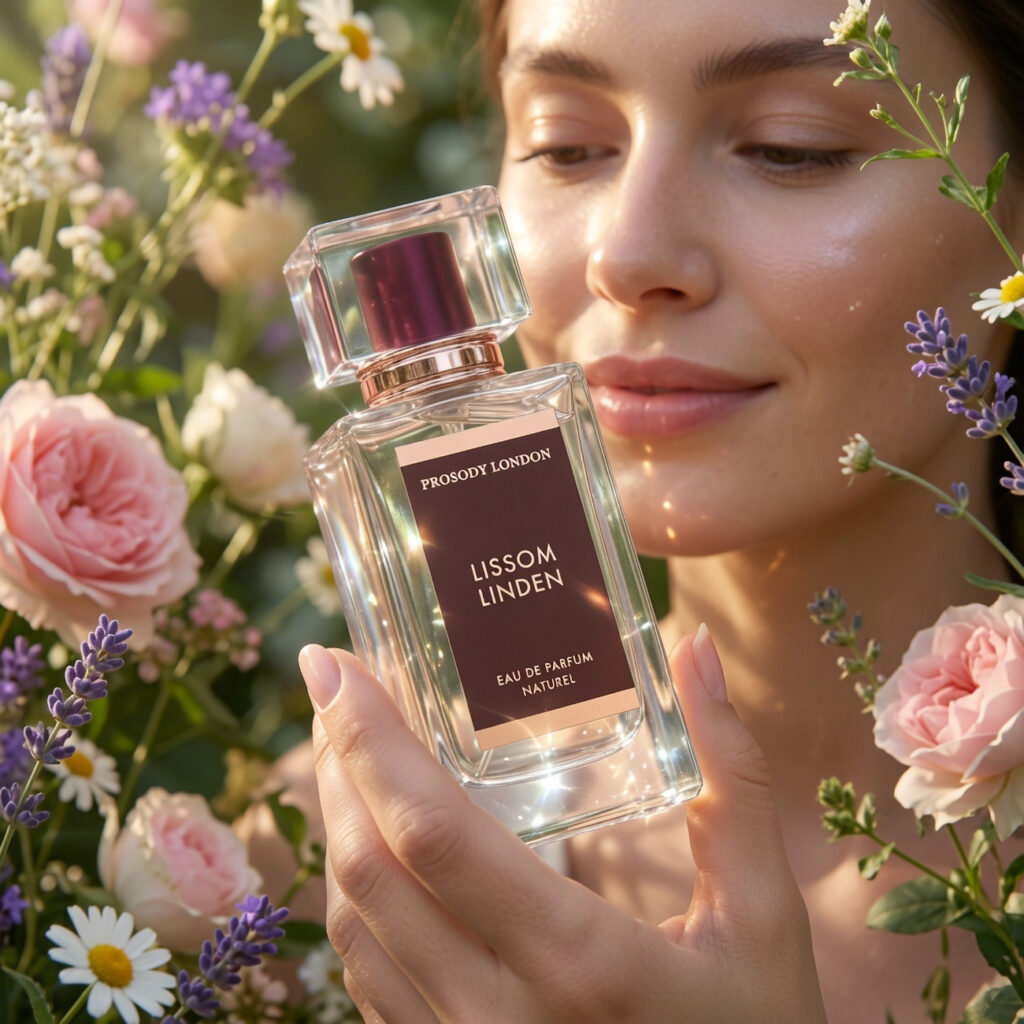
Carissis isn’t the only Prosody London fragrance built around ambrette. Lissom Linden uses it in a very different context — as the quiet engine behind an otherwise bright, honeyed floral. Linden blossom, chamomile, and siamwood give the composition its warm, summery character up top, but it’s ambrette seed underneath that does the unglamorous work of making it last: binding those lighter floral notes to the skin and slowing their evaporation, the same fixative role described earlier in this piece.
The result is a fragrance that reads as fresh and floral on first application, but stays close and skin-warm for hours rather than fading with the top notes — a good example of ambrette functioning less as the star of a composition and more as the material that makes everything else around it linger.
Final Thoughts
The Ambrette Seed Skin Scent represents a compelling direction in intimate perfumery, drawing on genuine botanical history, careful sourcing, and sensory nuance.
Derived from Abelmoschus moschatus, ambrette seed bridges plant and pulse, tradition and craft.
In a fragrance world saturated with volume, the Ambrette Seed Skin Scent offers something rare: closeness.
And in that closeness, it returns perfume to one of its oldest purposes: creating intimacy between scent and wearer.
FAQ
What does ambrette seed smell like?
Ambrette has a warm, musky, slightly nutty and fruity character, often described as softer and more skin-like than synthetic musks.
What is a skin scent, and how is it different from a regular perfume?
A skin scent is a fragrance designed to stay close to the body rather than project outward into a room. Instead of announcing itself from a distance, it’s felt at close range — during a hug, a conversation, or a shared space — which is why ambrette, with its naturally soft diffusion, suits this style well.
Why is ambrette seed used specifically in skin scents rather than louder fragrances?
Ambrette’s naturally soft diffusion makes it particularly well suited to skin scents. While it contributes warmth and longevity, it generally doesn’t project as strongly as many modern synthetic musks used in high-diffusion fragrances.
Why is ambrette seed so expensive?
It’s labor-intensive to harvest, has a low aromatic yield, and requires careful extraction — all of which make it costlier than many synthetic musk alternatives.
Does ambrette seed have proven health benefits?
Ambrette has a long history of traditional use in Ayurvedic and Unani medicine as a tonic and warming botanical, but these are traditional and historical uses rather than clinically established effects.
How do you wear a skin scent so it still lasts through the day?
Because skin scents rely on close-range sillage rather than projection, they benefit from being applied to pulse points on moisturised skin, which helps ambrette’s fixative properties bind and extend the fragrance’s presence.
What’s an example of a fragrance built around ambrette seed?
Carissis by Prosody London is a 100% natural skin scent that uses ambrette seed as its central musk note, designed for close, skin-level wear rather than projection.
Is ambrette a natural musk alternative to animal musk?
Yes. Ambrette seed has long been used in perfumery as a botanical substitute for animal-derived musk, without the ethical concerns of traditional musk sourcing.