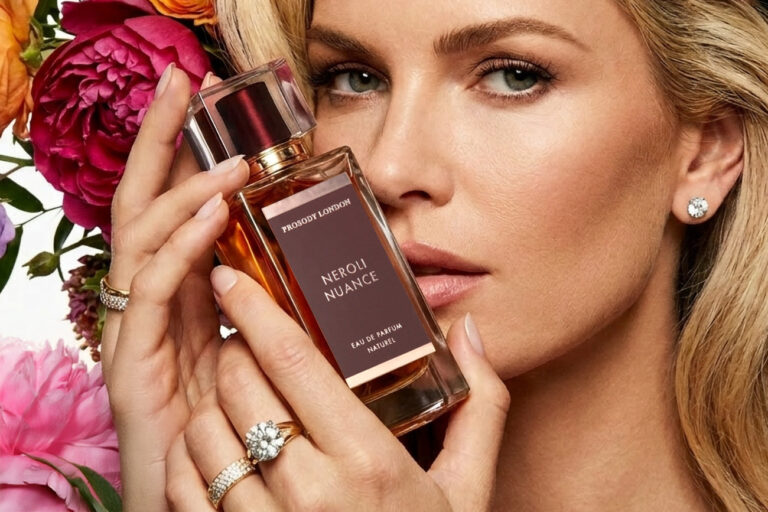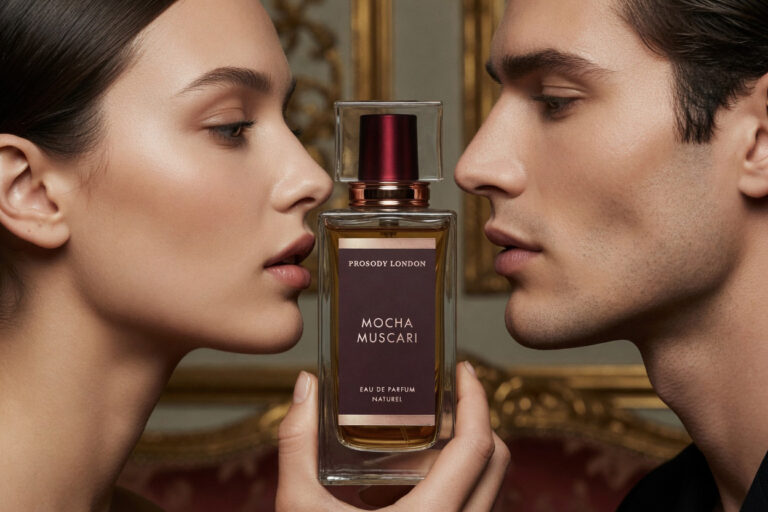
What Does Musk Smell Like? A Perfumer’s Guide to Musk in Fragrance
By Kershen Teo, Founder & Perfumer, Prosody London — Updated November 2026
At a Glance — What Does Musk Smell Like?
Musk is less a single smell than a family of soft, skin-like effects. Here is this guide in short: what musk smells like, where it comes from, and how a perfume can smell musky using only plants.
| Question | Short answer |
|---|---|
| What does musk smell like? | Soft, warm and skin-like: clean skin, warm cotton or fresh linen, with powdery, sweet or faintly animal edges. |
| Where does musk come from? | Originally a gland of the male musk deer. Today almost every musk in perfume is synthetic or, in natural perfumery, a plant material. |
| What is white musk? | A blend of synthetic musk molecules that smells of clean laundry and soft cotton. |
| Is there a natural musk? | Yes. Ambrette seed and angelica root contain natural musk molecules, softer and closer to the skin than white musk. |
| Why can’t I smell musk? | Some people are insensitive to particular musk molecules, and everyone stops noticing a familiar scent after a while. |
| Our natural musk perfumes | Carissis, Oud Octavo and Lissom Linden, all with ambrette seed and no animal or synthetic musk. |
What does musk smell like? Soft, warm and skin-like: the scent of clean skin, warm cotton or freshly washed linen, with powdery, sweet or faintly animal edges depending on the musk. It is less a single smell than a family of effects that make a perfume feel close, smooth and lasting.
That is why the word confuses people. “Musk” on a perfume label can mean a laundry-fresh white musk, a velvety skin scent, or the dark, animal warmth of the historical original. This guide explains where each comes from, why some people can barely smell musk at all, and how a perfume can smell musky without any animal or synthetic musk in it.
What Does Musk Smell Like? The Main Types Compared
| Type of musk | What it smells like | Where it comes from | Well-known example | From Prosody London |
|---|---|---|---|---|
| Animal musk | Rich, warm, faintly animal and leathery | Gland of the male musk deer; no longer used in mainstream perfumery | — | — |
| White musk | Clean laundry, soft cotton, powder | Blends of synthetic musk molecules | The Body Shop White Musk | — |
| Skin musk | Close, warm, “your skin but better” | Synthetic macrocyclic musks, or ambrette seed | — | Carissis |
| Botanical musk | Soft and musky, with pear-like and winey (ambrette) or earthy-green (angelica) facets | Ambrette seed, angelica root | — | Carissis, Oud Octavo, Lissom Linden |
What Is Musk?
Musk originally meant a secretion from a gland in the abdomen of the male musk deer. Dried, the gland (the “musk pod”) gave perfumers an intensely warm, animal note. Most harvesters killed the deer to take a pod weighing about 25 grams, and the trade pushed several species into decline. The Himalayan musk deer is now listed as Endangered by the IUCN, and international trade in musk is controlled under CITES.1
From the late nineteenth century, chemists learned to make molecules that smell musky, and today almost every “musk” in perfume is either synthetic or, in natural perfumery, a plant material with a musk-like character. When you read “musk” in a list of notes, it describes an effect, not an animal ingredient.
Musk’s animal relatives: civet, castoreum and ambergris
Deer musk was one of four animal materials that perfumers once relied on for warmth and depth. The other three are civet, castoreum and ambergris, and perfumers group all four together as animalic notes.
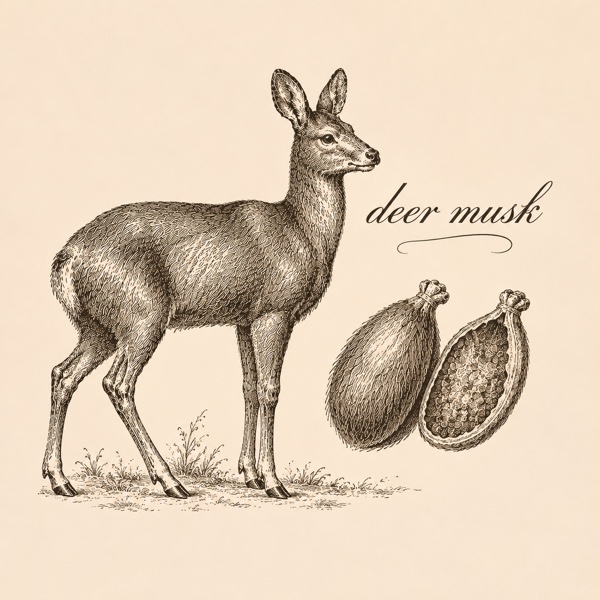
Dried gland of the male musk deer
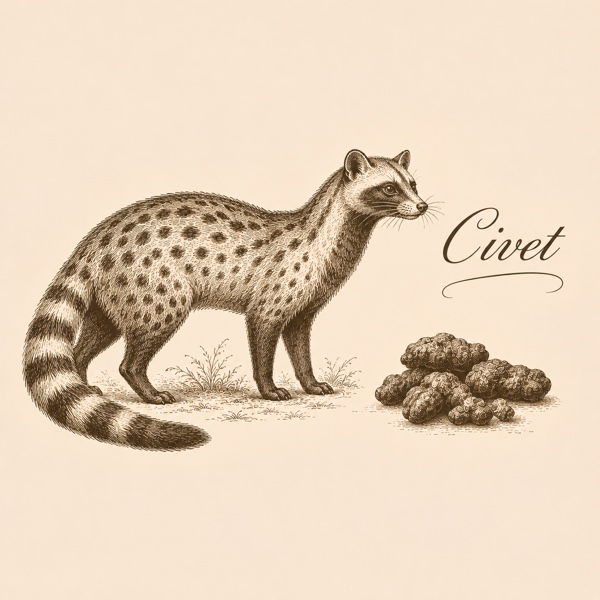
Paste from glands of the civet
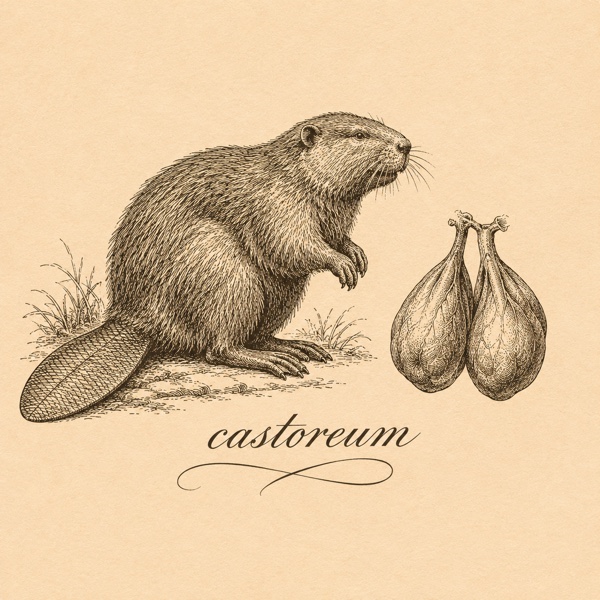
From the castor sacs of the beaver
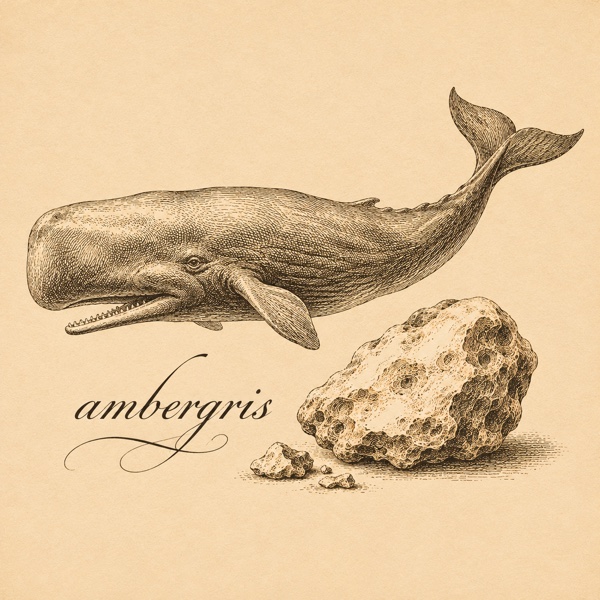
Formed in the sperm whale, aged at sea
Civet is a thick paste from glands near the tail of the civet, a cat-like mammal, and was usually collected from caged animals. Neat, it smells strongly faecal; heavily diluted, it gives florals a warm, radiant edge.
Castoreum comes from the castor sacs a beaver uses to mark its territory. It smells of leather, smoke and birch tar.
Ambergris forms in the gut of the sperm whale and is expelled into the sea. Years of sun and salt water turn it from a rank lump into something sweet, earthy and tobacco-like. It is found washed up on beaches rather than taken from the whale, but trading it is banned in some countries, including the US.
Modern perfumery replaces all four with synthetic materials. Prosody London uses none of them: the warm, animal depth in our perfumes comes from plants, such as ambrette seed in Lissom Linden and labdanum in Oud Octavo.
The Main Types of Musk in Perfume
White musk
White musk is the clean, soft, slightly powdery smell most people now associate with the word. It is built from synthetic musk molecules, usually several layered together. The Body Shop’s White Musk, launched in 1981, did much to make the term familiar.2 Because similar musks are widely used in laundry products, white musk often reads as freshly washed cotton.
Synthetic musk families
Synthetic musks fall into four broad families. Nitro musks came first, then polycyclic musks such as Galaxolide, then macrocyclic musks, which are closest in structure to the musks found in nature, and more recently alicyclic musks. Each smells slightly different, from sweet and powdery to clean and almost metallic, which is why perfumers combine them. If you want the detail, including the questions raised about some of them, see our guide to synthetic musk free perfume.
A personal note on Galaxolide. Galaxolide is everywhere: in laundry detergent, shampoo and a great many perfumes. It is also extremely powerful, and you can smell it from a long way off. I think that is why more refined perfumes are moving away from it. It is slow to break down and turns up in rivers and wastewater, but my objection is also aesthetic: to my nose it is too loud, and it overpowers everything around it. I notice it most in cheap perfumes, where it often does all the work. Some people find it incredibly sexy, and it remains immensely popular, but I find it a rather crude way of putting musk into a perfume.
Botanical musks: ambrette and angelica
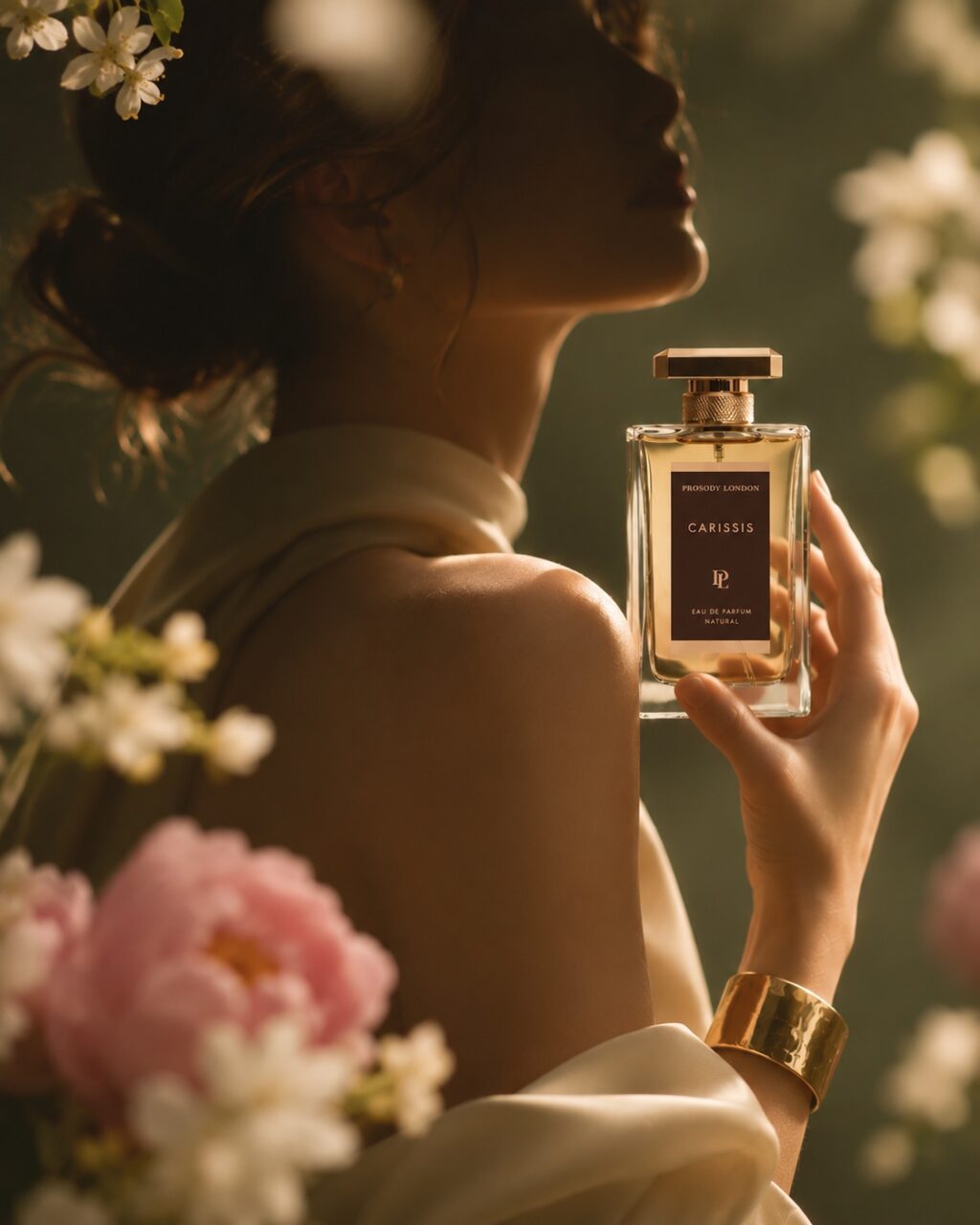
A few plants produce genuine musk molecules. The best known is ambrette seed, from Abelmoschus moschatus, a relative of hibiscus. It contains ambrettolide, a natural macrocyclic musk, and smells soft and skin-like with a pear-like, faintly winey sweetness. Angelica root carries another, pentadecanolide, wrapped in an earthy, green and peppery character.
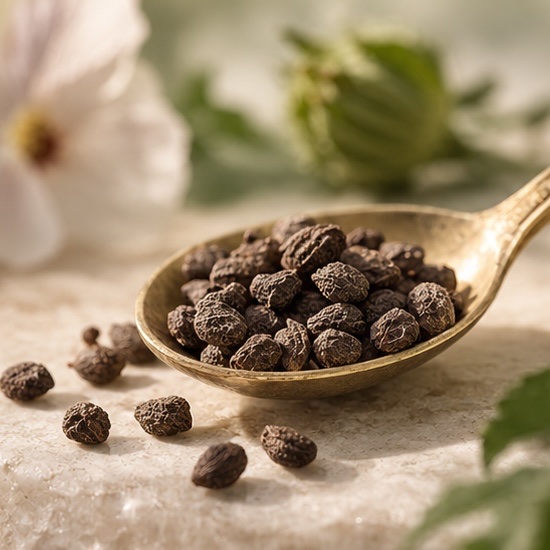
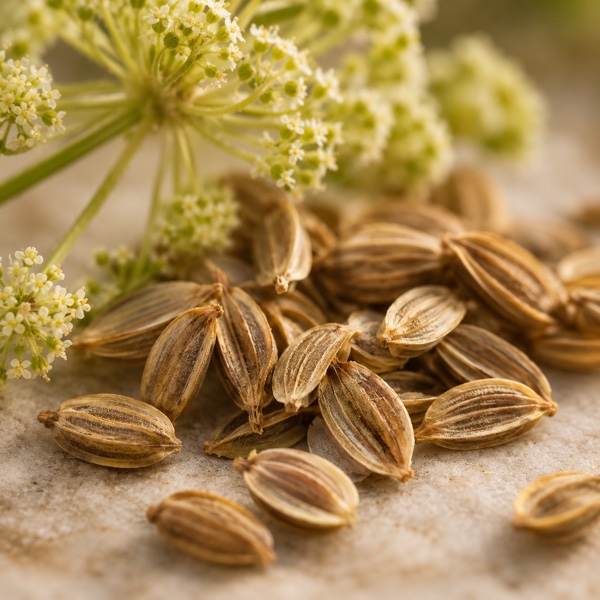
Botanical musks are quieter than synthetic white musks and sit closer to the skin. They do not reproduce the bright, laundry-clean effect of white musk; they give warmth and texture instead.
One naming trap: “musk ambrette” is also the name of an old synthetic nitro musk, so called because it smelled like the seed. It is not a plant material.
Why Some People Can’t Smell Musk
Musk molecules are large, and only certain smell receptors respond to them.3 People vary widely in how strongly they perceive musks, and some are completely insensitive to particular musk molecules while smelling others clearly.4 That is one reason perfumers rarely rely on a single musk: a blend gives most people something to notice.
There is a second, everyday reason you may lose your musk. “Our sense of smell is built to notice change, not constant background noise,” as I told Marie Claire. “Once a scent has been around for a while, your brain starts filtering it out so it can stay alert to new things.” Soft, skin-close musks are exactly the kind of note your nose files away first, even when people around you can still smell it.
Musk, Amber and Sandalwood: What’s the Difference?
These three often appear together, and they can blur on skin.
- Musk smells like skin: soft, clean or gently warm, and close to the body.
- Amber is a resinous, balsamic accord, built from materials such as labdanum, benzoin and vanilla. It is sweeter and warmer than musk.
- Sandalwood is creamy and woody, with a milky smoothness. It can feel musky, but its character comes from the wood itself. More in our search for the perfect sandalwood perfume.
Is Musk Vegan or Cruelty-Free?
The two terms mean different things. Vegan refers to ingredients: nothing derived from animals. Cruelty-free refers to testing: no testing on animals. Animal testing for cosmetics has been banned in the UK and EU since 2013.
Synthetic musks contain no animal material, and deer musk is no longer used in mainstream perfumery, so a modern musk note is rarely the problem. Whether a whole perfume is vegan depends on everything else in it, such as beeswax or honey extracts. Prosody London perfumes are made only from plant-derived aromatic materials, contain no synthetic musks and are vegan and cruelty-free. Read more in our guide to vegan perfume.
Natural Musk Perfumes From Prosody London
Each of these uses ambrette seed, and none contains animal or synthetic musk.
Carissis: a botanical skin scent
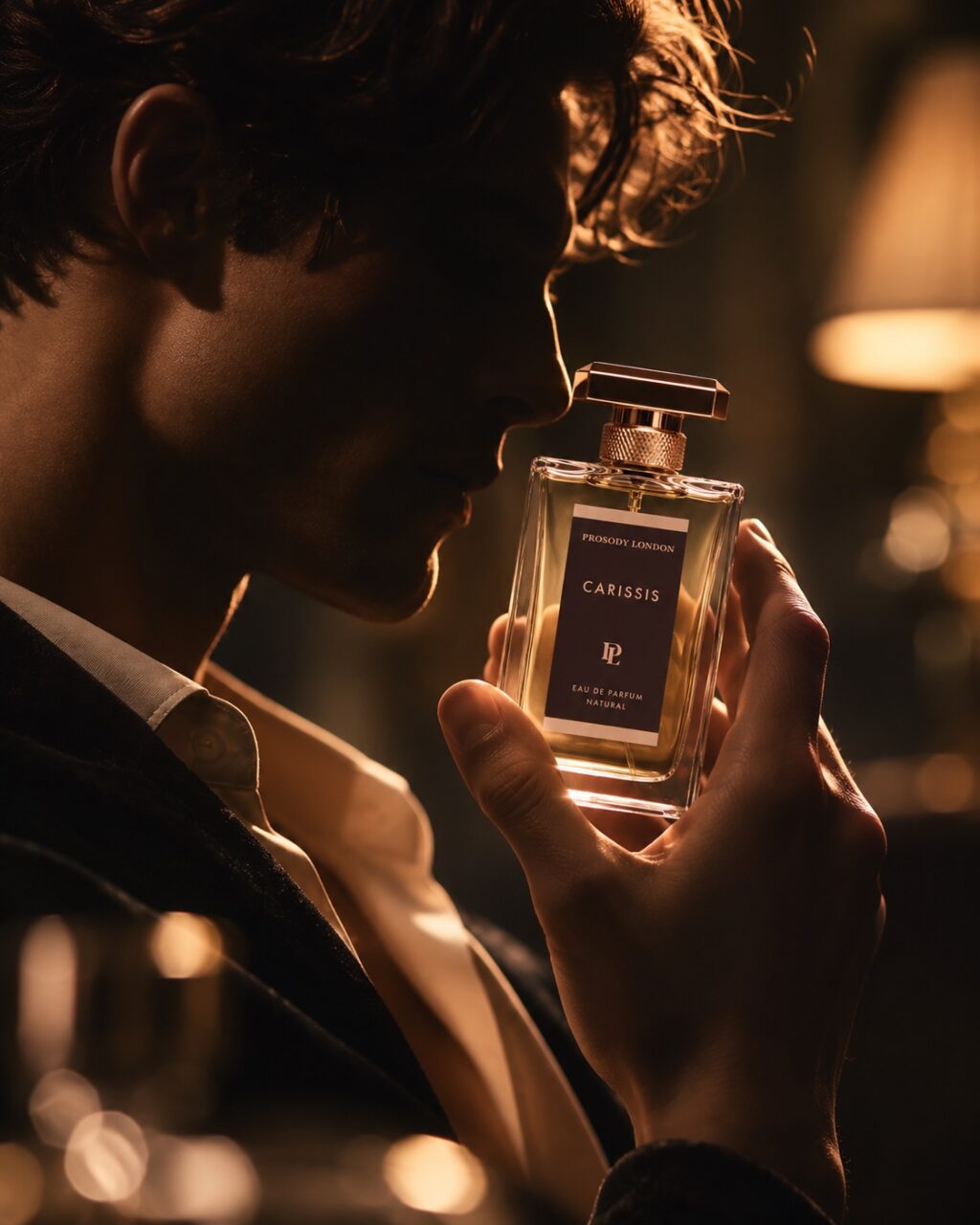
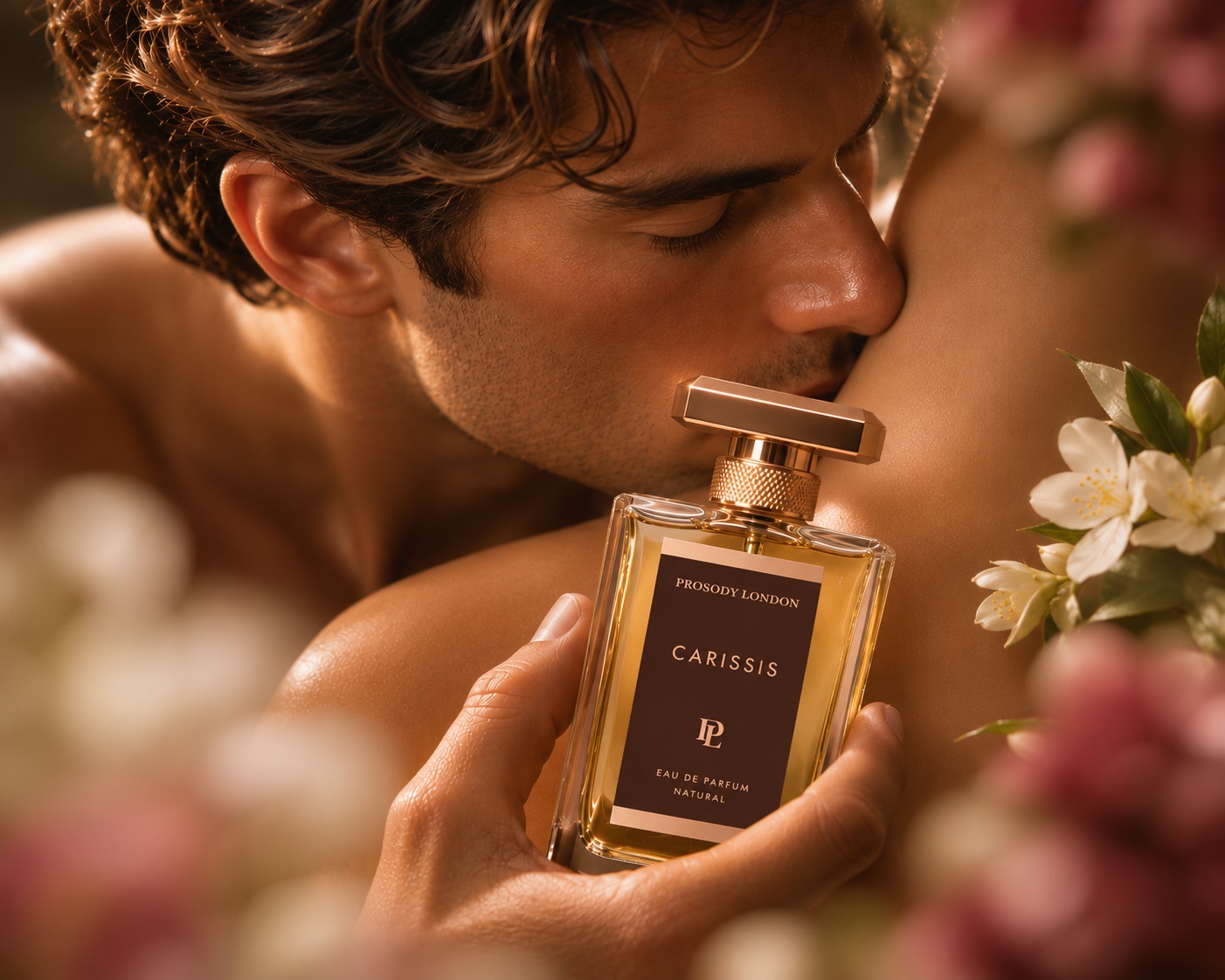
Carissis is built around the musk-like warmth of ambrette seed. Lavender, caraway seed and soft fruit accords of melon, blueberry and pear open it; rose and violet leaf form the heart; and ambrette seed settles with amyris, styrax, sandalwood, oakmoss and a peach accord. It stays close to the skin, which is the point of a skin scent. You will find it in our botanical skin scent collection.
Oud Octavo: a woody musk
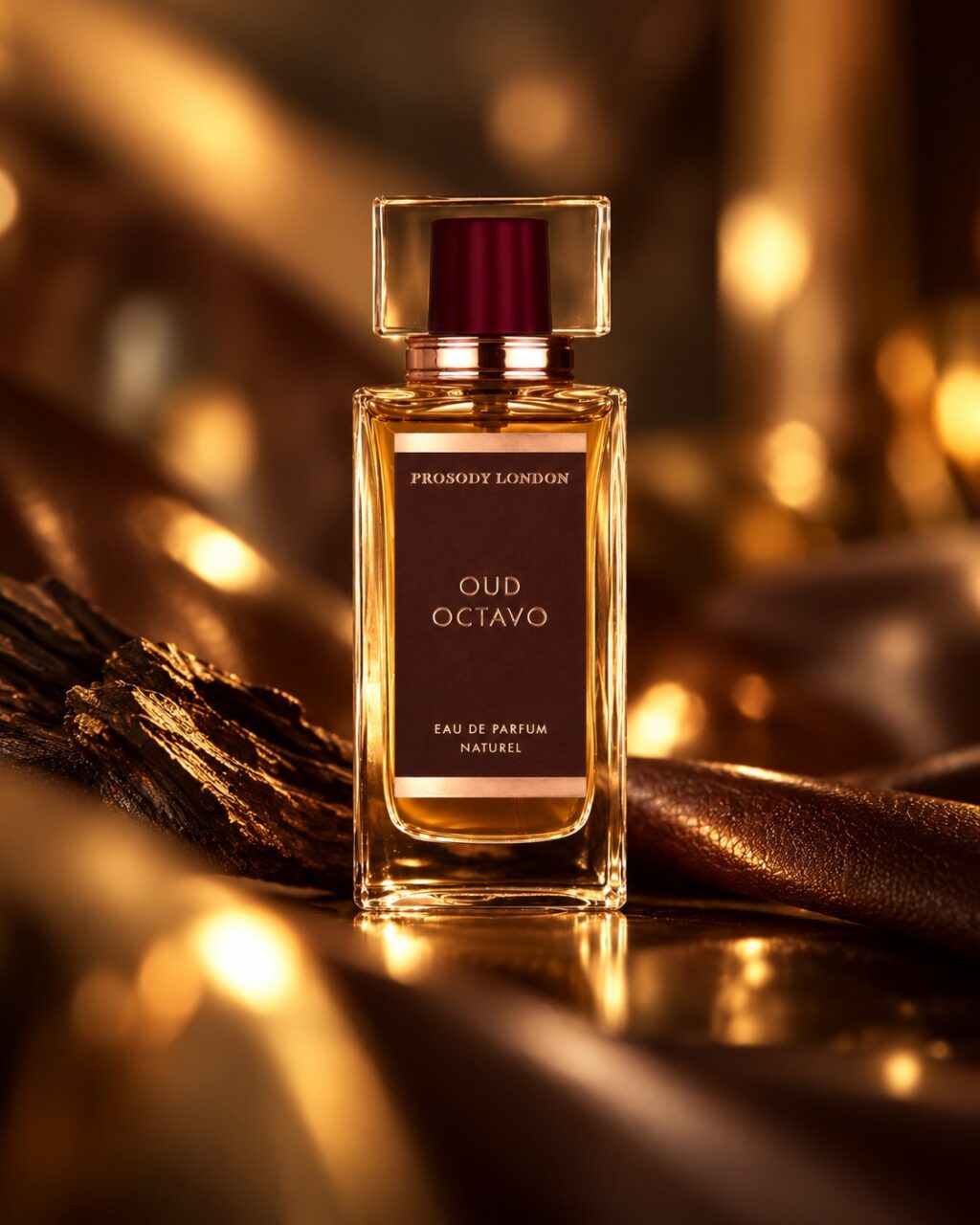
Oud Octavo pairs both botanical musks, ambrette seed and angelica root, with agarwood, sandalwood, vetiver, benzoin and vanilla. Here the musk works underneath the woods, softening their edges.
Lissom Linden: a floral musk
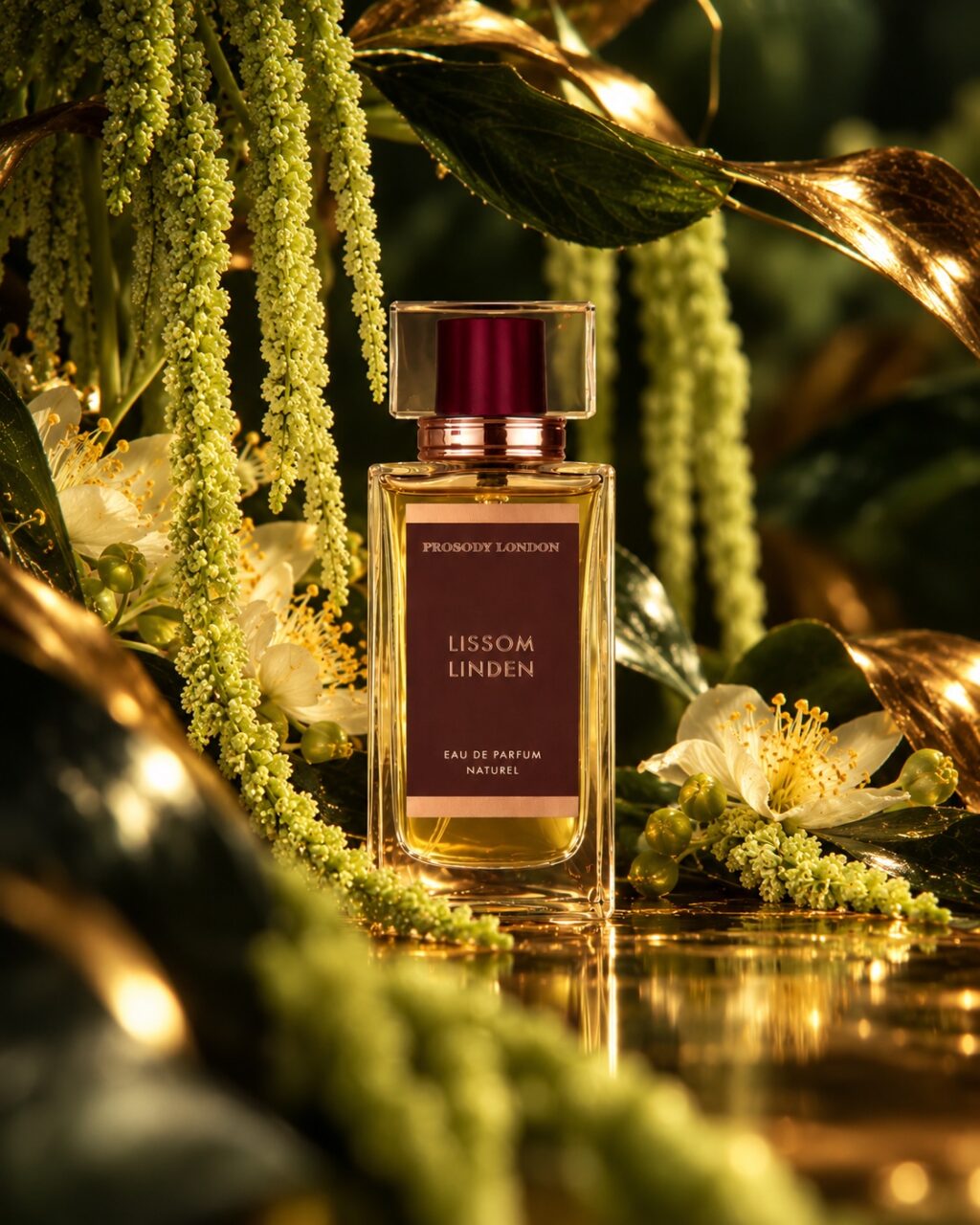
In Lissom Linden, ambrette seed sits in a base of frankincense, Atlas cedarwood, amyris and myrrh, beneath a heart of linden blossom, rose and chamomile. The musk gives the florals a warm, skin-like finish.
To compare them on your own skin, choose them in the Build Your Own Discovery Set.
Try them in 10 ml
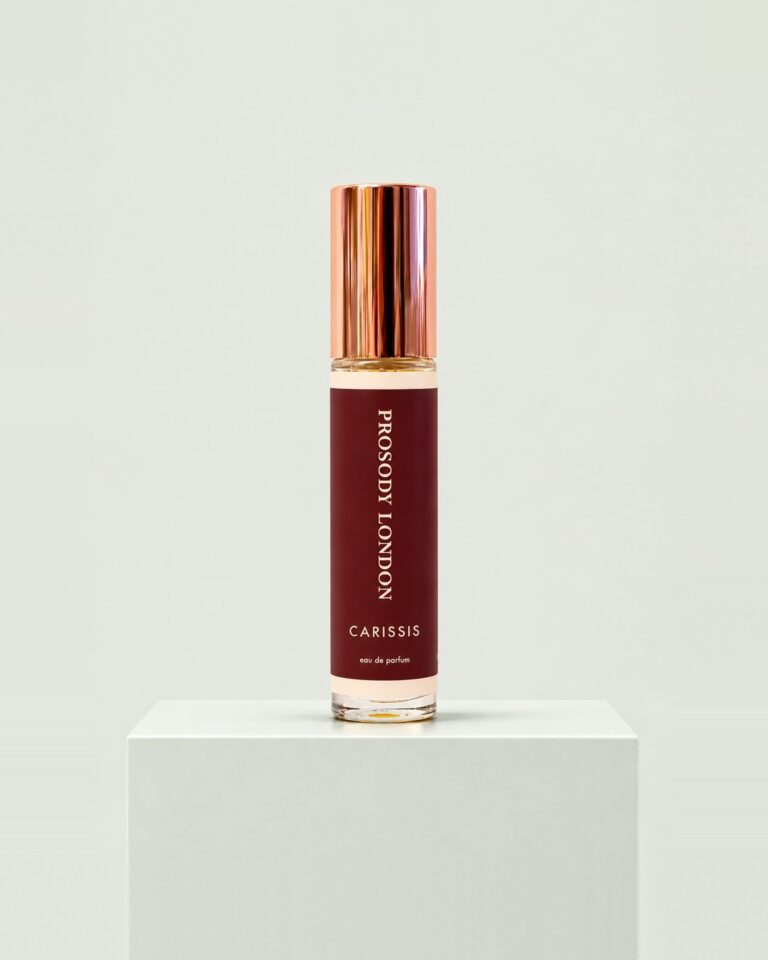
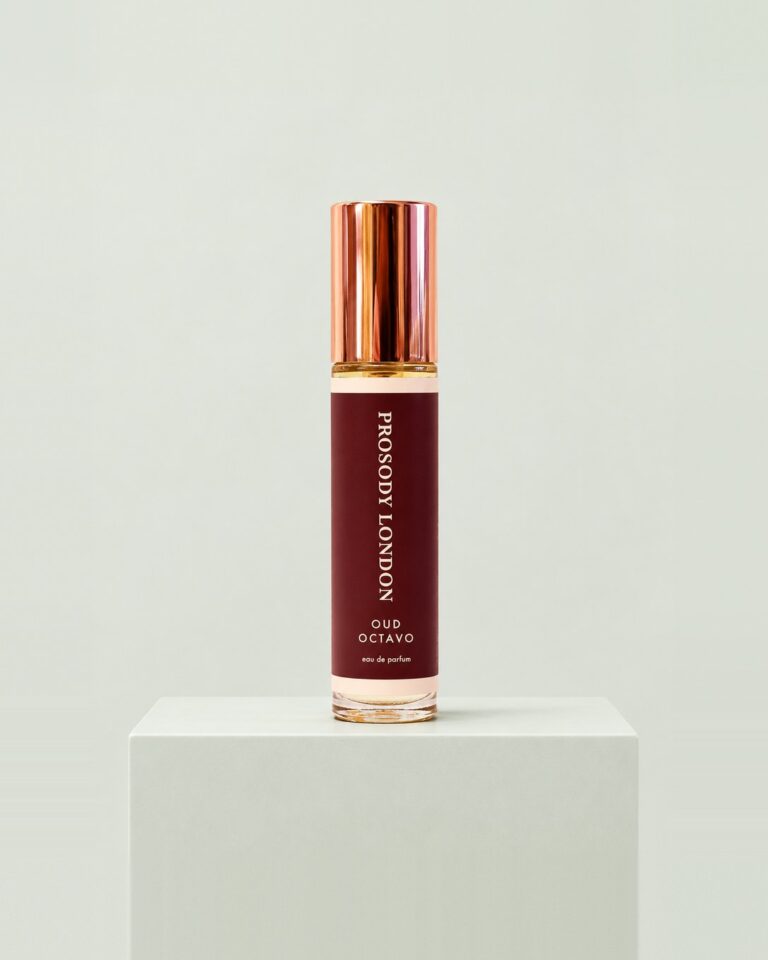
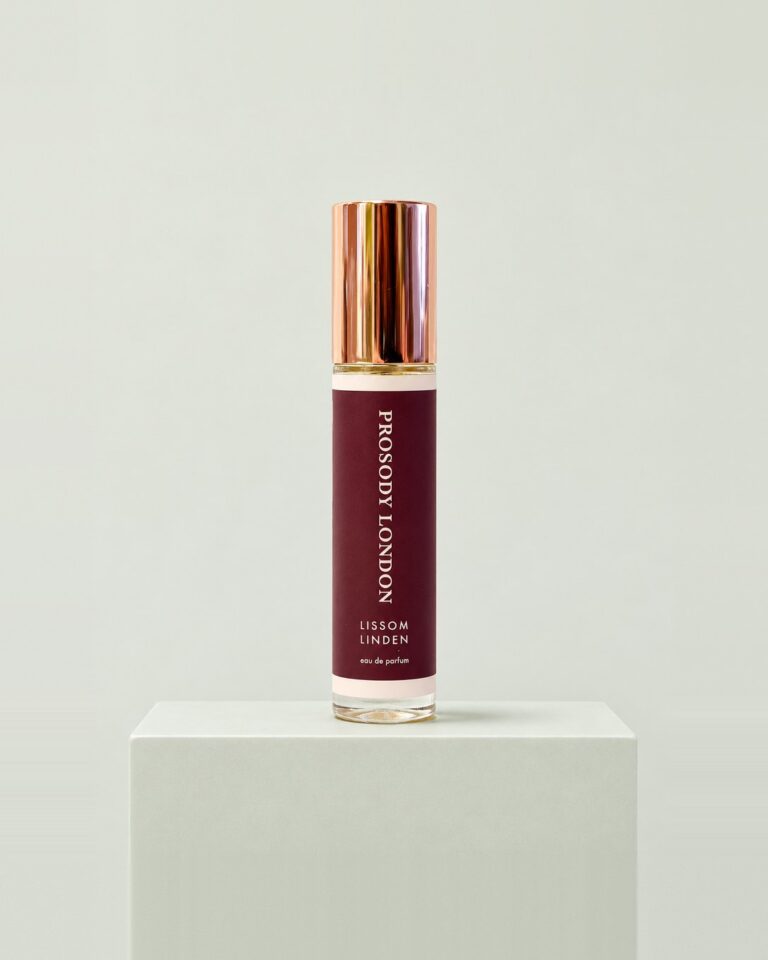
If you’d like to try a musk properly before committing to a full bottle, Carissis, Oud Octavo and Lissom Linden each come in a 10 ml bottle. It fits easily in a handbag or jacket pocket, so you can carry it with you and reapply through the day.
Carissis is unisex. Ambrette seed gives it a soft, sensual warmth that stays close to the skin, and it wears as naturally on a man as on a woman.
Mix and match 10 ml bottles: buy two or more and the second is 10% off, the third and any more 20% off. The saving is taken off automatically in your basket (it can’t be combined with discount codes).
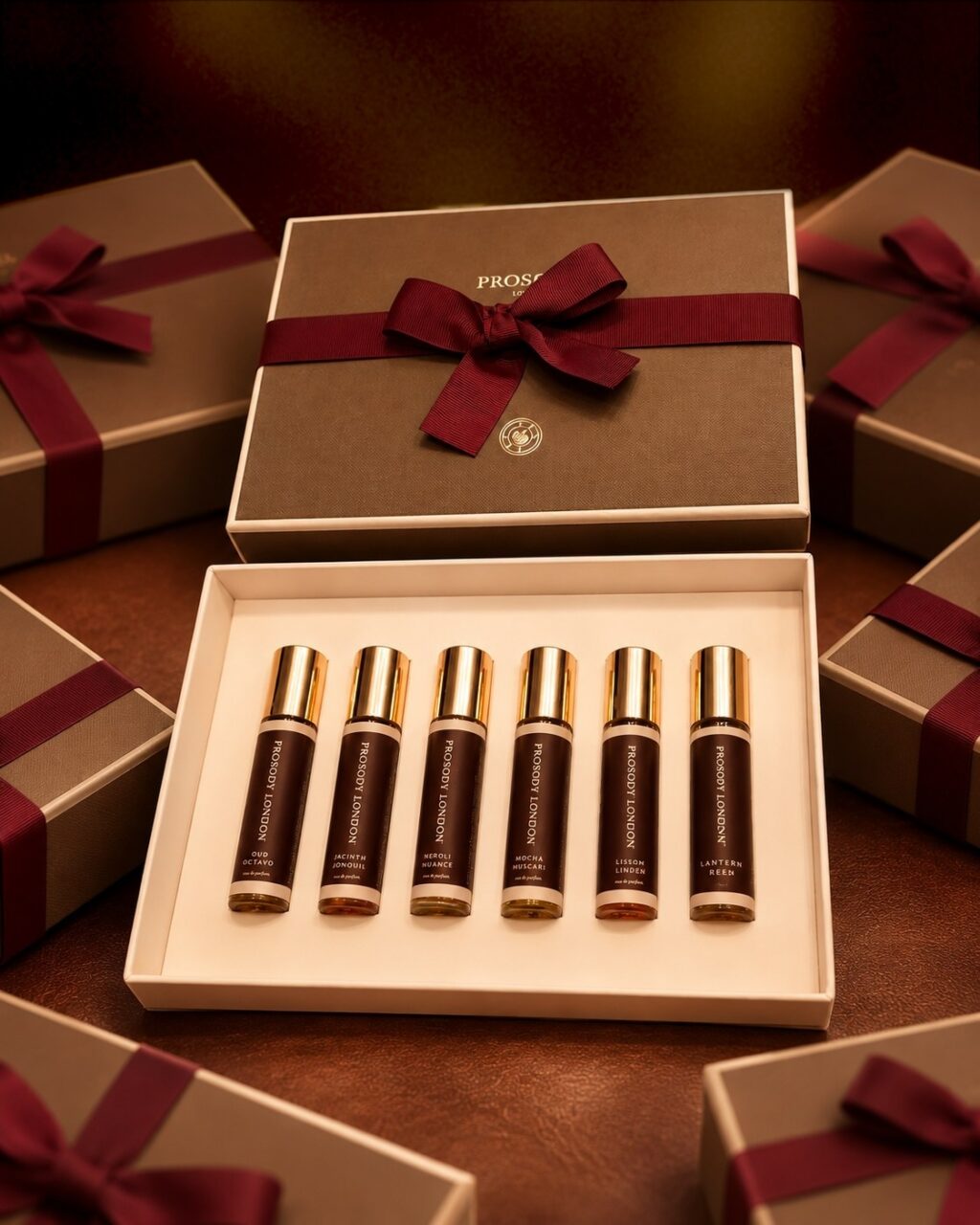
To try more of the collection, the Travel Set lets you choose any six of our nine perfumes in 10 ml bottles, and you can pick the same one more than once. In its ribboned box, it also makes a lovely gift.
How to Choose a Musk Perfume
- For a clean, laundry-fresh musk, look for “white musk” in the notes. It will be synthetic.
- For a musk that smells like warm skin, look for skin scents built on macrocyclic musks or ambrette seed.
- For a natural musk, look for ambrette seed or angelica root in the ingredients.
- For a darker, sensual musk, look for musk paired with woods, labdanum or leather notes.
Test musks on skin rather than paper, and ask someone else whether they can smell it after an hour. Because of nose blindness and musk anosmia, your own nose is not always the best judge.
Musk FAQ
What does musk smell like?
Musk smells soft, warm and skin-like, often described as clean skin or warm cotton. Depending on the type, it can lean powdery and fresh (white musk), sweet and close (skin musk), or darker and more animal.
What does white musk smell like?
White musk smells clean, soft and slightly powdery, a lot like freshly washed laundry. It is made from synthetic musk molecules.
Does musk still come from deer?
Not in mainstream perfumery. Deer musk is restricted under international trade rules because musk deer are endangered, and almost all musk notes today are synthetic or, in natural perfumes, plant-based.
Why can’t I smell the musk in my perfume?
Some people are insensitive to particular musk molecules, and everyone stops noticing a familiar scent after a while. Ask someone else, or try a perfume that uses a different type of musk.
Can a natural perfume smell musky?
Yes. Ambrette seed and angelica root both contain natural musk molecules. They give a softer, closer musk than synthetic white musk, with their own fruity or earthy facets.
What is the difference between musk and amber?
Musk smells like skin: soft and clean or gently warm. Amber is a sweeter, resinous accord built from materials such as labdanum, benzoin and vanilla.
Sources
- ESABII / IUCN Red List summary, “Moschus leucogaster” (Himalayan musk deer).
- The Body Shop, “White Musk”.
- Ahmed L, Zhang Y, Block E, et al. Molecular mechanism of activation of human musk receptors OR5AN1 and OR1A1 by (R)-muscone and diverse other musk-smelling compounds. Proc Natl Acad Sci USA. 2018;115(17):E3950–E3958. doi:10.1073/pnas.1713026115.
- Gilbert AN, Kemp SE. Odor perception phenotypes: multiple, specific hyperosmias to musks. Chem Senses. 1996;21:411–416. PDF.