Natural Spray Perfume, Explained | Prosody London
By Kershen Teo | Founder & Perfumer, Prosody London
I’ll admit something: the first time I really sat with the phrase ‘Eau de Parfum Natural Spray’ printed across a fragrance box, I read it the way most people probably do when they search for natural spray perfume — as a claim about what’s inside the bottle. Natural. As in, the perfume itself.
It isn’t. “Natural Spray” is a mechanism term — it describes the pump atomiser in the cap, not the formula underneath it. And once you notice how many “Natural Spray” fragrances sit a few lines away from an ingredients list that’s frankly, entirely synthetic, it’s hard not to wonder whether the overlap is doing the industry a favour it never had to earn. I’m not going to claim any brand chose that wording deliberately to mislead — I have no way of knowing that, and it isn’t necessary for the point to land. What I can show you is the label and the ingredient list sitting side by side, and let you draw your own conclusion.
At a Glance
| What “Natural Spray” means | A manual pump atomiser — not an aerosol/propellant. A mechanism term, unrelated to ingredients. |
| Why it’s confusing | “Natural” sits right next to your product category, and reads easily as an ingredients claim. |
| The reality | Many “Natural Spray” labelled fragrances are entirely synthetic blends. |
| Genuine natural perfume in spray form | Yes — it exists. Prosody London’s Eau de Parfum range is one example. |

What Does “Natural Spray Perfume” Actually Mean?
This is where the genuine confusion lives, and it’s worth being precise about it rather than gliding past it.
“Natural Spray” is decades-old fragrance industry and packaging language describing how a scent leaves the bottle: a manual pump that atomises liquid into a fine mist, as distinct from an aerosol can that uses a pressurised propellant to force liquid out. It’s a real, useful distinction — it affects things like spray pattern, how much product you use per application, and whether the can needs propellant chemicals at all.
As industry explainers of the vaporisateur-vs-natural-spray distinction confirm, a natural spray works through the pump mechanism itself rather than any pressurisation, which is exactly why it’s classed separately from an aerosol. You’ll find the phrase printed on fragrance boxes from mass-market drugstore brands right through to prestige houses, almost always with zero reference to what’s actually dissolved in the alcohol.
Which means a fragrance can be labelled “Natural Spray” and be built entirely from synthetic aroma chemicals — and very often is, including the phthalates and synthetic musks covered in our guide to endocrine disruptors in perfume. I looked at several current retail listings while researching this piece: one describes itself plainly as “Eau De Parfum Natural Spray,” and in the same listing, describes its own formulation as a blend of natural and synthetic ingredients. There’s no contradiction from the manufacturer’s point of view, because to them, “natural” was always modifying the spray mechanism. To a shopper skimming the title, that’s a very easy thing to read the other way.
Natural Perfume Spray — Is Botanical Perfume Available in Spray Form?
Yes, unambiguously. If you’ve only encountered natural perfume as oil-based roll-ons, attars, or solid balms, that’s a fair assumption to carry — a lot of independent natural perfumery does work in those formats, partly because oil-based perfumery is one of the oldest ways to wear botanical materials, and partly because it sidesteps needing an alcohol base entirely.
But there’s no technical reason a 100% botanical formulation can’t go into a conventional spray bottle. An Eau de Parfum is simply an aromatic composition dissolved in alcohol at a given concentration, then dispensed through a pump atomiser — the “spray” part is packaging and delivery, not chemistry. Whether the aromatic materials inside that alcohol are synthetic aroma molecules or genuine plant essential oils, absolutes, CO₂ extracts, and resins doesn’t change how the bottle works. It changes what you’re actually wearing.
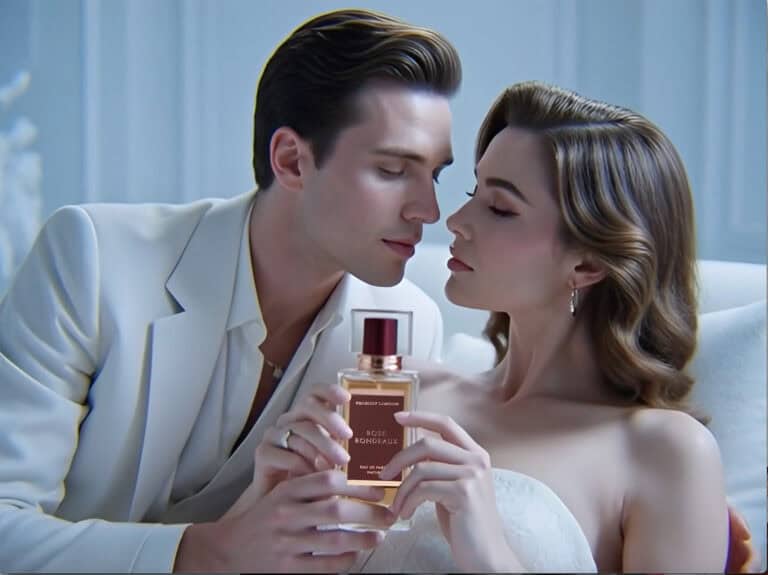
At Prosody London, every fragrance — Rose Rondeaux, Trevi Rose, and the rest of the range — is a conventional Eau de Parfum or natural cologne, formulated entirely from botanical materials in certified organic grain alcohol, dispensed the same way as any spray fragrance you’d find on a department store counter. The format isn’t the differentiator. The formulation is. For a broader look at the category, see our guide to natural perfume in the UK, or browse the full organic and all-natural perfume collection.
Natural Perfume Spray vs. Oils, Attars, and Solid Perfume
If you’re choosing a format rather than untangling a label, here’s the honest trade-off between them:
- Spray (Eau de Parfum / Eau de Toilette): Alcohol-based, projects further, dries down in stages (top, heart, base notes unfold over time), easiest to apply evenly across pulse points and clothing. This is the format most people mean when they picture “a bottle of perfume.”
- Oil-based / attar: No alcohol, sits closer to the skin, tends to run warmer and more linear in character since there’s no evaporating solvent carrying the top notes outward. Often longer-wearing on skin, shorter projection.
- Solid perfume: A wax or balm base, most intimate and least projecting of the three, popular for travel and reapplication through the day.
None of these formats tells you anything about whether the fragrance inside is natural or synthetic — that’s determined entirely by what the perfumer put in the bottle, not which bottle they put it in.
Prosody London’s Natural Perfume Sprays
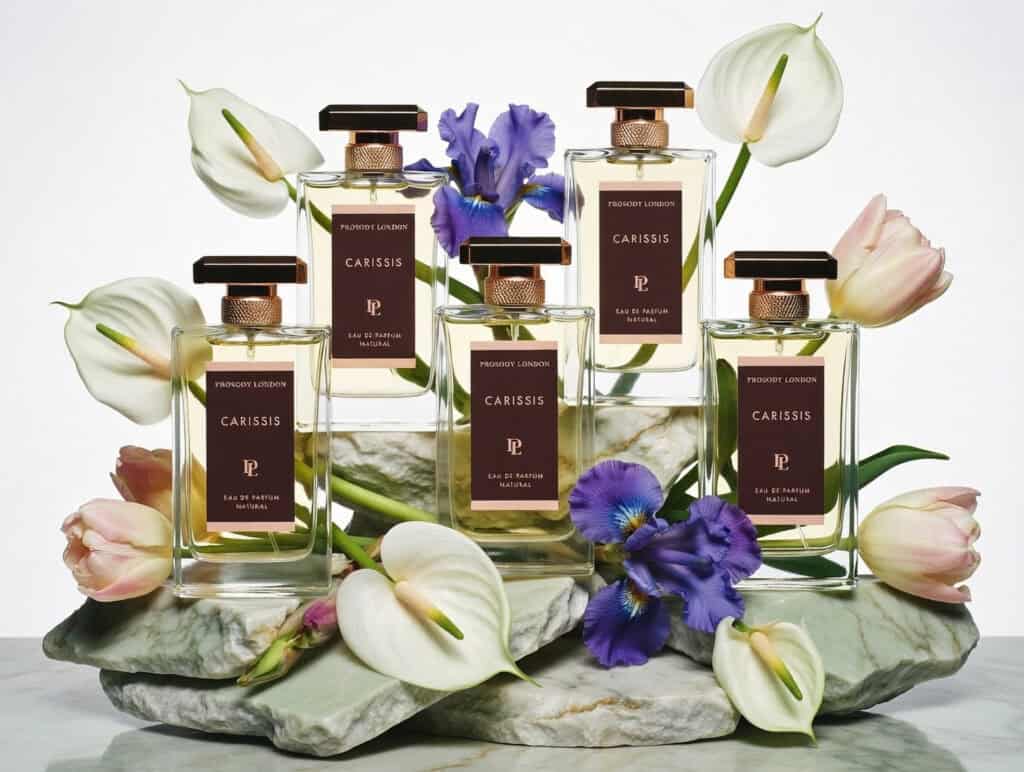
Every Prosody London fragrance is a genuine spray-format Eau de Parfum or natural cologne, formulated exclusively from essential oils, plant absolutes, CO₂ extracts, and natural resins — no synthetic aroma chemicals, no synthetic musks, no phthalates. Independent reviewers who’ve spent time with the range, with no commercial stake in the outcome, back that up:

Rose Rondeaux — a deep, jammy rose oil composition with raspberry, bergamot and sandalwood. Perfume critic Luca Turin has named it his personal favourite rose fragrance.
Oud Octavo — a sweet, woody oud built on cognac, cistus, cinnamon leaf and cedarwood. CaFleureBon’s reviewers have praised how the oud unfolds through eight distinct facets across the wear.

Neroli Nuance — an elaborate orange blossom composition with mandarin, jasmine sambac, and benzoin, long-lasting and evolving over many hours. Jo Fairley, editor of The Perfume Society, has described it as a super-elegant, summery orange blossom blend.
Ocean Commotion — an aquatic, ozonic cologne built on marram grass and beechwood. Perfume critic Stephan Matthews named it his favourite of Prosody’s entire cologne collection.

Pizzicato Bliss — a golden, fruit-forward cologne of quince blossom, fig leaf, and galbanum. CaFleureBon named it one of their top ten fragrances of the year it launched.
All five are conventional spray-format Eau de Parfum or cologne — nothing about wearing 100% botanical fragrance requires giving up the format you’re used to. If you’d rather sample a few before committing to a full bottle, the Build Your Own 6 x 2ml Discovery Set lets you try any of them in genuine spray format.
→ Explore the Prosody London Travel Set
FAQ
What does “natural spray” mean on a perfume bottle?
It refers to the delivery mechanism — a manual pump atomiser rather than an aerosol/propellant can. It’s a packaging and dispensing term, not a statement about whether the fragrance inside is made from natural or synthetic ingredients.
Is natural perfume available as a spray, or only as an oil?
Is natural perfume available as a spray, or only as an oil? Both. Oil-based and solid formats are common in independent natural perfumery, but there’s no technical barrier to a 100% botanical formulation being dissolved in alcohol and dispensed as a conventional Eau de Parfum spray, exactly like Prosody London’s range.
What’s the difference between a natural perfume spray and an aerosol?
What’s the difference between a natural perfume spray and an aerosol? A natural spray uses a manual pump to atomise liquid into a fine mist. An aerosol uses a pressurised propellant gas to force liquid out of the can. The word “natural” here describes the pump, not the fragrance formula.
Does spraying natural perfume last as long as oil-based natural perfume?
Generally, oil-based and solid formats tend to sit closer to the skin and can last slightly longer per application, since there’s no alcohol evaporating the top notes outward. A well-formulated Eau de Parfum spray, built on quality base materials like resins and sandalwood, closes much of that gap — Rose Rondeaux, for example, lasts eight to ten hours on skin.