20 Niche Fragrance Houses, Curated by a Working Perfumer
By Kershen Teo | Founder & Perfumer, Prosody London
At a Glance
Most “best niche fragrance” lists repeat the same six or seven names everyone already knows. This isn’t that list. These are twenty independent houses that earned their place through genuine craft, family lineage, critical praise, or sheer creative nerve — spanning fourteen countries, from a fourth-generation Barcelona fragrance family to a self-taught San Francisco painter whose work Luca Turin gave four stars. One of them is mine.
20 Niche Fragrance Houses — At a Glance
| House | Country | Known For |
|---|---|---|
| Prosody London | UK | 100% botanical formulation; Turin’s own rose benchmark |
| Grossmith | UK | England’s oldest surviving fragrance house (est. 1835) |
| Angela Flanders | UK | East End artisan; first Fortnum’s stocking in her career |
| Ruth Mastenbroek | UK | Former President, British Society of Perfumers |
| Mendittorosa | Italy | “Bowled over” Turin, twice, a decade apart |
| Meo Fusciuni | Italy | Fragrances written as poems first, scents second |
| Anomalia | France | Founded during lockdown, Turin-praised within two years |
| M. Micallef | France | Hand-decorated flacons; Fortnum’s own exclusive scent |
| Reine de Saba | France/Yemen | Built around the Queen of Sheba legend, A-list perfumers |
| Mystikum | Germany | Turin: rough branding, genuinely good fragrances |
| Maison Nikoui | Denmark | 2025 Beauty Oscars winner, Best Niche Fragrance |
| Ramon Monegal | Spain | Fourth-generation Barcelona fragrance family |
| Mmoire | Netherlands | Self-taught perfumer, memory-driven scent stories |
| Vilhelm Parfumerie | Sweden/USA | Every scent a specific biographical memory |
| Tauer Perfumes | Switzerland | Founding figure of modern indie fragrance |
| Stora Skuggan | Sweden | Scandinavian minimalism, mythology-driven concepts |
| Zoologist | Canada | Every fragrance named for a single animal |
| D.S. & Durga | USA | Brooklyn storytelling, 100% made in New York |
| Bruno Fazzolari / FZOTIC | USA | Painter-turned-perfumer, 4-star Turin review |
| BORNTOSTANDOUT | South Korea | Explosive growth, first Korean niche fragrance house globally |
Why I’m Writing This
I make my own fragrances for a living, but I’ve spent years genuinely admiring other people’s work too — their conceptual creativity, their clever, sometimes unexpected use of ingredients. Being stocked at Fortnum & Mason for 2 years put me right in the middle of the niche fragrance world in a way I never expected: I’ve attended trade shows and compared notes with other perfumers, brand ambassadors, and critics. People in this trade are genuinely friendly — I’ve been on the receiving end of real generosity and kindness from others in this industry more times than I can count.
Niche fragrance is a genuinely exciting art form, and this list is my honest attempt to point you toward the people doing it best — not just the names everyone already knows.
There are also a handful of niche houses I’ll always stop to smell whenever I’m at duty-free or in a department store — Frédéric Malle, Hermès, and Kilian chief among them. I genuinely love encountering real, complex natural ingredients used with ambition, wherever they show up. If you want my take on those more widely available houses, I’ve written about them separately in my guide to niche perfume brands worth trying. This article is about something different: houses with much smaller distribution — the ones you won’t stumble across at the airport, and mostly have to go looking for.
Turin-Praised
Luca Turin doesn’t hand out praise casually — his reviews are as likely to eviscerate a house’s branding as celebrate its fragrance, sometimes in the same sentence. That makes these six entries a genuinely useful shortcut: whatever else is true about the marketing, the noses behind these bottles have passed the most demanding sniff test in the business.

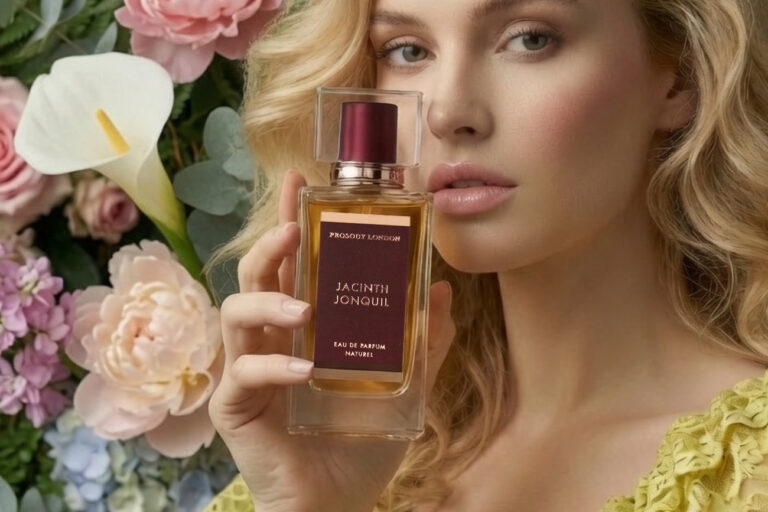
Prosody London — Founded and run by Kershen Teo from a studio on Finchley Road, London. Every fragrance is composed entirely from essential oils, plant absolutes, CO2 extracts, and natural resins in certified organic grain alcohol, formulated to IFRA standards and in accordance with COSMOS Organic principles — no synthetic aromatic molecules, phthalates, or petrochemical derivatives anywhere in the range. It’s the only 100% botanical house on this list, and the only one Luca Turin has used as his own benchmark: reviewing Lancôme’s flagship twelve-fragrance rose collection, he found even their best entry merely “reminiscent of Prosody’s superb Rose Rondeaux, but less fervent.” → Shop Prosody London
Grossmith — England’s oldest surviving fragrance house, founded in London in 1835. Closed during the Second World War, then rediscovered and revived by Simon Brooke, great-great-grandson of the founder, using original formulae and the same Baccarat crystal moulds from 1919. Turin called the relaunched house “the real thing… such an outlier point in the modern niche fragrance landscape that it deserves special mention.” → grossmithlondon.com
Mendittorosa — Naples, founded by Stefania Squeglia. Turin was “bowled over” by their fragrance Le Mat in 2017 and revisited the house favourably again in 2025, praising their distinctly “alchemical” aesthetic. → mendittorosa.com
Anomalia — Paris (and the Côte d’Azur), founded 2022 by Elena Spirina, a former film and marketing executive who began experimenting with fragrance during the 2020 lockdown before training at the Grasse Institute of Perfumery. Turin called the house’s ten fragrances “all of them of high quality and well put together.” → anomaliaparis.com
Mystikum — Germany, positioning itself as a revival of a 1920s Berlin house. Turin was sharply critical of the branding (“word salad,” fragile packaging) but direct about the actual fragrances: “Don’t let the naff names put you off. The perfumes are good stuff.” → mystikumfragrances.com
Bruno Fazzolari / FZOTIC — San Francisco, founded 2012 by a former painter and art professor who taught himself perfumery to complement his gallery work. His fragrance Lampblack received a genuine four-star review from Turin and was named one of Artforum’s top ten fragrances that year. Built with zero outside investment. → fzotic.com
Heritage & Family Lineage
These three houses share something the newest niche fragrance brands can’t manufacture: real, multi-generational continuity. A fragrance house that’s been in the same family for four generations, or a house resurrected from a dead founder’s own handwritten formulae, carries a kind of authenticity no amount of clever branding can replicate.
Ramon Monegal — Barcelona. Fourth generation in a family with a century-long fragrance lineage: his great-grandfather founded Myrurgia in 1916. Monegal spent thirty years there himself before launching his own eponymous house in 2009.
Angela Flanders — East End London, family-run and artisan-built. In 2024, Fortnum & Mason began stocking her work — the first time in her career she’d been sold outside her own two shops.
Ruth Mastenbroek — Classically trained in Grasse, former president of the British Society of Perfumers, and — by her own admission — better known within the industry for creating fragrances for other brands than for her own line, now stocked at Fortnum’s and Fenwick Bond Street.
Storytelling & Concept-Driven
For these five houses, the fragrance itself is only half the product — each bottle comes wrapped in a specific narrative, whether that’s a half-remembered myth, a named animal, or a piece of ancient history. If you’re drawn to niche fragrance as much for the story as the scent, this is where to look first.
D.S. & Durga — Brooklyn, founded 2007/2008 by David and Kavi Moltz, a self-taught perfumer and an architect. Each fragrance is its own narrative — Cowboy Grass, Radio Bombay — with its own liner notes, playlist, and film. 100% made in New York. → dsanddurga.com
Vilhelm Parfumerie — Swedish roots, New York soul. Founded 2015 by Jan Vilhelm Ahlgren, named for his grandfather; every fragrance recreates a specific biographical or mythical moment. → vilhelmparfumerie.com
Reine de Saba — Paris, founded 2022, built entirely around the historical Queen of Sheba. Led by Yemeni perfumer Habib Al-Suwaidi, previously private perfumer to the late King Fahd of Saudi Arabia, with fragrances created by an all-star roster including Dominique Ropion, Maurice Roucel, and Paul Guerlain. → reinedesabaparis.com
Zoologist — Canada, founded by Victor Wong. Every fragrance is named after and built around a single animal.
Mmoire — Amsterdam, founded by self-taught perfumer Sophie van Balen, handcrafted in Grasse, built around evoking personal memory through scent. → mmoire.com
Artistic Bottles & Design-Led Craft
Most fragrance packaging exists to get out of the way. These two houses make the bottle itself part of the argument — hand-decorated flacons and distinctly art-directed design languages worth collecting even before you’ve smelled what’s inside.
M. Micallef — Grasse. It was actually while my own fragrances were sitting on the shelf at Fortnum & Mason that I first properly noticed theirs — you can’t walk past M. Micallef’s hand-decorated flacons without stopping. Fortnum’s own copy praises the house for “luxuriously hand-decorated flacons, attention to detail, and artisanal excellence at every stage.” They created 1707 Noir specifically for the store, made by perfumer Jean-Claude Astier. → parfumsmicallef.com
Stora Skuggan — Stockholm, distinctly Scandinavian minimalist design language wrapped around genuinely artistic, mythology-driven fragrances. → storaskuggan.com
Fast-Growing & Emerging
Niche fragrance moves slowly by nature — small batches, small teams, patient growth. These two houses are the exception: genuinely new, genuinely independent, and already picking up real commercial and critical momentum well ahead of what their age would suggest.
BORNTOSTANDOUT — Seoul, founded 2020 by Jun Lim, a former financial analyst and lifelong fragrance collector. Now stocked in 60+ countries including Dover Street Market, expanding into Sephora in 2026. → borntostandout.com
Maison Nikoui — Copenhagen’s Vesterbro district. Their fragrance Cheeky Cherry won Best Niche Fragrance at the Beauty Oscars 2025.
Independent-Artisan Pioneers
Before “niche fragrance” was a recognisable category with its own department-store counters, these two perfumers were already doing the work — one widely credited as a founding figure of the modern indie movement, the other treating each fragrance as a poem before it’s ever a scent.
Tauer Perfumes — Switzerland. Andy Tauer is widely regarded among serious collectors as one of the founding figures of the modern independent niche fragrance movement. → tauerperfumes.com
Meo Fusciuni — Sicily, founded 2010 by Giuseppe Imprezzabile, a biochemist and herbalist who prefers the old apothecary term “aromatorio” to “perfumer.” Each fragrance begins as a written poem before it becomes a scent. 100% made in Italy.
What 2026 Fragrance Buyers Should Actually Be Looking For
What 2026 Fragrance Buyers Are Asking For
Consumers today increasingly want to understand not only who made a fragrance, but also how it’s formulated. Questions about ingredient sourcing, regulatory compliance, sustainability, and transparency have become much more common than they were even a few years ago.

That doesn’t mean synthetic ingredients are inherently unsafe. Modern perfumery relies on both natural and synthetic materials, and all fragrance ingredients should be used within recognised safety standards such as those published by IFRA. At the same time, some ingredients continue to be evaluated by scientific and regulatory bodies as new evidence emerges — France’s ANSES, for instance, has proposed classifying the synthetic musk galaxolide as toxic for reproduction, a proposal still under formal review rather than a settled conclusion.

For anyone buying niche fragrance, it’s worth asking straightforward questions: Is the fragrance IFRA compliant? Is the brand transparent about its materials? What philosophy guides its formulation?
At Prosody London, I chose to formulate exclusively with botanical aromatic materials INFRA compliant and to cosmos organic standards of ingredinets purity, because that best reflects my own creative philosophy. It’s one approach among many, but for customers who value naturally derived ingredients and full transparency, it’s an important part of what defines the house.
→ Explore the full Prosody London collection
→ Build Your Own 6 x 2ml Discovery Set