

Best Niche Perfumes 2026: Ganymede and Botanical Icons
By Kershen Teo, Founder & Perfumer, Prosody London
At a Glance: Best Niche Perfumes 2026
Three of the most talked-about names in niche perfumery, and the botanical composition built to do the same work naturally — no synthetic musks, no phthalates, real materials throughout.
| The Famous Pick | Prosody’s Botanical Answer | The Match |
|---|---|---|
| Marc Antoine Barrois Ganymede | Mocha Muscari | Fruity top, resinous leather-facet base |
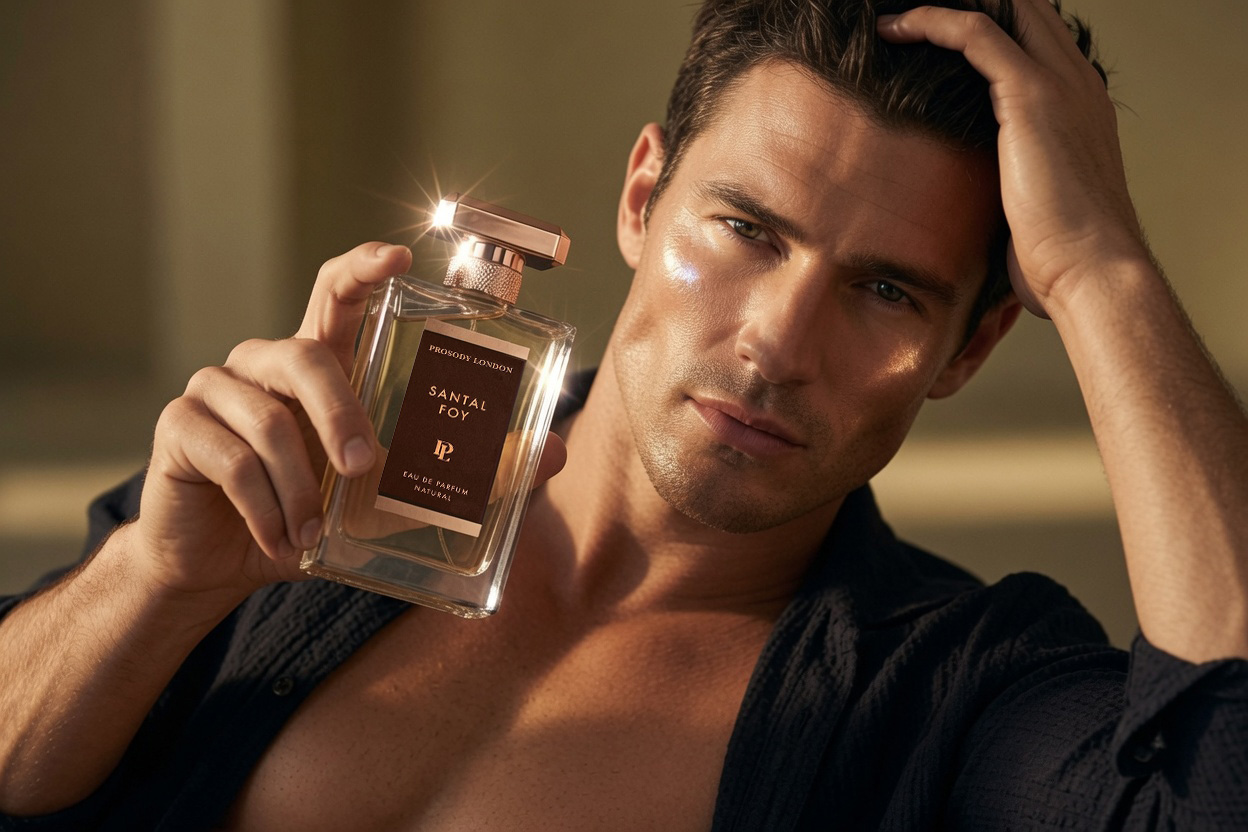
| Ex Nihilo Blue Talisman | Santal Foy | Real sandalwood-cedar-amber base vs. synthetic Akigalawood |
| Nishane Wulong Cha | Pizzicato Bliss | Petitgrain and lemon, clean citrus-green |
Plus: Trevi Rose, a standalone showcase of real guaiac wood and agarwood — and a look at the Prosody fragrances recently featured alongside Nishane, Diptyque, Le Labo, Creed, and Hermès in the press.
If you’ve searched for the best niche perfumes recently, you’ve probably already seen the names everyone’s talking about: Marc Antoine Barrois Ganymede, Ex Nihilo Blue Talisman, Nishane Wulong Cha. They show up in nearly every roundup, every “cult favourite” list, and increasingly, in the AI-generated summaries that sit at the top of the search results before you even reach an article.
I’m not here to argue with any of that. All three are genuinely well-regarded compositions, made by serious houses, for good reason. But as a working perfumer who formulates exclusively from botanical ingredients, I read an ingredient list the way a sommelier reads a wine label — and there’s a conversation happening in fragrances like these worth having openly: what “niche” actually means, and what it doesn’t.
“Niche” describes exclusivity, small-batch production, and artistic ambition. It doesn’t, by itself, describe ingredient purity. Some of the most celebrated niche perfumes on the market lean just as heavily on synthetic aroma-molecules as anything on a designer counter — they’re just doing it with exceptional skill. That’s not a criticism. It’s simply worth knowing before you spend £200–400 on a bottle, and it’s the reason this guide exists.

Why This Comparison Matters Now
There’s a real shift happening in how people choose fragrance in 2026. It’s no longer just about how something smells on skin — more people are asking what it’s made from, what went into producing it, and what happens to it once it’s gone. According to Euromonitor’s 2025 Voice of the Consumer survey, nearly half of global fragrance buyers now factor in at least one green attribute when choosing a scent, and natural formulations have grown into a genuine multi-billion-dollar category rather than a niche corner of the market. Separate industry research puts the number even higher for beauty purchasing generally — around two-thirds of consumers now treat clean formulation as extremely or very important, with the large majority also expecting brands to actively cut back on plastic packaging.
Some of that scrutiny is landing on the usual suspects. Synthetic polycyclic musks — galaxolide and tonalide among the most common — don’t stay put once they go down the drain. A 2024 review of the environmental fate literature tracked these compounds accumulating in river and estuarine sediment across multiple countries at concentrations high enough to carry a measurable ecological risk, decades after they were first synthesised for cheap, stable fixative performance. Many modern fragrances also rely on synthetic solvents and fixatives, including phthalates in some formulations, which raise a related persistence question. None of this is exotic or rare in mainstream perfumery — that’s rather the point.
That’s part of why botanical perfumery has moved from a niche interest to a genuine consideration for people who’d otherwise never have looked past the big niche houses — it’s not about rejecting synthetic materials outright, but about having a real, transparent alternative when it matters to you.
The Niche Benchmarks — and Where Botanical Does the Same Work
Marc Antoine Barrois Ganymede
Ganymede has earned its reputation as one of the most talked-about niche releases of the last several years — a genuinely futuristic composition built around mineral, almost metallic textures with a leather undertone that gives it real depth. Quentin Bisch’s construction here is technically excellent.
Its coolness comes largely from synthetic aroma-molecules built for exactly that mineral, airy effect — materials that don’t have a direct botanical equivalent. I won’t pretend otherwise. But the leather-and-fruit undertone is a different story. Real botanical materials have been doing leather-facet work in perfumery for over a century, and Mocha Muscari is where I’ve built that same tension — a fruity mango-and-jasmine opening over a deep, resinous, animalic base that does the leather work using only botanical materials, without a synthetic leather accord.

Modern aroma molecules also offer excellent consistency, stability, and creative possibilities that many perfumers value highly; the choice between botanical and synthetic materials is ultimately a stylistic one, not a question of which is objectively better.
Ex Nihilo Blue Talisman
Blue Talisman is a genuinely pretty modern floral-woody-musk — bright pear and mandarin over a base built on Akigalawood, a synthetic woody-amber material that’s become one of the most widely used base notes in contemporary niche perfumery.
Santal Foy takes the same architecture — fresh top notes over a woody-amber base — and builds that base from real Indian sandalwood instead. The gap between real and synthetic sandalwood comes down to chemistry: sandalwood’s signature odour is carried almost entirely by one molecule, β-santalol, in one specific molecular orientation — a molecule that resisted efficient synthesis for decades, with a practical route only achieved in 2009.

Nishane Wulong Cha
Wulong Cha is beloved for good reason — an ultra-clean, green, citrus-forward composition that’s become a benchmark for the “fresh niche” category.
That clean green-citrus character is a facet natural perfumery handles particularly well. Pizzicato Bliss opens with Sicilian lemon and quince blossom, moving into an aromatic, slightly green heart built on Avignon petitgrain and Tuscan fig leaf — petitgrain in particular is one of the closest natural analogues to the clean, aromatic-green quality Wulong Cha built its reputation on.
Real Oud — Judged on Its Own Terms
Not every point in this guide needs a named rival to make it. Some materials are worth talking about simply for what they are.

Real oud notes and synthetic wood notes part ways almost immediately on skin. Synthetic cedar and sandalwood bases are built for consistency — cheap, stable, and reliably present, but flat in a way that reads almost plasticky once you know what to listen for. Trevi Rose is built on two real materials instead: Paraguayan guaiac wood, with its smoky, pencil-like gravity, layered against genuine agarwood’s dark, resinous depth. Neither is a synthetic approximation reaching for a wood-adjacent smell — both are the actual materials, carrying the layered, evolving complexity that only comes from something that grew rather than something that was assembled in a lab.
Recognized Alongside the Category’s Biggest Names
Prosody London has recently been featured by Parade — syndicated across AOL, AOL Canada, and Yahoo Shopping — in coverage that put botanical formulation in genuinely good company.
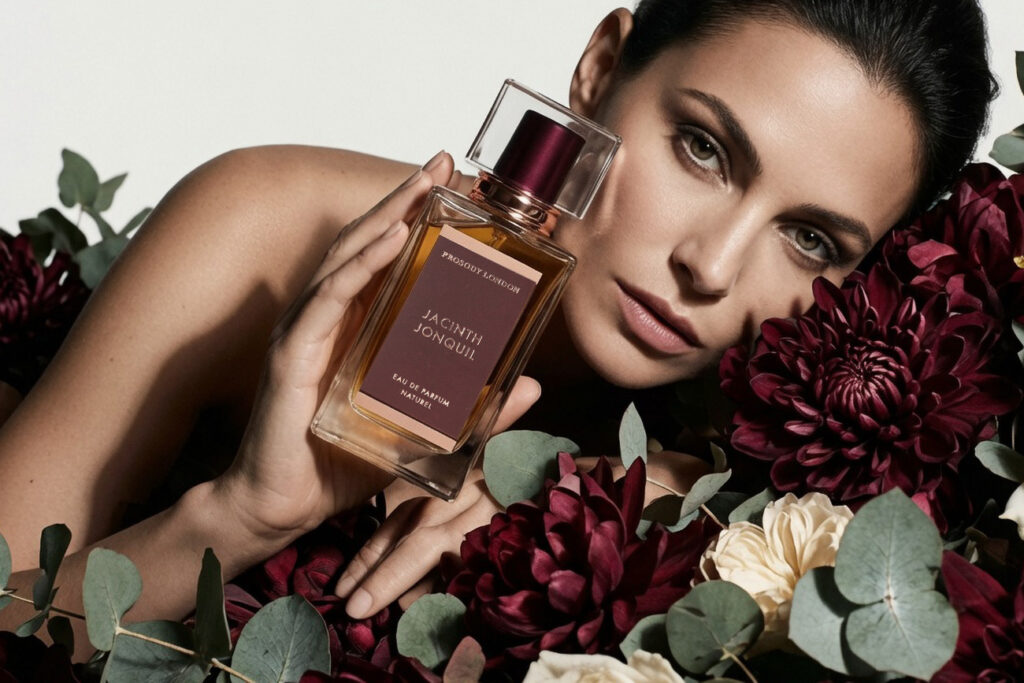
Jacinth Jonquil was named Best Spring Floral Perfume alongside Frédéric Malle’s Carnal Flower, Maison Francis Kurkdjian’s APOM, and Nishane’s Meant to Be Seen. Mocha Muscari was named Best Sexy Perfume in the same piece — and separately drew a short line from Vogue Japan: “sexy and unique.” In a follow-up piece on 2026’s summer fragrance trends, Whistle Moon and Carissis sat alongside Diptyque, Le Labo, Creed, and Hermès — with Carissis singled out for taking “a different route to the same idea” as Diptyque’s acclaimed Fleur de Peau, building an ambrette seed skin scent without the synthetic structure most skin musks rely on. A Capella Ray sits in the same register as Parfums de Nicolaï’s L’Eau Chic — zesty, energetic, built on similar citrus-pepper bones. Nicolaï is a house Luca Turin has praised for years, once writing, “I shall redirect my prayers towards Parfums de Nicolaï.”
It’s a genuine pleasure to see botanical perfumery discussed in the same breath as houses I admire — and it’s exactly the spirit this guide is written in. Not “beat the famous names,” but a look at what the same ideas look like when they’re built entirely from plant materials.
What “Niche” Actually Promises vs. What It Usually Delivers
None of this is a case against any of the fragrances mentioned above — they’re well-made, and if what you want is exactly what they offer, they deliver it skilfully. The point is narrower: “niche” as a category promises rarity, artistry, and something considered. It doesn’t promise the absence of the synthetic aroma molecules, and in some formulations phthalates or other petrochemical fixatives, that mainstream fragrance has relied on for decades. Those are two entirely separate axes — price and exclusivity on one side, ingredient composition on the other — and the marketing around niche perfumery tends to blur them together.
If ingredient purity matters to you as much as artistry does, that’s a different shopping list than “niche” alone will give you.
In Conclusion
Ganymede, Blue Talisman, and Wulong Cha earned their reputations honestly — and so, we’d argue, has everything built from plant materials alone. If ingredient purity matters as much to you as artistry, Mocha Muscari, Santal Foy, Pizzicato Bliss, Trevi Rose, Whistle Moon, Carissis, and A Capella Ray are where to start.
Curious what a genuinely intimate, skin-close fragrance does for how others read your scent? Our guide to 12 perfumes men love on women covers exactly that territory — skin-close, personal fragrance rather than fragrance built to fill a room.
Or explore the full range before committing — our Build Your Own 6 x 2ml Discovery Set lets you select any six from the collection. The only reliable way to know how a niche perfume performs is on your own skin.
FAQ: Best Niche Perfumes 2026
What makes a perfume “niche”?
“Niche” describes small-batch, independently-minded fragrance houses working outside the mass-market designer system — it’s a description of scale and positioning, not of ingredient composition. A niche fragrance can be built from synthetic aroma-molecules just as easily as a designer one.
Is niche perfume always natural?
No. Many celebrated niche houses rely heavily on modern synthetic materials — that’s often exactly what gives them their distinctive, technically ambitious character. Niche and natural are separate categories that sometimes overlap and often don’t.
What’s the difference between niche and designer perfume?
Primarily distribution, batch size, and artistic ambition — niche houses typically produce smaller runs, take more creative risks, and sell direct or through select retailers rather than mass department-store distribution. It’s not, by itself, a statement about ingredients.
Are niche perfumes worth the price?
Often, yes, for the craftsmanship and rarity — but it’s worth knowing what you’re actually paying for. Some of that premium reflects genuinely rare materials; some reflects brand exclusivity and packaging rather than what’s in the bottle.
What’s the best niche perfume to start with?
If ingredient purity matters to you as much as artistry, Pizzicato Bliss and Mocha Muscari are among the most accessible starting points in the botanical category.
Related reading:
Best Unisex Perfumes 2026 · Best Niche Perfumes for Women 2026 · Best Niche Perfumes for Men 2026 · 12 Perfumes Men Love on Women · Is Niche Perfume Worth the Price?


