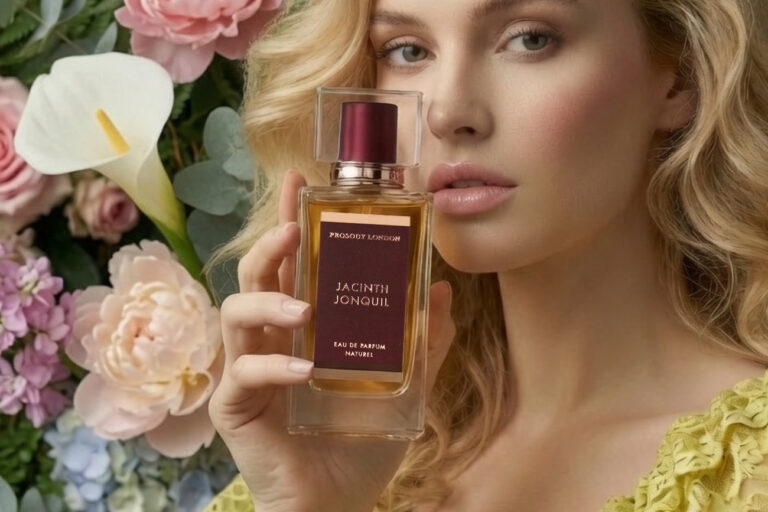
Perfume for Good Luck: 5 Secret Ingredients
By Kershen Teo | Founder & Perfumer, Prosody London
At a Glance — Perfume for Good Luck: Five Botanical Ingredients and Their Cultural History
The idea of a “lucky” perfume is rooted in cultural and spiritual traditions found across many societies. Across Hindu, Egyptian, and Indigenous American traditions, certain botanical ingredients were used in ritual, ceremony, and daily spiritual practice. Here are five of them, and why I chose each one for Santal Foy.
The concept of perfume for good luck is older than perfumery itself. Long before fragrance was worn for pleasure, it was used to communicate intention — to deities, to the cosmos, to oneself. Every ingredient burned in a temple or worn on the body was chosen deliberately, and many of the same botanical materials keep reappearing across cultures that had no contact with each other.
The recurrence of these botanicals across different cultures is historically interesting. While each tradition developed its own meanings, many of the same fragrant materials became associated with ceremony, wellbeing, and positive intention.
I’m not making metaphysical claims here. What I can tell you — as a working perfumer who uses only botanical ingredients — is that these five materials are real, complex, and demonstrably different from synthetic approximations. Whether they “attract luck” is for you to decide. What I know is that they’ve been trusted for that purpose across centuries of human history, and they are genuinely remarkable raw materials.

Sandalwood: Sacred and Grounding
Its importance and usage are recorded in the Vedas, Puranas, and Ayurvedic texts including the Charaka Samhita — it has been used in Hindu, Buddhist, and Jain ritual for over 4,000 years. In Hindu practice specifically, it is applied as paste to temple deities, burned as incense in ceremony, and used to anoint the body. The essential oil of Santalum album has a documented history in perfumery, medicine, and religious practice spanning millennia.
The specific oil we use in Santal Foy is aged Mysore sandalwood (Santalum album), sourced from a British wholesaler who batch-tests for purity and adulteration. That last point matters more than it might seem. East Indian sandalwood in commercial markets is highly prone to adulteration — with substitute species, synthetic santalols, or low-grade oils from other Santalum varieties. True aged Mysore sandalwood is softer, creamier, and more persistent than Australian sandalwood (S. spicatum), which has a sharper, more astringent profile. It also achieves markedly longer skin retention.
In fragrance terms, sandalwood is a fixative. It extends the life of everything around it by slowing evaporation. Across many spiritual traditions, sandalwood has been associated with grounding, protection, and contemplation.
Modern research has explored α-santalol in relation to nervous system activity in preclinical and early-stage studies (PMID 23196153). Separately, sandalwood has been studied for its potential calming associations and effects on perceived relaxation, alongside its long traditional use in contemplative practices. For the full picture on botanical fragrance materials and skin, read our guide to perfume and skin. For the full science on sandalwood’s relationship with relaxation and the nervous system, read our guide to calming perfume and the science behind it.
Traditional Associations with Good Fortune
Sandalwood is one of the oldest traded commodities in the world — and one of the most spiritually consistent. Across Hindu, Buddhist, Jain, and Ayurvedic traditions, it was used to invite divine alignment, purify spaces, and ground the individual in positive intention.
Carrot Seed: Underestimated, Earthy, Regenerative
Carrot seed (Daucus carota) is one of the more underused oils in natural perfumery and one of my personal favourites. It has an earthy, slightly warm character — rooty rather than obviously floral or woody. In folk herbalism across Europe and Asia, carrot seed was associated with cleansing, transition, and new beginnings.
Formulaically, it adds unusual depth in the mid-register. It also has good fixative properties and blends well with heavier base notes. I use it in Santal Foy to introduce a natural earthiness that keeps the sandalwood from reading as simply sweet.

Orange Blossom: Clarity and Lightness
Citrus aurantium blossoms — the source of neroli oil and orange flower absolute — appear in the bridal traditions of multiple cultures simultaneously: Mediterranean, Middle Eastern, South Asian. The association is consistent: new beginnings, optimism, purification of the past.
Orange blossom absolute has a notably complex aromatic profile. GC/MS analysis identifies dozens of constituents, with linalool, linalyl acetate, limonene, farnesol, and nerolidol among the dominant compounds. The effect in a blend is brightness and lift. In Santal Foy it opens the fragrance before the deeper base notes come forward. This is also a material where natural versus synthetic is immediately apparent to a trained nose — synthetic neroli loses the subtle honeyed, slightly green character that makes the real thing so distinctive.
Linalool and linalyl acetate — two of orange blossom’s primary constituents — have been studied for their relationship with GABAergic modulation and relaxation responses (PMID 30405369). For more on the research into linalool and neroli’s relationship with mood and relaxation, read our guides to calming perfume and perfume for mood and happiness. Orange blossom is also central to Neroli Nuance, our neroli-led eau de parfum, where the same linalool-rich botanical is explored in a lighter, citrus-forward register.
Historical Symbolism
Consistently across cultures, orange blossom signals a threshold moment — the beginning of something new. In the formula it performs the same function: it opens everything up.
Tonka: Coumarin, Warmth, and Ancient Luck Traditions
Tonka bean (Dipteryx odorata) comes from South America, where it has been used in folk practice as a good-luck charm — carried in pockets, tucked into clothing, used in ritual. It made its way into European perfumery in the 19th century and became foundational to the oriental and fougère families.
The dominant compound is coumarin, which gives tonka its characteristic scent: warm vanilla, almond, a faint tobacco edge, sweet hay. Coumarin is also found naturally in lavender, sweet clover, and woodruff — it’s a widespread botanical molecule, which is why tonka blends easily with so many other materials. In Santal Foy it adds warmth and smoothness to the base. I should note: we use tonka absolute in small concentration. Coumarin is an IFRA-restricted material with category-specific limits in leave-on products, and we formulate within those IFRA guidelines.
Why It Appears in Good Fortune Traditions
The luck association with tonka is old and specific — it was literally carried as a charm. The coumarin molecule that defines its scent is warm, enveloping, and magnetic. In a blend it draws everything together.
Myrrh: Ancient Purification, Modern Fixative
Myrrh (Commiphora myrrha) is a resin tapped from a thorny tree native to the Horn of Africa and the Arabian Peninsula. It has been used throughout history in incense and perfume, and since Biblical times for the treatment of wounds. Its protective and purifying associations span Egyptian embalming, Jewish temple incense, Ayurvedic medicine, and Christian liturgy — making it one of the most universally attested ritual materials in the world.
As a perfumery material, myrrh resinoid is one of the most effective natural fixatives available. Its substantivity — the technical term for how well a material clings to skin and fabric — is exceptional. It extends the longevity of a formula significantly, which is part of why Santal Foy achieves the 8–10 hour wear time we get without any synthetic musks or phthalate-based fixatives. The scent itself is earthy, slightly bitter, warm — it rounds off sharp edges in a blend and adds a certain gravitas to the dry-down.
Research has explored myrrh’s constituents in relation to biological pathways associated with discomfort response in preclinical models (PMC9672555), alongside its long historical use in traditional systems of medicine and ritual.
Traditional Associations with Good Fortune
Across many traditions, myrrh became associated with purification and renewal, helping explain its enduring place in rituals connected with protection and good fortune. Myrrh also appears as a structural base note in Lantern Reed and Whistle Moon.

Santal Foy- the perfume for good Luck: The Formulation
Santal Foy brings these five ingredients together with additional botanical materials into what I consider one of our most successful blends. The brief I set myself was: a perfume that feels ancient without being heavy; sacred without being incense-like; inspired by traditional ideas of good fortune in the most grounded sense — a fragrance intended to evoke clarity, presence, and quiet confidence.
The Mysore sandalwood is the dominant note and the structural core. The orange blossom opens it. Carrot seed and myrrh anchor the middle and base. Tonka smooths everything into a coherent whole.
Because our Mysore sandalwood stock is finite and I am not confident we can source at the same quality again, Santal Foy is limited edition. When the oil is gone, the formula as it currently exists cannot be reproduced exactly.
If you want to try it before committing to a full bottle, our natural perfume sample set includes a 2ml vial.
If you’re interested in the historical symbolism of fragrance and prosperity, we’ve also written about botanical ingredients traditionally associated with abundance and wealth — read our guides to scent ingredients to attract abundance and perfume that attracts money.

FAQ — Perfume for Good Luck: Five Botanical Ingredients
Is there any scientific basis for “lucky” perfume ingredients?
The ingredients in Santal Foy were not chosen because of scientific evidence for luck — luck is a cultural and symbolic concept, not a measurable outcome. What research does explore, separately, is how certain botanical compounds interact with the nervous system, mood, and physiological stress responses. α-Santalol in sandalwood has been studied for its relationship with parasympathetic nervous system activation (PMID 23196153). Linalool in orange blossom has been studied for GABAergic modulation and relaxation responses (PMID 30405369). These are separate from any claim about luck — they are reasons why these materials have been valued across cultures for their effect on human wellbeing, which may help explain their enduring association with ceremony and positive intention.
Why do the same botanical ingredients appear across unconnected cultures?
The recurrence of sandalwood, myrrh, orange blossom and similar materials across Hindu, Egyptian, Islamic, and Indigenous American traditions is a genuinely interesting historical phenomenon. These cultures had no contact with each other, yet independently selected many of the same fragrant materials for ceremony and ritual. The most likely explanation is that these materials were selected for their genuine sensory and psychological effects — their ability to create particular states of calm, clarity, or presence — rather than through arbitrary association.
What makes Santal Foy different from other perfumes marketed as lucky?
Most products marketed as “lucky” or “abundance” fragrances are built on synthetic aromatic molecules that approximate the smell of the botanical materials without containing their actual chemical complexity. Santal Foy is formulated entirely from botanical ingredients — aged Mysore sandalwood, orange blossom absolute, carrot seed, tonka absolute, and myrrh resinoid — each chosen for both its olfactory character and its cultural history. There are no synthetic musks, phthalates, or petrochemical derivatives in any concentration. For more on why this matters, read our guides to hidden chemicals in perfume and endocrine disruptors in perfume.
Does Prosody London claim that Santal Foy attracts luck?
No. Santal Foy is a 100% botanical eau de parfum built on five ingredients with documented cultural and historical associations with good fortune, ceremony, and positive intention across multiple civilisations. Whether wearing it affects your luck is for you to decide. What we can say with confidence is that these are genuinely remarkable raw materials, formulated with care from authentic botanical sources, and that the cultural traditions that valued them for thousands of years were responding to something real about their sensory and psychological character.
How long does Santal Foy last?
6–8 hours on skin, without synthetic musks or phthalate-based fixatives. Longevity comes from myrrh resinoid’s exceptional substantivity and the slow-release character of aged Mysore sandalwood — both natural fixatives with centuries of use in perfumery for exactly this purpose.
Is Santal Foy suitable for sensitive skin?
Santal Foy contains no synthetic aromatic molecules, phthalates, or synthetic musks — the compound classes most commonly associated with skin sensitivity and irritation in mainstream fragrance. Tonka absolute contains coumarin, an IFRA-restricted material, and we formulate within IFRA guidelines for leave-on products. As with any natural fragrance, patch testing on a small area of skin before full application is recommended, particularly if you have known sensitivities to botanical materials. For more on natural fragrance and sensitive skin, read our guide to natural perfume for sensitive skin.
Can I try Santal Foy before buying a full bottle?
Yes — our Build Your Own 6 x 2ml Discovery Set lets you select Santal Foy alongside five other formulas from the collection, wearing each through a full day before deciding. Given Santal Foy is limited edition — tied to a finite stock of aged Mysore sandalwood that cannot be guaranteed to be replaced at the same quality — trying it on your own skin before committing is the right approach.