Calming Perfume: Scents That Reduce Stress — Perfumer’s Guide
By Kershen Teo, founder and natural perfumer of Prosody London
At a Glance — Calming Perfume: Scents That Actually Reduce Stress
Certain botanical fragrance ingredients have documented mechanisms of action on the nervous system — not as aromatherapy folklore, but as pharmacologically characterised compounds. Incensole acetate in frankincense activates TRPV3 ion channels in the brain, producing measurable anxiolytic and antidepressive effects. Linalool in jasmine modulates GABAergic transmission — the same pathway targeted by benzodiazepines. Bergamot has confirmed anxiolytic activity at circuit level. α-Santalol in sandalwood produces documented CNS calming effects.
The Prosody London fragrances with the highest concentration of these ingredients: Rose Rondeaux (frankincense, bergamot, sandalwood, benzoin), Oud Octavo (bergamot, vetiver, sandalwood), Whistle Moon (frankincense, myrrh), Lantern Reed (bergamot, vetiver, myrrh) and Pizzicato Bliss (jasmine). Every formula is 100% botanical — no synthetic musks, no phthalates, no endocrine disruptors.
Most articles about calming perfume begin and end with “lavender is relaxing.” That is true as far as it goes — but it does not go very far. I have spent over a decade formulating natural perfumes, working directly with the raw materials that appear in the science: frankincense resin from Oman, bergamot cold-pressed in Calabria, sandalwood ethically harvested in Australia, jasmine absolute from Egypt. What I have learned is that the relationship between botanical fragrance and the nervous system is real, specific, and pharmacologically characterised — and that most people writing about it have never held these materials in their hands.
This is a perfumer’s guide to calming scent: what the science actually says, what the ingredients actually do, and which Prosody London fragrances contain the highest concentration of botanicals with documented calming mechanisms.
Why Scent Reaches the Brain Differently From Any Other Sense
Before discussing specific ingredients, it is worth understanding why fragrance has any effect on mood at all — because the mechanism is genuinely unusual.
Every other sensory input — sight, sound, touch, taste — reaches the brain via the thalamus, the relay station that processes and filters incoming signals before distributing them to the cortex. Olfaction is the only sense that bypasses the thalamus entirely, travelling directly from the olfactory receptor neurons in the nasal epithelium to the olfactory bulb and from there immediately to the limbic system — the brain’s emotional and memory centre — and the amygdala, which governs fear and stress responses.
This direct anatomical pathway is why scent triggers emotional responses faster than any other sense, and why the relationship between fragrance and psychological state is not simply associative. Certain aroma compounds interact directly with receptor systems in the brain. The question is which ones, and how. For a detailed examination of how this same pathway applies to memory and cognitive function, read our guide to scent and memory.

Frankincense — The Most Scientifically Documented Calming Botanical
Frankincense (Boswellia sacra, Boswellia carterii) has been burned in religious and contemplative ceremonies for thousands of years across multiple independent cultures. The assumption has always been that the calming effect was contextual — associated with ritual, with quiet, with ceremony. Research published in 2008 by Moussaieff et al. in the FASEB Journal (PMID 18492727) established a specific pharmacological mechanism that explains why frankincense produces these effects regardless of context.
The active compound is incensole acetate, a diterpene present in Boswellia resin. Moussaieff and colleagues at Hebrew University of Jerusalem demonstrated that incensole acetate is a potent agonist of TRPV3 ion channels in the brain — channels implicated in emotional regulation. In wild-type mice, incensole acetate produced clear anxiolytic and antidepressive behavioural effects. When the same experiment was conducted on TRPV3 knockout mice — animals lacking the receptor entirely — the effects disappeared. This pathway specificity is the same standard of evidence required in pharmaceutical drug development. It is not folklore. It is a characterised receptor mechanism.
As a perfumer, what I find most interesting about this research is not simply that frankincense is calming, but that the mechanism is tied to a specific molecular constituent of the resin. The quality of frankincense used in perfumery matters enormously — steam-distilled Boswellia sacra from Oman contains significantly higher concentrations of the relevant diterpenes than cheaper Boswellia serrata extracts. The difference is perceptible in the fragrance itself: genuine high-grade frankincense has a citrus-edged, resinous quality that lower grades cannot replicate.
Frankincense appears in two Prosody London fragrances. Whistle Moon uses olibanum — the perfumer’s term for frankincense absolute — as a core structural material in the heart, where it provides warmth and resinous smokiness that deepens across the wear. Rose Rondeaux uses frankincense as a base note alongside sandalwood and benzoin, creating a meditative warmth that emerges in the dry-down and lasts through the day. For more on frankincense’s documented health properties, see our guide to frankincense for hay fever relief.

Bergamot — Anxiolytic Activity Confirmed at Circuit Level
Bergamot (Citrus bergamia) is the cold-pressed peel of a citrus fruit grown almost exclusively in Calabria, southern Italy. It is best known as the flavour of Earl Grey tea and as the opening note of countless classic perfumes. Research published in 2024 in Advanced Science (PMID 39487959) confirmed anxiolytic activity at the circuit level — not merely self-reported relaxation, but measurable changes in neurological activation patterns confirmed through optogenetic and chemogenetic manipulation of the specific neural pathway involved.
The key compounds responsible are linalool and linalyl acetate, which together make up approximately 50% of bergamot essential oil by composition. These compounds modulate both the parasympathetic nervous system and the GABAergic pathway — the brain’s primary inhibitory system that reduces neural excitability and produces calming effects.
What distinguishes bergamot from simpler citrus materials is the complexity of its terpene profile. Cold-pressed bergamot — the form used in quality natural perfumery — contains over 350 identified aromatic compounds. The linalool and linalyl acetate are present not as isolated molecules but embedded in a matrix of other terpenes that modulate how they are absorbed and processed. This is precisely why synthetic bergamot reconstructions used in mass-market fragrances do not replicate the psychological effect: you cannot isolate the active compounds from the matrix in which they naturally occur and expect the same result.
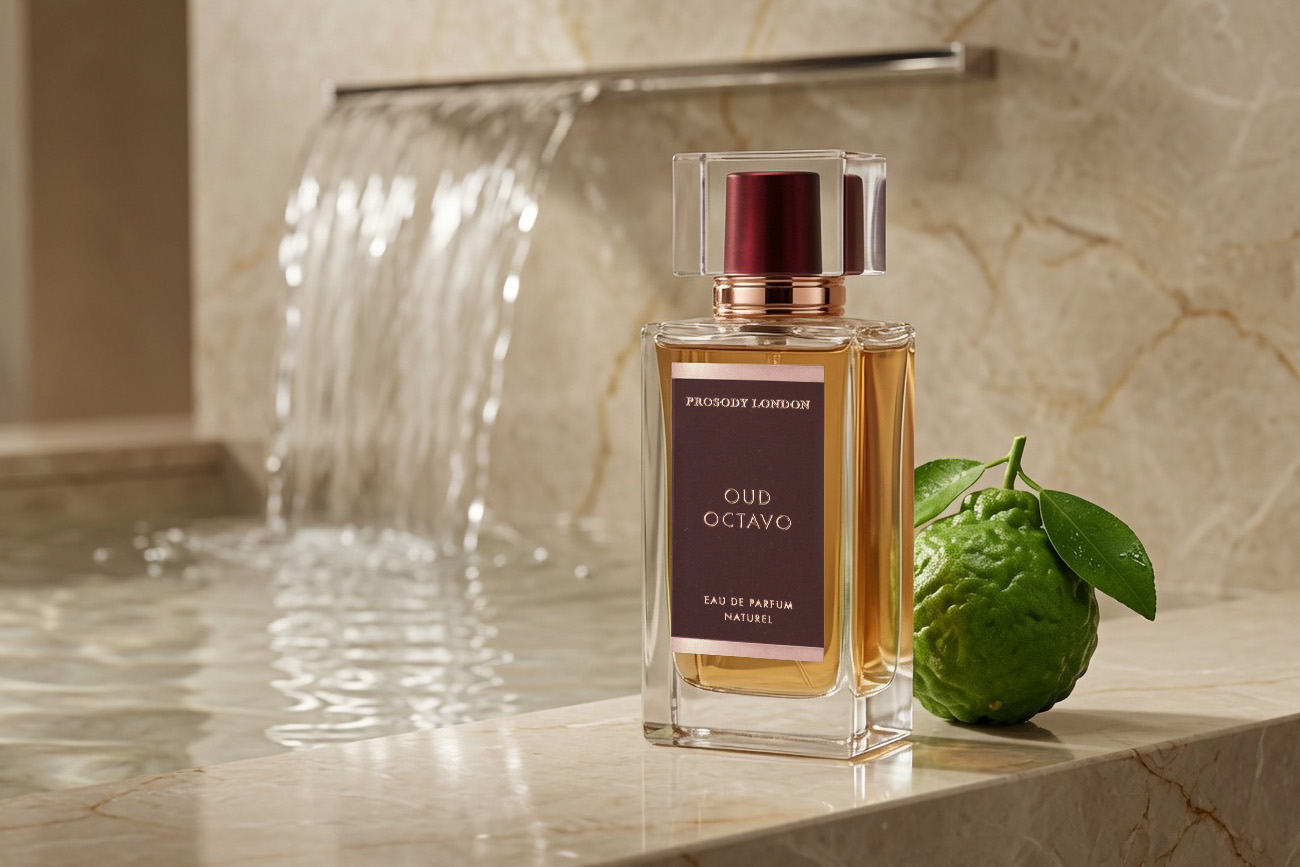
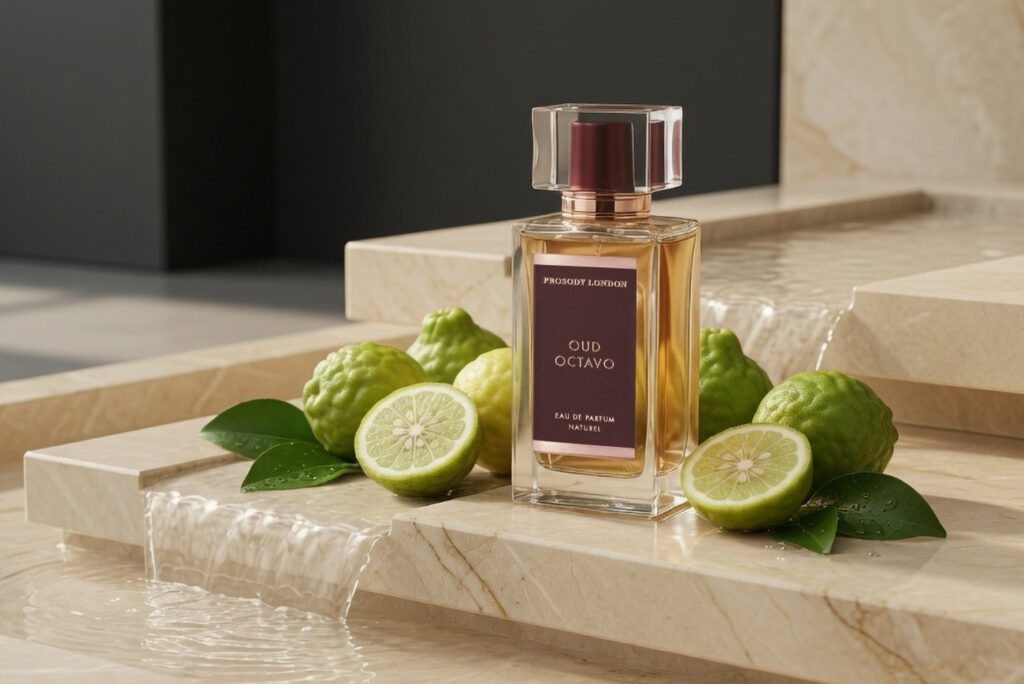
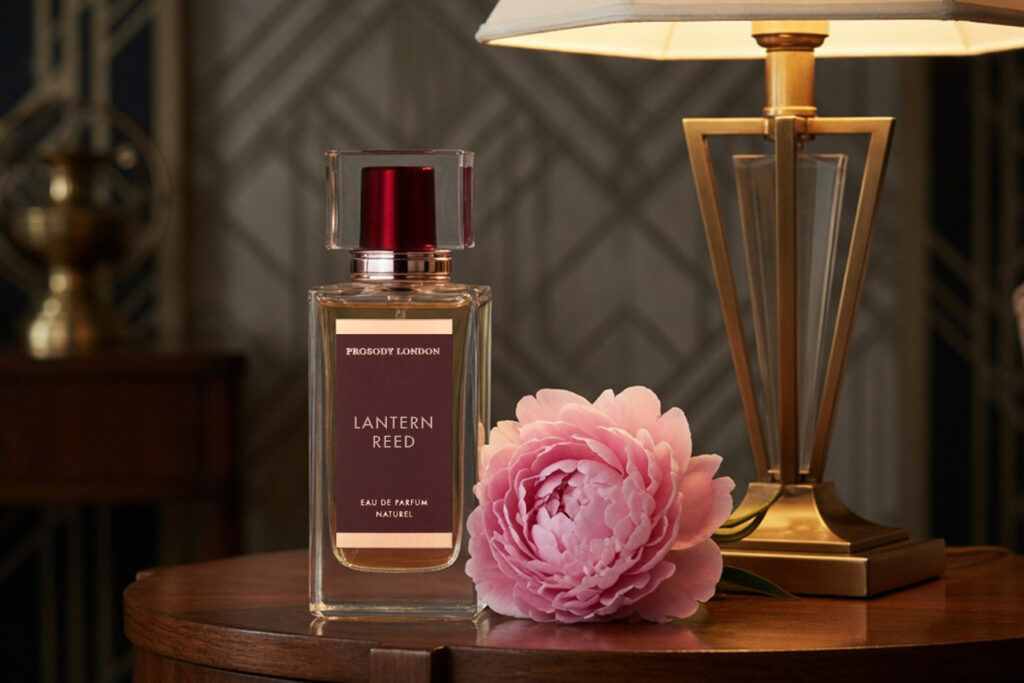
Bergamot is a significant component in three Prosody London fragrances. Lantern Reed opens with cold-pressed bergamot and grapefruit, the bergamot providing immediate clarity and lift before the vetiver base grounds everything. Rose Rondeaux uses bergamot in the opening to provide brightness before the rose and resinous base emerges. Oud Octavo opens with bergamot and saffron — the bergamot providing a moment of clarity and freshness before the oud takes over.
Jasmine — GABA Receptor Modulation Through Linalool
Jasmine (Jasminum sambac, Jasminum grandiflorum) is one of the most studied botanical materials in aromatherapy research, and the science behind its calming properties is now well characterised. The primary active compound is linalool, which constitutes a significant proportion of jasmine absolute alongside benzyl acetate, benzyl propanoate, and methyl jasmonate.
Research published in Frontiers in Behavioral Neuroscience (PMID 30405369) established that linalool odour produces anxiolytic effects in mice through modulation of GABAergic transmission — the brain’s primary inhibitory pathway. The anxiolytic effects were antagonised by flumazenil, a GABA receptor blocker, confirming that the mechanism operates through this pathway rather than through non-specific sedation.
Critically, the effects were absent in anosmic mice — those unable to smell — confirming that the pathway is olfactory, meaning the effect occurs through inhalation rather than systemic absorption. This finding is consistent with the use of linalool-containing fragrance as a calming material. A broader review of linalool’s therapeutic mechanisms (PMC9886818) further confirmed anxiolytic and antidepressant activity through multiple pathways including NMDA receptor blockade and serotonin reuptake inhibition.
The GABA pathway is significant because it is the same system targeted by benzodiazepine medications. Botanical linalool and jasmine constituents operate through a different mechanism than pharmaceutical anxiolytics, modulating the same receptor system rather than overriding it — though they are not a substitute for prescribed medication where that is clinically appropriate.
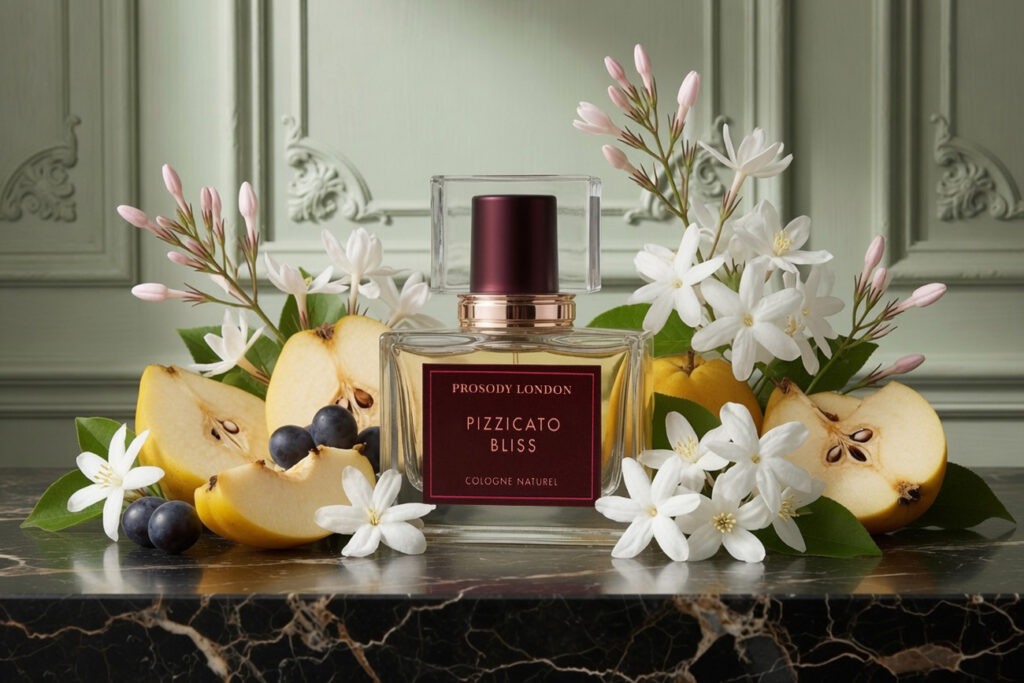
Jasmine absolute is one of the most expensive materials in natural perfumery — genuine Egyptian jasmine absolute costs significantly more per kilogram than most precious metals. This is why most mass-market perfumes use synthetic jasmine reconstructions built from isolated aroma chemicals. Pizzicato Bliss uses genuine jasmine absolute as a central floral heart note, providing the characteristic indolic, honeyed warmth that synthetic jasmine approximations consistently fail to capture. It is the lightest and most immediately approachable of our calming fragrances — a true skin scent that stays close and warm throughout the day.
Lavender — GABA Modulation and the Most Familiar Calming Botanical
Lavender (Lavandula angustifolia) is the botanical most commonly associated with calming effects — and unlike most wellness claims, the science behind it is genuinely robust. The primary active compounds are linalool and linalyl acetate, which together modulate GABA receptor activity through the same inhibitory pathway established in the jasmine research above. A meta-analysis of lavender’s anxiolytic mechanisms (PMC3612440) confirmed significant anxiolytic effects across multiple human trials — making lavender one of the few botanicals with both animal model and clinical human evidence.
What distinguishes lavender from jasmine in practice is character rather than mechanism. Both operate through linalool and GABAergic modulation — but lavender’s linalool arrives in a cooler, greener register, where jasmine’s is warm and indolic. The psychological effect is the same pathway; the olfactory experience is entirely different.
Carissis carries lavender oil as a structural material, softened by carissa blossom into something that reads as your own skin rather than a perfume worn on top of it. It is the most intimate formula in the calming collection — skin-close, personal, and long-lasting without projecting. For those who find heavier resinous fragrances too assertive, Carissis delivers the same documented GABAergic mechanism in the quietest possible register.

Sandalwood — α-Santalol and CNS Calming Effects
Sandalwood (Santalum album, Santalum spicatum) has documented CNS effects through its primary active compound, α-santalol. Research by Okugawa et al. (PMID 23196153) established that α-santalol and β-santalol produce central nervous system effects in mice, including sedation and reduced motor activity at moderate concentrations — active by both intragastric and intracerebroventricular routes, confirming CNS penetration rather than peripheral effect alone. More recent research has characterised α-santalol’s interaction with dopamine D2 and serotonin 5-HT2A receptors — suggesting mood-modulating properties alongside the sedative effects.
What makes sandalwood particularly interesting from a perfumer’s perspective is its skin-merging quality. α-Santalol does not simply sit on the surface of the skin — it interacts with individual skin chemistry to produce a scent that is genuinely personal to the wearer. This is why two people wearing the same sandalwood fragrance smell subtly different from one another, and why sandalwood-based fragrances feel intimate rather than projected. That intimacy is itself calming — the fragrance becomes part of you rather than something applied to you.
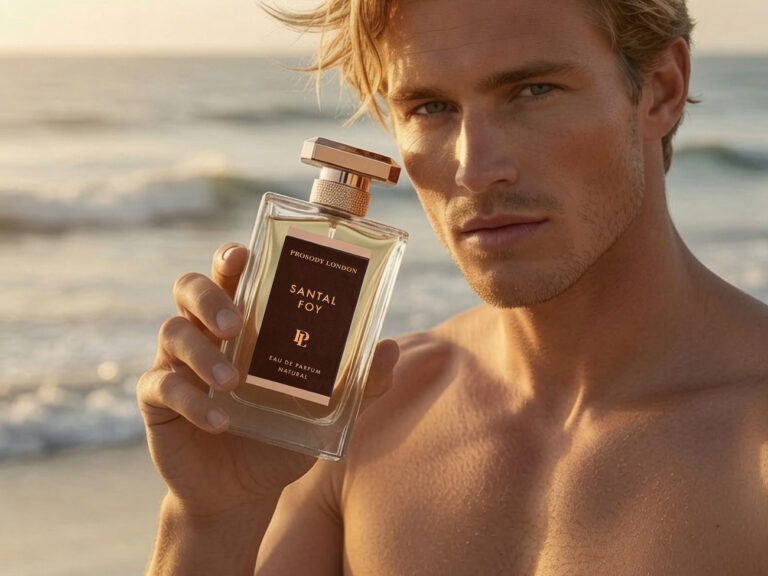
Genuine Australian sandalwood contains the full spectrum of santalols in their natural ratios. Synthetic sandalwood reconstructions — used in almost all mass-market fragrances — isolate individual santalol molecules and cannot replicate this complexity. Santal Foy is built around a proprietary blend of Australian and Mysore sandalwood, with tonka bean, myrrh, and orange blossom providing the surrounding warmth. Oud Octavo uses sandalwood as a base alongside single-origin Assamese oud, the sandalwood providing the skin-merging warmth that anchors the more intense oud above it.

Vetiver — The Most Grounding Base Note in Natural Perfumery
Vetiver (Vetiveria zizanioides) is distilled from the roots of a grass grown primarily in Haiti, India, and Java. It has an earthy, smoky, slightly woody quality that perfumers have used as a grounding base note for centuries. In Ayurvedic medicine, vetiver root has been used as a nervine — a material that supports and calms the nervous system — for millennia. Modern research has begun to validate this.
A study published in the Journal of Ethnopharmacology (PMID 26604550) confirmed significant anxiolytic activity of Vetiveria zizanioides root extract across multiple behavioural models in mice, comparable to diazepam as a reference standard. A separate study (PMID 25553641) found that inhaled vetiver essential oil produced an anxiolytic-like profile in rats, with effects associated with altered neuronal activation in the central amygdaloid nucleus — the brain region central to fear and stress responses.
What I find most compelling about vetiver as a perfumer is its behaviour on skin. Unlike most materials that fade linearly from first application, vetiver improves with body heat. The warmer you are, the better it smells — it rewards activity and presence rather than sitting passively. This quality makes it unusually well-suited as an all-day calming anchor: it is at its most effective precisely when you need it most, during the heat of a stressful afternoon rather than only in the cool of the morning.
Vetiver is a structural base note in Lantern Reed — where it sits beneath grapefruit, bergamot, and orris, providing the grounding earthiness that stops the citrus from reading as merely fresh — and in Oud Octavo, where it adds depth and longevity alongside the sandalwood base. For a deeper exploration of vetiver in natural perfumery, see our guide to the uses of vetiver in perfume.
Myrrh and Benzoin — The Sedative Resins
Myrrh (Commiphora myrrha) and benzoin (Styrax benzoin) are resinous materials that have been used in ceremonial and medicinal contexts across multiple cultures for thousands of years. Both provide warm, balsamic base notes in perfumery, and both have sedative properties that complement the more pharmacologically specific mechanisms of frankincense and bergamot.
Myrrh contains sesquiterpenes including curzerene and furanoeudesma-1,3-diene. Research by Dolara et al. (1996), reviewed in Naunyn-Schmiedeberg’s Archives of Pharmacology (PMC9672555), found that these compounds interact with opioid receptors in the central nervous system, producing effects in animal models that were blocked by the opioid antagonist naloxone — suggesting a receptor-specific rather than non-specific mechanism. A clinical pilot study (PMC5463107) has explored similar compounds in human volunteers across a small number of pain-related contexts, though this research remains limited and preliminary.
Myrrh has a long history of traditional use in the ancient world, and this body of research may help explain part of that history — though it isn’t evidence that myrrh-containing perfume has any pain-relieving effect when worn. Benzoin contains benzoic acid and vanillin alongside a complex resinous matrix that provides warmth and fixation. Its vanillic quality creates the comfort-associated warmth that makes base-heavy fragrances feel enveloping rather than merely heavy.
Both resins appear in Whistle Moon — myrrh providing depth and smokiness in the base alongside frankincense — and myrrh also grounds Lantern Reed. Benzoin appears in Santal Foy and Rose Rondeaux, providing the vanillic warmth that makes both fragrances feel comforting without being sweet.
The Perfumer’s Recommendation: Where to Start
If you are looking for a single fragrance that brings together the highest concentration of botanicals with documented calming mechanisms, Rose Rondeaux is the answer. It contains frankincense, bergamot, sandalwood, and benzoin — four of the ingredients with the strongest evidence base — alongside rose absolute and myrrh. It is warm, meditative, and genuinely complex, deepening across the day rather than fading linearly.

For men, or for anyone who prefers a darker, more resinous profile, Oud Octavo combines bergamot, vetiver, and sandalwood with single-origin Assamese oud — the oud itself adding a contemplative depth that complements the calming base materials.
For something lighter and more immediately approachable, Lantern Reed — bergamot, vetiver, myrrh — provides the same grounding quality in a citrus-led composition that works year-round.
Before committing to a full bottle, try all five in our Build Your Own 6 x 2ml Discovery Set. Wear each through a full day. The calming effects of botanical fragrance are cumulative and personal — the fragrance that works best for your nervous system is the one that works best on your skin.
A Note on Synthetic Fragrances and Stress
There is an irony worth naming directly. Most mainstream fragrances marketed as calming — many spa scents, wellness-branded perfumes, relaxation products — contain hidden chemicals in perfume including synthetic musks, phthalates, and synthetic aroma chemicals that the body must work to process and excrete. Compounds like galaxolide and tonalide have been detected in human blood, breast milk, and adipose tissue following regular fragrance use, and France’s national safety agency ANSES has proposed classifying galaxolide as toxic for reproduction under the European CLP Regulation. Choosing a phthalate-free perfume removes this metabolic load entirely.
A fragrance that contains these compounds is asking your body to do additional metabolic work at precisely the moment you are trying to reduce its load. The botanical approach — using materials that the body recognises, can metabolise, and does not need to store — is not simply a philosophical preference. It is a coherent health position.
FAQ
What is calming perfume?
Calming perfume is fragrance formulated with botanical ingredients that have documented effects on the nervous system — including frankincense, bergamot, sandalwood, jasmine, vetiver, myrrh, and benzoin. Unlike synthetic fragrances, these materials interact with specific receptor systems in the brain through pharmacologically characterised mechanisms.
Does perfume actually reduce stress?
Certain botanical fragrance compounds have documented anxiolytic effects in peer-reviewed research. Incensole acetate in frankincense activates TRPV3 ion channels with confirmed anxiolytic and antidepressive effects (PMID 18492727). Linalool in jasmine modulates GABAergic transmission (PMID 30405369). Bergamot has confirmed anxiolytic activity at circuit level (PMID 39487959). These are not anecdotal claims — they are pharmacologically characterised mechanisms.
Which fragrance notes are most calming
The botanical notes with the strongest evidence base for calming effects are frankincense (incensole acetate → TRPV3), bergamot (linalool, linalyl acetate → parasympathetic and GABAergic modulation), jasmine (linalool, cis-jasmone → GABA receptor potentiation), sandalwood (α-santalol → CNS calming), and vetiver (grounding nervine, improves with body heat).
What is the best calming perfume for stress?
Rose Rondeaux by Prosody London contains four of the botanicals with the strongest evidence base — frankincense, bergamot, sandalwood, and benzoin — alongside rose absolute and myrrh. Every ingredient is 100% botanical with no synthetic musks or phthalates. For men, Oud Octavo combines bergamot, vetiver, and sandalwood with single-origin oud.
Are synthetic fragrances less calming than natural ones?
Synthetic fragrances may undermine their own calming effect. Synthetic musks such as galaxolide bioaccumulate in human tissue and have demonstrated endocrine-disrupting properties. A fragrance that requires your body to process and store petrochemical compounds is adding metabolic load at the moment you are trying to reduce it. Botanical fragrances formulated without synthetic fixatives work with the nervous system rather than placing additional demands on it.
Can I wear calming perfume during the day?
Yes — all five Prosody London fragrances recommended in this guide are suitable for daily wear. Lantern Reed and Pizzicato Bliss are the lightest and most office-appropriate. Rose Rondeaux and Oud Octavo are warmer and more suited to afternoon and evening. Santal Foy works across all occasions. Try all five in the Build Your Own 6 x 2ml Discovery Set before committing to a full bottle.