

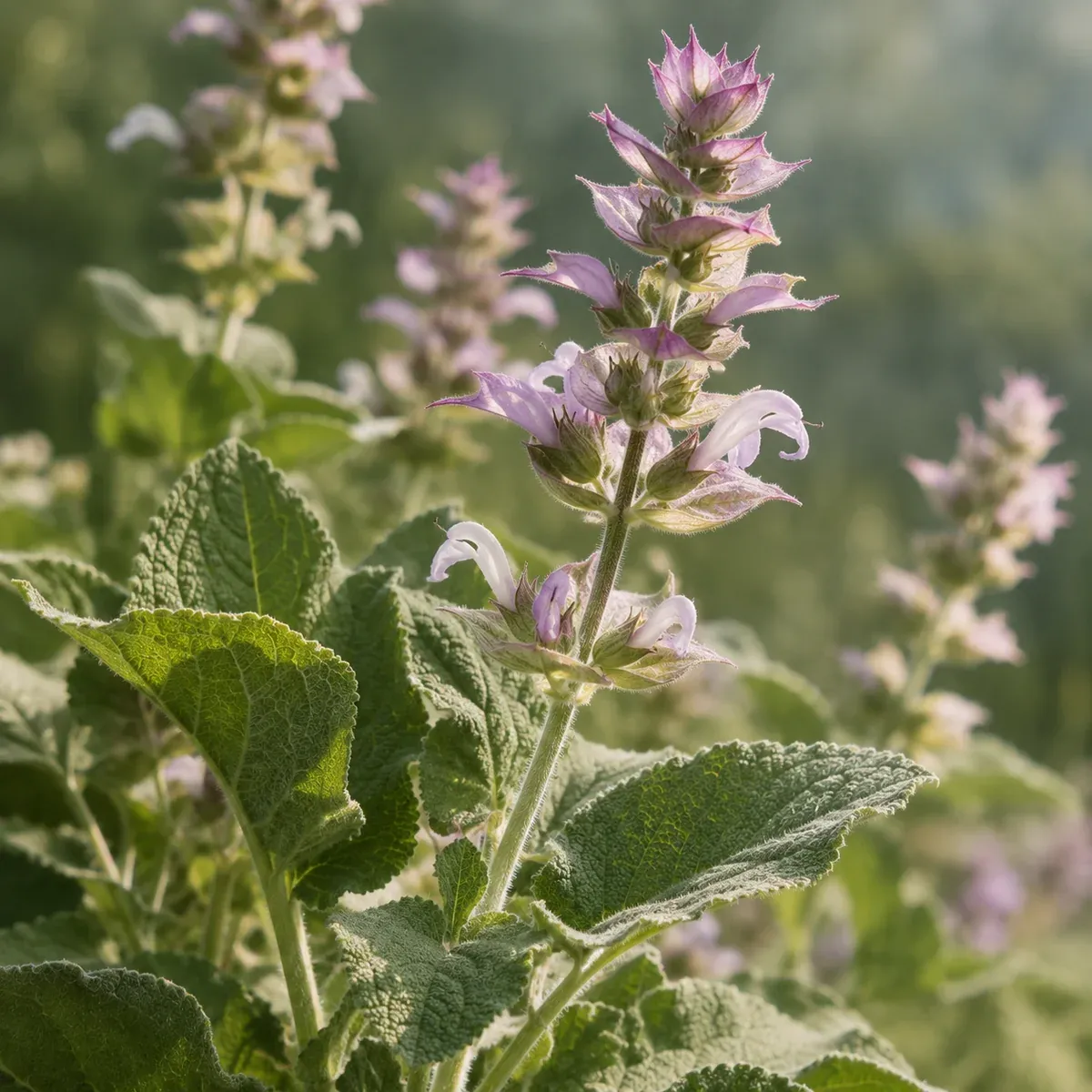
Clary Sage
Salvia sclarea
Clary sage is herbal, ambery and softly musky, with a tea-like warmth. Discover one of perfumery’s most versatile notes, found in ten of our fragrances.
What does clary sage smell like in perfume?
Clary sage smells herbal, ambery and softly musky, with a tea-like, slightly fruity warmth and a hint of hay. It is softer and sweeter than kitchen sage, and it is one of the most versatile notes in perfumery, appearing in ten of our fragrances.
| Botanical name | Salvia sclarea |
|---|---|
| Plant part | Flowering tops |
| Origin | France, Russia and Bulgaria |
| Extraction | Steam distillation |
| Note | Base |
| Scent family | Herbs & Green |
| Odour | Herbal, ambery and musky, with a soft, tea-like and slightly fruity character |
| Perfume uses | Fougères, chypres, ambers and colognes |
| Key molecules | Linalyl acetate, linalool, sclareol |
| Odour impact | Medium |
| Odour life on a strip | Long: a day or more |
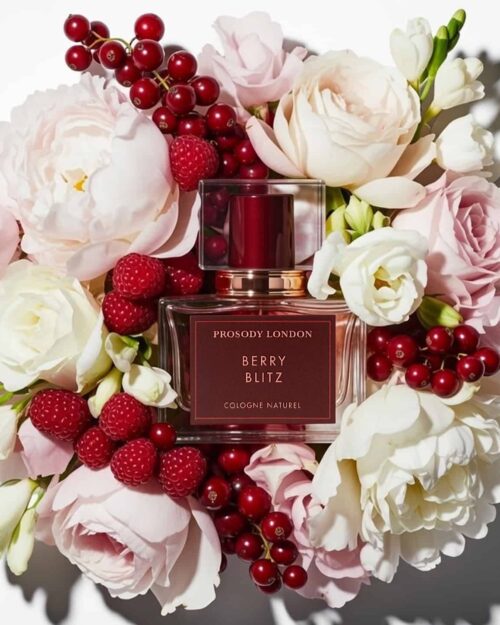
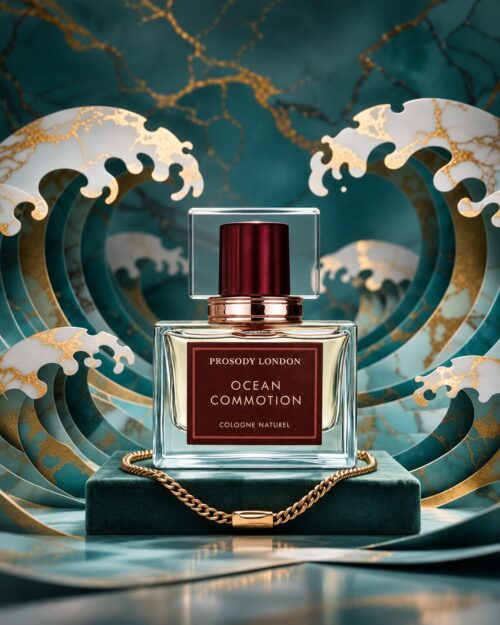
| Found in | A Capella Ray, Berry Blitz, Jacinth Jonquil, Lantern Reed, Mocha Muscari, Neroli Nuance, Ocean Commotion, Oud Octavo, Rose Rondeaux, Pizzicato Bliss |
Used within IFRA limits. Impact and odour life are our own studio guide, judged on a smelling strip.
What Is Clary Sage?
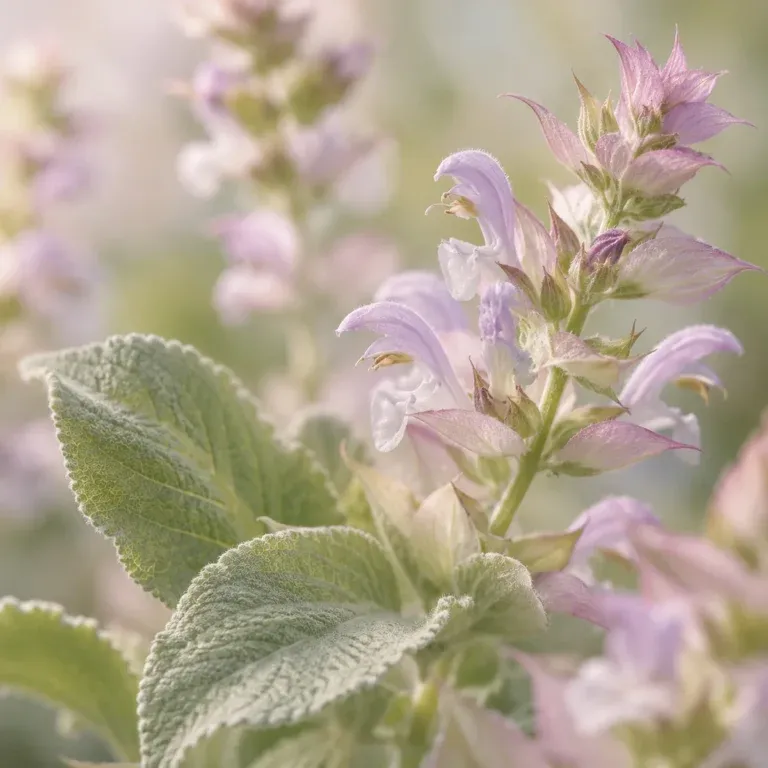
Clary sage, Salvia sclarea, is a tall herb with lilac and pink flower spikes, grown in France, Russia and Bulgaria. The flowering tops are steam-distilled to make the essential oil. It is also the natural source of sclareol, a molecule perfumers use to create ambery notes.
Clary Sage Scent Profile
Here is how strongly each facet of clary sage comes through, from our own smelling-strip notes.
Herbal
Soft, aromatic herb.
Ambery
A warm, golden depth.
Musky
A skin-like softness.
Fruity
A gentle, tea-like fruitiness.
How Perfumers Use Clary Sage
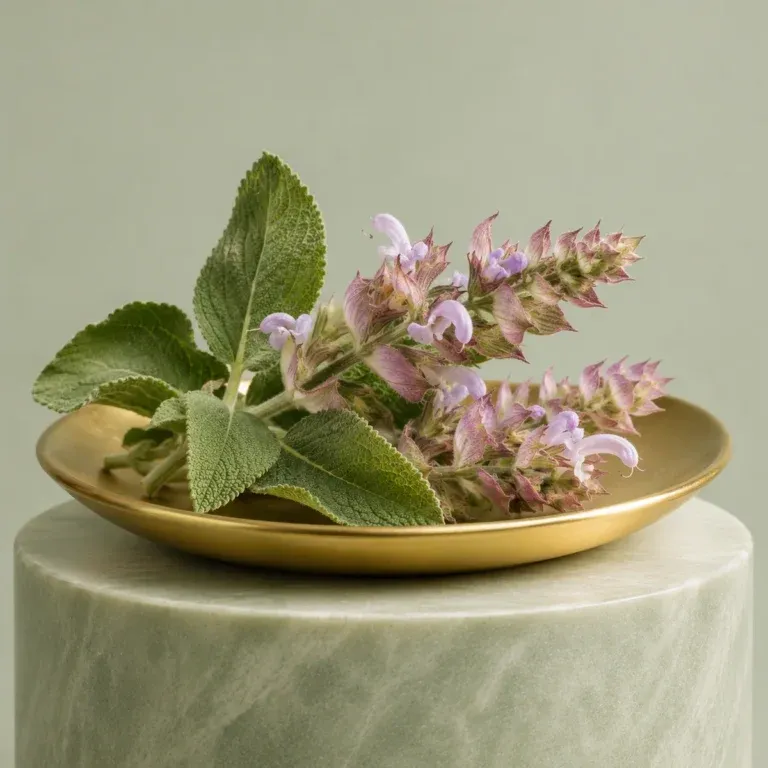
Perfumers use clary sage as a bridge: it softens citrus, deepens florals and adds an ambery, musky warmth to bases. It works in almost every fragrance family, from fresh colognes to chypres and ambers, and it is one of the classic herbs of the fougère alongside lavender.
Growing and harvesting clary sage
Clary sage is a biennial: it spends its first year as a rosette of large, velvety leaves and flowers in its second summer. The flowering tops are cut when the spikes are in full bloom and distilled soon after. The plant itself has a strong, warm and sometimes sweaty smell in the field, quite unlike the polished oil.
The molecules behind clary sage’s scent
Linalyl acetate and linalool give clary sage its soft, fresh, lavender-like side. Sclareol, present in the plant in larger amounts than in the oil, brings a faint, ambery, tobacco-like warmth. Together they explain why clary sage feels both fresh and warm.
A link to amber
Clary sage contains sclareol, the natural starting point for ambergris-like materials. Chemists convert sclareol into ambroxide, the molecule behind many ambery-woody notes in modern perfumery. That kinship is why clary sage itself brings a warm, ambery character to a fragrance.
Natural or synthetic clary sage?
A clary sage effect can be suggested with linalyl acetate and linalool, the two main components of the oil. On their own they smell clean and lavender-like. The natural oil carries much more: tea-like, hay-like and ambery facets that give a composition its soft, musky warmth.
Clary sage in history and tradition
Its name comes from the Latin clarus, meaning clear. In Germany clary sage was once used to flavour wine, which earned it the name muscatel sage. It has been grown for its scent for centuries and remains one of the most widely used herbs in perfumery.
How to smell clary sage yourself
Clary sage grows easily in a sunny British garden. Brush the large, soft leaves and you will smell a warm, herbal note; smell the flower spikes and you will find the sweeter, ambery side. Compare it with kitchen sage, which is sharper and more camphoraceous.
Smell Clary Sage in Prosody London Perfumes
For clary sage at its most expressive, try Lantern Reed. Clary sage sits in the heart with rose and orris, adding a soft, ambery warmth. You will also find clary sage in A Capella Ray, Berry Blitz, Jacinth Jonquil, Mocha Muscari, Neroli Nuance, Ocean Commotion, Oud Octavo, Rose Rondeaux and Pizzicato Bliss.
-
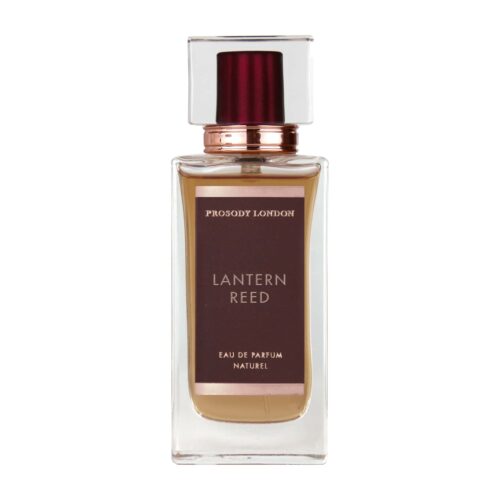

Lantern Reed – Natural Perfume
Price range: £49.00 through £135.00Select options This product has multiple variants. The options may be chosen on the product page -


-

-


Jacinth Jonquil – Natural Perfume
Price range: £49.00 through £135.00Select options This product has multiple variants. The options may be chosen on the product page -

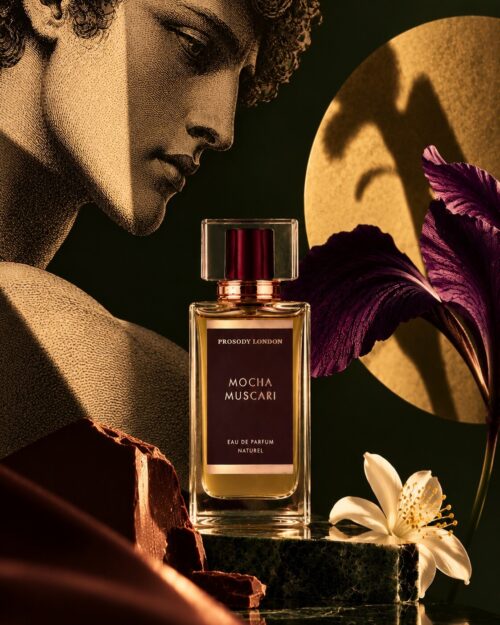
Mocha Muscari – Natural Perfume
Price range: £52.00 through £149.00Select options This product has multiple variants. The options may be chosen on the product page -


Neroli Nuance – Natural Perfume
Price range: £49.00 through £135.00Select options This product has multiple variants. The options may be chosen on the product page -

-


Oud Octavo – Natural Perfume
Price range: £52.00 through £149.00Select options This product has multiple variants. The options may be chosen on the product page -


Rose Rondeaux – Natural Perfume
Price range: £49.00 through £135.00Select options This product has multiple variants. The options may be chosen on the product page -


What Blends Well With Clary Sage?
Questions About Clary Sage
What does clary sage smell like?
Herbal, ambery and softly musky, with a tea-like, slightly fruity warmth and a hint of hay.
Is clary sage the same as sage?
No. Clary sage is softer, sweeter and more ambery than common sage, Salvia officinalis, which smells sharper and more camphoraceous.
Why is clary sage used so often in perfume?
It is versatile, blending with citrus, florals, woods and resins alike, and it adds warmth without taking over.
Does clary sage smell like amber?
Partly. It contains sclareol, the natural starting point for ambery materials, so it has a soft, ambery warmth beneath its herbal freshness.
What pairs with clary sage?
Lavender, bergamot, rose, labdanum, oakmoss and vetiver.
Explore all of our natural perfume ingredients.
