The Enchanting World of Sandalwood: Santalum Album, Santalol, Scent and Perfumery
By Kershen Teo | Founder & Perfumer, Prosody London
At a Glance — Sandalwood in Perfumery
Sandalwood is one of perfumery’s most prized natural woods, valued for its creamy, warm, soft-woody character and its ability to give a fragrance depth, smoothness and lasting structure. The name covers several species of the Santalum genus, with Indian sandalwood (Santalum album) holding a particularly important place in fragrance history. Its distinctive character comes largely from naturally occurring compounds including α-santalol and β-santalol, while differences between species and growing regions can produce noticeably different oils.
Sandalwood is expensive because the valuable oil is concentrated in mature heartwood, the trees grow slowly, and harvesting has historically placed pressure on wild populations. For a perfumer, however, its value goes beyond rarity. Sandalwood can soften citrus and floral materials, add creamy depth to woods and resins, and help bring an entire composition together.
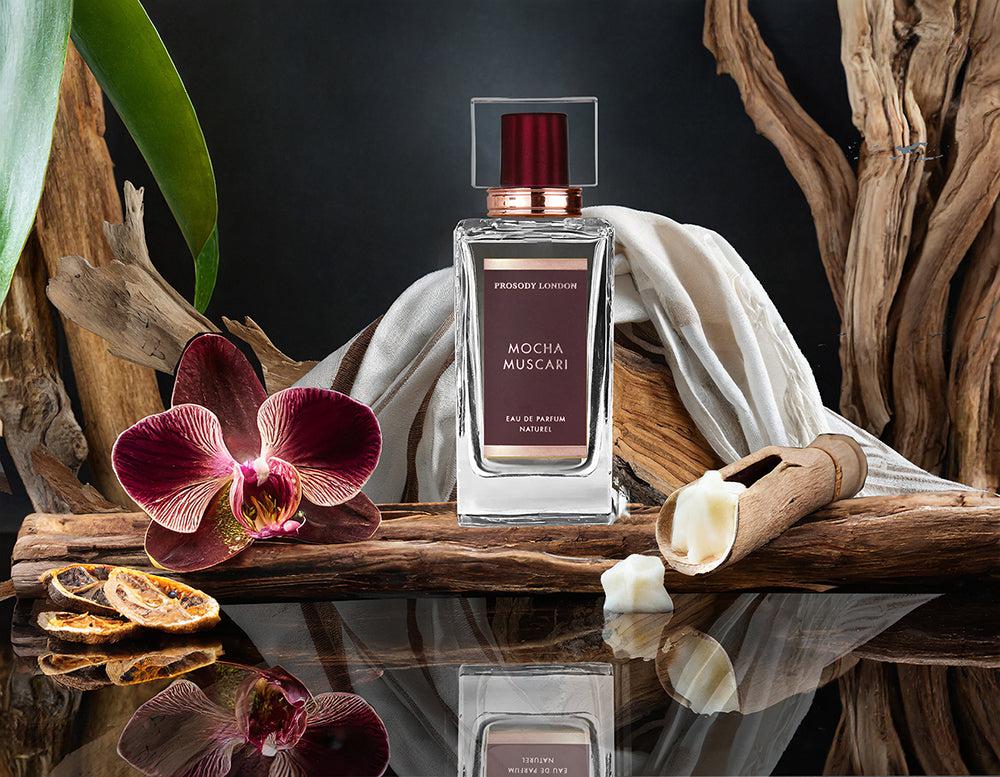
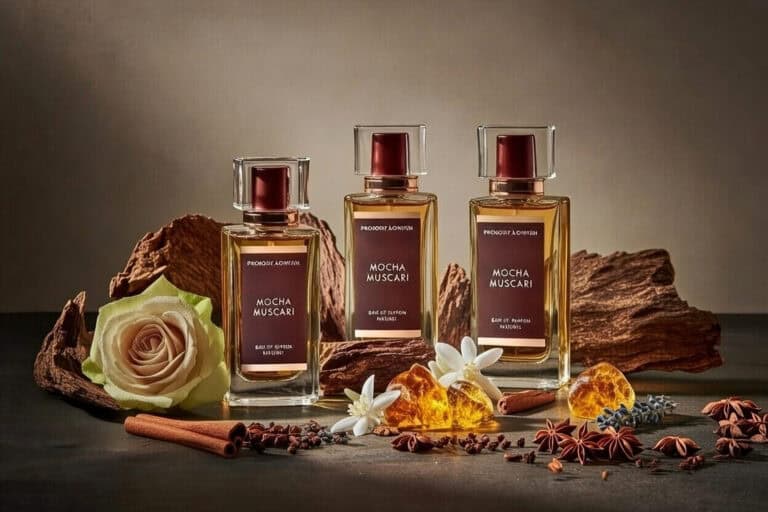
In Prosody London’s botanical perfumes, sandalwood appears in compositions including Santal Foy, Oud Octavo and Mocha Muscari, each using the material differently. This article explores what sandalwood actually smells like, where it comes from, why genuine sandalwood oil is so valuable, the role of santalol, the difference between Indian and Australian sandalwood, and how a perfumer works with this extraordinary natural material.
What Does Sandalwood Smell Like?
Sandalwood is prized for an aroma that is warm, creamy and quietly woody, with a soft sweetness that gives it an almost tactile quality on skin. Unlike sharper woods, it tends to feel smooth and rounded, with subtle earthy, balsamic and slightly spicy facets that become more apparent as the fragrance develops.
For a perfumer, sandalwood is valuable not simply because it smells beautiful on its own, but because of the way it behaves within a composition. It can soften brighter citrus and floral materials, add warmth to an otherwise austere woody accord, and give a fragrance a creamy, polished depth. Its character can also change considerably according to the species, growing conditions, extraction method and age of the wood.
This complexity is one reason sandalwood has remained such an important natural material in fine perfumery. Genuine sandalwood oil contains a number of naturally occurring aromatic constituents, with α-santalol and β-santalol among the compounds most closely associated with its characteristic scent.
In botanical perfumery, these natural variations are part of the material’s appeal. Rather than creating a fixed sandalwood effect from a single synthetic aroma molecule, the perfumer works with the complexity of the natural extract itself.
Where Does Sandalwood Come From?
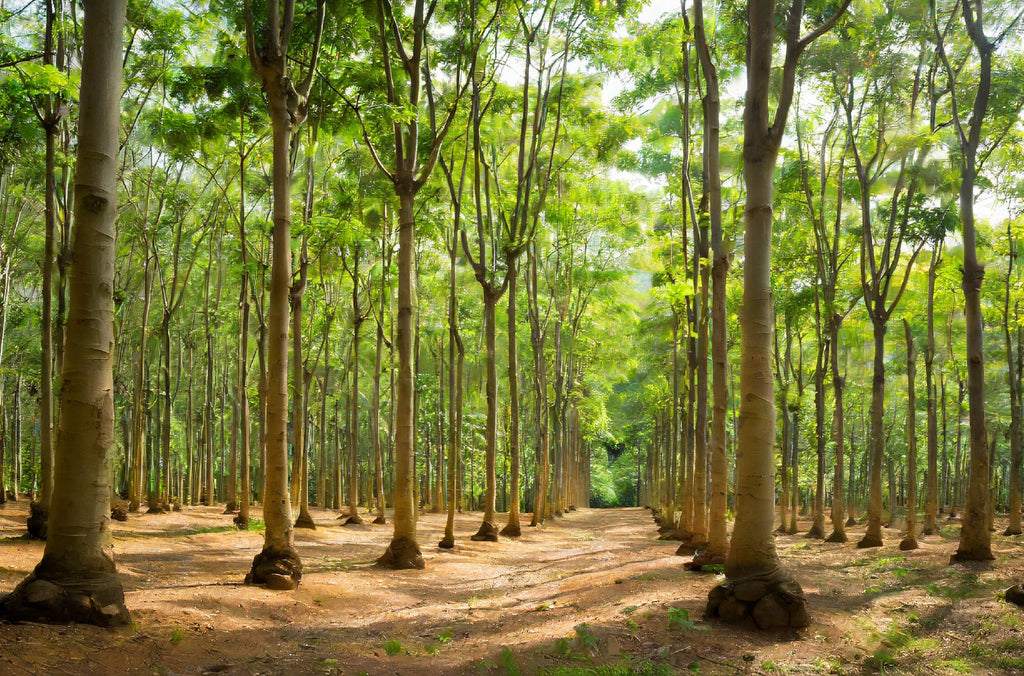
Sandalwood comes from trees belonging to the Santalum genus, with several species valued for their aromatic heartwood. The two most important in modern perfumery are Indian sandalwood (Santalum album) and Australian sandalwood (Santalum spicatum), although other Santalum species are also used.
Indian sandalwood has a particularly long history in perfumery, incense and traditional practices. Santalum album has traditionally been associated with the Mysore region of India, where the oil became renowned for its exceptionally rich, creamy and smooth character. The tree is slow-growing, and the highest concentration of fragrant oil is found in the mature heartwood and roots rather than in the outer wood.
Australian sandalwood has a different olfactory personality. Santalum spicatum, native to Western Australia, tends to produce an oil that is drier, more woody and slightly earthier, with less of the soft creaminess associated with the finest Indian sandalwood. For a perfumer, that difference matters: the choice of sandalwood can influence not only the depth of a composition but its entire texture.
Sandalwood is also unusual because the tree must mature for many years before it develops a commercially valuable quantity of aromatic heartwood. This slow growth, together with demand for the oil and restrictions designed to protect wild populations, helps explain why high-quality natural sandalwood remains such a precious perfumery material.
Today, responsible sourcing is an important part of working with sandalwood. For a natural perfumer, the question is not simply whether an oil smells exceptional, but whether the material can be obtained in a way that protects the species and supports sustainable cultivation for the future.
Why Is Sandalwood So Expensive?
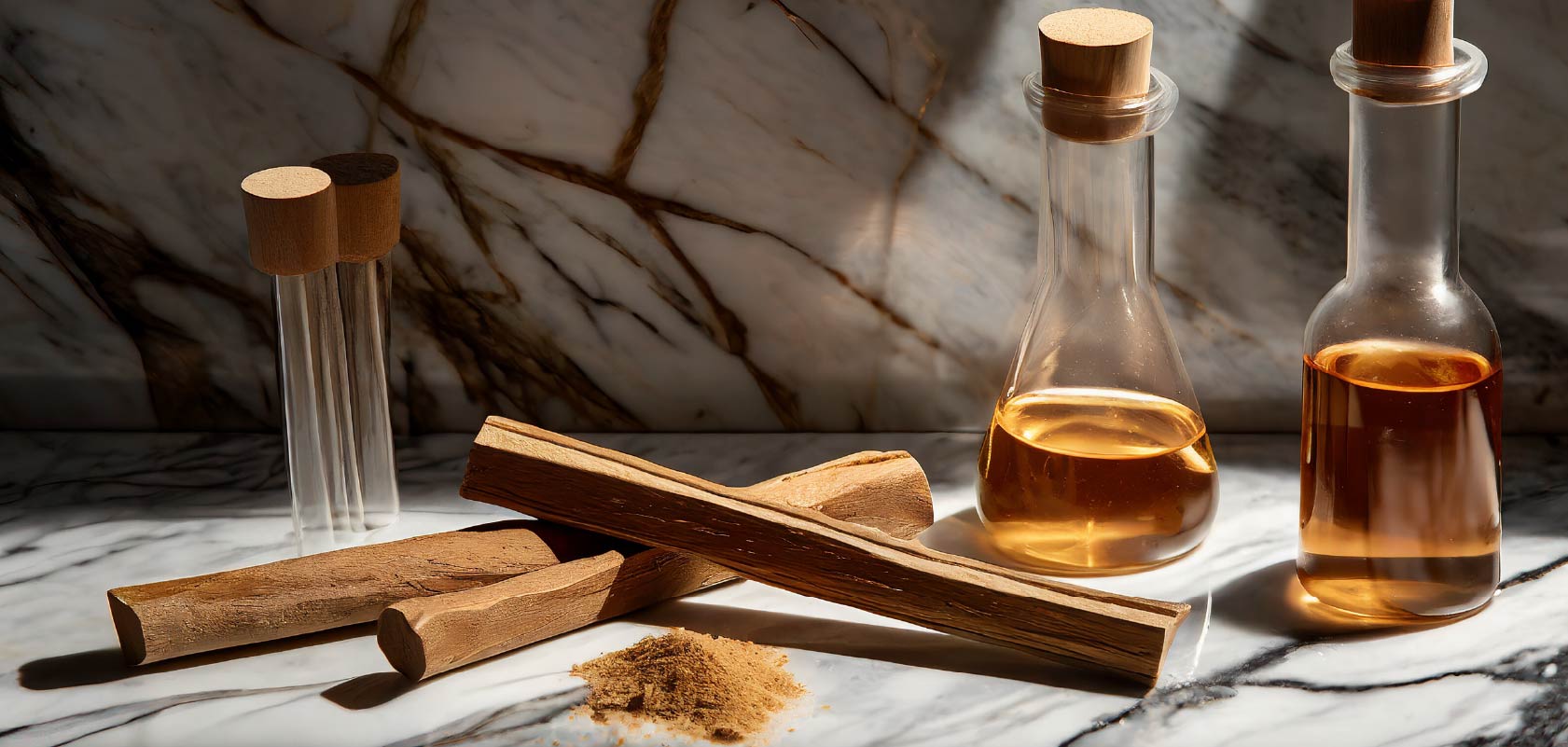
The price of genuine sandalwood oil is largely a consequence of time, scarcity and the amount of material required to produce it. Sandalwood trees are slow-growing, and it is the mature heartwood — particularly from older trees — that contains the aromatic compounds prized by perfumers.
Producing the oil is therefore very different from harvesting a fast-growing botanical. The wood has to be cultivated and managed over many years before it develops the depth and concentration required for quality sandalwood oil. Once harvested, the heartwood is processed and distilled, adding further cost to an already limited natural resource.
Indian sandalwood is particularly valuable because of the exceptional quality historically associated with Santalum album. Its oil is known for its rich, creamy and persistent character, while supplies of genuinely high-quality material are limited by cultivation times, regulation and sustainability requirements.
Australian sandalwood has helped broaden the availability of responsibly sourced natural sandalwood, but it should not simply be regarded as a cheaper substitute for Indian material. The two oils have distinct aromatic profiles and can play different roles in a perfume.
There is also a practical reason sandalwood commands attention from perfumers: a good sandalwood oil does far more than provide a woody note. Its smoothness can connect otherwise contrasting materials, while its naturally persistent character can give a composition greater depth and continuity on skin.
For a natural perfumer, that combination of rarity, complexity and olfactory performance is what makes genuine sandalwood such a valuable material.
Why Is Sandalwood So Valuable in Perfumery?
Sandalwood has a rare ability to be both distinctive and accommodating. It has enough character to be recognisable, yet its creamy, smooth texture allows it to sit comfortably alongside florals, spices, citrus, woods and resins without overwhelming them.
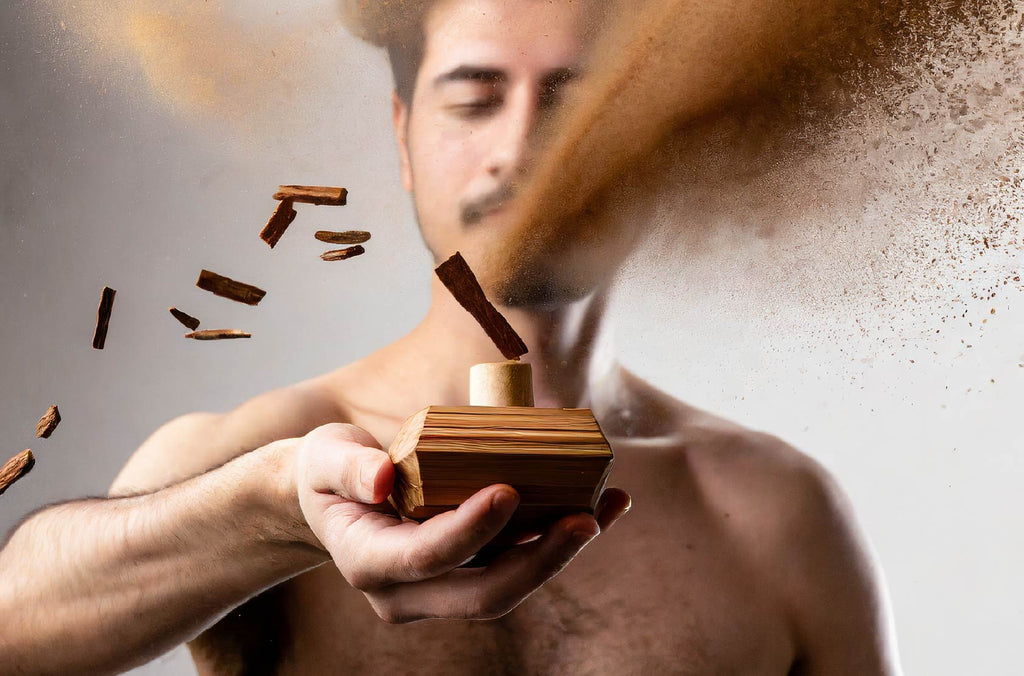
In a fragrance formula, sandalwood is most often used as a base material. Its naturally persistent aroma helps give a perfume depth as the brighter top notes begin to fade, creating a smoother transition from the opening through to the dry-down. Rather than simply sitting underneath the other ingredients, it can act almost like a bridge between them.
Its creamy character is particularly useful when a composition needs softness. Sandalwood can round off sharper citrus notes, give floral materials greater warmth, and add a velvety quality to darker woods and resins. This makes it remarkably versatile across different fragrance styles, from minimalist woody compositions to richer oriental and floral perfumes.
The material is also valued for the complexity of its natural aroma. Genuine sandalwood oil is not a single scent molecule but a mixture of naturally occurring constituents, including the santalols most strongly associated with its characteristic profile. The precise balance of these constituents varies according to species, origin and extraction, which is part of what gives different sandalwood oils their individual personalities.
This is where the skill of the perfumer becomes important. The aim is not necessarily to make sandalwood dominate the formula, but to understand how much is needed to create the desired texture, warmth and persistence.

At Prosody London, sandalwood appears in Santal Foy, Oud Octavo and Rose Rondeaux, three compositions in which the material takes on a different role within the overall fragrance. This is part of what makes sandalwood so interesting to a perfumer: the same natural material can contribute creaminess, warmth, depth or softness depending on the surrounding ingredients and the structure of the formula.
What Gives Sandalwood Its Character?
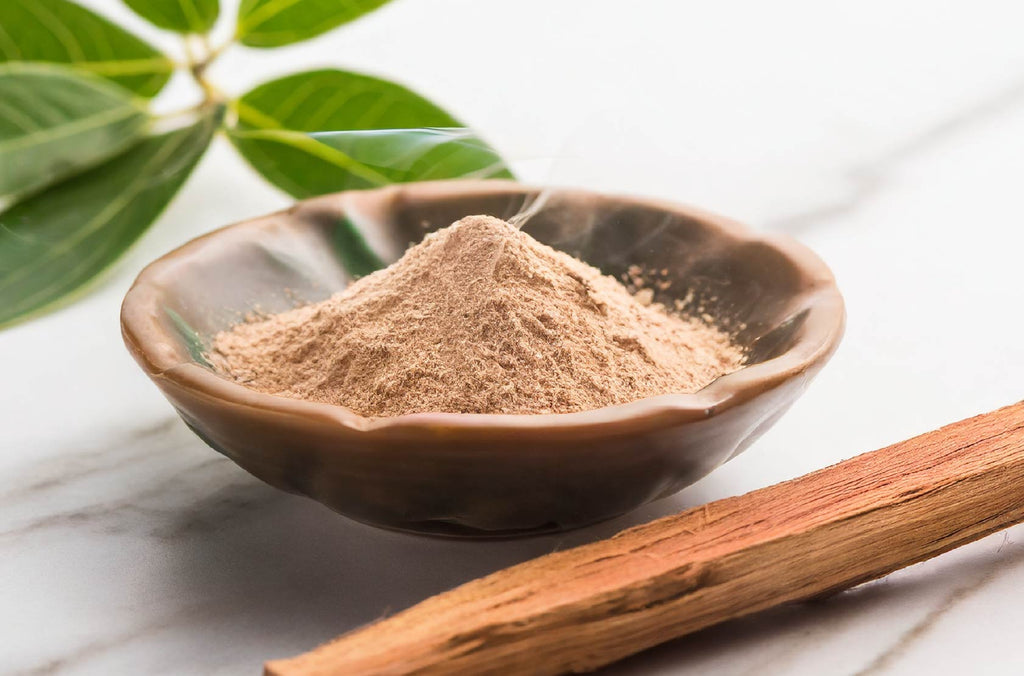
Much of sandalwood’s distinctive character comes from a group of naturally occurring molecules known as santalols. In particular, α-santalol and β-santalol are major constituents of sandalwood oil and are closely associated with the material’s characteristic creamy, soft and persistent woody aroma.
These molecules are part of what makes genuine sandalwood so different from a simple “woody” accord. The oil contains a naturally complex mixture of aromatic constituents, and it is this combination that gives sandalwood its depth, warmth and rounded texture.
For the perfumer, this complexity is important. Sandalwood is not simply added to make a fragrance smell woody. Its creamy facets can soften floral materials, its warmth can enrich spices and resins, and its persistence can help carry a composition into the dry-down.
The composition of sandalwood oil also varies according to species, geographical origin, age of the wood and extraction. Indian Santalum album is particularly prized for its rich, creamy profile, while Australian sandalwood can present a drier and more distinctly woody character. These differences give the perfumer a palette rather than a single fixed sandalwood note.
This is also why replacing natural sandalwood with a single sandalwood-like aroma molecule is not quite the same olfactory experience. A synthetic material can reproduce a particular aspect of sandalwood, but natural sandalwood oil brings together many constituents in proportions created by the plant itself.

In Santal Foy, for example, sandalwood forms the central accord alongside tonka bean and orange blossom, creating the creamy, lactonic character for which the fragrance is known. Oud Octavo uses sandalwood differently, placing it in the dry-down alongside cedarwood and vanilla beneath its agarwood heart. In Rose Rondeaux, sandalwood provides a soft, musky woody foundation beneath rose, raspberry, blackcurrant and patchouli.

Indian Sandalwood vs Australian Sandalwood
Indian and Australian sandalwood are both important natural materials in modern perfumery, but they are not interchangeable in character. The difference begins with the species: Indian sandalwood is primarily Santalum album, while Australian sandalwood is commonly Santalum spicatum.
Indian sandalwood has traditionally been prized for its exceptionally smooth, creamy and sweet-woody character. At its finest, the oil has a soft, almost milky quality, with subtle balsamic and warm facets that make it particularly effective in luxurious base compositions. It can give a perfume a sense of polish without making the woody character feel dry or austere.
Australian sandalwood tends to have a different personality. Its aroma can be drier, more distinctly woody and slightly earthy, with a gentle sweetness underneath. This can make it particularly useful when a composition needs structure and natural woodiness without the pronounced creaminess associated with some Indian sandalwood oils.
The difference is not simply a question of geography. Species, age, growing conditions, heartwood quality, harvesting practices and distillation all influence the resulting oil. Even two oils from the same species can have noticeably different olfactory profiles.
For a perfumer, this variation is an advantage rather than a problem. Choosing sandalwood is part of the creative process: the material has to suit the composition rather than simply carry the label of the most prestigious origin.
How Perfumers Use Sandalwood
Sandalwood is one of those rare perfumery materials that can change its role depending on what surrounds it. It can be creamy and intimate, dry and woody, warm and sensual, or almost transparent when used in smaller quantities. This versatility is why it appears across such a wide range of fragrance styles.
As a base note, sandalwood helps give a perfume a sense of continuity as the more volatile top notes disappear. Citrus, herbs and delicate florals may create the first impression, but sandalwood can remain underneath them, giving the dry-down greater softness and cohesion.
It is particularly effective with floral materials. Rose, jasmine, orange blossom and other florals can become warmer and more rounded when placed against a creamy woody base. With citrus, sandalwood can soften the sharpness of the opening and create a smoother transition into the heart. With resins, vanilla and darker woods, it can add creaminess and prevent the composition from becoming too dry or austere.
The quantity matters too. A sandalwood-rich perfume can make the material the central subject of the composition, while a much smaller amount can work almost invisibly, modifying the texture of the fragrance without announcing itself as a distinct note.
This is one reason natural sandalwood is so interesting to work with. Its character is not completely fixed. The natural oil brings its own balance of aromatic constituents to the formula, and the final impression depends on the materials around it, the concentration used and the way the fragrance develops on skin.
At Prosody London, this can be seen across Santal Foy, where sandalwood is central to a creamy floral-woody structure; Oud Octavo, where it supports the darker character of oud, cedarwood and vanilla; and Rose Rondeaux, where musky sandalwood provides a soft foundation for its rose and fruit facets.
FAQ — Sandalwood in Perfumery
What has sandalwood traditionally been used for?
Sandalwood has a long history of use in India and other parts of Asia in religious ceremonies, meditation, traditional perfumery and Ayurvedic practices. Sandalwood preparations have also been used traditionally for skin conditions and as a calming aromatic material. Modern research has investigated constituents of sandalwood oil, particularly α-santalol and β-santalol, for their biological and pharmacological properties, although traditional use should not be confused with established medical treatment. A review of sandalwood and its biological activities provides a useful overview.
What does medical research say about sandalwood?
Research has examined sandalwood oil and its major constituents for antimicrobial, anti-inflammatory and neurological effects. One particularly interesting area is α-santalol, which has been investigated for effects on the central nervous system and sleep-related responses in experimental studies. Research published in Phytomedicine found that sandalwood aroma influenced sleep-related behaviour in an experimental model. These findings are scientifically interesting, but they do not establish sandalwood perfume as a medical treatment.
Why is santalol important in sandalwood?
antalol, particularly α-santalol and β-santalol, is responsible for much of the characteristic creamy, woody and soft aroma of sandalwood. These compounds are also the focus of much of the scientific research into sandalwood oil. Their concentration and composition vary between sandalwood species and origins, which is one reason different natural sandalwood oils can smell remarkably different.
Which Prosody London perfumes contain sandalwood?
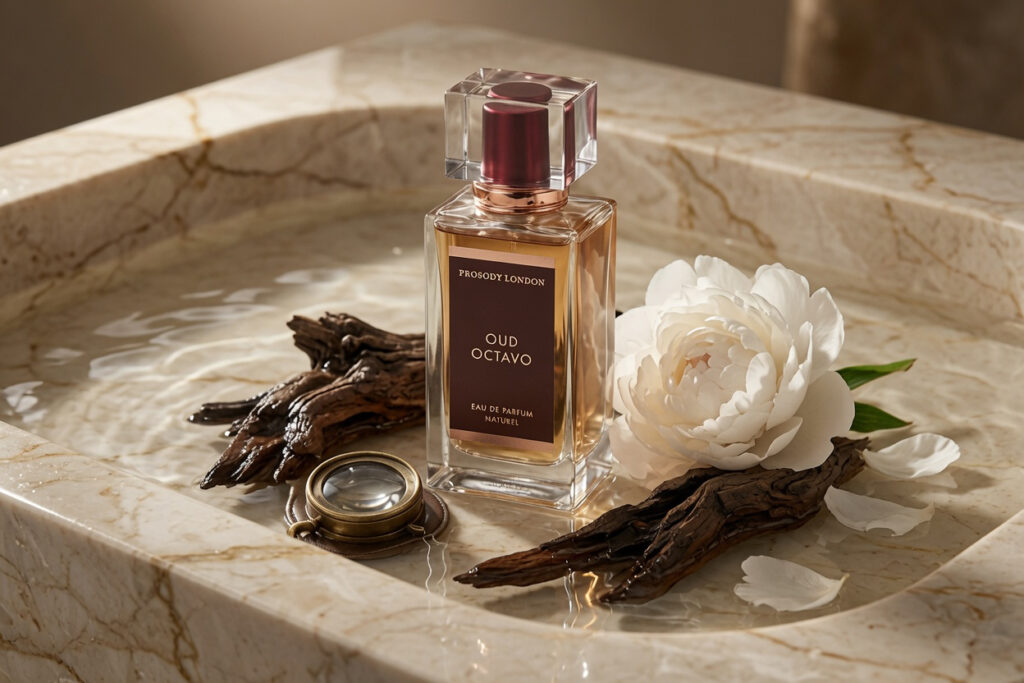
Sandalwood appears in several Prosody London compositions, including Santal Foy, Oud Octavo and Mocha Muscari. Each uses the material differently — from the more direct sandalwood character of Santal Foy to the darker oud composition of Oud Octavo and the richer, gourmand-leaning character of Mocha Muscari.
Is sandalwood good for the skin?
Sandalwood has a long history in traditional skincare, and sandalwood oil has been investigated for antimicrobial and anti-inflammatory activity. However, laboratory and traditional evidence does not mean that sandalwood perfume should be regarded as a treatment for a skin condition. For fragrance, its principal role remains olfactory: adding softness, warmth, creaminess and depth to a composition.