

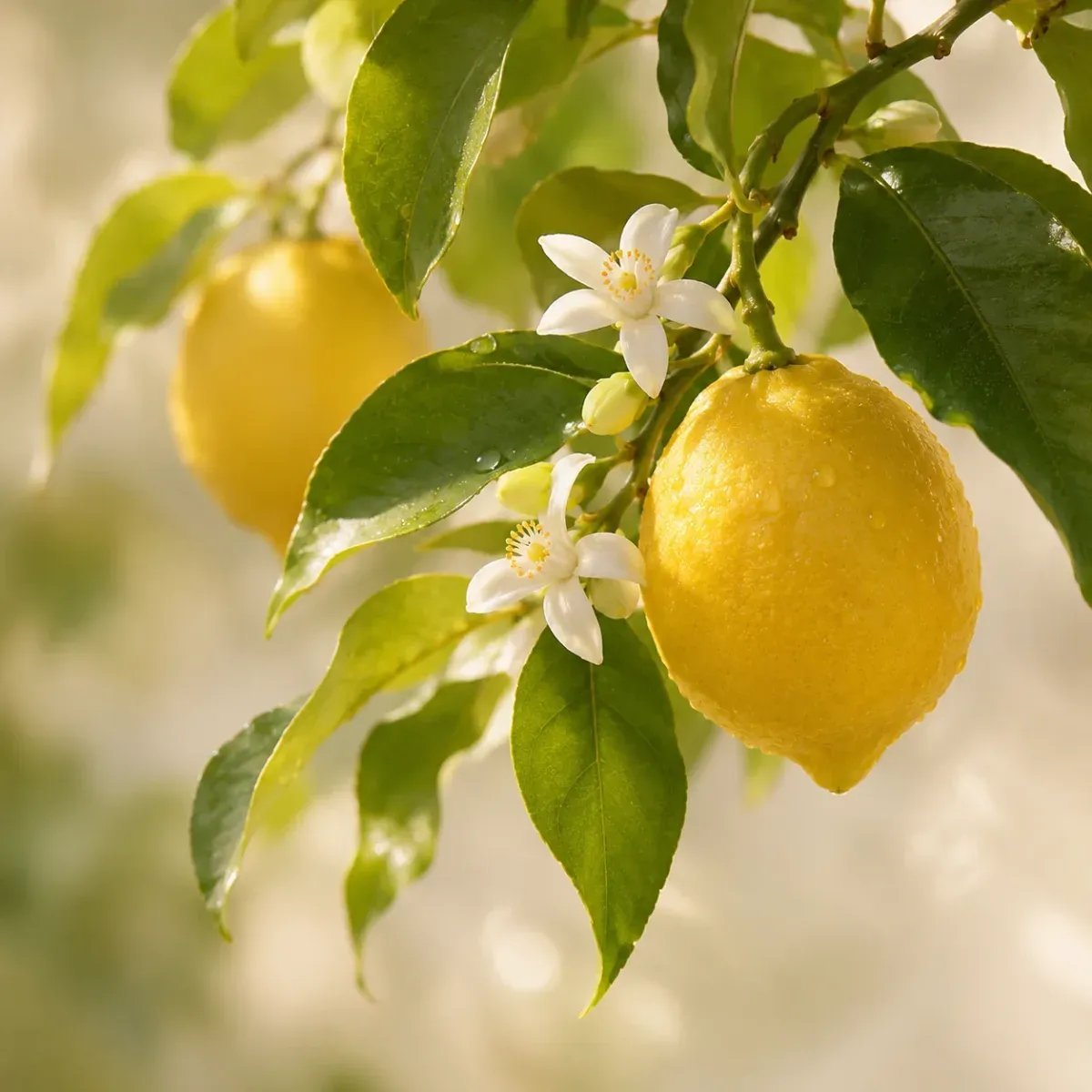
Lemon
Citrus limon
Lemon is bright, zesty and sharp, with a juicy sparkle. Discover the classic citrus that opens colognes and fresh florals.
What does lemon smell like in perfume?
Lemon smells bright, zesty and crisp: the sharp, juicy sparkle of freshly cut peel, with a slightly bitter edge from the rind. In perfume it is the classic opening note. It lifts everything that follows and makes a fragrance feel fresh from the first spray.
| Botanical name | Citrus limon |
|---|---|
| Plant part | Peel of the fruit |
| Origin | Sicily and southern Italy, Spain, Argentina |
| Extraction | Cold-pressed from the peel |
| Note | Top |
| Scent family | Citrus & Fresh |
| Odour | Bright, zesty and crisp, with a sharp, juicy sparkle |
| Perfume uses | Colognes, citrus openings and fresh florals |
| Key molecules | Limonene, citral, β-pinene |
| Odour impact | Medium |
| Odour life on a strip | Very short: under an hour |
| Found in | A Capella Ray, Lissom Linden, Paper Flower Fan, Pizzicato Bliss |
Used within IFRA limits. Impact and odour life are our own studio guide, judged on a smelling strip.
What Is Lemon?

Lemon oil is pressed from the peel of Citrus limon, not the juice. Tiny oil glands in the rind hold the scent, which is why scratching a lemon releases such a vivid burst. Sicilian lemon oil has long been prized by perfumers for its rounded, juicy character.
Lemon Scent Profile
Here is how strongly each facet of lemon comes through, from our own smelling-strip notes.
Zesty
Sharp, mouth-watering peel.
Crisp
A dry, airy freshness.
Juicy
A touch of sweetness from ripe fruit.
Green
A slightly bitter, leafy edge from the rind.
How Perfumers Use Lemon

Lemon is one of the most volatile materials on the perfumer’s palette, so it shines in the first minutes and fades quickly. Perfumers use lemon notes to give colognes their sparkle, to brighten florals and to cut through rich bases so they never feel heavy. It pairs naturally with other citrus, with herbs such as rosemary and lavender, and with neroli and petitgrain.
Growing and harvesting lemon
Lemon oil comes mainly from Sicily and Calabria in southern Italy, Spain and Argentina. Lemon trees flower and fruit several times a year. In Sicily the main crop is picked in winter, and a summer crop called verdelli is coaxed from the trees by holding back water. The oil is cold-pressed from the peel.
The molecules behind lemon’s scent
Most of lemon oil is limonene, which gives a bright but fairly plain citrus smell. The true lemon character comes from citral, a mix of two molecules, geranial and neral. β-Pinene and γ-terpinene add a fresh, green, slightly piney edge.
Natural or synthetic lemon?
Citral breaks down easily, so a “lemon” note in mainstream perfumes and household products is often rebuilt from more stable synthetics. Natural lemon oil smells fuller and juicier, with a slight bitterness from the peel, though it is one of the quickest notes to fade.
Lemon in history and tradition
Lemon was one of the citrus oils in the first eau de cologne, made in Cologne in the early 18th century by the Italian perfumer Johann Maria Farina. Its bright blend of lemon, bergamot, neroli and rosemary still defines the cologne style, and our natural colognes follow the same tradition. On the Amalfi coast and in Sorrento, lemon peel is steeped to make limoncello. In Britain, pancakes with lemon and sugar are the Shrove Tuesday tradition.
How to smell lemon yourself
Grate the zest of a lemon and smell it, then smell the juice on its own. The juice smells sour and simple. The zest holds the oil, and you will notice it is sweeter, brighter and slightly floral. That bright, sweet note is what perfumers use.
Smell Lemon in Prosody London Perfumes
For lemon at its most expressive, try A Capella Ray. Lemon joins lime, green mandarin and petitgrain in a bright citrus chorus, softened by jasmine, so you meet it at its most sparkling. You will also find lemon in Lissom Linden, Paper Flower Fan and Pizzicato Bliss.
-


-


Lissom Linden – Natural Perfume
Price range: £49.00 through £135.00Select options This product has multiple variants. The options may be chosen on the product page -


-


What Blends Well With Lemon?
Questions About Lemon
Does lemon last long in perfume?
No. Lemon is a top note that fades within the first hour, which is why it is paired with longer-lasting heart and base notes.
Is lemon the same as lemongrass?
No. Lemon comes from the fruit peel; lemongrass is a grass whose oil smells lemony but greener and more herbal.
What is the difference between lemon and bergamot?
Both are citrus peel oils. Lemon is sharper, juicier and more zesty; bergamot is softer and more floral, with a slightly spicy, tea-like note.
Explore all of our natural perfume ingredients.
