

Petitgrain
Citrus aurantium
Petitgrain is green, woody and lightly floral, with a bitter citrus edge. Discover the leafy side of the bitter orange tree, loved in colognes and fougères.
What does petitgrain smell like in perfume?
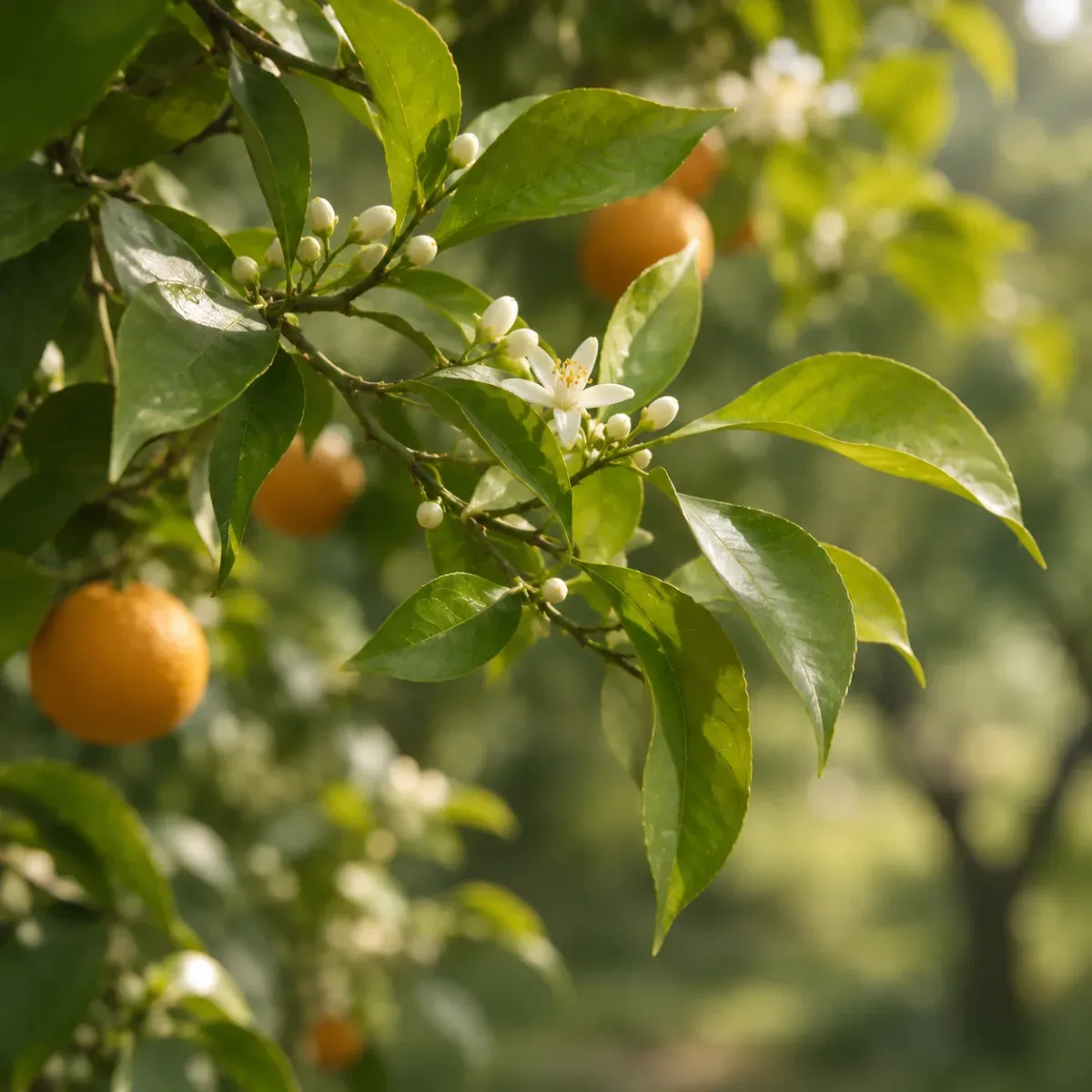
Petitgrain smells green, woody and gently floral, like crushing a leaf from an orange tree between your fingers. It is fresher and drier than neroli, with a slightly bitter citrus edge, which is why it turns up in so many classic colognes.
| Botanical name | Citrus aurantium |
|---|---|
| Plant part | Leaves and twigs of the bitter orange tree |
| Origin | Paraguay, Tunisia and Italy |
| Extraction | Steam distillation |
| Note | Top |
| Scent family | Citrus & Fresh |
| Odour | Green, woody and lightly floral, with a bitter citrus edge |
| Perfume uses | Colognes, fougères and fresh florals |
| Key molecules | Linalyl acetate, linalool, α-terpineol |
| Odour impact | Medium |
| Odour life on a strip | Short: a few hours |
| Found in | A Capella Ray, Jacinth Jonquil, Paper Flower Fan, Pizzicato Bliss |
Used within IFRA limits. Impact and odour life are our own studio guide, judged on a smelling strip.
What Is Petitgrain?
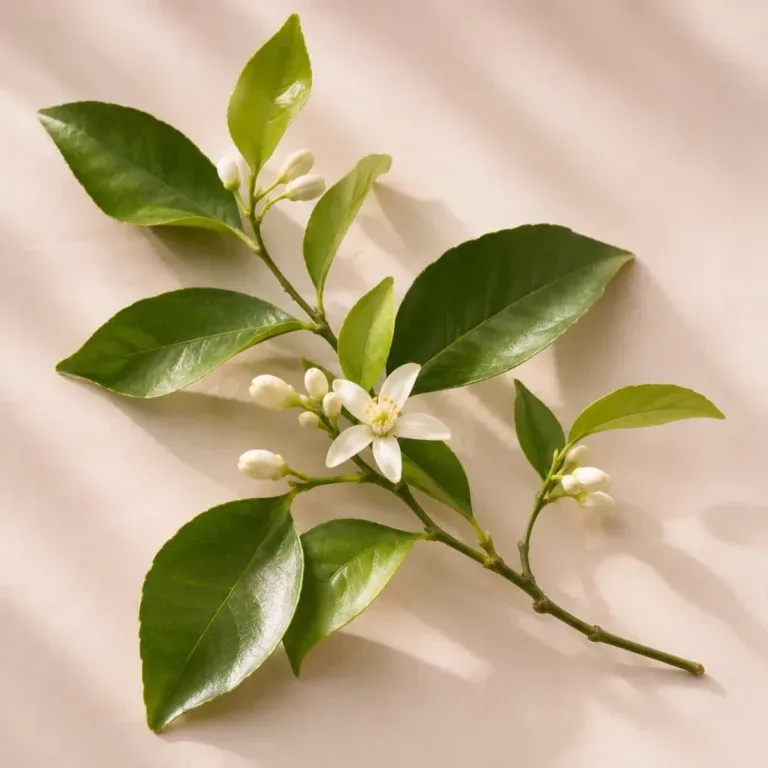
Petitgrain is an essential oil steam-distilled from the leaves and twigs of the bitter orange tree, Citrus aurantium. The name, sometimes written “petit grain”, is French for “little grain”: the oil was once distilled from the tiny unripe fruits, before the leaves took over. Paraguay is now the main source, with smaller amounts from Tunisia and Italy. Perfumers also use leaf oils from other citrus trees, such as petitgrain mandarin and petitgrain lemon, but plain “petitgrain” means the bitter orange leaf.
Petitgrain Scent Profile
Here is how strongly each facet of petitgrain comes through, from our own smelling-strip notes.
Green
Crisp, leafy and freshly crushed.
Woody
A twiggy, dry note from the branches.
Floral
A soft hint of orange blossom.
Bitter
A pleasantly bitter citrus edge.
How Perfumers Use Petitgrain
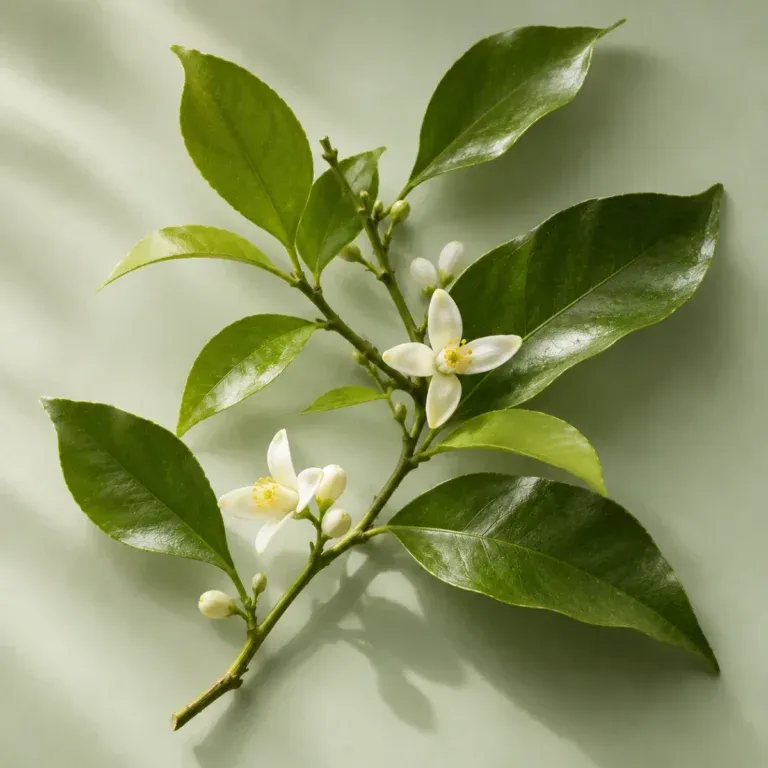
Perfumers lean on petitgrain in classic colognes, where it bridges bright citrus top notes and floral hearts. Its leafy freshness keeps neroli and orange blossom from turning too sweet, and its dry, woody side suits lavender and rosemary in fougères. It lasts a few hours on a smelling strip, a little longer than citrus peel oils, so it holds the fresh opening together while the heart develops.
One tree, three scents
Petitgrain, neroli and orange blossom all come from the same bitter orange tree. Petitgrain is the leaf and twig, green and woody; neroli is the steam-distilled blossom, fresh and citrusy; orange blossom absolute is the solvent-extracted flower, sweet and honeyed. Many colognes use two or all three together.
Growing and harvesting petitgrain
Petitgrain is made from the leaves and young twigs of the bitter orange tree, usually from prunings, so it is harvested through much of the year. Paraguay produces most of it today, with smaller amounts from Tunisia and Italy. The leaves are steam-distilled fresh.
The molecules behind petitgrain’s scent
Petitgrain is rich in linalyl acetate and linalool. Linalyl acetate smells fresh and slightly fruity, a little like bergamot and lavender; linalool is soft and floral. α-Terpineol adds a lilac-and-pine note, and small woody, green compounds from the twigs give petitgrain its bitter edge.
Natural or synthetic petitgrain?
Linalyl acetate and linalool are cheap to make in the lab, so a “petitgrain” note is often reconstructed from them. The natural oil smells greener and more twiggy, with the bitter-orange-leaf character that gives a cologne its crispness.
Petitgrain in history and tradition
Petitgrain is one of the materials of the original eau de cologne, the light citrus water first sold in Cologne in the early 18th century, alongside bergamot, lemon, neroli and rosemary. For centuries it was distilled mainly around the Mediterranean, especially in the south of France. In the 20th century Paraguay, where bitter orange trees grow almost wild, became its main producer.
How to smell petitgrain yourself
If you have a citrus tree as a house plant, crush a leaf between your fingers: that green, slightly bitter, faintly floral smell is petitgrain. Compare it with the peel of the fruit and you will smell why perfumers treat leaf and peel as different materials.
Smell Petitgrain in Prosody London Perfumes
For petitgrain at its most expressive, try Pizzicato Bliss. Petitgrain adds a crisp, leafy freshness beside lemon and mandarin, showing its classic cologne character. You will also find petitgrain in A Capella Ray, Jacinth Jonquil and Paper Flower Fan, as well as the Paper Flower Fan hair parfum and the Fougère Fauve reed diffuser.
-


-


-


-


Jacinth Jonquil – Natural Perfume
Price range: £49.00 through £135.00Select options This product has multiple variants. The options may be chosen on the product page -


-


What Blends Well With Petitgrain?
Questions About Petitgrain
Is petitgrain the same as neroli?
No. Both come from the bitter orange tree, but petitgrain is distilled from the leaves and twigs and smells greener and woodier; neroli comes from the blossom.
Why is it called petitgrain?
“Petit grain” is French for “little grain”. The oil was first distilled from the small unripe fruits of the bitter orange; today it comes from the leaves and twigs.
How long does petitgrain last?
A few hours on a smelling strip, a little longer than citrus peel oils such as lemon or orange.
What pairs well with petitgrain?
Neroli, lavender, bergamot and rosemary.
Explore all of our natural perfume ingredients.
