

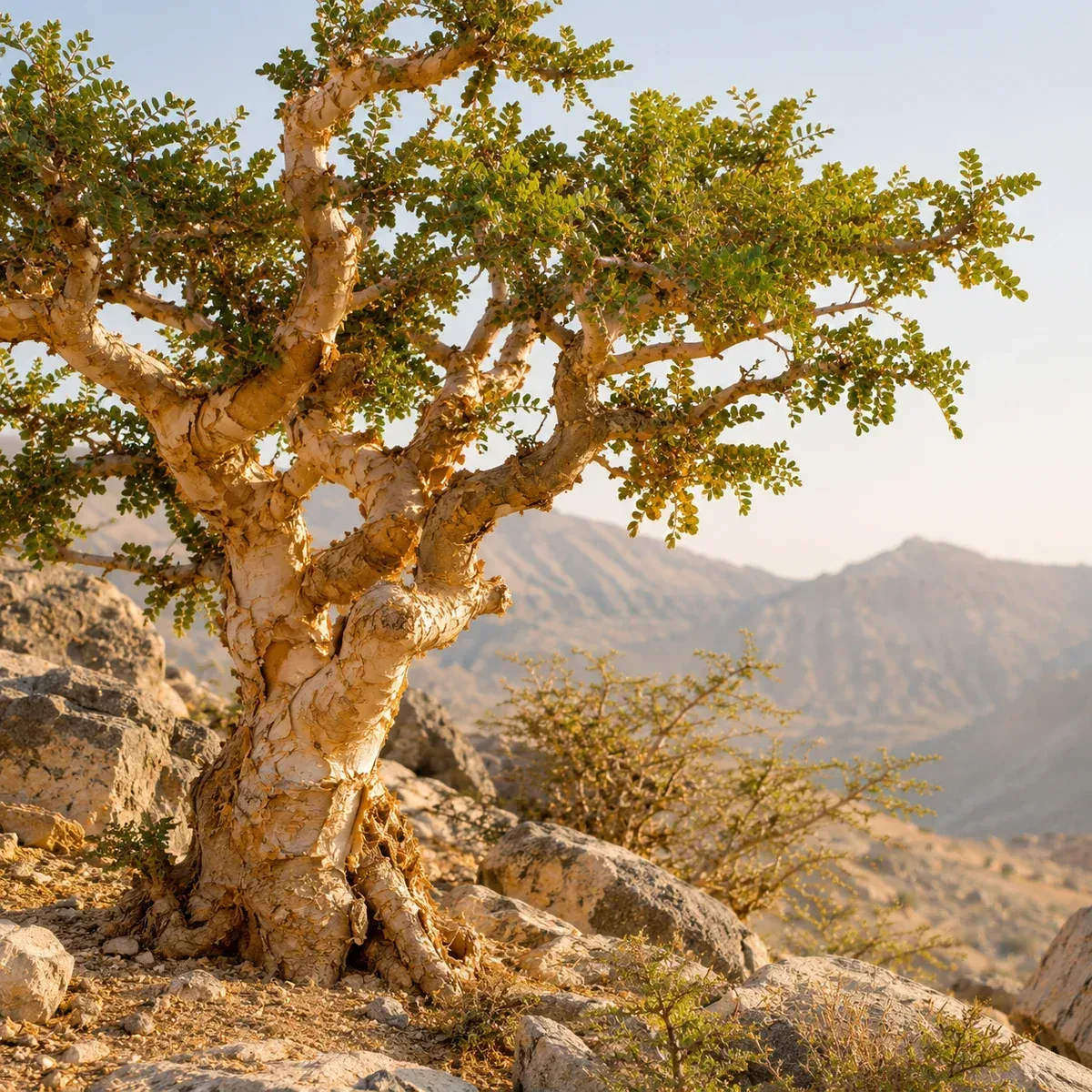
Frankincense
Boswellia carterii / Boswellia sacra
Frankincense is lemony, resinous and incense-like, with a fresh, peppery lift. Discover the ancient resin behind incense and woody blends.
What does frankincense smell like in perfume?
Frankincense smells lemony, resinous and incense-like, with a fresh, peppery lift. It brings a bright, resinous radiance to a fragrance.
| Botanical name | Boswellia carterii / Boswellia sacra |
|---|---|
| Plant part | Gum resin from the bark |
| Origin | Somalia, Oman and Ethiopia |
| Extraction | Steam distillation and resinoid |
| Note | Base |
| Scent family | Woods & Resins |
| Odour | Lemony, incense-like and resinous, with a fresh, peppery lift |
| Perfume uses | Incense, woody and amber blends |
| Key molecules | α-pinene, limonene, octyl acetate, incensole |
| Odour impact | Medium |
| Odour life on a strip | Long: a day or more |
| Found in | Lissom Linden, Mocha Muscari, Rose Rondeaux, Whistle Moon |
Used within IFRA limits. Impact and odour life are our own studio guide, judged on a smelling strip.
What Is Frankincense?

Frankincense, also called olibanum, is a resin from Boswellia trees that grow in the arid lands of Somalia, Oman and Ethiopia. Harvesters cut the bark and collect the milky resin once it hardens into tears.
Frankincense Scent Profile
Here is how strongly each facet of frankincense comes through, from our own smelling-strip notes.
Resinous
Warm, sticky incense.
Citrus
A bright, lemony lift.
Peppery
A fresh, spicy edge.
Woody
A dry, warm depth.
How Perfumers Use Frankincense

Perfumers use frankincense to add light, height and an incense-like glow. It pairs well with myrrh, rose, woods and citrus.
Growing and harvesting frankincense
Frankincense comes from Boswellia trees in Somalia, Oman and Ethiopia. Harvesters cut the bark, and a milky resin seeps out and hardens over a few weeks into tears. The cuts are repeated through the season. The resin is distilled into an essential oil or extracted into a resinoid.
The molecules behind frankincense’s scent
α-Pinene gives frankincense its fresh, pine-like lift, and limonene a bright, lemony note. Octyl acetate adds a soft, fruity edge. Incensole, a less volatile compound in the resin, adds to the dry, resinous depth.
Natural or synthetic frankincense?
Incense notes in mainstream perfumes are often built from synthetic woody and amber molecules with citrus. Natural frankincense oil has a brighter, more lemony and pine-like top, with the dry, resinous depth of the tears themselves.
Frankincense in history and tradition
Frankincense was one of the most valuable goods of the ancient world, carried along the Incense Road from southern Arabia to the Mediterranean. The frankincense sites of Dhofar in Oman are a UNESCO World Heritage Site. In the Christian story, frankincense was one of the gifts of the Magi, and it is still burned in churches today.
How to smell frankincense yourself
Church suppliers and some spice shops sell frankincense tears. Smell a tear cold: it is lemony and resinous. Then warm it in your hand for a minute and smell it again, and you will notice it becomes softer and more balsamic.
Smell Frankincense in Prosody London Perfumes
For frankincense at its most expressive, try Lissom Linden. Frankincense lends a luminous, resinous base beneath linden blossom and rose. You will also find frankincense in Mocha Muscari, Rose Rondeaux and Whistle Moon.
-


Lissom Linden – Natural Perfume
Price range: £49.00 through £135.00Select options This product has multiple variants. The options may be chosen on the product page -


Mocha Muscari – Natural Perfume
Price range: £52.00 through £149.00Select options This product has multiple variants. The options may be chosen on the product page -


Rose Rondeaux – Natural Perfume
Price range: £49.00 through £135.00Select options This product has multiple variants. The options may be chosen on the product page -


What Blends Well With Frankincense?
Questions About Frankincense
Do frankincense and olibanum smell the same?
Frankincense and olibanum are names for aromatic resins from Boswellia trees, but the perfumery materials sold under those names can smell very different. Frankincense essential oil often has a fresh, lemony, peppery and pine-like character. Olibanum resinoid can be much deeper, darker and more balsamic, with a smoky, church-incense impression. These differences reflect the particular material, species and extraction process; the names themselves are not strict guarantees of scent.
Does frankincense smell like church incense?
It can evoke church incense, but the two are not identical. Church incense usually involves resins burned on charcoal, creating a smoky atmosphere. Frankincense essential oil is often brighter, with lemony, pine-like and peppery facets over a dry resinous warmth; resinoids may smell deeper and more balsamic.
What is the difference between frankincense and myrrh in perfume?
Both come from aromatic tree resins, but frankincense is generally brighter, more citrusy, pine-like and airy, whereas myrrh is usually darker, earthier and bittersweet, sometimes with medicinal or smoky nuances. Perfumers often combine them for a layered incense accord.
Is frankincense a top, middle or base note?
Frankincense is frequently used to add resinous depth to the heart and base of a perfume. Depending on the material, its essential oil can also contribute lively citrusy and peppery opening facets.
Which Prosody London perfumes contain frankincense?
Frankincense features in Lissom Linden, where it lends resinous depth beneath linden blossom and rose. It also appears in Mocha Muscari, Rose Rondeaux and Whistle Moon. Each composition places the ingredient in a different aromatic setting.
What pairs with frankincense?
Frankincense blends well with myrrh and labdanum for balsamic depth, rose for a floral contrast, bergamot for brightness, and sandalwood or other woods for a warm, polished finish.
Explore all of our natural perfume ingredients.
