

By Kershen Teo, founder and perfumer of Prosody London.
Perfume for anxiety is a phrase that would have seemed implausible to most clinicians a decade ago. It no longer does.
Anxiety is the most prevalent psychiatric condition in the world — and botanical fragrance now has a growing, genuinely credible evidence base as a complementary support. Not a replacement for clinical treatment. Not aromatherapy marketing. A measurable, mechanistically understood effect on the neurological systems that drive anxiety, documented across dozens of peer-reviewed randomised controlled trials.
This article is about that evidence — which botanical compounds have clinical data behind them, how they interact with the brain’s anxiety architecture, and what to look for in a non-toxic, long-lasting formula if you want those compounds in meaningful concentrations.
If you are experiencing severe or persistent anxiety, please speak to a healthcare professional. What follows is not medical advice. It is an honest account of what peer-reviewed research says — and why the formulation standard of a fragrance matters more for this topic than for almost any other.
What Anxiety Does to the Brain — and Why Scent Is Unusually Well-Placed to Help
Anxiety is fundamentally a state of neurological hyperarousal — the sympathetic nervous system activating threat responses in the absence of genuine threat. Cortisol rises, heart rate increases, the amygdala fires continuously. The body is in a state of readiness for a danger that never arrives.
The olfactory system is uniquely positioned to interrupt this cycle. Unlike every other sense, olfactory signals travel directly to the amygdala and hippocampus without passing through the thalamus — the brain’s sensory relay station. There is no filtering, no delay. A scent reaches the brain’s emotional centre faster and more directly than anything you can see, hear or touch.
This is not poetic. It is anatomy. And it explains why certain botanical compounds inhaled through fragrance can produce measurable physiological effects on anxiety states within minutes of exposure.
The Botanical Compounds With Clinical Evidence for Anxiety
Linalool and Linalyl Acetate — the most studied anxiolytic botanicals
Linalool is the primary active molecule in lavender and is also present in neroli, bergamot and many floral essential oils. It is the most clinically studied botanical compound for anxiety reduction in the world.
A 2023 systematic review of 11 randomised controlled trials found that lavender inhalation produced significant anxiety-reducing effects on both psychological and physiological manifestations of anxiety. The mechanism is well-characterised: linalool and linalyl acetate interact with NMDA receptors and inhibit calcium channels, activating the inhibitory pathway and reducing neuronal excitability. Linalool also increases extracellular serotonin levels by blocking serotonin transporters.
Critically, a 2023 network meta-analysis of 44 randomised controlled trials involving 3,419 anxiety patients found that lavender — the richest botanical source of linalool — was the most effective essential oil for both state and trait anxiety across all studies included. This is not a single study. It is the pooled evidence of nearly 3,500 people across dozens of controlled trials.

Bergamot — cortisol reduction and HPA axis modulation
Bergamot essential oil contains both limonene and linalool alongside a complex of additional active compounds. Its anxiety-relevant mechanism operates partly through the hypothalamic-pituitary-adrenal axis — the system governing cortisol release and the body’s stress response.
Bergamot essential oil has been observed to cause an alteration of the HPA axis, attenuating the rise of corticosterone levels in the blood and producing measurable cortisol-lowering effects. In practical terms, inhalation of bergamot reduces the physiological stress marker most directly associated with anxiety — not through sedation, but through systemic regulation of the stress response itself.
Neroli — clinical evidence from randomised controlled trials
Neroli oil, extracted from bitter orange blossom, is rich in linalool and limonene. A 2022 randomised controlled trial found that neroli essential oil inhalation significantly reduced anxiety and perceived pain in women during labour — one of the most acutely anxiety-provoking clinical situations studied. The trial design was rigorous: randomised, controlled, with objective physiological measures alongside self-reported anxiety scores.

Rose — serotonin pathway and emotional regulation
Rosa damascena has a documented mechanism of action on serotonin pathways relevant to anxiety and emotional regulation. A systematic review confirmed evidence for Rosa damascena efficacy in mental disorders across both preclinical animal studies and clinical trials. The mechanism involves rose oxide’s interaction with the serotonergic system — the same pathway targeted by SSRI medications, though through a different and far gentler route.
Sandalwood — parasympathetic activation
Sandalwood’s primary molecule, α-santalol, has documented effects on the autonomic nervous system. Inhalation studies show sandalwood activates the parasympathetic nervous system — the body’s rest-and-digest response, directly counter to the sympathetic hyperarousal of anxiety. The effect is grounding and physiologically measurable rather than simply subjective.
An Important Note on Synthetic Fragrance and Anxiety
This is a topic where the formulation matters beyond the usual reasons.
Most mainstream fragrances contain synthetic musks, phthalates and petrochemical-derived compounds. Research published in PMC has documented that certain synthetic fragrance compounds can act as endocrine disruptors, interfering with the body’s hormonal regulation — the same system that governs cortisol and the stress response.
In January 2025, the French Agency for Food, Environmental and Occupational Health and Safety proposed classifying galaxolide — one of the most widely used synthetic musks — as a Category 1B reproductive toxicant.
Wearing a synthetic fragrance to manage anxiety while simultaneously exposing yourself to compounds that may disrupt the hormonal system is a contradiction that 100% botanical formulation structurally eliminates. The linalool in our formulas works through well-evidenced calming mechanisms. Nothing in the formula works against it.
For a full account of what synthetic fragrances contain, read our guide to hidden chemicals in perfume.
Prosody London Perfumes for Anxiety — What the Ingredients Deliver
Each formula below contains botanical ingredients with direct clinical evidence for anxiety reduction. The evidence is in the ingredients — not in wellness marketing.

Carissis → — Lavender-Led Anxiolytic
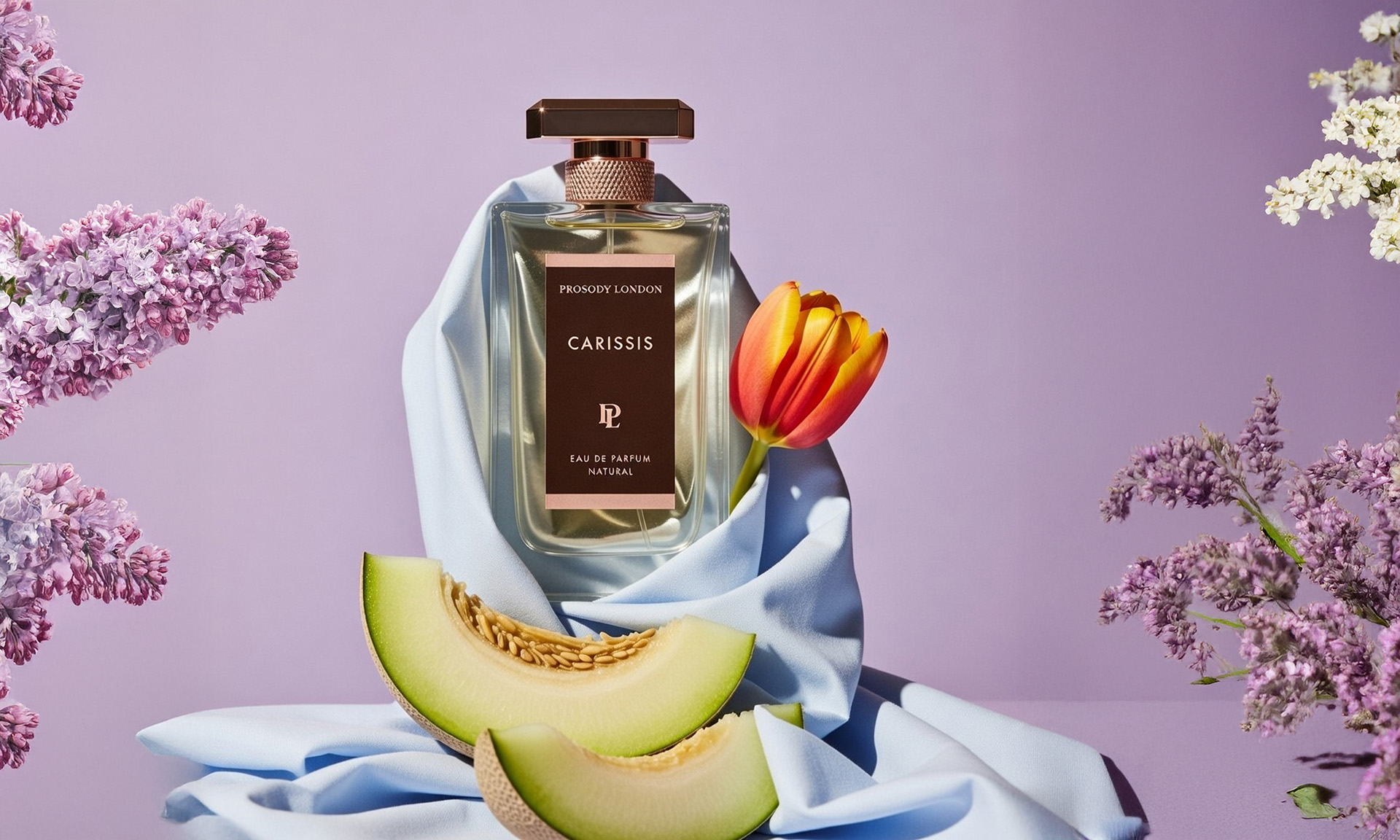
Perfume for anxiety starts with linalool — and Carissis is our most linalool-rich formula. The lavender absolute running through this composition delivers the compound with the most extensive clinical evidence for anxiety reduction of any botanical ingredient. This is an intimate, skin-close formula — the carissa blossom warms the lavender into something soft and personal rather than medicinal. The effect is the quiet settling of a nervous system that has been running too fast.

Neroli Nuance → Neroli and Orange Blossom, Clinically Evidenced
The entire formula is built around neroli and orange blossom absolute — the two botanical sources with the most direct RCT evidence for anxiety reduction. Neroli Nuance is perfume for anxiety in the most literal sense: its primary ingredients are the ones researchers chose for controlled clinical trials. The candlewood and benzoin base give the formula tenacity without heaviness. Liz Earle has cited this as her favourite fragrance. The science explains why it works the way it does on the nervous system.

Lissom Linden → Bergamot-Led Cortisol Reduction
Bergamot opens Lissom Linden with its documented cortisol-lowering mechanism — the HPA axis modulation that directly addresses the physiological substrate of anxiety rather than merely masking its subjective experience. The linden blossom heart adds warmth and sweetness above the bergamot base, while frankincense in the dry-down contributes additional parasympathetic activation. This is a perfume for anxiety that works from the outside in — beginning with the stress hormone system and settling the whole nervous system from there.

Rose Rondeaux → Bulgarian Rose and the Serotonin Pathway
Bulgarian rose absolute is the heart of Rose Rondeaux — and rose’s interaction with serotonin pathways gives this formula its particular quality of emotional regulation. Where lavender and neroli work primarily through GABA and cortisol mechanisms, rose works through a different but complementary route. The myrrh and sandalwood base provide grounding depth. This is perfume for anxiety with a specifically emotional character — the kind that comes from feeling held rather than sedated.

Santal Foy → Sandalwood and Parasympathetic Activation
Santal Foy is built around sandalwood — the botanical with the most direct documented effect on parasympathetic nervous system activation. Where most anxiety support works by dampening the sympathetic response, sandalwood actively stimulates its opposite — the rest-and-digest state that anxiety so comprehensively suppresses. Creamy, warm and deeply grounded, this formula delivers its parasympathetic effect wrapped in one of the most naturally long-lasting botanical bases in perfumery.

Lantern Reed → Bergamot, Vetiver and Myrrh
Perfume for anxiety benefits from formulas that both address the acute stress response and provide grounding in the base notes. Lantern Reed does both. Bergamot opens with its cortisol-modulating mechanism, while vetiver and myrrh in the base provide the deep, earthy anchorage that keeps the nervous system from floating. Vetiver’s deeply tenacious base note keeps this formula present across a full day of wear — a quality that matters for anxiety support, where consistent olfactory input is more effective than intermittent exposure.

Mocha Muscari → Lavender in an Unexpected Form
Perfume for anxiety does not have to smell like a spa. Mocha Muscari is our most unusual linalool-rich formula — the lavender at its heart bonding with labdanum and a deep mocha character to create something that reads as warm and roasted rather than floral. The linalool is fully present. The anxiolytic mechanism is the same as in Carissis. The experience is entirely different — dark, complex and deeply comforting in a way that speaks to a different kind of nervous system. For those who find floral lavender too light or too familiar, Mocha Muscari delivers the same clinical ingredient through a completely different sensory door.
How to Use Botanical Perfume for Anxiety Support
The clinical evidence for perfume for anxiety is primarily for inhalation — wearing the fragrance close to skin and inhaling it naturally throughout the day, rather than applying it to clothing where the volatile compounds disperse differently.
Apply to pulse points — wrists, inner elbow, base of throat — where body heat releases the botanical molecules continuously. The evidence suggests consistent, low-level exposure across hours is more effective for anxiety management than a single intense application.
This is one area where natural botanical perfume for anxiety has a structural advantage over synthetic fragrance — the complexity of the botanical molecule profile means the formula continues releasing different compounds as it develops on skin, providing a more varied and sustained olfactory input than a flat synthetic formula that releases all at once and then holds.
A Note on Serious Anxiety
Perfume for anxiety is a complementary support, not a clinical treatment. If your anxiety is significantly affecting your daily life, please speak to your GP or a mental health professional. The evidence cited above is for complementary use — these compounds work alongside the nervous system’s own regulation mechanisms and work best as part of a broader approach to wellbeing.
For further reading on the botanical ingredients discussed here, see our articles on neroli oil, natural perfume vs synthetic, and perfume that attracts happiness.
Our natural perfume sample set allows you to wear each formula through its full development on skin before committing — which is the right approach when choosing a perfume for anxiety, where personal chemistry and the specific quality of calm that works for you matters more than any general recommendation.
