

By Kershen Teo, founder and perfumer of Prosody London
Perfume brands with the best quality ingredients share one thing in common — they treat raw materials as the creative foundation, not a cost to be minimised. As a perfumer who sources exclusively from botanical suppliers, I have spent years evaluating what separates genuinely exceptional ingredient quality from marketing language. The difference is usually apparent within the first hour of wear.
What follows is my assessment of the houses worth knowing — covering both natural and synthetic perfumery, because ingredient quality is not exclusive to either category. A synthetic perfume built on premium aroma chemicals can outperform a natural one built on inferior botanicals. The question is always whether the materials were chosen for what they contribute to the composition, or for what they save on the budget.
Among the world’s luxury houses, only a few are truly devoted to ingredient excellence. Boadicea the Victorious, Frédéric Malle, and Hermès stand out, each bringing a unique philosophy to perfume craftsmanship. They don’t chase trends or mass-market appeal; they focus on crafting fragrances where every note is deliberate, refined, and memorable.
What Makes Ingredients High-Quality
Ingredient quality in perfumery is not simply about rarity — it is about complexity, purity, and the processes involved in harvest and extraction. Natural botanicals carry an intrinsic aromatic depth that synthetic alternatives approximate but rarely match. A well-sourced jasmine absolute, rose otto, or vetiver root oil contains hundreds of distinct aromatic compounds that interact with skin chemistry in ways that evolve over hours. That evolution — the way a fragrance changes from the first spray to the dry-down — is what separates genuinely exceptional perfumery from the linear projection of most mass-market options.
The other factor is fixation. The finest natural base materials — resins, roots, balsams — have a molecular weight that causes them to evaporate slowly, anchoring lighter top and heart notes and extending overall wear. This is why a well-formulated natural fragrance can match or exceed the longevity of a synthetic one, without relying on the synthetic fixatives that have raised health and environmental concerns. For more on what drives genuine longevity in perfume, see my guide to long lasting perfume.
The Art of Blending: Crafting Perfume with Purpose
The quality of individual ingredients matters only as much as the intelligence of their combination. Blending requires a deep understanding of how each material behaves — how it opens, how it develops, how it interacts with the notes above and below it in the composition. A poorly blended fragrance can waste extraordinary materials; a well-blended one can make modest materials sing.
What I look for when evaluating another perfumer’s work is whether the composition has a logic — whether each note earns its place and whether the dry-down reveals something the opening only hinted at. That quality of intentional unfolding is the mark of genuine craftsmanship, and it requires both exceptional materials and the experience to know how to use them.
Luxury Perfume Houses: A Commitment to Ingredient Excellence
A small number of houses have built reputations specifically on ingredient quality rather than marketing scale. Three worth knowing:
Frédéric Malle operates as a publisher of perfumery — commissioning established perfumers including Dominique Ropion, Pierre Bourdon, and Edouard Fléchier to create without commercial compromise. The result is a catalogue of fragrances built on expensive materials used at high concentrations. Portrait of a Lady, composed by Ropion, uses a rose absolute concentration that most commercial houses would consider prohibitive.
Hermès benefits from the long tenure of in-house perfumer Jean-Claude Ellena (now succeeded by Christine Nagel) — both perfumers known for working with high-quality materials in a restrained, transparent style that allows individual ingredients to read clearly rather than hiding behind complexity.
Boadicea the Victorious takes a different approach — bold layering of smoky woods, luxurious musks, and rare resins, pushing materials to their expressive limits. The style is maximalist where Hermès is minimalist, but the underlying commitment to sourcing quality ingredients is similar.
None of these houses use 100% botanical formulations — their compositions include synthetic aroma chemicals alongside naturals. For those seeking fragrance built exclusively from botanical ingredients, the field is smaller and the sourcing standards more demanding.
Niche Perfumery: Investing in Rich, Unmatched Ingredients
Niche perfumery is defined not by price but by the relationship between perfumer and material. Niche houses typically work with smaller production volumes, which allows them to use rarer and more expensive ingredients that would be cost-prohibitive at mass-market scale. The variability of natural materials — the way a rose harvest changes year to year, or the way vetiver from Haiti smells different from vetiver from India — is embraced rather than engineered away. That variability is part of what makes niche fragrance interesting.
The counter-argument — that synthetic aroma chemicals offer consistency and precision that naturals cannot — is valid. Some of the finest fragrances in history have been built on synthetic molecules. The question is not natural versus synthetic, but whether the materials, whatever their origin, were chosen for their contribution to the composition or their contribution to the margin.
The Dark Side of Mainstream Perfumery: The Risks of Synthetic Ingredients
Most mainstream fragrances list “fragrance” or “parfum” as a single ingredient, concealing dozens of individual compounds under trade secret protection. Among the most commonly used are phthalates, synthetic musks, and parabens — compounds that have attracted growing scientific scrutiny.
Phthalates are used as fixatives and solvents. Multiple peer-reviewed studies have identified them as endocrine-disrupting compounds with effects on reproductive hormones. A 2007 study in Environmental Science & Technology detected synthetic musk fragrances in human breast milk, and a separate study in Environmental Toxicology and Chemistry found them in human blood samples across eleven cities. These findings demonstrate bioaccumulation — the compounds cross the skin barrier and accumulate in tissue over time.
This does not mean mainstream fragrance is dangerous at typical consumer exposure levels. But for a product applied to skin daily, often for decades, the precautionary case for avoiding these compounds is reasonable. For a full examination of the evidence, see my article on whether perfume causes cancer and our guide to hidden chemicals in perfume.
The Uniqueness of Natural Ingredients: Irreplaceable and Timeless
The following materials are, in my view, the ones where the gap between natural and synthetic is most significant — where the natural version does something the synthetic version genuinely cannot replicate.|
Prosody London: Crafting Timeless, Luxurious Scents
At Prosody London, we believe that the true essence of a fragrance is found in its ingredients—just as the legendary perfume houses do. But what sets us apart is our commitment to sustainability, natural botanicals, and authenticity. Each of our perfumes is crafted with the finest ingredients, sourced responsibly, and selected not only for their luxury but also for their purity and impact on well-being. We create scents that evoke emotions and create lasting memories, blending nature’s complexities with a refined approach to artistry.
Just like the houses we admire, we do not chase trends. We believe that perfume should be timeless and that every note within our compositions should contribute to a purposeful, immersive experience. When you wear a Prosody London fragrance, you are experiencing more than just a scent—you’re indulging in an art form, one crafted with passion, care, and an unwavering dedication to the finest ingredients.
Niche Perfumery: Investing in Rich, Unmatched Ingredients
In the world of niche perfumery, there is an undeniable commitment to higher-grade ingredients. Niche brands are not content with the average or synthetic; they invest in rarity, authenticity, and natural richness. Natural materials like rare florals, woods, and spices bring an unmatched complexity to a fragrance, offering a level of depth that synthetic alternatives can rarely replicate. The variability of natural ingredients, such as the changing character of limonene (a bright terpene found in both grapefruit and frankincense), adds a layer of unpredictability and uniqueness to every bottle.
These natural ingredients, with their subtle nuances, offer something that lab-created scents can never match: a living, breathing essence that changes with time, climate, and skin chemistry. This is what makes niche perfumery so fascinating—it celebrates the beauty of nature’s imperfection, crafting perfumes that are as dynamic and multifaceted as the ingredients they are made from.

Jasmine: The Floral Queen of Perfume
Natural jasmine absolute contains hundreds of distinct aromatic compounds — indole, benzyl acetate, linalool, farnesene among them — that together produce a scent of extraordinary depth and evolution. The slight animalic quality of real jasmine, which comes from its indole content, is something synthetic jasmine consistently underplays or eliminates, producing a flatter, sweeter result. I use jasmine sambac absolute in several Prosody London formulations — Jacinth Jonquil and Mocha Muscari among them — specifically because the natural material has a warmth and complexity that the synthetic cannot approach.
Jasmine serves as a powerful heart note in fine perfumery, providing opulent, sensual depth that supports florals, orientals, and woods equally. It pairs naturally with rose, ylang-ylang, sandalwood, and oud, and has the rare quality of making everything around it smell better.

Oud: The Mystical Wood of Ancient Luxury
Oud, also known as agarwood, is one of the most precious and exotic ingredients in perfumery, often referred to as black gold. This dense, resinous wood is harvested from the Aquilaria tree, which produces the resin only in response to a fungal infection. The result is a rich, smoky, and balsamic scent that is deeply mysterious and luxurious.
- Why Oud is Superior:
Natural oud has an unparalleled complexity and depth. Its fragrance is a dynamic blend of woody, smoky, and balsamic elements, with occasional floral, spicy, or sweet undertones. The beauty of oud lies in its ability to mature over time, evolving and changing as it interacts with the wearer’s skin chemistry. Synthetic oud, typically made from chemical oud recreations (like synthetic agarwood), can never capture the authenticity and richness of the natural material. While synthetic oud may attempt to replicate the wood’s smokiness, it lacks the multi-dimensionality and lasting power of its natural counterpart. - Oud’s Role in Perfumery:
Oud is often used as a base note in oriental, woody, and amber fragrances. Its depth makes it an ideal anchor for other notes, allowing them to linger for hours. Oud pairs beautifully with other resins like myrrh and frankincense, as well as florals like rose and jasmine. Its ability to ground a fragrance gives it a sense of mystery and luxury, making it one of the most sought-after ingredients in high-end perfumery.

Myrrh: The Sacred Resin with a Rich, Earthy Depth
Myrrh resin from the Commiphora tree has been used in perfumery and ritual for thousands of years — and with good reason. Its balsamic, earthy, slightly sweet warmth functions as both a fragrance note and a natural fixative, anchoring other materials and extending their wear. Natural myrrh has a living quality — a slight bitterness that synthetic myrrh analogues flatten into something more uniform and less interesting.
In oriental and amber compositions, myrrh pairs beautifully with frankincense, labdanum, and oud, contributing depth and longevity that make the overall fragrance feel ancient and grounded.

Olibanum (Frankincense): The Sacred Incense that Evokes Spirituality
Frankincense from the Boswellia tree is one of the most compositionally versatile materials in natural perfumery — woody, resinous, slightly citrus, with a clean, meditative quality that balances both heavy orientals and light florals. The natural resin has a transparency that synthetic frankincense replicas lack — a brightness in the top that gives way to warmth without ever feeling heavy. I use it as a base anchor in several Prosody London formulations, including Jacinth Jonquil and Rose Rondeaux, where it provides depth without overwhelming the floral heart.

Orris Root: The Rare and Elegant Floral Note
Orris root — derived from iris rhizomes aged for three years before extraction — is one of the most expensive materials in perfumery by weight. The ageing process converts the root’s starch into irones, the aromatic compounds responsible for orris’s distinctive powdery, floral, violet-like character. The natural material has an elegant bitterness and complexity that synthetic irones lack — the synthetic versions tend toward sweetness, losing the earthy, slightly woody facets that make real orris so distinctive. Orris is also an exceptional fixative, helping to extend the life of the composition on skin..

Rose: The Timeless Symbol of Elegance and Romance
Natural Damask rose otto or absolute contains up to 300 distinct aromatic compounds — geraniol, citronellol, nerol, phenylethyl alcohol among them. That molecular complexity is why natural rose evolves over hours on skin while synthetic rose aldehydes project a fixed, linear impression from first spray to last trace. Rose otto requires several tonnes of petals to produce a single kilogram of oil, all harvested by hand before dawn when the aromatic concentration peaks. That labour and rarity is reflected in the material’s quality.
I use Damask rose absolute as the centrepiece of Rose Rondeaux — a composition built specifically to demonstrate what a high concentration of natural rose absolute achieves on skin over a full day.

Vetiver: The Earthy Depth that Grounds Fragrance
Vetiver is, in my view, one of the most extraordinary materials in natural perfumery — and one of the clearest demonstrations of the gap between natural and synthetic. A 2014 study published in Chemistry & Biodiversity described vetiver oil as “one of the most complex essential oils, being mostly composed of several hundreds of sesquiterpene derivatives with a large structural diversity.” That complexity is precisely what gives natural vetiver its characteristic quality — an earthy, smoky, woody depth that shifts and evolves over hours in a way that no synthetic vetiver analogue has replicated.
The fixative properties of vetiver are exceptional. Its high molecular weight sesquiterpene alcohols — khusimol, isovalencenol, vetiselinenol — evaporate slowly and bind well to skin, anchoring lighter notes and extending overall wear significantly. I use upcycled vetiver as a key fixative across multiple Prosody London formulations for exactly this reason.

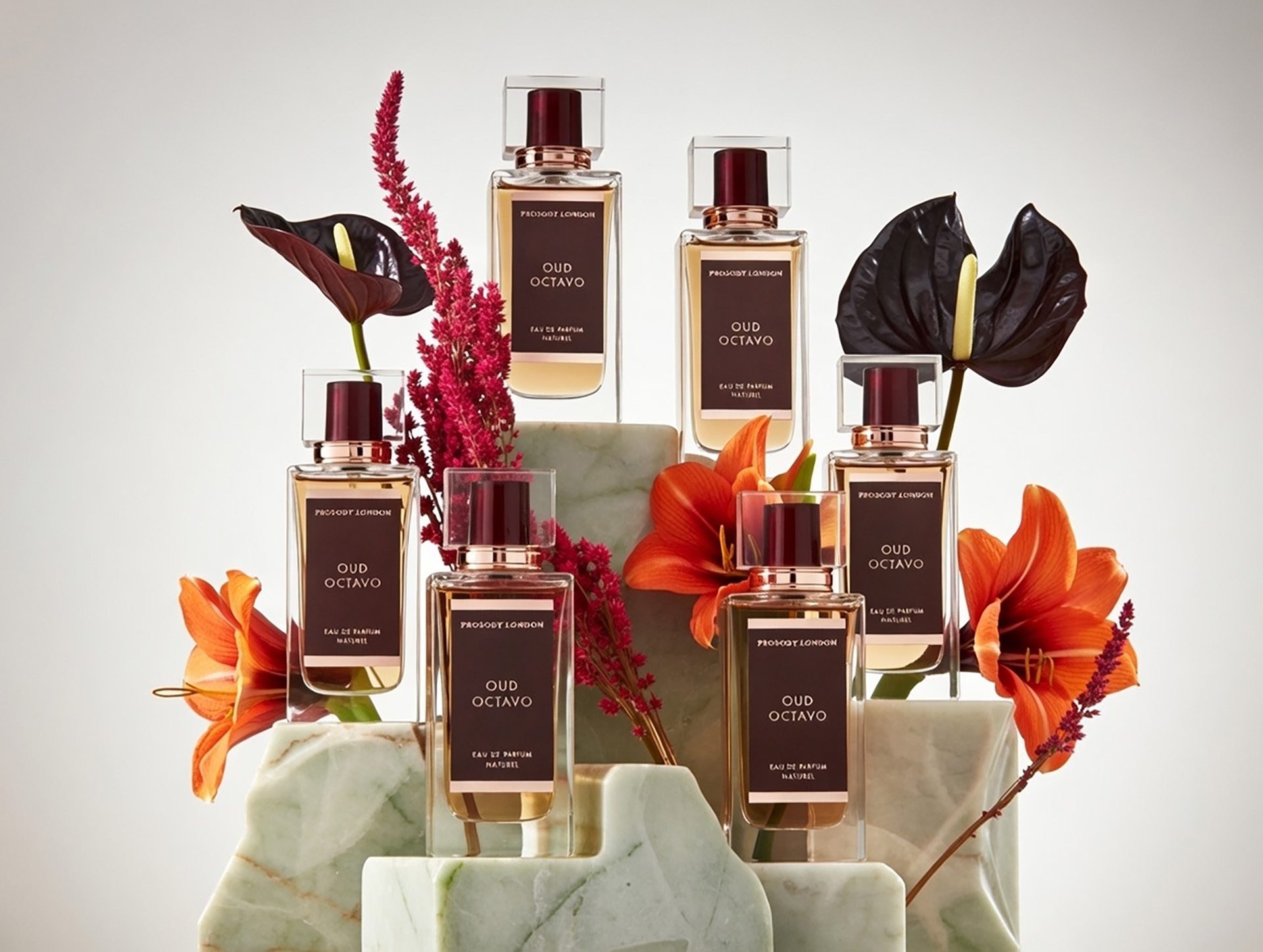
Prosody London: Oud Octavo, Rose Rondeaux, and Lissom Linden
These three fragrances represent different dimensions of what high-quality botanical ingredients achieve in composition:

Oud Octavo — Smoky, Animalic Depth
Built around wild-harvested black agarwood oud, balanced with fresh herbs, bright citrus, and subtle spices. It opens vividly before descending into smoky, leathery, faintly animalic waves that pulse with mystery. The natural oud’s fixative power anchors the scent, providing up to 10–12 hours of wear on most skin types, evolving from bright to intimately woody. No synthetic sharpness — just nature’s raw elegance.
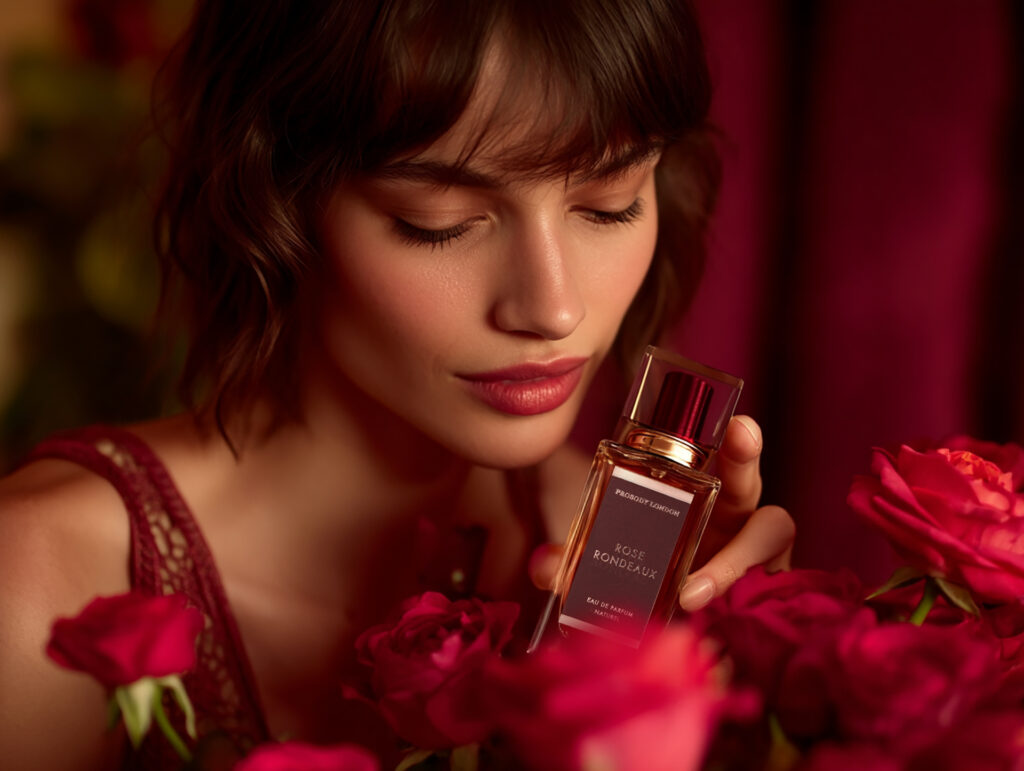
Rose Rondeaux — Velvety, Rounded Romance
A rose portrait built on rich Damask rose absolute, layered with geranium’s green facets and soft vanilla warmth. It avoids the sharp, linear quality of many rose fragrances, presenting instead a full-bodied bloom — honeyed, fruity, and subtly spicy. The high concentration of natural absolutes ensures impressive staying power, with the rose lingering velvety on skin for up to 8–10 hours on most skin types.


Lissom Linden — Honeyed Summer Breeze
Capturing the delicate, honeyed scent of linden blossom in full summer bloom, blended with green tea accents and soft woods. It opens with a luminous, tea-like freshness before melting into sweet floral nectar with hay-like warmth. Despite its airy profile, the natural linden absolute provides surprising longevity — often outlasting synthetic green florals by hours, with a gentle sillage that whispers through the day.
These three exemplify why high concentrations of potent naturals — oud resin, rose absolute, linden blossom — act as natural fixatives, binding to skin and releasing facets slowly. Unlike volatile synthetics that fade quickly, these living essences evolve over time, creating a personal, ever-changing signature.
Try before committing — our Build Your Own Discovery Set lets you select any six from the collection and wear each through its full dry-down before deciding.

Conclusion: What Separates Genuinely Great Perfume Ingredients
The perfume brands worth knowing for ingredient quality — whether they work with naturals, synthetics, or both — share one characteristic: they treat the materials as the creative foundation rather than a cost variable. The finest synthetic perfumery uses expensive aroma chemicals at high concentrations. The finest natural perfumery uses rare botanicals sourced for their quality rather than their price point.
At Prosody London, I work exclusively with botanical ingredients because I believe that is where the most interesting olfactive territory currently exists — not because synthetic perfumery is inferior, but because the complexity of natural materials, and the challenge of achieving longevity and performance without synthetic shortcuts, produces a more interesting creative problem. The results, when the sourcing and formulation are right, speak for themselves.
Explore the full Prosody London natural perfume collection.

