

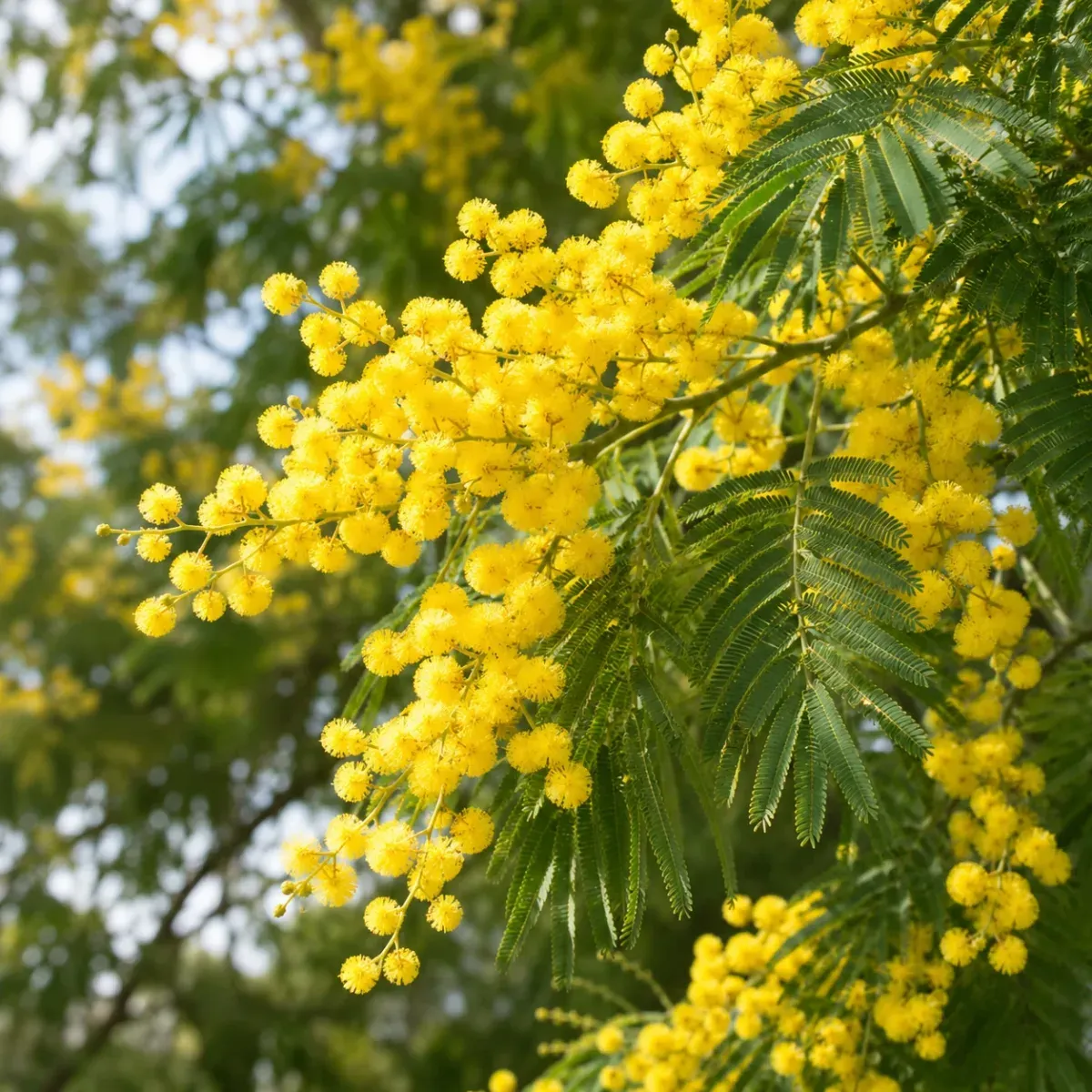
Mimosa
Acacia dealbata
Mimosa is powdery, honeyed and soft, with green and almond-like facets. Discover the golden winter flower behind sunny, powdery florals.
What does mimosa smell like in perfume?
Mimosa smells powdery, honeyed and soft, with a gentle green, almond-like edge. It feels like sunshine on a cold February day, when its yellow blossoms first appear.
| Botanical name | Acacia dealbata |
|---|---|
| Plant part | Flowers |
| Origin | Grasse, France and India |
| Extraction | Absolute |
| Note | Top to heart |
| Scent family | Florals |
| Odour | Powdery, honeyed and soft, with green and almond-like facets |
| Perfume uses | Powdery florals and soft, sunny blends |
| Key molecules | Anisaldehyde, phenylethyl alcohol, long-chain hydrocarbons |
| Odour impact | Low |
| Odour life on a strip | Long: a day or more |
| Found in | Moiré Mimosa |
Used within IFRA limits. Impact and odour life are our own studio guide, judged on a smelling strip.
What Is Mimosa?
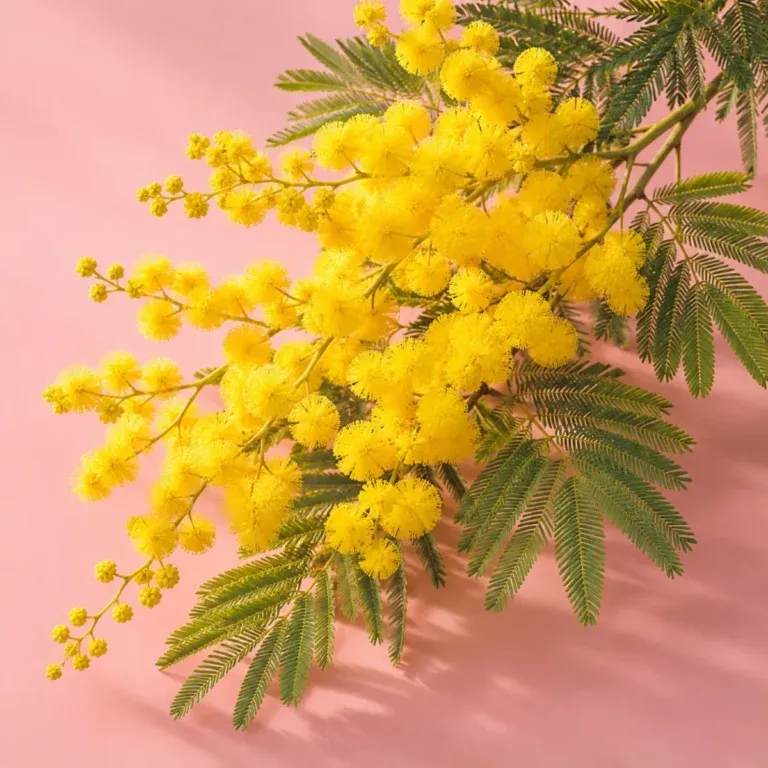
Mimosa absolute is extracted from the fluffy yellow flowers of Acacia dealbata, the silver wattle. Originally from Australia, it now grows wild on the hills around Grasse, in the south of France.
Mimosa Scent Profile
Here is how strongly each facet of mimosa comes through, from our own smelling-strip notes.
Powdery
Soft, cushiony powder.
Honeyed
Warm, golden sweetness.
Green
A fresh, leafy note.
Almond
A faint, sweet nuttiness.
How Perfumers Use Mimosa

Perfumers use mimosa to add a soft, powdery warmth to florals. It pairs well with violet, almond, citrus and light woods, and brings a gentle, sunny character.
Growing and harvesting mimosa
Mimosa, Acacia dealbata, flowers in late winter. In the south of France, around the Tanneron hills near Grasse, flowering branches are cut from January to March. The flowers are extracted with solvent into a waxy concrete, then into the absolute. India is also a growing source.
The molecules behind mimosa’s scent
Anisaldehyde gives mimosa its sweet, powdery, slightly almond-like note. Phenylethyl alcohol adds a soft, honeyed floral touch. Mimosa absolute also contains heavy, waxy compounds that give its soft texture and help the scent last on a strip.
Natural or synthetic mimosa?
A “mimosa” note in mainstream perfumes is often built from anisaldehyde, heliotropin and ionones. Natural mimosa absolute is greener and waxier, with a hint of cucumber and a honeyed warmth that a reconstruction rarely captures.
Mimosa in history and tradition
Mimosa came from Australia to the French Riviera in the 19th century, where it now grows wild. Mandelieu-la-Napoule holds a mimosa festival every February, and a scenic Route du Mimosa runs along the coast. In Italy, sprigs of mimosa are given to women on 8 March, International Women’s Day.
How to smell mimosa yourself
In late winter, British florists sell sprigs of mimosa, usually from France. Hold the fluffy yellow flower balls close and smell them. You will find a soft, powdery, honeyed scent with a green note. The scent is delicate and fades as the flowers dry.
Smell Mimosa in Prosody London Perfumes
For mimosa at its most expressive, try Moiré Mimosa. Mimosa absolute is the signature of this powdery, sunny cologne, with aniseed and coconut.


What Blends Well With Mimosa?
Questions About Mimosa
What is mimosa absolute?
The concentrated extract of mimosa flowers. The blossom is first extracted into a waxy concrete, which is then washed with alcohol to give the absolute: soft, powdery and long-lasting.
Is mimosa strong?
No, it is soft and gentle.
What pairs with mimosa?
Aniseed, coconut, citrus and soft woods.
Explore all of our natural perfume ingredients.
