

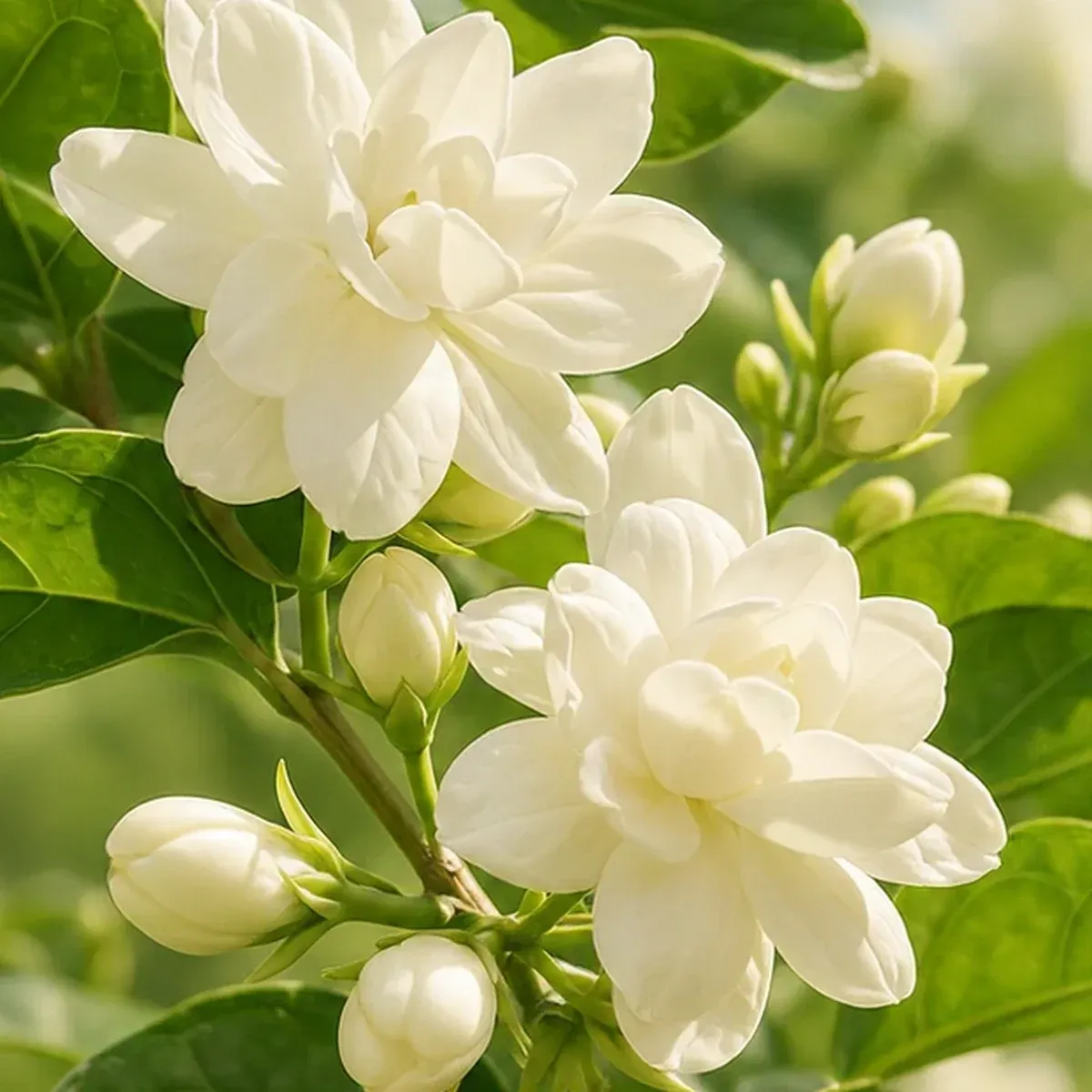
Jasmine Sambac
Jasminum sambac
Jasmine sambac is lush, fruity and heady, with green, tea-like facets. Discover the jasmine that brings richness to white and fruity florals.
What does jasmine sambac smell like in perfume?
Jasmine sambac smells lush, fruity and heady, with a green, almost tea-like freshness. It is brighter and more fruity than jasmine grandiflorum, and is the jasmine used to scent jasmine tea.
| Botanical name | Jasminum sambac |
|---|---|
| Plant part | Flowers |
| Origin | India and China |
| Extraction | Absolute and CO2 extract |
| Note | Top to heart |
| Scent family | Florals |
| Odour | Lush, fruity and heady, with green, tea-like and indolic facets |
| Perfume uses | White florals, fruity florals and ambers |
| Key molecules | Benzyl acetate, linalool, methyl anthranilate, indole |
| Odour impact | Very high |
| Odour life on a strip | Long: a day or more |
| Found in | Jacinth Jonquil, Neroli Nuance |
Used within IFRA limits. Impact and odour life are our own studio guide, judged on a smelling strip.
What Is Jasmine Sambac?

Jasmine sambac, Jasminum sambac, also called Arabian jasmine, is an evergreen climbing shrub with small, waxy white flowers. It is grown mainly in India and China for perfumery and tea.
Jasmine Sambac Scent Profile
Here is how strongly each facet of jasmine sambac comes through, from our own smelling-strip notes.
Floral
Heady white petals.
Fruity
A juicy, almost banana-like ripeness.
Green
A fresh, tea-leaf note.
Indolic
A warm, animalic depth that makes it sensual.
How Perfumers Use Jasmine Sambac

Perfumers use jasmine sambac to give florals a radiant, fruity brightness. It is powerful, so a little goes a long way, and it pairs well with citrus, orange blossom and soft woods.
Sambac vs grandiflorum
Jasmine sambac is fruitier, greener and more tea-like. Jasmine grandiflorum is richer, sweeter and more classically perfumey. We use both, for different effects.
Growing and harvesting jasmine sambac
Jasmine sambac grows mainly in southern India, especially Tamil Nadu, and in China. The flowers open in the evening. For perfume, the buds are picked by hand early in the morning, and they open and release their scent later that day, when they are extracted into an absolute or a CO2 extract.
The molecules behind jasmine sambac’s scent
Benzyl acetate gives jasmine its sweet, fruity note. Linalool, stronger in sambac than in other jasmines, adds a fresh, tea-like lift. Methyl anthranilate brings a grape-like sweetness, and a trace of indole adds warmth and depth.
Natural or synthetic jasmine sambac?
Most jasmine notes in mainstream perfumes are built from synthetics such as hedione, benzyl acetate and hexyl cinnamic aldehyde. Natural jasmine sambac is greener, fruitier and more complex, with tea-like and indolic facets that a reconstruction smooths away.
Jasmine sambac in history and tradition
Jasmine sambac is the national flower of the Philippines, where it is called sampaguita, and of Indonesia, where it is called melati putih. In South India the flowers are strung into garlands and worn in the hair, and they are sold by the length in markets. In China the flowers are used to scent jasmine tea.
How to smell jasmine sambac yourself
Brew a cup of good jasmine tea, which is scented by layering tea leaves with fresh jasmine sambac flowers. Smell the dry leaves, then the steam. You can also grow jasmine sambac as a house plant in Britain, and smell the flowers when they open in the evening.
Smell Jasmine Sambac in Prosody London Perfumes
For jasmine sambac at its most expressive, try Jacinth Jonquil. Jasmine sambac opens a sunny spring floral with jonquil and hyacinth accords. You will also find jasmine sambac in Neroli Nuance.
-


Jacinth Jonquil – Natural Perfume
Price range: £49.00 through £135.00Select options This product has multiple variants. The options may be chosen on the product page -


Neroli Nuance – Natural Perfume
Price range: £49.00 through £135.00Select options This product has multiple variants. The options may be chosen on the product page
What Blends Well With Jasmine Sambac?
Questions About Jasmine Sambac
Is jasmine sambac the jasmine in jasmine tea?
Yes. Jasmine tea is scented with fresh jasmine sambac flowers, which is why its green, tea-like facet feels so familiar.
Is jasmine sambac strong?
Yes, it is one of the most powerful floral materials, used in small amounts.
What pairs with jasmine sambac?
Orange blossom, mandarin, ylang ylang and sandalwood.
Explore all of our natural perfume ingredients.
