

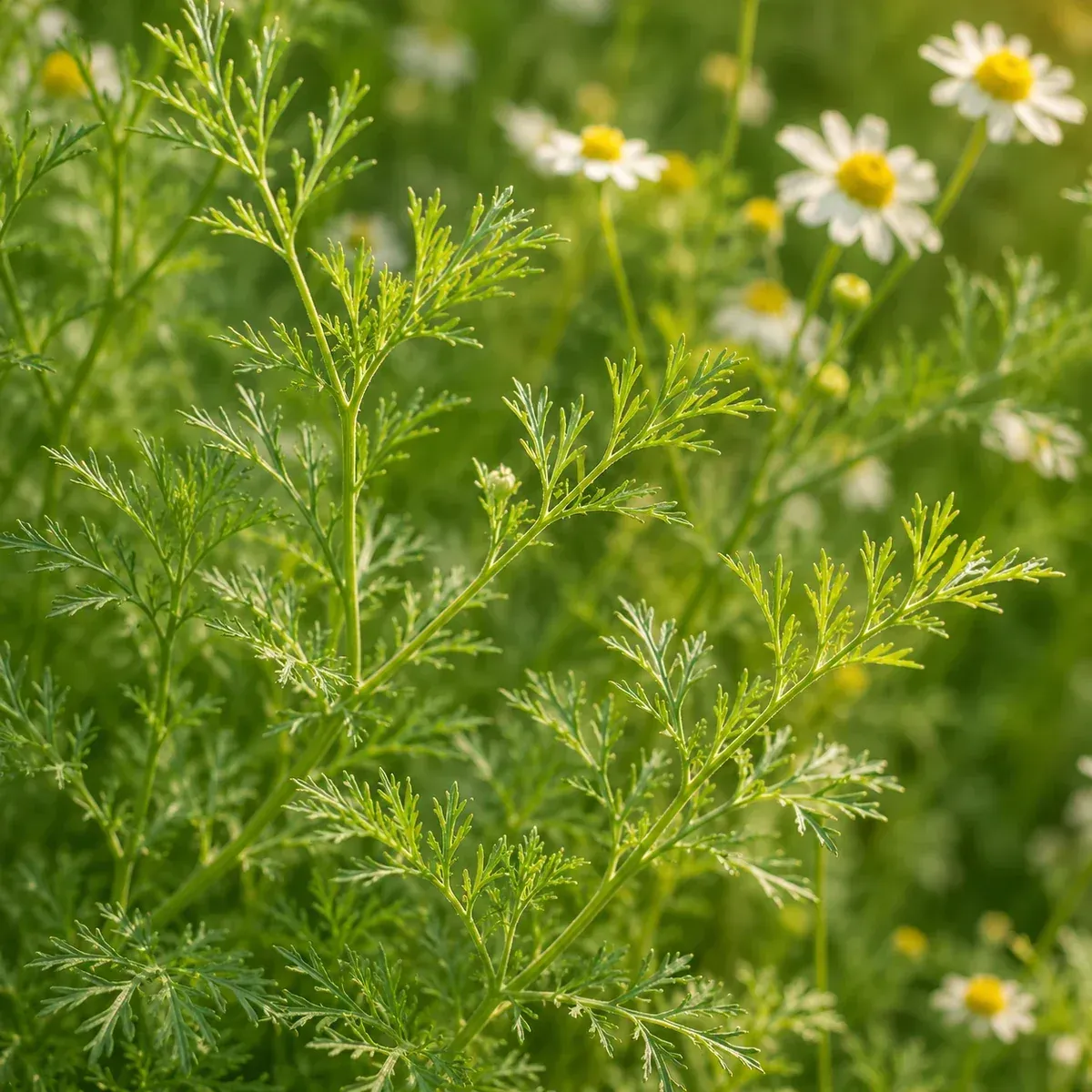
Chamomile
Chamaemelum nobile
Chamomile is soft, apple-like and herbal, with a gentle honeyed warmth. Discover the small flower behind herbal and tea-like blends.
What does chamomile smell like in perfume?
Chamomile smells soft, apple-like and herbal, with a gentle honeyed warmth. It brings a soft, tea-like warmth to a fragrance.
| Botanical name | Chamaemelum nobile |
|---|---|
| Plant part | Flowers |
| Origin | England, France and Morocco |
| Extraction | Steam distillation |
| Note | Heart |
| Scent family | Florals |
| Odour | Soft, apple-like and herbal, with a gentle honeyed warmth |
| Perfume uses | Soft florals, herbal and tea-like blends |
| Key molecules | Isobutyl angelate, butyl angelate, pinocarvone |
| Odour impact | Medium |
| Odour life on a strip | Medium: most of a day |
| Found in | Lissom Linden |
Used within IFRA limits. Impact and odour life are our own studio guide, judged on a smelling strip.
What Is Chamomile?
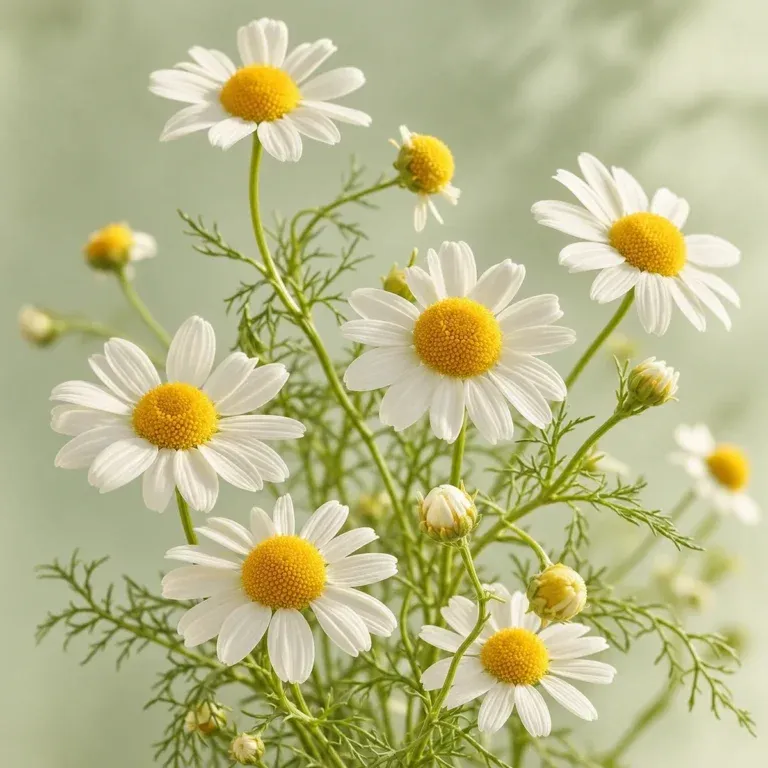
Roman chamomile, Chamaemelum nobile, is a low, creeping plant with small, daisy-like flowers, long grown in English gardens. Its oil is steam-distilled from the flowers.
Chamomile Scent Profile
Here is how strongly each facet of chamomile comes through, from our own smelling-strip notes.
Fruity
A crisp, apple-like note.
Herbal
A soft, green herb.
Honeyed
A gentle, sweet warmth.
Hay
A sun-dried, tea-like dryness.
How Perfumers Use Chamomile
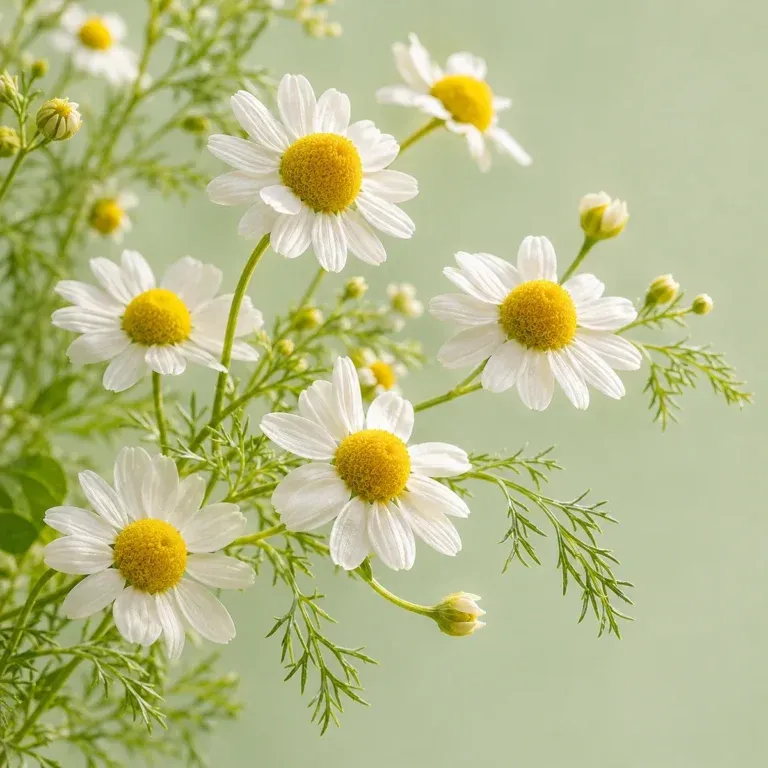
Perfumers use chamomile to add softness and a natural, herbal sweetness. It pairs well with linden, tea, rose and honeyed notes, giving florals a soft, rounded warmth.
Growing and harvesting chamomile
Roman chamomile, Chamaemelum nobile, is grown in England, France and Morocco. It is a low, creeping plant with small daisy-like flowers. The flowers are harvested in summer, when they are fully open, and steam-distilled.
The molecules behind chamomile’s scent
Roman chamomile is rich in esters such as isobutyl angelate and butyl angelate, which give its fruity, apple-like smell. Pinocarvone adds a herbal, slightly minty note. The name chamomile comes from the Greek for “earth apple”, after this scent.
Natural or synthetic chamomile?
A “chamomile” note in mainstream perfumes is often built from fruity, apple-like esters and herbal synthetics. Natural Roman chamomile is warmer and more complex, with a soft hay and honey note under the fruit.
Chamomile in history and tradition
Roman chamomile was planted as fragrant lawns in English gardens, and it releases its scent when walked on. Shakespeare’s Falstaff remarks that the more chamomile is trodden on, the faster it grows. In medieval Britain it was also a strewing herb, scattered on floors so that it released its scent when walked on. In perfumery, chamomile gives a soft, herbal warmth to florals and tea-like blends.
How to smell chamomile yourself
Most chamomile tea is made from German chamomile, a different plant with a sweeter, hay-like smell. If you can, find Roman chamomile at a garden centre and rub the leaves and flowers. You will smell fresh apple, herbs and a soft sweetness.
Smell Chamomile in Prosody London Perfumes
For chamomile at its most expressive, try Lissom Linden. Chamomile softens a honeyed linden heart, adding a gentle, tea-like warmth.
-


Lissom Linden – Natural Perfume
Price range: £49.00 through £135.00Select options This product has multiple variants. The options may be chosen on the product page
What Blends Well With Chamomile?
Questions About Chamomile
Does chamomile smell like tea?
It has a soft, herbal, tea-like quality, as well as an apple-like fruitiness.
Is chamomile strong in perfume?
It is used in small amounts for softness.
What is the difference between Roman and German chamomile in perfume?
Roman chamomile (Chamaemelum nobile, also called Anthemis nobilis) has a soft, fruity, apple-like scent with herbal and honeyed facets. German chamomile (Matricaria chamomilla) is a different species; its essential oil is often more earthy, herbal and hay-like, with a slightly smoky character. During steam distillation, chamazulene forms and gives German chamomile oil its distinctive deep-blue colour. This page describes Roman chamomile.
Explore all of our natural perfume ingredients.
