

Natural isolates let us capture scents that nature cannot give as an essential oil. There is no way to press a melon, distil a pear or extract a freesia. To capture these notes without turning to petroleum-based synthetics, we use natural isolates.
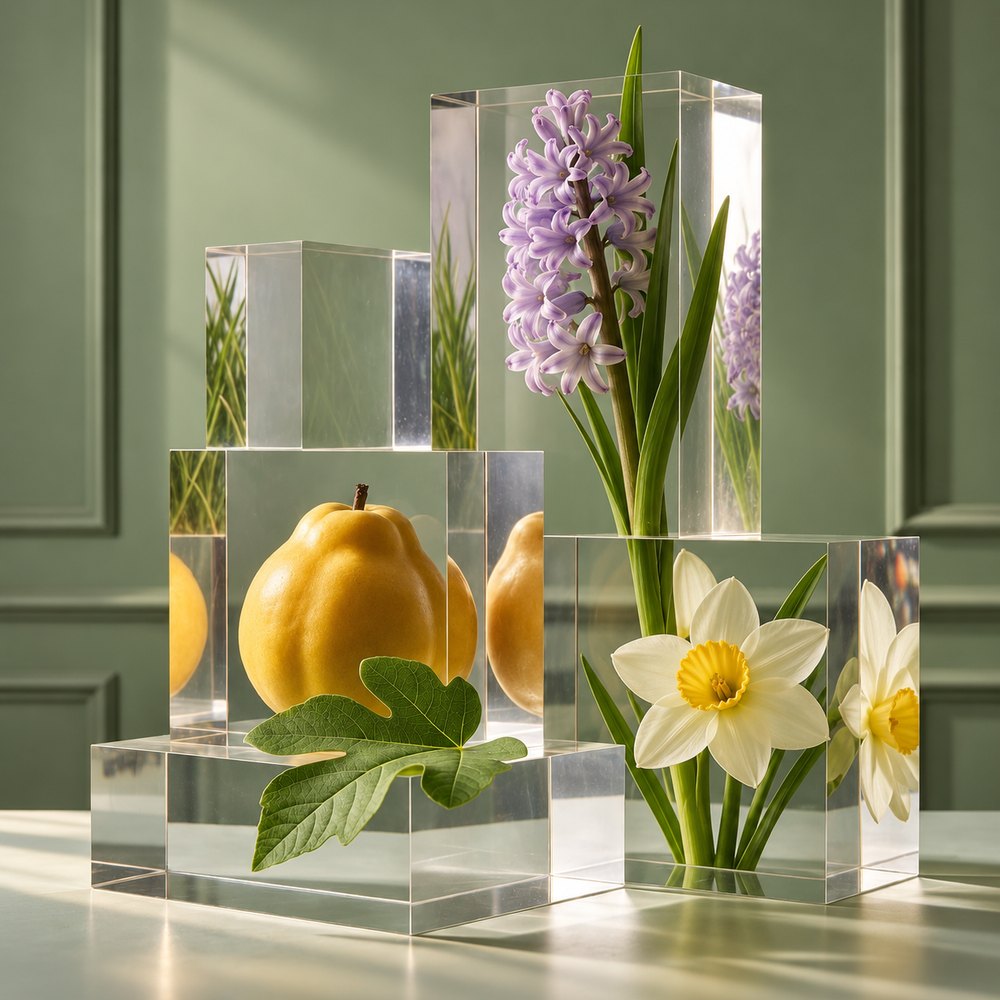
What is a natural isolate?
A natural isolate is a single aroma molecule separated from a natural raw material, by distillation, fractionation or natural fermentation. It is not a “nature-identical” synthetic made from petroleum: the molecule comes from a plant, a seed, a resin or a natural fermentation, and it keeps that natural origin. The international standard ISO 9235 sets out what counts as a natural aromatic raw material, including isolates.
Where do they come from?
A few examples of the kind of molecules perfumers isolate from nature:
- Linalool, from ho wood and coriander seed: fresh, floral and woody.
- Eugenol, from clove leaf: warm and spicy.
- Citral, from litsea cubeba: bright and lemony.
- Geraniol, from palmarosa: soft and rosy.
- Natural vanillin, from clove or rice bran: creamy vanilla.
Why we use them
Natural isolates let us create effects no single plant oil can give: the watery coolness of melon, the crispness of pear, the lift of a spring flower. They are especially valuable in the top notes, where they add clarity and sparkle and help keep fresh citrus and fruit notes bright and recognisable.
A rare and costly choice
Natural isolates often cost ten times or more than the same molecule made synthetically. Most of the fragrance industry uses the cheaper synthetic version; we choose the natural one, because it keeps every drop of our perfumes plant-derived.
Why natural isolates are on the rise
As more people ask for natural flavourings in food and drink, production of natural isolates has grown. That has made more of them available to perfumers too, although they remain expensive and in limited supply compared with synthetics.
Natural and organic compatibility
Natural isolates are compatible with natural and organic formulation standards when they are produced by permitted natural processes. They contain no petroleum-derived synthetics, phthalates or synthetic musks.
Our accords
These are the accords we build from natural isolates, and the perfumes you will find them in. The exact molecules behind each accord remain our own.
°Made of natural isolates. Explore all our ingredients
